Sleep Hygiene: What Actually Matters (and What's Just Decor)
Sleep hygiene gets preached more than practiced. Here's which habits actually move the needle for sleep, which ones are decor, and where to start tonight.
By Kurt Woleret
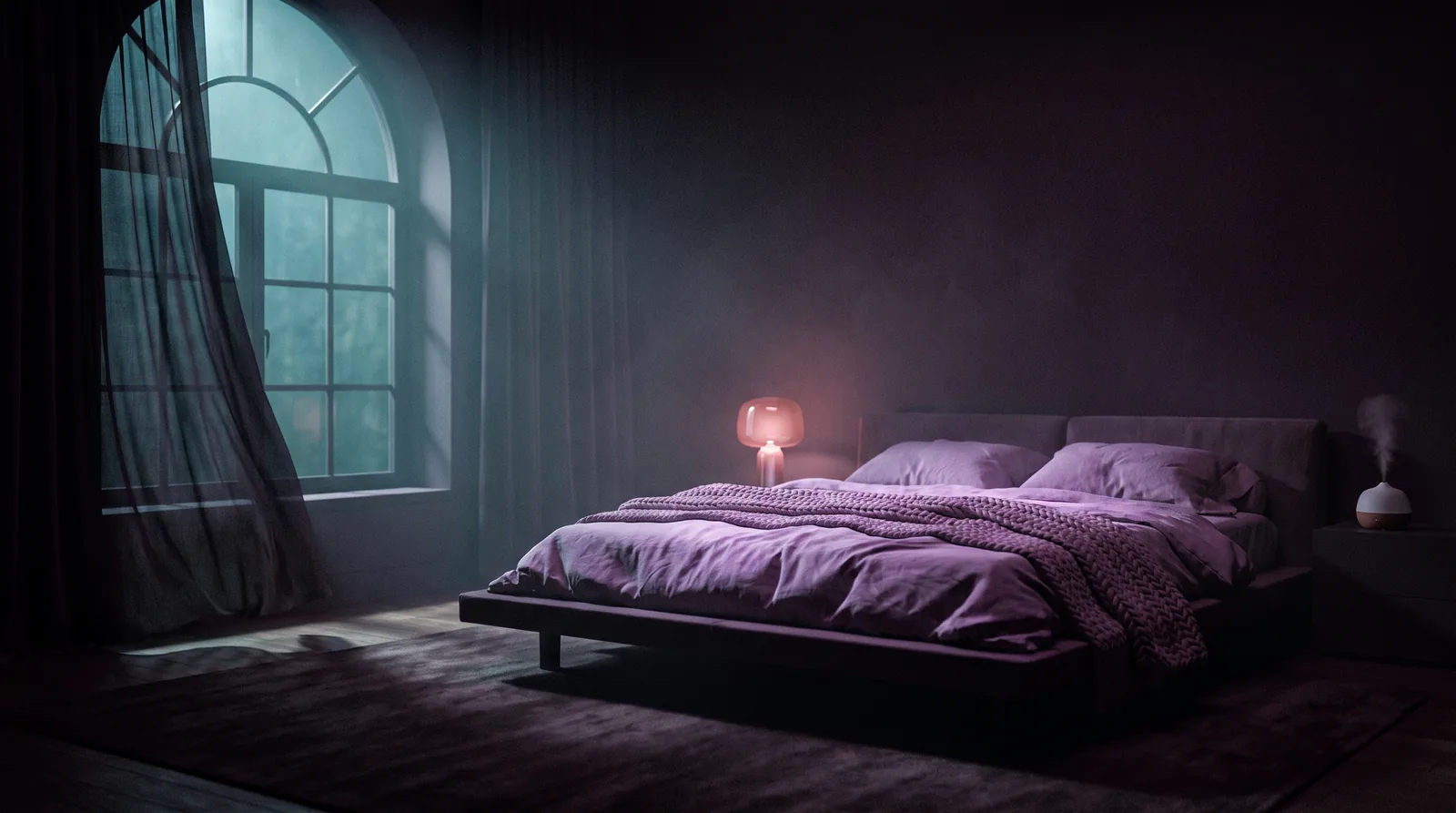
Sleep hygiene is the flossing of the wellness world. Everybody knows the rules. Everybody nods along. And at 11:47 on a Tuesday night, everybody is lying in the dark watching a video about a guy who restores old typewriters, with the phone six inches from their face. I'm not judging. I live in a studio apartment where my bed, my desk and my kitchen are technically the same room, so my sleep environment and my deadline environment share a wall, which is to say they don't.
Here's the problem with sleep hygiene as it's usually preached: it arrives as a list of fifteen commandments, all delivered with equal urgency, as if the lavender pillow spray and the caffeine cutoff were doing the same amount of work. They are not. Some of these habits have real evidence behind them. Some are decor. Knowing which is which means you can fix two things instead of guiltily ignoring fifteen.
What sleep hygiene actually is
The term just means the set of daily behaviors and environmental tweaks that make good sleep more likely: consistent timing, light management, what you consume and when, what your bedroom is like, and what you do in the hour before bed. The concept came out of insomnia treatment, and that origin matters. A research review of the evidence behind individual sleep hygiene recommendations found something a little awkward: most of the classic rules were developed for clinical insomnia patients, and the evidence that each rule helps the average tired person is thinner and patchier than the confident tone of most advice suggests (Irish et al., 2015, Sleep Medicine Reviews). Thinner doesn't mean wrong. It means the rules are not all created equal, and the ones with the best support deserve top billing.
The heavy hitters
First: a consistent wake time. Not bedtime, wake time. Your body clock sets itself off the morning anchor, and if that anchor drags around by three hours between Tuesday and Sunday, you're giving yourself a small case of jet lag every week without going anywhere. Pick a wake time you can hold most days and let bedtime find you. Sleepiness is better recruited than commanded.
Second: caffeine timing. Caffeine has a half-life of roughly five to six hours, which means the 4 p.m. cold brew is still arguing with your adenosine at 10 p.m. You don't have to quit. You have to stop earlier than you think. For most people a cutoff around eight hours before bed is a reasonable opening bid; we've covered the details in our caffeine cutoff piece.
Third: light. Bright light in the morning tells your clock the day has started; dim light at night tells it the day is ending. Overhead lights blazing at 11 p.m. send a very specific memo to your brain, and the memo says lunchtime. Lamps low and warm in the last hour do more than almost any gadget you can buy.
Fourth: alcohol honesty. A nightcap makes you fall asleep faster and sleep worse, fragmenting the second half of the night. It's a loan with a bad interest rate. Take it knowingly or don't take it.
Sleep hygiene isn't fifteen commandments. It's about four habits doing most of the work while the pillow spray watches.
The stuff that's mostly decor
The perfect pillow, the special tea, the scent diffuser, the expensive tracker ring: none of these are harmful, and if the ritual of them settles you, that's a real effect worth keeping. But they're accessories, not engines. A tracker in particular can backfire; if your sleep score starts dictating your mood, you've invented a new thing to lose sleep over, which has its own name, orthosomnia, and its own article on this blog.
Even the sacred no-screens rule is more nuanced than the sermons suggest. The evidence points less at the glow of the screen and more at what you're doing on it: arousal, engagement, one-more-episode mechanics. A boring book on a screen is closer to a boring book than to a doomscroll. The question isn't screen or no screen. It's revving or winding down.
A realistic starting lineup
If you try to adopt every rule at once you'll keep the system for four days, which I know because I've done it roughly eleven times. Instead, run the smallest version that touches the big levers:
- Hold your wake time within about an hour, seven days a week, and let morning light hit your eyes soon after.
- Set a caffeine curfew around eight hours before bed and actually obey it, including the sneaky afternoon chocolate and pre-workout.
- Dim the apartment for the last hour: lamps instead of overheads, and swap the feed for something genuinely low-stakes.
- Keep the bedroom cool, dark and quiet, and if it can't be quiet (my building's radiator plays jazz), cover the noise with something steady.
That last hour is where most plans die, because "wind down" is vague and the phone is specific. Give the hour a shape instead. I end mine with a few minutes of slow visuals in Feelsy with the sound low, sometimes the built-in 4-7-8 breathing exercise when the deadline adrenaline is still circulating. It isn't magic. It's just something dim, slow and finite to aim the brain at, which is exactly the job the hour needs filled.
When hygiene isn't the problem
One honest caveat. If you've genuinely run the big four for a few weeks and you still lie awake most nights, more hygiene is probably not the answer, and piling on rules can make sleep feel like a test you keep failing. Chronic insomnia has its own first-line treatment (CBT-I), and that's a conversation for a professional, not a longer checklist. Sleep hygiene is the foundation, not the whole house. Pour it properly, then stop pouring.
Feelsy is a wellness product, not medical advice. If stress, anxiety or sleep problems persist, please speak with a qualified professional.
References
- Irish, L. A., Kline, C. E., Gunn, H. E., Buysse, D. J., & Hall, M. H. (2015). The role of sleep hygiene in promoting public health: A review of empirical evidence. Sleep Medicine Reviews, 22, 23-36.
Frequently Asked Questions
What is sleep hygiene?
Sleep hygiene is the set of daily habits and bedroom conditions that make good sleep more likely: a consistent schedule, smart caffeine and alcohol timing, light management, a cool dark quiet room, and a calm final hour before bed. The term came out of insomnia treatment, and the individual rules vary a lot in how much evidence supports them.
What parts of sleep hygiene actually matter most?
Four levers do most of the work: a consistent wake time held within about an hour every day, a caffeine cutoff roughly eight hours before bed, bright light in the morning with dim warm light at night, and honesty about alcohol, which helps you fall asleep but fragments the second half of the night. Pillows, sprays and gadgets are accessories by comparison.
Is it bad to look at screens before bed?
The evidence points less at the glow itself and more at what you do on the screen. Highly engaging, arousing content keeps the brain revved, while something genuinely boring and low-stakes is closer to reading a dull book. The practical question to ask is whether the activity is winding you up or winding you down.
What if good sleep hygiene still doesn't fix my sleep?
If you've honestly run the main habits for a few weeks and still lie awake most nights, adding more rules usually isn't the answer. Chronic insomnia has its own first-line treatment, cognitive behavioral therapy for insomnia, and that's worth discussing with a professional. Sleep hygiene is the foundation, not the entire treatment.

About the author
Contributing writer
Kurt is a New York based writer covering the practical science of stress, sleep and focus. He is the resident sceptic of the Journal: if a technique cannot survive a crowded subway commute and a deadline week, he is not interested in it.
Feel it for yourself.
Feelsy turns reading about calm into practising it. Two minutes of a slow texture is often the whole difference.


Related reading
 Sleep
SleepHow to Fall Asleep Faster: Sound, Light and Ritual
Falling asleep is a skill, not a stroke of luck. Here is how sound, light and a 15-minute ritual can quiet a racing mind and shorten the trip to sleep.
 Sleep
SleepHow Late Is Too Late for Coffee? Your Caffeine Cutoff, Explained
Caffeine six hours before bed can still cut an hour of sleep. What the research says about your last-cup cutoff, half-lives, and smarter timing.
 Sleep
SleepHow to Fix Your Sleep Schedule (Without Wrecking a Whole Week)
Your sleep schedule drifted and now bedtime is a rumor. Here's how to reset your body clock with light, timing, and patience instead of willpower.
 SleepNew
Chamomile Tea Before Bed: An Old Remedy, Gently Examined
Does chamomile tea really help you sleep? What the research actually shows, what the evening ritual itself does, and how to brew a cup worth slowing down for.
 SleepNew
Sleep Divorce: Why Sleeping Apart Might Save Your Nights
More than a third of Americans have tried a sleep divorce. What sleeping apart actually does for rest and relationships, and how to trial it without drama.
 Sleep
SleepWhy Rocking Lulls You to Sleep: From Cradles to Hammocks
Why gentle rocking helps adults fall asleep faster and sleep more deeply: the science of the swaying bed, hammocks and trains, and how to use it at night.