How Much Sleep Do You Actually Need? An Honest Look at the Numbers
Eight hours is the number everyone quotes and almost nobody sourced. Here's where the official sleep recommendations come from and how to find your range.
By Kurt Woleret
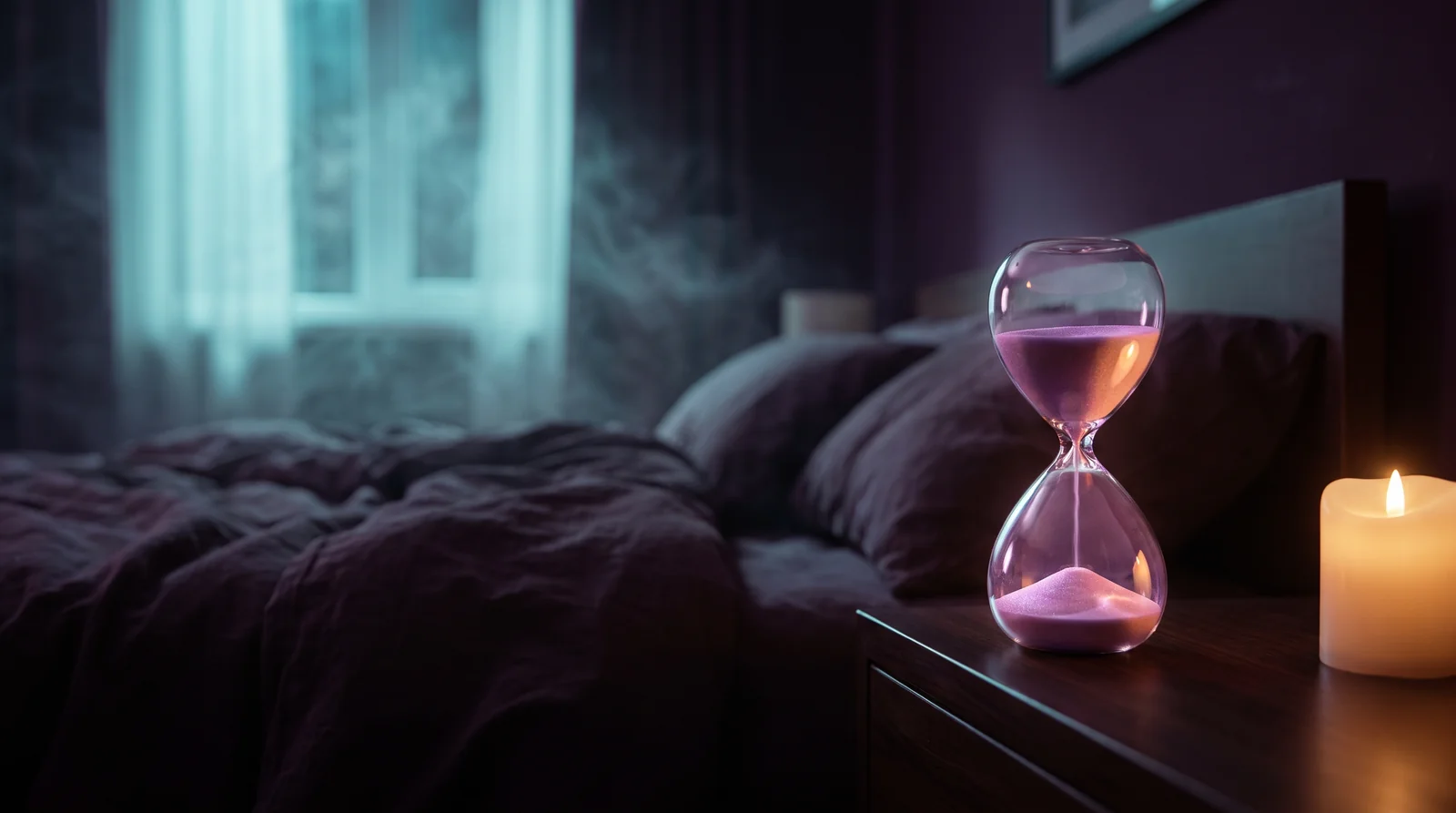
Ask the internet how much sleep you need and you'll get a number delivered with the confidence of a subway conductor announcing a delay: eight hours. Everyone knows it. Almost nobody knows where it came from. I didn't either, until a deadline week left me running on five and a half hours a night and I decided to find out exactly how far into the red I was. So I went looking for the source of the eight-hour rule. Here's the spoiler: it isn't a rule. It's the middle of a range, the range is wider than you think, and the interesting question was never the average. It's where you personally sit inside it.
Where the official numbers actually come from
The figure most sleep advice leans on comes from the National Sleep Foundation, which convened a panel of experts to review the evidence on sleep duration and health, then published formal recommendations by age group (Hirshkowitz et al., 2015, Sleep Health). For adults aged 26 to 64, the recommended range is seven to nine hours. Not eight. Seven to nine. For adults 65 and up, it's seven to eight. Teenagers get eight to ten, and school-age kids nine to eleven. The panel also acknowledged something the headlines usually drop: for some adults, six hours may be appropriate, and for others, ten. The famous eight is just the comfortable center of a two-hour window, the way a size medium is the center of a rack that also stocks small and large.
That two-hour spread isn't the panel hedging. It's the honest shape of the data. Sleep need varies from person to person for reasons that include genetics, age, health, and how much recovery your days demand. Two people can both be perfectly rested, one on seven hours and one on nine, the same way two people can be perfectly healthy at different heights. The population has a range. You have a number, and it lives somewhere inside it.
Eight hours isn't a law of nature. It's the middle of a range that was never about you specifically.
Why you can't just pick the low end
Here's where I'd love to report that I'm one of the lucky six-hour people. I'm not, and odds are you aren't either. Genuinely short sleepers exist, but they're rare, and the trap is that sleep deprivation is very good at impersonating adaptation. Run on six hours for a couple of weeks and you stop feeling dramatically tired; you just quietly become a slightly worse version of yourself. Reaction time slips. Mood curdles. The third coffee becomes load-bearing. Meanwhile your self-assessment stays cheerful, because the part of the brain doing the assessing is the same part that's underslept. If your evidence for being a short sleeper is that you've been doing it a while and you're basically fine, that's not evidence. That's the symptom.
How to find your actual number
The good news is that your number is findable without a lab. What you need is a stretch of days where sleep gets to run its course, ideally a vacation or any two weeks when the stakes are low. The method is boring and it works:
- Pick a consistent bedtime that feels natural, not aspirational, and keep it every night.
- Ditch the morning alarm, or set it as a backstop far later than you expect to need.
- Let yourself wake naturally, and note the time. The first few days will run long as you pay off old debt; ignore them.
- After four or five days, the wake times settle. The gap between lights-out and that natural wake time, minus however long you take to drift off, is your number.
Most people land somewhere between seven and nine, which is exactly what the recommendations would predict. The value isn't in discovering something exotic. It's in replacing a borrowed number with a measured one, so you stop either shortchanging yourself or lying in bed for nine hours when your body was finished at seven and a half.
A note on trackers, because someone will ask: a wearable can help you spot patterns, but you don't need one for this experiment, and the wake-up time on your nightstand clock is data enough. Treat any device's sleep score as a weather report, not a verdict. The point of finding your number is fewer things to worry about at night, not a new metric to lose sleep over.
Hitting your number in real life
Knowing you need eight hours is easy. Being horizontal and unconscious for eight hours in an apartment with thin walls and a phone that thinks midnight is prime time is the hard part. Two things move the needle more than any gadget. The first is a consistent wake time, which anchors everything upstream. The second is an actual wind-down: a repeatable last half hour that tells your nervous system the day is over. Mine is unglamorous. Screens go quiet, lights go low, and I put Feelsy on with a slow-moving texture and the sound low, let autoplay carry it, and run the built-in 4-7-8 breathing exercise until my thoughts stop refreshing. It's not magic. It's a cue, repeated until it works like one.
One more honest note: if you consistently give yourself a full seven to nine hour window and still wake up wrecked, duration may not be your problem. Quality can be broken while quantity looks fine, and persistent, unrefreshing sleep is worth raising with a professional rather than optimizing around.
So: how much sleep do you need? Probably seven to nine hours. Precisely? That's a two-week experiment away. Run it once and you'll never have to argue with the internet's favorite number again.
Feelsy is a wellness product, not medical advice. If stress, anxiety or sleep problems persist, please speak with a qualified professional.
References
- Hirshkowitz, M., Whiton, K., Albert, S. M., Alessi, C., Bruni, O., et al. (2015). National Sleep Foundation's sleep time duration recommendations: methodology and results summary. Sleep Health, 1(1), 40-43.
Frequently Asked Questions
How much sleep do adults actually need?
The National Sleep Foundation's expert panel recommends seven to nine hours a night for adults aged 26 to 64, and seven to eight hours for adults 65 and older. The panel also noted that six hours may be enough for some adults and ten appropriate for others, which is why it's best treated as a range with your own number somewhere inside it.
Is 6 hours of sleep enough?
For a small minority of genuinely short sleepers, yes, but they're rare. For most people, six hours leads to a quiet decline in reaction time and mood that stops feeling like tiredness after a couple of weeks. Feeling basically fine on six hours isn't proof you've adapted; underslept brains are poor judges of their own performance.
How do I figure out my personal sleep need?
Use a low-stakes stretch like a vacation: keep a consistent, natural bedtime, remove the morning alarm, and let yourself wake naturally. The first few days run long while you pay off sleep debt, then your wake time settles. The settled gap between falling asleep and waking naturally is your number, and for most people it lands between seven and nine hours.
How much sleep do teenagers need?
The National Sleep Foundation recommends eight to ten hours a night for teenagers, and nine to eleven hours for school-age children. Sleep need declines gradually with age, which is why the adult recommendation drops to seven to nine hours and then seven to eight for people over 65.
What if I sleep 8 hours and still wake up tired?
If you consistently give yourself a full seven-to-nine-hour window and still wake unrefreshed, the problem may be sleep quality rather than quantity. Fragmented or shallow sleep can leave you tired despite good duration, and persistently unrefreshing sleep is worth discussing with a qualified professional.

About the author
Contributing writer
Kurt is a New York based writer covering the practical science of stress, sleep and focus. He is the resident sceptic of the Journal: if a technique cannot survive a crowded subway commute and a deadline week, he is not interested in it.
Feel it for yourself.
Feelsy turns reading about calm into practising it. Two minutes of a slow texture is often the whole difference.


Related reading
 Sleep
SleepSleep Cycles, Explained: What Actually Happens Every 90 Minutes
What a sleep cycle actually is, how long one really lasts, why deep sleep front-loads your night, and how to time your alarm so mornings hurt less.
 Sleep
SleepHow Much Deep Sleep Do You Need? An Honest Number
How much deep sleep adults actually need each night, what slow-wave sleep does for memory and recovery, why trackers get it wrong, and what really increases it.
 Sleep
SleepWhy Am I Still Tired After 8 Hours of Sleep?
Getting eight hours but waking up exhausted? Here's why time in bed isn't the same as good sleep: fragmentation, timing, alcohol, and what actually helps.
 SleepNew
Night Owl vs Early Bird: The Science of Chronotypes
Night owl or early bird isn't a personality flaw or a virtue. It's a chronotype. Here's what the science says about your body clock and how to work with it.
 SleepNew
How to Wake Up Early (Without Hating Your Life)
Want to become a morning person? Here's how to wake up early using light, timing and consistency, based on what circadian science actually shows.
 Sleep
SleepCan't Sleep? Why Getting Out of Bed Is the Counterintuitive Fix
Lying awake trying harder is the one thing that makes insomnia worse. Here's the 20-minute rule, the science of stimulus control, and how to use it.