Video Game Music for Focus: Why Boss Fight Composers Beat Your Study Playlist
Why video game music helps you focus: it's composed to keep you engaged for hours without stealing attention. How to use soundtracks for deep work.
By Kurt Woleret
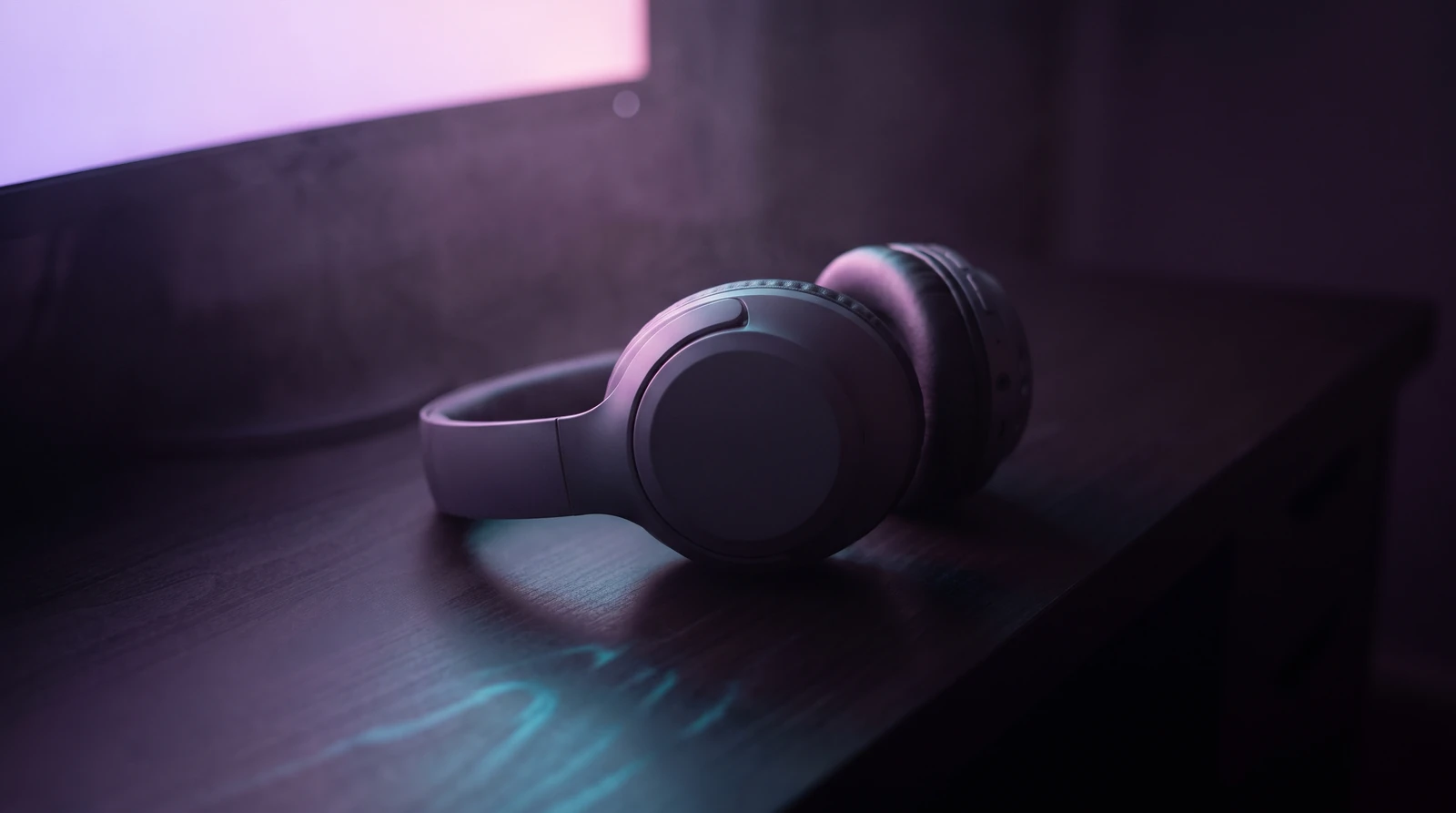
During the worst deadline week of last winter, I cycled through every focus playlist the internet recommends. Classical: I started critiquing the cellist. Lo-fi: fine, covered that elsewhere. Rain sounds: needed the bathroom. Then a friend who ships code for a living sent me a four-hour playlist of old video game soundtracks, the moody exploration kind, and something embarrassing happened: I did my best work of the month to music written for a plumber collecting coins. It turns out there's a decent reason for that, and for once the internet folk wisdom holds up to a sceptical poke.
Music engineered not to be the main event
Here's the thing nobody tells you about game soundtracks: they're one of the only genres of music explicitly composed to be ignored. A film score has two hours to make you cry. A pop song has three minutes to get stuck in your head. A game composer has a different brief entirely: keep a player emotionally engaged for dozens of hours while they do a demanding task, and never, ever pull their attention off that task. The music has to loop without getting annoying, signal mood without demanding analysis, and maintain momentum without building to a chorus that hijacks your ear. That brief, written for dungeons and side quests, happens to be a nearly perfect spec sheet for work music. You're not borrowing entertainment; you're borrowing purpose-built attentional wallpaper with a budget.
There's a nostalgia dividend, too, if you grew up with any of this music. A soundtrack you know by heart carries zero surprises, and surprise is exactly what background sound can't afford. The track you've heard four hundred times since middle school doesn't ask to be evaluated; it just establishes a familiar room and gets out of the way. People who swear by one specific game's soundtrack for work are usually not describing the composition. They're describing a conditioned signal, the audio equivalent of sitting down at the same library desk every day, and conditioning is a perfectly respectable focus tool. Cheaper than a library card, even.
The lyrics problem, which is a real problem
The clearest advantage is the quietest one: almost no vocals. Psychologists have known for decades that speech you're not even trying to listen to interferes with holding words and numbers in your head. In a classic 1982 study, Salamé and Baddeley found that unattended spoken syllables disrupted people's short-term memory for digits, even though they'd been told to ignore the speech entirely. Your language system is a dog that chases every ball; it doesn't check with you first. Lyrics, podcasts, and the argument at the next café table all get processed whether you like it or not, and they compete directly with reading, writing, and any work that runs on words, which is most work. Instrumental music sidesteps the whole fight. Game soundtracks are instrumental not by accident but by design, because a singer would have been fighting the game for your attention.
Your language system is a dog that chases every ball. Lyrics get processed whether you like it or not; game music never throws the ball.
The sceptic's paragraph, as required by law
Now the honest part. Is there a stack of randomized trials showing that video game music specifically beats silence, or lo-fi, or Beethoven, for productivity? No. The direct research on game soundtracks and task performance is thin, and the broader background-music literature is famously mixed: effects depend on the task, the tempo, the volume, and stubbornly on the person. Some people genuinely work best in silence, and complex reading tends to suffer under almost any added sound. So I won't tell you game music is scientifically proven to focus you, because that sentence would be doing marketing, not science. What I'll tell you is that its design constraints, instrumental, loop-friendly, moderate energy, emotionally steady, line up unusually well with everything we do know about what makes background sound compatible with work. The genre earned its reputation by engineering, not magic.
How to actually use it
Field notes from a month of testing on actual deadlines:
- Pick exploration and ambient tracks, not boss battles. Music written for inventory menus and open fields sits lower and steadier than anything written for combat.
- Loop one album instead of shuffling a mega-playlist. Familiarity is the feature; by the third loop the music disappears and only the momentum is left.
- Keep it quieter than feels natural. Background means background. If you can hum along in real time, it's foreground.
- Go silent for the genuinely hard stuff. Dense reading and first drafts are where even good background sound starts charging rent.
The eyes want wallpaper too
One last observation from the deadline trenches. The same logic that makes game music work for your ears applies to your eyes between sessions. When I surface from a work block, the worst thing I can do is open a feed, which is the visual equivalent of a boss battle: loud, fast, designed to win. What works is a few minutes of something slow and loopy that asks nothing back. Feelsy's slime textures on autoplay are basically an exploration-zone soundtrack for the eyes, drifting, repetitive, quietly engaging, and its ambient sound beds pair fine with a soundtrack habit. Then back in. The whole trick of a focus environment, audio or visual, is the same: steady signals that say nothing is happening, carry on. Game composers figured that out decades ago, one coin at a time.
Feelsy is a wellness product, not medical advice. If stress, anxiety or sleep problems persist, please speak with a qualified professional.
References
- Salamé, P., & Baddeley, A. (1982). Disruption of short-term memory by unattended speech: Implications for the structure of working memory. Journal of Verbal Learning and Verbal Behavior, 21(2), 150-164.
Frequently Asked Questions
Why is video game music good for studying and focus?
Game soundtracks are one of the few genres composed specifically to support a demanding task without stealing attention from it. They're instrumental, loop-friendly, moderate in energy, and emotionally steady, which lines up well with what's known about background sound that stays compatible with work.
Is music with lyrics bad for concentration?
For word-based work, usually yes. A classic 1982 study by Salamé and Baddeley found that unattended speech disrupted short-term memory for digits even when people were told to ignore it. Your language system processes words automatically, so lyrics compete directly with reading and writing. Instrumental music avoids that conflict.
Is video game music scientifically proven to improve productivity?
No. Direct research on game soundtracks and task performance is thin, and the broader background-music literature is mixed, with effects depending on the task, volume, tempo and person. The genre's advantage comes from its design constraints rather than from proof it beats silence. Some people still work best with no sound at all.
What kind of video game music works best for focus?
Choose exploration and ambient tracks rather than battle themes, loop a single album instead of shuffling, and keep the volume lower than feels natural. By the second or third loop the music fades into the background and leaves only a sense of momentum, which is exactly the job.
When should I work in silence instead?
For dense reading and first drafts, even well-designed background sound can start to cost you, since those tasks lean hardest on the language system. Save the soundtrack for routine or mechanical work, and treat silence as the premium option for anything genuinely difficult.

About the author
Contributing writer
Kurt is a New York based writer covering the practical science of stress, sleep and focus. He is the resident sceptic of the Journal: if a technique cannot survive a crowded subway commute and a deadline week, he is not interested in it.
Feel it for yourself.
Feelsy turns reading about calm into practising it. Two minutes of a slow texture is often the whole difference.


Related reading
 ASMR
Why Lo-Fi Music Helps You Focus (It's Not the Vinyl Crackle)
Millions study to lo-fi beats, but why does it work? The research on background music, lyrics and attention, and how to build a focus soundtrack that helps.
 ASMR
Why You Focus Better in a Coffee Shop (and How to Bottle It)
Coffee shop noise helps many people concentrate better than silence. Here's the research on ambient sound and focus, and how to recreate the effect at home.
 ASMR
The Mozart Effect: How One Small Study Launched a Thousand Baby CDs
One 1993 study convinced the world that Mozart raises IQ. What the research actually found, what the meta-analysis says, and what music really does for focus.
 ASMR
The Cocktail Party Effect: How You Hear One Voice in a Crowd
The cocktail party effect lets your brain tune into one voice in a noisy room, and snap to your own name across it. The science of auditory attention.
 ASMR
Sound Masking: Why Adding Noise Makes a Room Quieter
Sound masking doesn't block noise, it buries it. How steady background sound hides sirens, neighbors and snoring, and how to set it up for sleep and focus.
 ASMR
Scratching ASMR: Why Fingernails on Fabric Put the Internet to Sleep
Scratching is one of ASMR's biggest trigger families: fabric, wood, mic covers. Why dragging fingernails across texture calms so many brains, explained.