Washing Dishes as Meditation: The Quiet Practice Hiding in Your Sink
Washing dishes by hand can lower stress when done with full attention. Here is what one study found, and how to turn the evening sink into a small warm ritual.
By Mei Lin
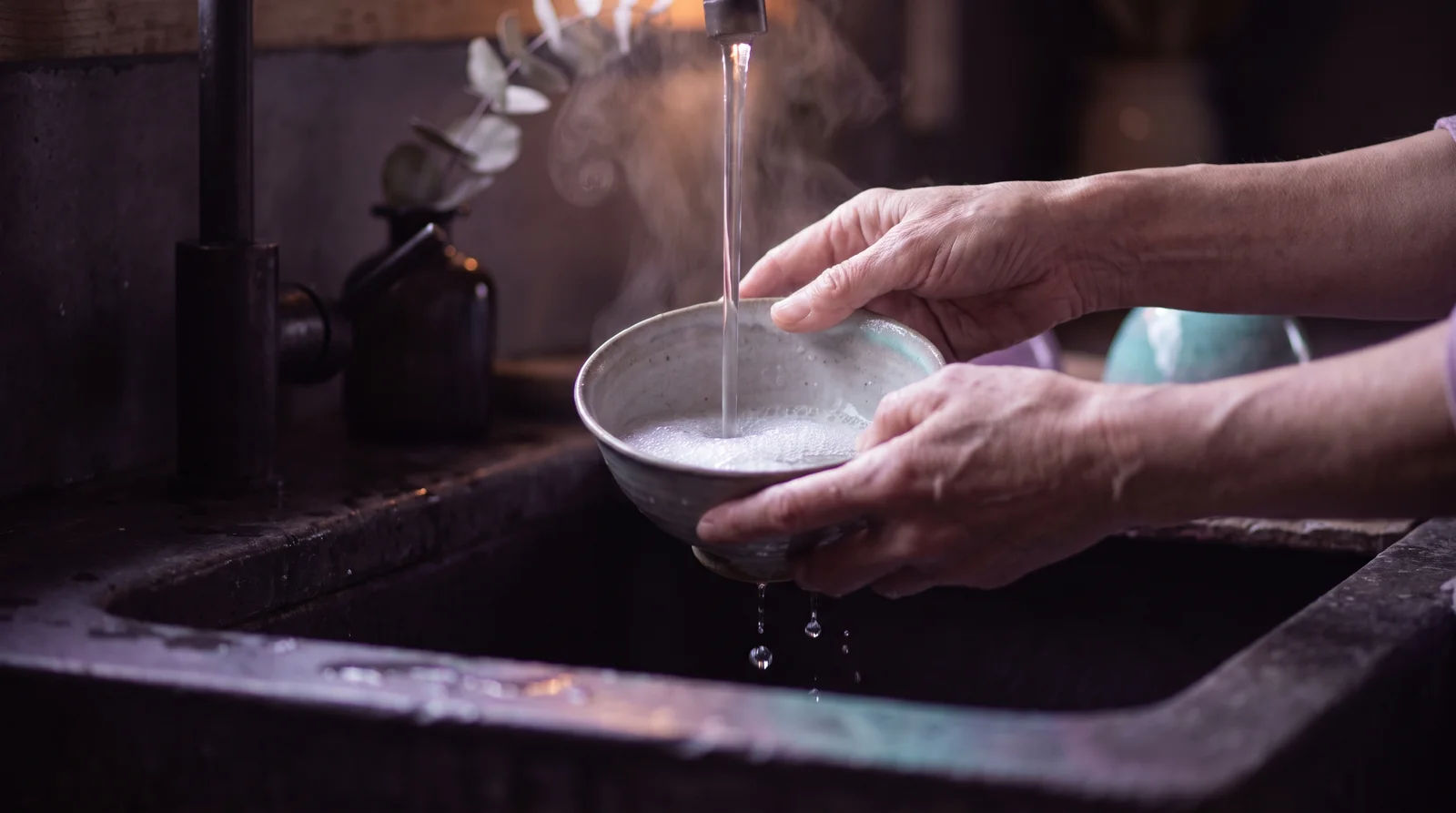
My grandmother did not allow a dishwasher in her Shanghai kitchen, and she did not really allow helpers either. After dinner she would run the water until it steamed, roll her sleeves to the elbow, and wash each bowl as if it were the only bowl in the world. We thought she was being stubborn. It took me twenty years to understand that she was being something else: quiet. The sink was the one place where no one asked her anything, where her hands knew every move without her, and where the day's noise dissolved into warm water along with the last of the rice. She was not doing chores. She was practicing.
A chore with a secret
Most of us treat dishwashing as a tax on dinner, something to rush through or outsource to a machine. But the chore has a secret: it contains nearly everything a formal meditation contains. There is warm water on the skin. There is scent, of soap and of the meal just finished. There is repetition, the same circling wipe, bowl after bowl. There is a clear beginning, a pile, and a clear end, an empty basin, which is more than most tasks in modern life can offer. The only missing ingredient is attention, and attention is the one thing we can add for free.
Researchers have tested this directly. In a study at Florida State University, students were asked to wash dishes after reading either a simple descriptive passage or a short mindfulness passage inviting them to attend fully to the water, the smell of the soap and the sensations of the task. Those who washed mindfully reported a meaningful drop in nervousness and a rise in feelings of inspiration afterward, while the ordinary washers felt no such shift (Hanley et al., 2015, Mindfulness). Same sink, same dishes, same few minutes. The difference was entirely in where the mind was placed.
I find this result easy to believe, because dishwashing is one of the last strongholds of single-tasking. You cannot scroll with wet hands. You cannot type. For ten minutes the modern world simply cannot reach you, and the mind, offered no second task, slowly stops auditioning for one. In a day spent split between screens, that alone is worth the pruned fingertips.
Why warm water and slow hands work
The sink is kind to a busy mind for reasons a meditation cushion sometimes is not. The task gives the hands a real job, so attention has somewhere honest to rest instead of being told to hover on nothing. The water is warm, and warmth on the hands and wrists is one of the body's oldest signals that it is safe to soften. The movements are rhythmic and already known, the way kneading dough or pouring tea is known, so the body can lead and the thinking mind can finally follow. And the task ends. A finished rack of clean dishes is proof, visible and dripping, that something in the day was completed, which is its own quiet medicine on days when nothing else seems to finish.
She was not doing chores. She was practicing.
How to wash the dishes to wash the dishes
The title of the Florida State paper borrows a teaching often shared in mindfulness traditions: wash the dishes to wash the dishes, not to have them done. That is the whole instruction, but if you would like it unfolded, here is how I do it, more or less as my grandmother did without ever naming it:
- Run the water warm and notice the moment it first meets your hands. This is the threshold. Let it mark the end of the day's rushing.
- Wash one dish at a time, and only that dish. Feel its weight, its curve, the change from greasy to smooth under your fingers.
- Let the sounds be the soundtrack: water running, the soft knock of ceramic, the small fizz of foam. If the kitchen is loud, these sounds are still there underneath.
- When your mind drifts to tomorrow, come back to the bowl in your hands. The next dish is always waiting to receive your attention again.
- At the end, drain the basin slowly and watch it empty. Dry your hands as carefully as you washed. The practice ends when your hands are dry.
Ten minutes is typical for a family dinner's worth of dishes. That is longer than most beginners manage on a cushion, and it happens every single day without your calendar's permission.
The last bowl
I still wash my bowls by hand, even the nights a machine sits right there. Some evenings, after the rack is full, I keep the ritual going a little longer: I make tea, or I let one of Feelsy's slow textures drift on the counter while the 4-7-8 breathing exercise settles my breath to the pace my hands just taught it. But the heart of the practice stays at the sink. Warm water, one bowl, slow hands, and the day rinsing away with the foam. My grandmother never once used the word meditation. She just left every kitchen calmer than she found it, and now I know that was not a coincidence.
Feelsy is a wellness product, not medical advice. If stress, anxiety or sleep problems persist, please speak with a qualified professional.
References
- Hanley, A. W., Warner, A. R., Dehili, V. M., Canto, A. I., & Garland, E. L. (2015). Washing dishes to wash the dishes: Brief instruction in an informal mindfulness practice. Mindfulness, 6(5), 1095–1103.
Frequently Asked Questions
Can washing dishes really reduce stress?
Yes, when it is done with full attention. In a Florida State University study, students who washed dishes after reading a short mindfulness passage, attending to the warm water, the smell of the soap and the sensations of the task, reported a meaningful drop in nervousness and a rise in feelings of inspiration. Students who washed the same dishes in the ordinary distracted way felt no such shift, so the benefit comes from where the mind is placed, not the chore itself.
How do I wash dishes mindfully?
Wash one dish at a time, and only that dish. Notice the moment warm water first meets your hands, feel each bowl's weight and curve, and let the sounds of water and ceramic be your soundtrack. When your mind drifts to tomorrow, return to the dish in your hands. At the end, drain the basin slowly and dry your hands as carefully as you washed; the practice ends when your hands are dry.
Why is dishwashing good for a busy mind?
The task gives your hands a real job, so attention has somewhere honest to rest instead of hovering on nothing. The warm water signals the body that it is safe to soften, the movements are rhythmic and already known, and the task visibly ends: a full rack of clean dishes is proof that something in the day was completed. Together these make the sink kinder to a restless mind than an empty cushion often is.
How long should a dishwashing meditation take?
About as long as the dishes take. Ten minutes is typical for a family dinner's worth, which is longer than most beginners manage in seated meditation, and it recurs every day without needing space in your calendar. There is nothing to add except attention: begin when the warm water meets your hands and finish when your hands are dry.

About the author
Contributing writer
Mei grew up in Shanghai around tea that could not be hurried and grandmothers who considered stillness a skill. She writes about slow hands and sensory ritual: tea, calligraphy, qigong, and the quiet crafts that taught the world how to pay attention.
Feel it for yourself.
Feelsy turns reading about calm into practising it. Two minutes of a slow texture is often the whole difference.


Related reading
 Breath & Body
Kneading Dough: Why Baking Bread Quiets the Mind
Baking as therapy is real: kneading dough gives restless hands rhythm, warmth and patience. Why bread calms the mind, plus a simple kneading meditation.
 Ancient Wisdom
Tea Meditation: The Slow Ritual of Gongfu Cha
How to turn tea into meditation: the Chinese gongfu tea ritual, why warm slow ritual calms the nervous system, and a ten-minute practice for any mug.
 Ancient Wisdom
Why Chinese Grandmothers Prescribe Hot Water for Everything
In China, plain hot water is comfort, care and daily ritual in a single cup. The story of he re shui, thermos culture, and what a warm slow sip can teach.
 Breath & BodyNew
Do Cold Showers Actually Work? A Skeptic Reads the Evidence
Cold showers are pitched as a cure for everything from low energy to weak character. Here's what the actual research says, and how to try one without the cult.
 Breath & BodyNew
Dopamine Detox: What It Gets Right and What It Gets Wrong
Dopamine detox promises a factory reset for your distracted brain. Here's what the neuroscience actually says, what helps, and what's just rebranded boredom.
 Breath & Body
How to Stop Overthinking: Quieting a Mind That Will Not Move On
Why overthinking loops and how to interrupt it: what rumination research shows, why you cannot argue with a spiral, and gentler ways to change the channel.