What Are Chakras? An Honest Guide to the Body's Oldest Map
Where the seven chakras actually come from, what the ancient texts meant by them, and how to use the system as a gentle map for meditation today.
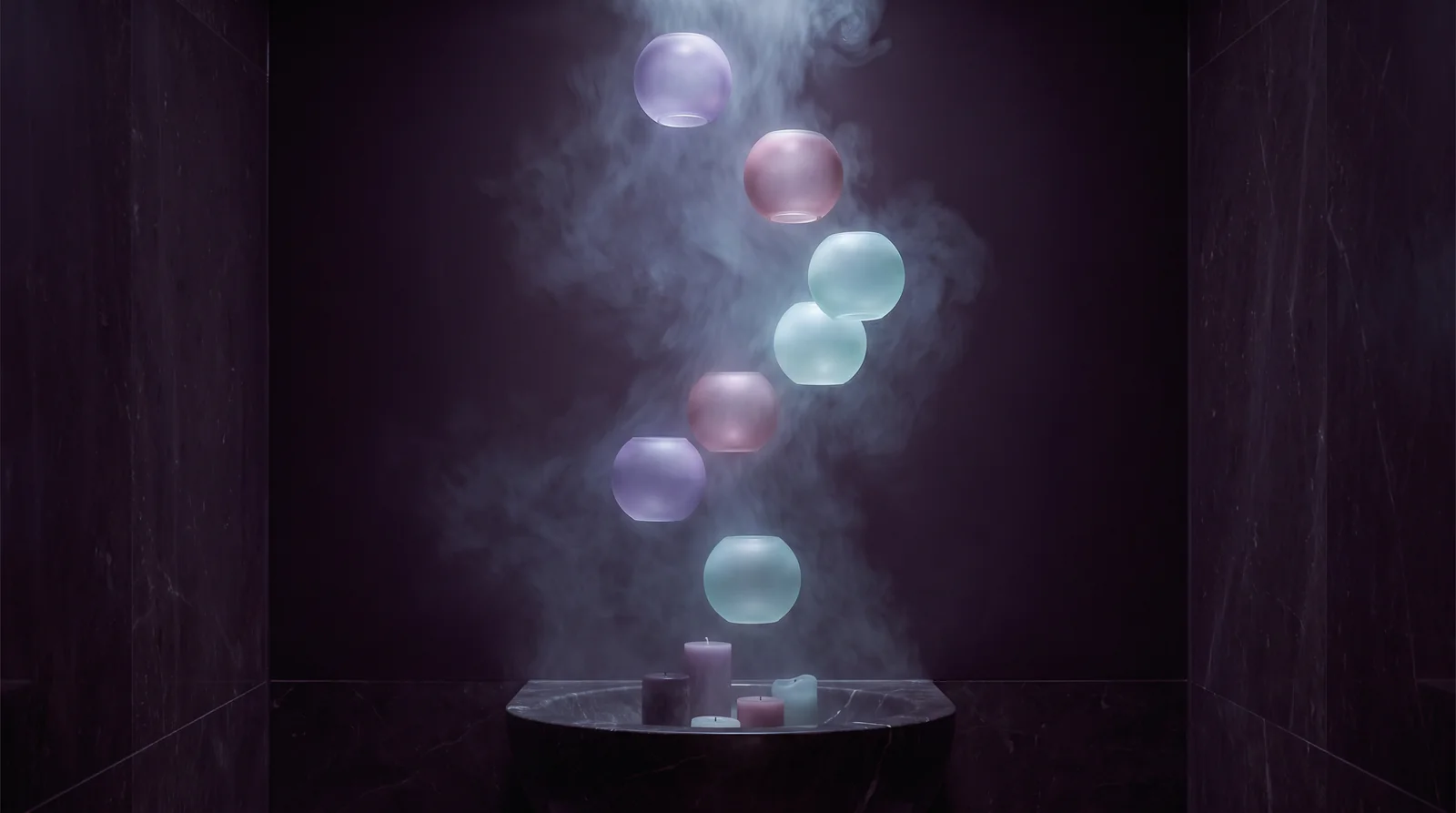
There is a poster on the wall of nearly every yoga studio in the world: a seated figure, spine straight, with seven coloured discs stacked from the base of the spine to the crown of the head, red at the bottom, violet at the top, a tidy rainbow of the soul. It is one of the most recognisable images in modern wellness, and almost everything interesting about it is missing from the poster. The real history of the chakras is older, stranger and far more beautiful than the laminated version.
This is a guide for the curious and the gently sceptical alike: where the chakras actually come from, what the old texts meant by them, and how to use the system today as what it always was at its best, a superbly designed map for meditation.
A wheel, not an organ
The word chakra is Sanskrit, and it means wheel, or circle. In the yogic traditions that developed the idea, chakras are centres arranged along the body's central axis, from the base of the spine to the crown, places where attention, breath and sound could be gathered and held. They belong to what scholars call the subtle body: a felt, imagined anatomy that practitioners worked with in meditation. You will not find chakras in an anatomy textbook, and it is worth saying plainly that the people who first described them were not looking for them there. The subtle body was never meant to be the sort of thing a surgeon could point to. It was the sort of thing a meditator could inhabit.
What the old texts actually say
Chakra systems emerged within the tantric traditions of medieval India, roughly a thousand years ago and more, and the first surprise is that there was never just one. Different lineages taught different maps. Some texts describe five centres, some six, some nine, some twelve or more. The seven-chakra scheme most of us know today is one system among many that later became the standard, a little like one dialect becoming the official language. Scholars who study these traditions describe the subtle body as sitting deliberately between mind and body, belonging fully to neither.
The second surprise matters even more for anyone who wants to practise. The old texts are prescriptive, not descriptive. They do not say: here is a lotus at your heart, go and observe it. They say: build one. Install it, petal by petal, with visualisation, with a seed syllable to recite, with a deity or an element to hold in mind at each station. The question so often asked today, do chakras exist, would have puzzled the original authors. One did not find chakras. One made them, the way a musician makes a scale real by playing it.
The chakras were never a diagram to believe in. They were a practice to do.
How the rainbow arrived
The West met the chakras largely through a single book: The Serpent Power, published in 1919 by Arthur Avalon, the pen name of the British judge Sir John Woodroffe, who translated a sixteenth-century Sanskrit text describing six centres and the crown above them. From there the system spread into Western yoga, psychology and popular culture, picking up new layers as it travelled. The tidy mapping of one rainbow colour per chakra is a twentieth-century Western addition, and it would have surprised the medieval authors, whose lotuses came in crimson and smoke, gold and the white of the full moon. The familiar modern associations, this chakra governs confidence, that one governs love, are likewise mostly recent arrivals. None of this makes the modern rainbow wrong, exactly. It makes it one more layer in a very long conversation, and it frees you to use the map lightly rather than anxiously.
Why the map still works
Strip away the metaphysics and something genuinely useful remains. Placing attention inside the body is one of the oldest and steadiest anchors in meditation; it gives a wandering mind somewhere warm to stand. What the chakra system adds is structure. Instead of one vague instruction, feel your body, you are given a sequence of stations and a direction of travel, base to crown, like a slow walk up a familiar staircase. Each station is a fresh beginning, which is a quiet mercy for anyone whose attention drifts. In that sense the chakras are less a theory of anatomy than a curriculum for attention, and a very well tested one.
A gentle chakra meditation for beginners
Here is a simple, honest version of the practice. It asks for ten minutes and no beliefs at all.
- Sit comfortably with a long spine and let the breath slow. A few rounds of 4-7-8 breathing settle things nicely, and the guided 4-7-8 exercise in Feelsy makes an easy front door if counting on your own feels fiddly.
- Rest your attention at the base of the spine. Do not search for anything. Simply feel what is there: contact, weight, perhaps warmth.
- Move upward in stages, lower belly, navel, heart, throat, brow, crown, giving each station three or four slow breaths before travelling on.
- If a colour or a soft glow arises at any point, welcome it. If nothing arises, the felt sense of warmth and weight is the practice itself, not a lesser version of it.
- At the crown, let attention widen to the whole body and sit quietly for a minute before opening your eyes.
A map, not a medical claim
It is worth being clear, because the modern marketplace is not: no instrument has ever measured a chakra, and no scan will find one. If someone offers to photograph yours, keep your money. But a map does not need to be an anatomy to be true to the territory of practice. The chakra system endures because it does something: it slows the breath, gathers the attention, and walks it through the body with unusual grace. That is a contemplative technology, refined across centuries, and it costs nothing to try.
And if seated visualisation is simply not your temperament, the same principle works with open eyes: resting the gaze on slow colour and light until the mind settles around it. That is the quiet idea behind Feelsy's drifting textures, lavender and rose moving at the pace of a calm breath, a subtle body you can actually see. The old teachers built their lotuses from imagination. You are allowed to borrow a screen.
Feelsy is a wellness product, not medical advice. If stress, anxiety or sleep problems persist, please speak with a qualified professional.
References
- Samuel, G., & Johnston, J. (Eds.) (2013). Religion and the Subtle Body in Asia and the West: Between Mind and Body. Routledge.
Frequently Asked Questions
What are chakras in simple terms?
Chakras are centres along the body's central axis, from the base of the spine to the crown, used in Indian tantric meditation as places to gather attention, breath and sound. The word is Sanskrit for wheel. They belong to the subtle body, a felt and imagined anatomy for practice, rather than to physical anatomy, so they are best understood as a map for meditation rather than organs.
How many chakras are there?
It depends on the tradition. Medieval Indian texts taught many different systems, with five, six, nine, twelve or more centres. The seven-chakra scheme familiar today spread widely after a 1919 English translation called The Serpent Power, which described six centres plus the crown. Seven is a convention that became standard, not a fixed fact of anatomy.
Are chakras scientifically real?
No instrument has ever measured a chakra, and the original texts never claimed they could be found by dissection; they treated chakras as something a meditator builds through visualisation and breath. What is real is the effect of the practice itself: slow breathing and attention moved gently through the body are genuinely calming, whatever map you use to guide them.
How do I do a chakra meditation as a beginner?
Sit with a long spine, slow the breath with a few rounds of 4-7-8 breathing, and rest attention at the base of the spine. Then move upward in stages, belly, navel, heart, throat, brow and crown, spending three or four slow breaths at each. If colours arise, welcome them; if not, simply feeling warmth and weight at each station is the full practice.
Do you have to visualise colours for chakra meditation to work?
No. The rainbow colour scheme is a twentieth-century Western addition, and the older practice was about placing attention, breath and sound at each centre. If images do not come easily, the felt sense of contact, warmth and weight at each station works just as well, and resting your eyes on slow-moving colour on a screen or a candle flame is an equally valid open-eyed route.

About the author
Contributing writer
Eleonor writes about contemplative traditions, attention and the cultural history of calm. She has spent two decades collecting the rituals humans use to slow down, from zazen halls to hammams, and translating them for modern, screen-lit lives.
Feel it for yourself.
Feelsy turns reading about calm into practising it. Two minutes of a slow texture is often the whole difference.


Related reading
 Ancient Wisdom
Mantra Meditation: Why Repeating One Word Quiets the Mind
What a mantra actually does to a busy mind: the science of repetition, how to choose a word, and a simple way to practise mantra meditation tonight.
 Breath & Body
Pranayama for Beginners: Ancient Breathing, Modern Calm
A gentle introduction to pranayama: what yogic breath control means, three beginner-friendly techniques to try tonight, and what slow-breathing research shows.
 Ancient Wisdom
Trataka: The Original Visual Meditation
Centuries before screens, yogis rested their gaze on a single candle flame. How trataka works, how to practise it safely, and what it teaches modern visual meditation.
 Ancient WisdomNew
Ataraxia: The Ancient Greek Art of an Untroubled Mind
Ataraxia is the ancient Greek word for an untroubled mind, prized by Epicureans, Stoics and Sceptics alike. Here is what it means and how they reached it.
 Ancient WisdomNew
Ma: The Japanese Art of Negative Space
Ma is the Japanese concept of negative space: the pause, the gap, the emptiness that gives everything else meaning. Here is how to invite more of it into a day.
 Ancient Wisdom
Negative Visualisation: The Stoic Habit of Imagining Loss
Negative visualisation, the Stoic practice of briefly imagining losing what you have, sounds grim but works as a gratitude exercise. Here is how to do it well.