Trataka: The Original Visual Meditation
Centuries before screens, yogis rested their gaze on a single candle flame. How trataka works, how to practise it safely, and what it teaches modern visual meditation.
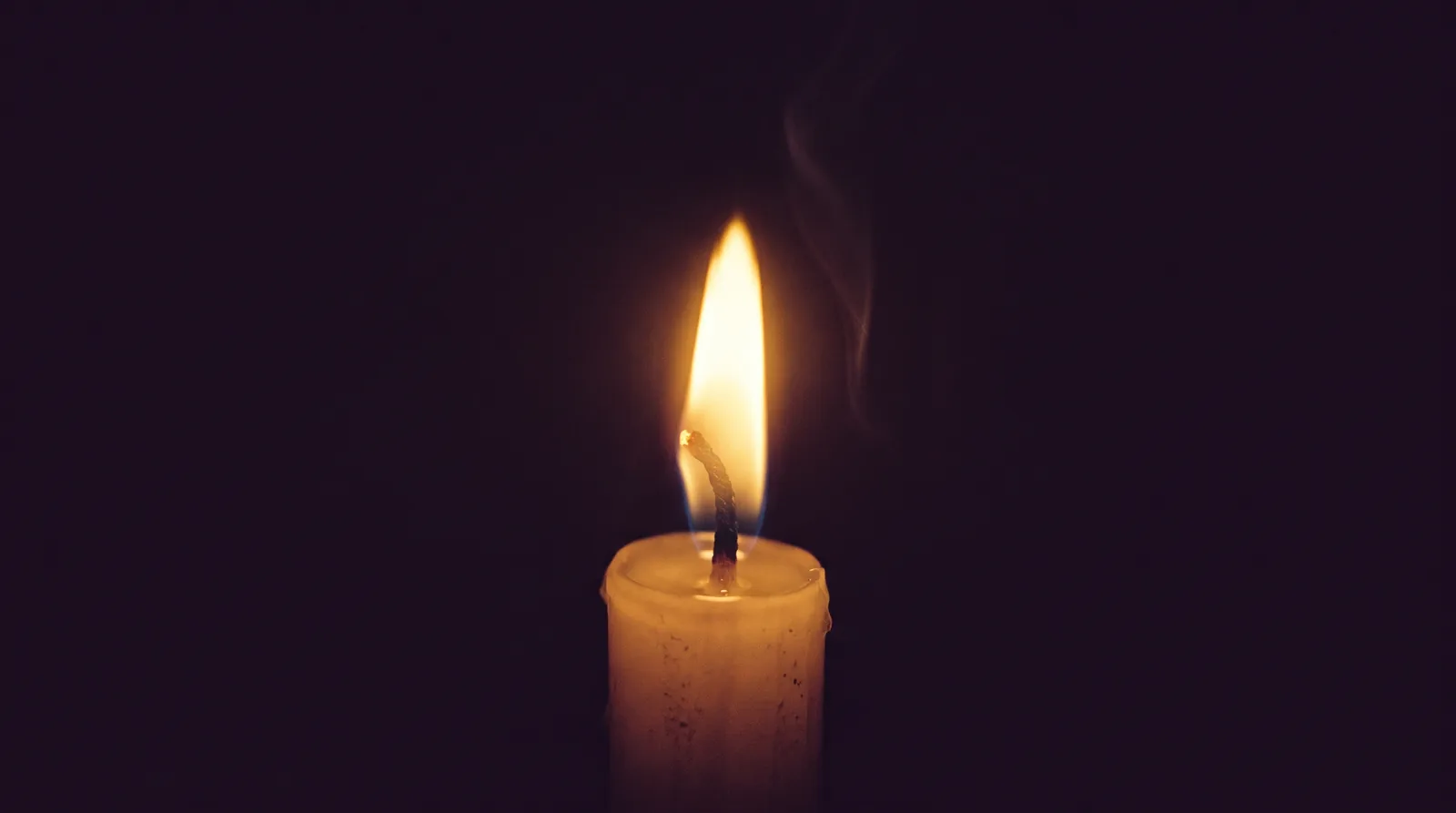
Every tradition that has thought seriously about attention has eventually arrived at the same discovery: the eye is a handle for the mind. Give the eye one steady thing to rest on, and the rest of the mind slowly gathers behind it. In the yogic tradition, that discovery has a name and a technique, and it is at least a thousand years old. It is called trataka, from the Sanskrit for to gaze.
Trataka is usually described in the Hatha Yoga Pradipika, a fifteenth-century manual, as one of the six purification practices. The instruction is disarmingly simple: sit comfortably in a dark room, place a candle at eye level about an arm's length away, and look at the flame. Not at the room, not at your thoughts about the flame. At the flame. You keep your gaze soft and steady, blinking as little as is comfortable, until the eyes water. Then you close them and watch the afterimage of the flame float in the darkness behind your eyelids until it fades.
Why a single point works
Modern attention research gives us a vocabulary for what the yogis found by experiment. The mind wanders by default; holding attention on nothing is close to impossible for most people. But holding attention on something, a single, gently interesting object, is a skill that improves with practice. The flame is close to a perfect object. It is bright enough to hold the eye, alive enough to stay interesting, and simple enough that it asks nothing of you. It flickers, but slowly. It changes, but never surprises.
This is the same design brief that shows up everywhere in this journal: soft fascination, an object that occupies attention without demanding it. A candle flame may be the oldest piece of calm technology in continuous use.
The two halves of the practice
Trataka has an outer half and an inner half. The outer half is the gazing itself, open eyes on the flame. The inner half begins when the eyes close: you keep your attention on the afterimage, the ghost of the flame that hangs in your visual field. As the afterimage drifts and fades, you follow it, and when it is gone you rest in the dark. Practitioners describe this second half as the deeper one. The flame trains the gaze; the afterimage trains the mind to hold something with no external help at all.
The eye is a handle for the mind. Trataka is a thousand years of knowing it.
How to try it
- Sit in a dim or dark room with a lit candle roughly an arm's length away, flame at eye level.
- Settle your breath for a minute before you begin. Let your face be soft.
- Gaze at the flame with relaxed eyes for one to three minutes. Blink when you need to. This is not an endurance contest.
- When the eyes water or tire, close them. Watch the afterimage until it fades completely.
- Repeat once or twice if you like, then sit quietly for a minute before getting up.
Two sensible cautions. First, keep sessions short at the beginning; a few minutes is plenty, and straining the eyes is a sign to stop, not push through. Second, if you have an eye condition, wear contact lenses that dry easily, or experience light sensitivity or seizures, check with a professional before practising, or simply choose a different anchor. The tradition itself offers alternatives: a dark circle on a wall, a bowl of water, the moon.
From flame to screen
It is fashionable to treat screens and meditation as opposites, and usually the instinct is right; most of what a phone shows you is engineered to fragment attention, not gather it. But the lesson of trataka is that the object matters more than the medium. A single moving point of light, watched softly in a dark room, has been a doorway to stillness for centuries. When Feelsy's meditation loops put a slow flame or a drifting texture on your screen in a dark bedroom, they are not inventing anything. They are translating the oldest visual meditation there is into the object you already carry.
Feelsy is a wellness product, not medical advice. If stress, anxiety or sleep problems persist, please speak with a qualified professional.
References
- Hatha Yoga Pradipika, trans. Brian Dana Akers (2002). YogaVidya.com.
Frequently Asked Questions
What is trataka?
Trataka is a yogic gazing technique, from the Sanskrit word for to gaze, described in the fifteenth-century Hatha Yoga Pradipika as one of six purification practices. It involves sitting in a dark room and looking steadily at a candle flame at eye level about an arm's length away until the eyes water, then closing them to watch the afterimage float and fade in the darkness.
Why does staring at a candle flame calm the mind?
The mind wanders by default and holding attention on nothing is close to impossible, but holding attention on a single, gently interesting object is a skill that improves with practice. A candle flame is close to a perfect object because it is bright enough to hold the eye, alive enough to stay interesting, and simple enough to ask nothing of you, flickering slowly but never surprising.
What are the two halves of the trataka practice?
The outer half is the gazing itself with open eyes on the flame, and the inner half begins when the eyes close and attention shifts to the afterimage, the ghost of the flame hanging in your visual field, which you follow as it drifts and fades before resting in the dark. Practitioners describe the inner half as the deeper one, since it trains the mind to hold something with no external help at all.
How do I practise trataka safely?
Sit in a dim or dark room with a candle at eye level an arm's length away, settle your breath, then gaze softly at the flame for one to three minutes without straining, closing your eyes when they water or tire and watching the afterimage until it fades. Keep sessions short at first, and if you have an eye condition, dry-eye-prone contact lenses, light sensitivity, or seizures, check with a professional first or use an alternative anchor like a dark circle on a wall or a bowl of water.
How does trataka relate to Feelsy's meditation loops?
The lesson of trataka is that the object matters more than the medium, since a single moving point of light watched softly in a dark room has been a doorway to stillness for centuries. Feelsy's slow flames or drifting textures on a screen in a dark bedroom are described as translating that same oldest visual meditation into the object you already carry.

About the author
Contributing writer
Eleonor writes about contemplative traditions, attention and the cultural history of calm. She has spent two decades collecting the rituals humans use to slow down, from zazen halls to hammams, and translating them for modern, screen-lit lives.
Feel it for yourself.
Feelsy turns reading about calm into practising it. Two minutes of a slow texture is often the whole difference.


Related reading
 Ancient Wisdom
Ancient Practices for Modern Calm: A World Tour
Humans have engineered calm for thousands of years. A tour through Zen, pranayama, hammam culture, forest bathing and the ancestors of visual meditation.
 Visual Meditation
What Is Visual Meditation? The Complete Guide
Visual meditation rests your attention on slow, pleasing motion so calm happens almost on its own. Here is how it works, what the research says, and how to practise it in three minutes.
 Visual Meditation
Meditation for People Who Can't Meditate
If sitting still with your eyes closed feels impossible, you are not broken. Here is a gentler on-ramp built around senses, movement and very small doses.
 Ancient Wisdom
Döstädning: The Gentle Swedish Art of Death Cleaning
What Swedish death cleaning really means: the calm philosophy of döstädning, how it differs from ordinary decluttering, and how to begin at any age.
 Ancient Wisdom
How to Start a Gratitude Journal You Will Actually Keep
How to start a gratitude journal that actually helps: what the research found, why most lists go stale, and the very old art of counting blessings.
 Ancient Wisdom
Haiku as Meditation: Seventeen Syllables of Attention
How writing haiku trains attention: why the tiny form works like meditation, what noticing small moments does for wellbeing, and how to write your first.