What Is 8D Audio? The Science Behind the Spinning Sound
8D audio pans music around your head using binaural tricks. Here's how the illusion works, why it feels immersive, and whether it helps you relax or focus.
By Kurt Woleret
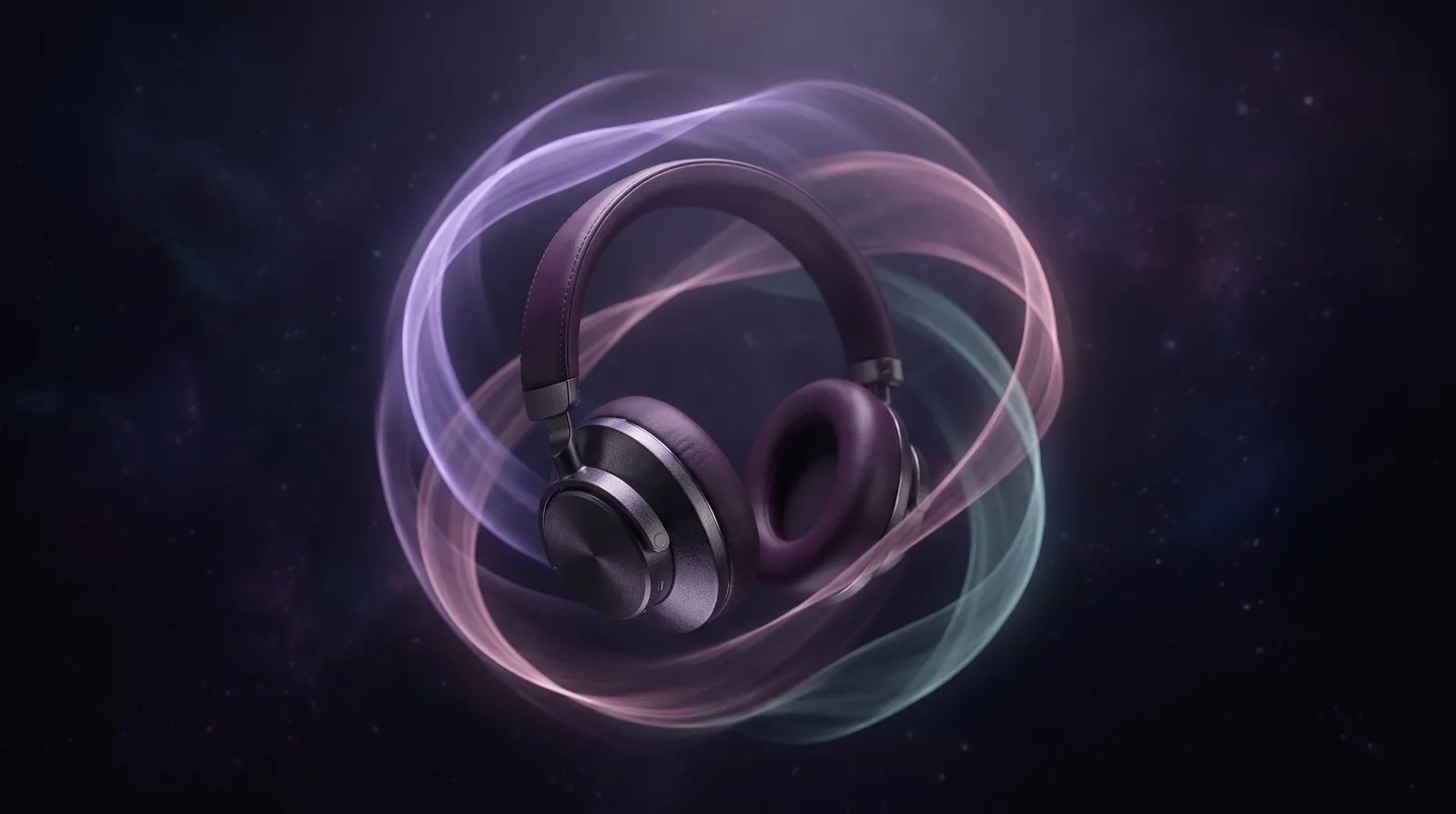
The first time I played an 8D audio track, on headphones, on a crowded F train, I turned around to see who was singing behind me. Nobody was singing behind me. It was the track, doing a slow lap around my skull while a man across the aisle ate a sandwich. That's the whole pitch of 8D audio: music that seems to orbit you, swooping from ear to ear and somehow passing through the space behind your head. The comments sections call it a religious experience. Let's talk about what it actually is.
There are no extra dimensions. Sorry.
Start with the name, which is marketing, not math. There's no eighth dimension of sound, no secret audio physics unlocked by YouTube producers. Regular stereo has two channels, left and right. What gets labeled 8D is a standard stereo track processed with spatial audio effects: the sound source is panned in a slow circle, reverb is added to fake a sense of room, and filtering mimics the way sounds change as they move around your head. Play it on speakers and the magic mostly collapses. On headphones, your brain fills in the rest.
The 'rest' is the interesting part. Your brain locates sound using tiny differences between your ears: a sound on your left arrives at the left ear a fraction of a millisecond sooner, slightly louder, with the treble less muffled by your own head. Your outer ears add their own subtle coloration depending on whether a sound comes from ahead, behind or above. Audio engineers can measure and imitate those cues, and when a track feeds each ear the right differences, your brain concludes, reasonably but wrongly, that the sound is out there in the room, circling you like a polite ghost.
8D audio isn't new physics. It's your brain's GPS for sound, getting fed a fake itinerary it happily believes.
Why it feels so immersive
Movement is the trick's secret weapon. A static fake location is easy for your brain to shrug off. A moving one keeps your auditory system actively tracking, updating position estimates several times a second, and that tracking is absorbing in a way ordinary stereo isn't. It gives your attention a slow-moving object to follow, which is why so many people describe 8D audio with the same words this site uses for lava lamps and drifting particles: hypnotic, enveloping, weirdly calming. It's soft fascination for your ears.
Fans also report chills, tingles and full-body waves, and the comment sections overlap heavily with ASMR territory. Plausible, but here's where I put my skeptic hat back on: the tingles themselves have only been studied properly in the ASMR context. Research on ASMR videos found that people who experience the response show reliable physiological changes while watching, including reduced heart rate alongside increased skin conductance, that pleasant-but-activated combination (Poerio et al., 2018, PLOS ONE). Whether an orbiting Billie Eilish vocal produces the same physiology, nobody has measured. The honest answer on 8D specifically is: immersive illusion, well understood; relaxation claims, plausible and untested.
Does it help you relax or focus?
Anecdotally, plenty of people study, unwind and fall asleep to 8D tracks, and there's a reasonable mechanism: an engaging, predictable, slowly moving stimulus can crowd out mental chatter, the same job a fish tank or a rain loop does. Personally I find it better for zoning out than locking in; when I'm writing, a vocal doing laps around my head is a carousel I didn't order. For focus I do better with steadier textures, brown noise or a coffee-shop murmur. For decompressing flat on my back with my eyes closed after a deadline week, the orbiting stuff earns its keep.
A few practical notes if you want to try it:
- Headphones are mandatory. The illusion is built from ear-to-ear differences, so speakers turn it back into ordinary stereo with too much reverb.
- Keep the volume moderate. The swooping makes loudness spikes easy to underestimate, and your ears don't grade on a curve.
- If it makes you queasy, that's real; a small minority find moving audio disorienting, the motion-sickness of the ear. Skip it, nothing is wrong with you.
- Pair it with something visual if your mind still wanders. Sound circling you plus a slow texture to watch gives restless attention two gentle anchors instead of one.
That last combination is basically the Feelsy recipe: slow sound in your ears, slow motion in your eyes, nothing demanding a decision. Put an 8D track under a folding slime texture or a drifting particle field and you've built a two-channel wind-down out of parts your nervous system actually responds to.
The verdict
8D audio is a clever, well-understood illusion with a dumb name, and I mean that affectionately. It won't rewire your brain, and the more breathless claims about healing frequencies can stay in the comments. But as a free, low-effort way to make your attention sit still for twenty minutes, it's legitimate. Your brain's sound-location system evolved to track predators and taxis. Letting it track a slow, harmless orbit instead turns out to be oddly restful. Just maybe don't spin around on the F train looking for the singer. People will talk.
Feelsy is a wellness product, not medical advice. If stress, anxiety or sleep problems persist, please speak with a qualified professional.
References
- Poerio, G. L., Blakey, E., Hostler, T. J., & Veltri, T. (2018). More than a feeling: Autonomous sensory meridian response (ASMR) is characterized by reliable changes in affect and physiology. PLOS ONE, 13(6), e0196645.
Frequently Asked Questions
What is 8D audio?
8D audio is regular stereo music processed with spatial effects so the sound seems to orbit slowly around your head. Producers pan the track in a circle, add reverb to fake a sense of space, and filter the sound to mimic how audio changes as it moves around you. The '8D' name is marketing; there are no extra dimensions involved, just a well-crafted illusion your brain completes.
Why does 8D audio only work with headphones?
Because the illusion is built from tiny differences between what your left and right ears hear: timing, loudness and tone. Headphones deliver each ear its own precisely controlled signal, which lets those fake location cues work. Played on speakers, the two channels mix in the air before reaching your ears, and the effect collapses into ordinary stereo with extra reverb.
Is 8D audio good for relaxation or sleep?
Many people find it calming, and the mechanism is plausible: a slow, predictable, moving sound gives your attention something gentle to track, which can crowd out mental chatter the way watching a fish tank does. But the relaxation claims haven't been directly studied, so treat it as a pleasant tool rather than a proven therapy. If it works for you, that's the measurement that matters.
Is 8D audio the same as ASMR?
No, but they're neighbors. ASMR is a tingling, relaxing response some people get from soft triggers like whispering and tapping, and research has found reliable physiological changes, including reduced heart rate, in people watching ASMR videos. 8D audio is a spatial illusion applied to music. Both use headphones and both can feel immersive and calming, but the tingle response to 8D tracks specifically hasn't been measured.
Can 8D audio be harmful?
For most people it's as safe as any music, with the usual caveat about volume: the swooping effect makes loudness easy to underestimate, so keep it moderate. A small minority find moving audio disorienting or slightly nauseating, a kind of motion sickness of the ear. If that's you, there's nothing wrong with you; just skip it and use steadier sounds instead.

About the author
Contributing writer
Kurt is a New York based writer covering the practical science of stress, sleep and focus. He is the resident sceptic of the Journal: if a technique cannot survive a crowded subway commute and a deadline week, he is not interested in it.
Feel it for yourself.
Feelsy turns reading about calm into practising it. Two minutes of a slow texture is often the whole difference.


Related reading
 ASMR
ASMRBinaural Beats: Do They Actually Work?
Binaural beats promise focus, calm, and better sleep through plain headphones. A skeptical look at what the research and meta-analyses actually found.
 ASMR
ASMRBinaural ASMR: Why Headphones Change Everything
Why ASMR feels flat from speakers and electric in headphones: how binaural recording works, what it does to your nervous system, and how to set it up right.
 ASMR
ASMRASMR, Explained: What Science Says About the Tingles
ASMR is more than a trend. Here is what the tingles are, who feels them, and what studies have measured about their effects on heart rate, mood and calm.
 ASMRNew
Why Is Bob Ross So Relaxing? The Science of Happy Little Brushstrokes
Bob Ross has been putting people to sleep for four decades, and he'd take that as a compliment. Here's the science of why his painting videos work like ASMR.
 ASMR
ASMRWhy Paint Mixing Videos Are So Satisfying
Why paint mixing videos feel so satisfying: the slow science of swirls and folds, what ASMR research suggests, and how to watch them as a mini meditation.
 ASMR
ASMRMisokinesia: Why Watching Someone Fidget Drives You Up the Wall
If a bouncing knee across the room hijacks your whole brain, you may have misokinesia. Here's the research on fidget sensitivity and what actually helps.