Why Do We Yawn? The Science of the World's Most Contagious Habit
Why do we yawn, and why is yawning contagious? The brain-cooling theory, the empathy link, and what your afternoon yawns are actually telling you.
By Kurt Woleret
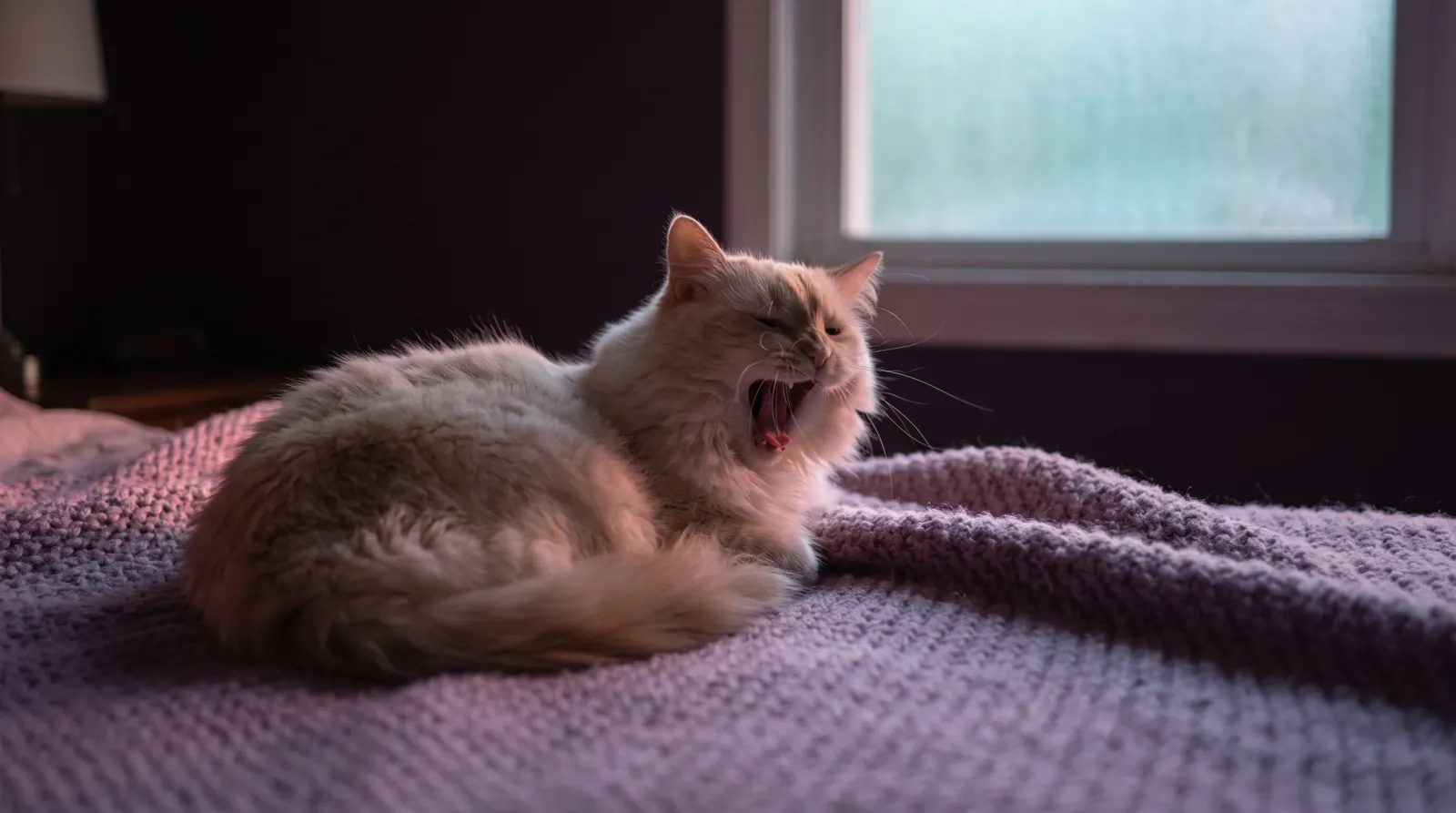
Here's a fun experiment you're already running. Somewhere in the next few minutes, purely from reading the word yawn a few times, there's a decent chance you'll yawn. It happens to people reading about yawning, thinking about yawning, and watching strangers yawn on the subway, which in my experience can take out half a car like dominoes. We yawn before we're born. We yawn when we're bored, when we're exhausted, and, weirdly, when we're anxious before something big. Paratroopers reportedly yawn before jumps. And for something this universal, the honest scientific answer to why is delightfully unsettled. Let's go through the theories, starting with the one you were taught that happens to be wrong.
No, it's not about oxygen
The classic explanation says you yawn to gulp extra oxygen when levels run low. It's tidy, it's intuitive, and the evidence walked away from it decades ago. In the experiments, breathing air with extra carbon dioxide didn't make people yawn more, and breathing pure oxygen didn't make them yawn less. Exercise, which genuinely spikes your oxygen demand, doesn't trigger yawning either. Whatever the yawn is doing, it isn't refueling. Which raises the obvious question: a huge jaw stretch, a deep slow inhale, watering eyes, and a brief moment where you're useless to everyone around you. What's all that machinery for?
The leading theory: you're air-conditioning your brain
The explanation with the best experimental support right now is thermoregulation: yawning cools the brain. The big inhale and the dramatic jaw stretch increase blood flow around the skull, and the incoming air cools that blood slightly, like opening a window in a stuffy room. Brains run hot when you're tired or bored, and they perform best in a narrow temperature band.
The predictions this theory makes have held up surprisingly well. If yawning cools the brain, you'd expect people to yawn more in mild warm conditions than in cold ones, and less when the outside air is hotter than the body, because pulling in hot air cools nothing. That's roughly what studies find: one line of research identified a thermal window for yawning, with contagious yawning rising in warm-but-not-hot ambient temperatures and dropping off in cold and extreme heat alike (Massen et al., 2014). It also fits the everyday pattern: you yawn most at the two thermal shoulders of the day, waking up and winding down, when your brain temperature is in transition. The yawn seems to be less about fuel and more about climate control.
A yawn isn't your brain running out of fuel. It's your brain adjusting the thermostat between one state and the next.
Why yawns spread like gossip
Now the strange part. Cooling explains the solo yawn. It doesn't explain why yours just triggered mine. Contagious yawning is its own phenomenon, and it appears to run on social wiring. A study in PLoS ONE tracked spontaneous yawning in everyday settings and found that yawn contagion wasn't random: it was strongest between family members, then friends, then acquaintances, with strangers at the back of the line (Norscia & Palagi, 2011). The closer the social bond, the more catchable the yawn. That gradient is why researchers connect contagious yawning to empathy, the low-level kind where nervous systems mirror each other without asking permission. You don't decide to catch a yawn from someone you love. Your body just files their state under relevant and copies it. Reading about yawning works the same way, which is why you're possibly mid-yawn right now. I'll wait.
What your yawns are actually telling you
So a yawn is mostly a transition marker. It shows up when your brain is shifting gears: sleep to waking, alert to drowsy, calm to keyed-up before the big meeting. That's useful information if you bother to read it. The 3 p.m. yawning fit isn't a moral failing or proof you need a fourth coffee. It's your brain marking the natural afternoon dip, and it responds better to a real break than to more stimulation. And the pre-presentation yawn doesn't mean you're bored by your own slides. It's your system trying to settle itself into the right gear, which is oddly reassuring once you know it.
You can also work with the machinery instead of against it. When the afternoon yawns arrive, take them as a scheduled maintenance alert: stand up, get water, look at something farther away than a screen for two minutes. When you're winding down at night, don't fight the yawning cascade with bright light and one more episode. That cascade is the off-ramp. I'll take mine with Feelsy running on the nightstand, slow textures and quiet sound giving my eyes somewhere soft to land between yawns, and a round of its 4-7-8 breathing exercise, which delivers the same deep, slow inhale a yawn does, just on purpose. Two or three cycles in, the yawns and the exhales start finishing each other's sentences.
The takeaway, before you yawn again
We yawn to regulate, not to refuel: the best-supported theory says a yawn cools a brain in transition, and the contagious version is your nervous system keeping time with the people around you. It's half thermostat, half handshake. Which means the next time someone yawns in your meeting, they're not necessarily bored. Their brain is just changing temperature. If the whole room follows, congratulations: at least the team has empathy.
Feelsy is a wellness product, not medical advice. If stress, anxiety or sleep problems persist, please speak with a qualified professional.
References
- Massen, J. J. M., Dusch, K., Eldakar, O. T., & Gallup, A. C. (2014). A thermal window for yawning in humans: yawning as a brain cooling mechanism. Physiology & Behavior, 130, 145–148.
- Norscia, I., & Palagi, E. (2011). Yawn contagion and empathy in Homo sapiens. PLoS ONE, 6(12), e28472.
Frequently Asked Questions
Why do we yawn?
The theory with the best experimental support says yawning cools the brain: the deep inhale and big jaw stretch increase blood flow around the skull and let incoming air cool it slightly. Yawns cluster at transitions, like waking up, winding down, or shifting between alert and drowsy states, when brain temperature is changing.
Is yawning caused by a lack of oxygen?
No. In experiments, breathing extra carbon dioxide didn't increase yawning and breathing pure oxygen didn't reduce it, and exercise, which raises oxygen demand, doesn't trigger yawns either. The oxygen explanation is intuitive but the evidence abandoned it decades ago.
Why is yawning contagious?
Contagious yawning appears to run on social wiring. Research tracking real-world yawns found contagion was strongest between family members, then friends, then acquaintances, with strangers least affected. That bond gradient is why scientists link catching yawns to low-level empathy, where nervous systems mirror each other automatically.
Why do I yawn so much in the afternoon?
Afternoon yawning fits usually mark the natural dip in alertness most people hit mid-afternoon. It's a transition signal, not a failing, and it tends to respond better to a short real break, water, and a couple of minutes looking away from screens than to more caffeine or stimulation.
Does yawning mean I'm bored?
Not necessarily. Yawns mark state changes, so they show up with drowsiness, boredom, and even pre-performance nerves, which is why people yawn before big meetings or high-pressure moments. A yawn means your brain is shifting gears, not that the room has lost you.

About the author
Contributing writer
Kurt is a New York based writer covering the practical science of stress, sleep and focus. He is the resident sceptic of the Journal: if a technique cannot survive a crowded subway commute and a deadline week, he is not interested in it.
Feel it for yourself.
Feelsy turns reading about calm into practising it. Two minutes of a slow texture is often the whole difference.


Related reading
 Breath & Body
The Physiological Sigh: A 30-Second Breath That Actually Works
The physiological sigh is a double inhale and long exhale that calms you in under a minute. Here's the science behind it and exactly how to do it right.
 Breath & Body
The 3 P.M. Slump: Why Your Brain Clocks Out After Lunch
That mid-afternoon energy crash isn't your lunch, it's your circadian rhythm. Here's the science of the post-lunch dip and what actually gets you through it.
 Breath & Body
How to Stimulate Your Vagus Nerve (What's Real, What's Not)
The vagus nerve is the internet's favorite calm switch. Here's what it really does, what actually tones it, and which viral hacks are a waste of your time.
 Breath & BodyNew
Do Cold Showers Actually Work? A Skeptic Reads the Evidence
Cold showers are pitched as a cure for everything from low energy to weak character. Here's what the actual research says, and how to try one without the cult.
 Breath & BodyNew
Dopamine Detox: What It Gets Right and What It Gets Wrong
Dopamine detox promises a factory reset for your distracted brain. Here's what the neuroscience actually says, what helps, and what's just rebranded boredom.
 Breath & Body
How to Stop Overthinking: Quieting a Mind That Will Not Move On
Why overthinking loops and how to interrupt it: what rumination research shows, why you cannot argue with a spiral, and gentler ways to change the channel.