Why Slime Videos Are So Satisfying
There is a real reason your shoulders drop when you watch slime being folded and poked. A look at ASMR, soft fascination and the design of satisfying motion.
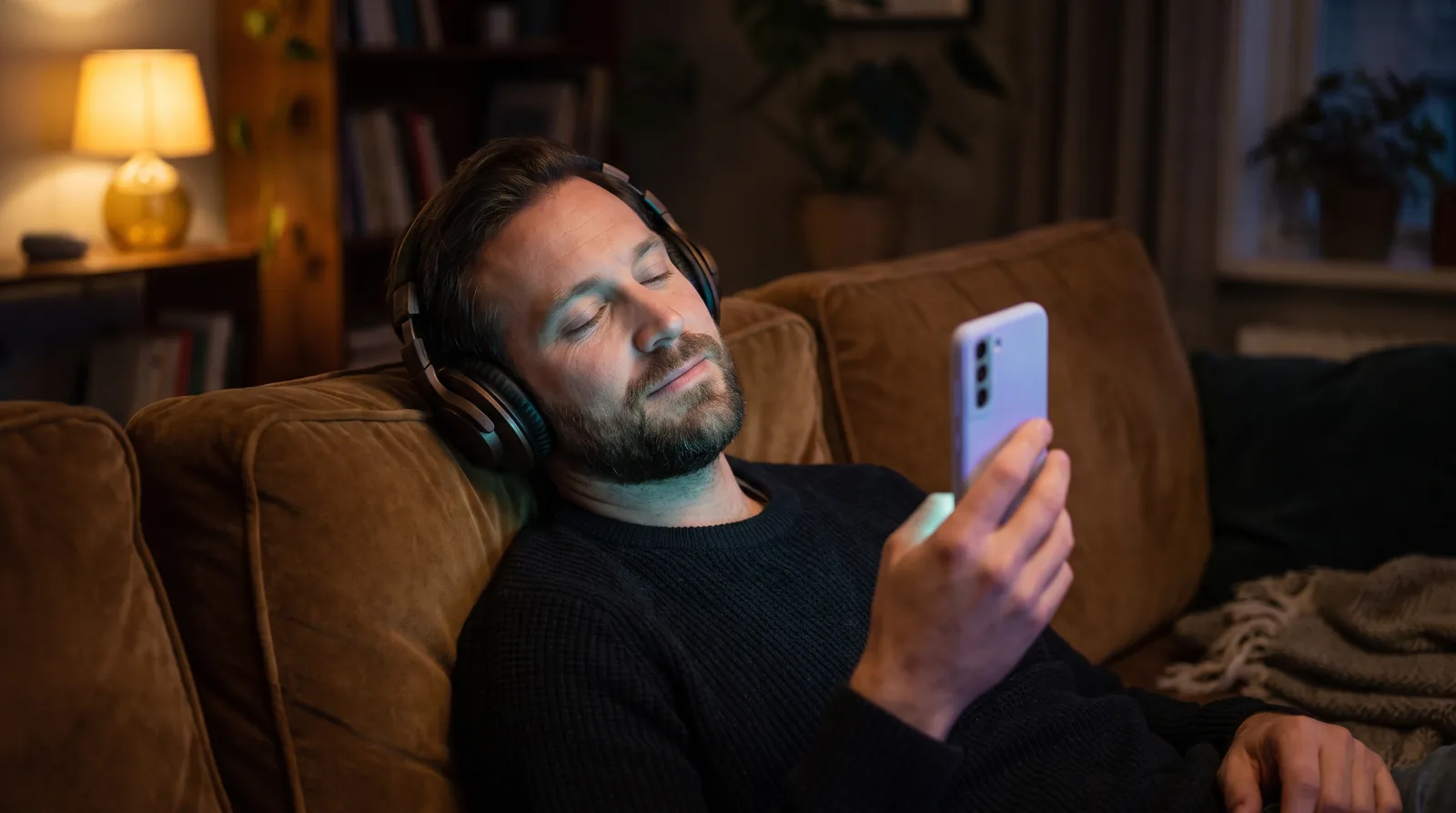
The first time you see someone fold a piece of glossy slime in half on a screen, one of two things happens. Either it does nothing for you, or your shoulders drop, your breath slows, and you find yourself watching for far longer than you meant to. Slime is one of the strangest quiet victories of the modern internet, and there are good reasons it works.
Slime is a multisensory trigger
Slime is unusual among ASMR content because it engages more than one channel at the same time. There is the visual: slow, folding, obedient. There is the audio: sticky pops, soft pulls, a low crinkle. And, when you have an app that lets you touch it, there is a tactile channel too. Multisensory content that all points in the same slow direction is significantly more effective at producing calm than any single channel alone.
For readers unfamiliar with the wider category, our guide on what ASMR is and what the science actually shows covers the mechanism in more depth. In brief, a substantial minority of people experience a tingling, calming response to specific soft audio and visual triggers, and this response has been measured as a real drop in heart rate (Poerio et al., 2018, PLOS ONE). Slime is one of the most reliably reported triggers in that literature.
The role of predictability
Slime is satisfying in part because it is predictable in exactly the right way. You know, more or less, what the next fold will look like. You know the pop is coming. But the exact shape and sound are just novel enough to keep your attention engaged. This is the sweet spot Attention Restoration Theory calls soft fascination (Kaplan, 1995, Journal of Environmental Psychology): stimuli complex enough to hold you, safe enough that you do not have to work at it.
Contrast this with a fast-cut social video, which is designed to spike your attention every couple of seconds so you keep scrolling. That kind of content is fascinating in a hard way. It tires you out. Slime does the opposite.
Slime is safe, slow, complex, and obedient. Almost nothing else on your phone is all four at once.
Motion your body reads as safe
Your nervous system is constantly making one background judgement: is this safe. Fast, sharp, unpredictable movement reads as potentially dangerous. Slow, smooth, continuous movement reads as safe. Slime, watched at a reasonable pace, sits firmly in the second category. So do folding fluids, drifting orbs, and slow ink swirls, which is why they often show up next to slime in the same libraries.
This is the same principle behind the calming effect of watching waves, clouds, or a slow fire. Slime is the tabletop version.
The mild sense of agency
Watching is calming. Touching is more calming still. Interactive slime, of the kind you get in a well-designed app, adds one more ingredient: agency without effort. Your finger presses. The slime responds. Nothing bad happens if you get it wrong. There is no goal, no score, no failure state. That combination is genuinely rare in modern digital experiences and is a large part of why interactive textures feel like play.
This is also why slime pairs so well with breath practice. If you gently press the surface on the inhale and release on the exhale, the motion of the slime becomes a metronome you can feel. For a natural pairing, try it alongside the 4-7-8 breathing technique.
Sound design does most of the heavy lifting
Watch a good slime video with the sound off. Then watch it again with headphones. The difference is not small. The sticky pull, the little pop, the low fabric-y crinkle: those are the sounds most likely to trigger tingles in ASMR-sensitive listeners. Producers know this and record slime on close, sensitive microphones for exactly that reason.
The audio side of the story is closely related to the calming effect of continuous background sound in general, which is worth reading about in our guide to white noise for sleep.
Why it is not just for kids
Slime looks like a toy, so it is easy to dismiss. That would be a mistake. Adults are the primary audience for slime videos on the internet, and the reason is not childhood nostalgia. It is that a slow multisensory loop is one of the cheapest, fastest, safest ways to lower a stressed nervous system for a few minutes. There is no medication involved, no time commitment, no learning curve. You just watch and, sometimes, touch.
How to use slime as a micro-practice
- Pick a two-minute window when you would otherwise scroll something noisy.
- Put on headphones if you can. Turn the phone brightness down.
- Watch a slime loop without doing anything else. Do not skip forward.
- For the last minute, if the app allows it, touch the texture and let your breath follow the motion.
- Notice how you feel before opening the next thing.
Do that a few times a day for a week and you will start to understand why the internet's most popular quiet corner is a place where slime never stops being folded.
Feelsy is a wellness product, not medical advice. If stress, anxiety or sleep problems persist, please speak with a qualified professional.
References
- Poerio, G. L., Blakey, E., Hostler, T. J., & Veltri, T. (2018). More than a feeling: Autonomous sensory meridian response (ASMR) is characterized by reliable changes in affect and physiology. PLOS ONE, 13(6), e0196645.
- Kaplan, S. (1995). The restorative benefits of nature: Toward an integrative framework. Journal of Environmental Psychology, 15(3), 169–182.
Frequently Asked Questions
Why are slime videos so satisfying to watch?
Slime engages more than one sense at once, offering slow, folding visuals, sticky pops and soft pulls as audio, and a tactile channel if you can touch it through an app. Multisensory content that all points in the same slow direction is significantly more effective at producing calm than any single channel alone.
What role does predictability play in why slime feels calming?
Slime is predictable in exactly the right way, you roughly know what the next fold or pop will be, but the exact shape and sound are novel enough to keep your attention engaged without demanding effort. This is the sweet spot Attention Restoration Theory calls soft fascination, in contrast to fast-cut social videos designed to spike attention and tire you out.
Why does slow, smooth motion feel relaxing to the nervous system?
Your nervous system is constantly judging whether something is safe, and fast, sharp, unpredictable movement reads as potentially dangerous while slow, smooth, continuous movement reads as safe. Slime, watched at a reasonable pace, sits firmly in the safe category, alongside folding fluids, drifting orbs and slow ink swirls.
Does touching interactive slime add to the calming effect?
Yes, watching is calming but touching is more calming still, because interactive slime in a well-designed app adds agency without effort, your finger presses, the slime responds, and there is no goal, score, or failure state. This mild sense of agency is genuinely rare in modern digital experiences and is part of why interactive textures feel like play.
Is slime content only for children?
No, adults are the primary audience for slime videos online, not because of childhood nostalgia but because a slow multisensory loop is one of the cheapest, fastest, safest ways to lower a stressed nervous system for a few minutes, with no medication, time commitment, or learning curve involved.

About the author
Contributing writer
Eleonor writes about contemplative traditions, attention and the cultural history of calm. She has spent two decades collecting the rituals humans use to slow down, from zazen halls to hammams, and translating them for modern, screen-lit lives.
Feel it for yourself.
Feelsy turns reading about calm into practising it. Two minutes of a slow texture is often the whole difference.


Related reading
 ASMR
ASMRASMR, Explained: What Science Says About the Tingles
ASMR is more than a trend. Here is what the tingles are, who feels them, and what studies have measured about their effects on heart rate, mood and calm.
 Visual Meditation
What Is Visual Meditation? The Complete Guide
Visual meditation rests your attention on slow, pleasing motion so calm happens almost on its own. Here is how it works, what the research says, and how to practise it in three minutes.
 Sleep
SleepWhite Noise for Sleep: What Works and What Does Not
White, pink and brown noise all promise better sleep. Here is what the evidence actually supports, how to choose, and how to set up sound for a quieter night.
 ASMRNew
Why Is Bob Ross So Relaxing? The Science of Happy Little Brushstrokes
Bob Ross has been putting people to sleep for four decades, and he'd take that as a compliment. Here's the science of why his painting videos work like ASMR.
 ASMRNew
What Is 8D Audio? The Science Behind the Spinning Sound
8D audio pans music around your head using binaural tricks. Here's how the illusion works, why it feels immersive, and whether it helps you relax or focus.
 ASMR
ASMRWhy Paint Mixing Videos Are So Satisfying
Why paint mixing videos feel so satisfying: the slow science of swirls and folds, what ASMR research suggests, and how to watch them as a mini meditation.