Why Stretching Feels So Good: The Science of the Morning Reach
That full-body morning stretch feels better than it has any right to. Here's what's happening in your muscles and nerves, and how to use it to calm down.
By Kurt Woleret
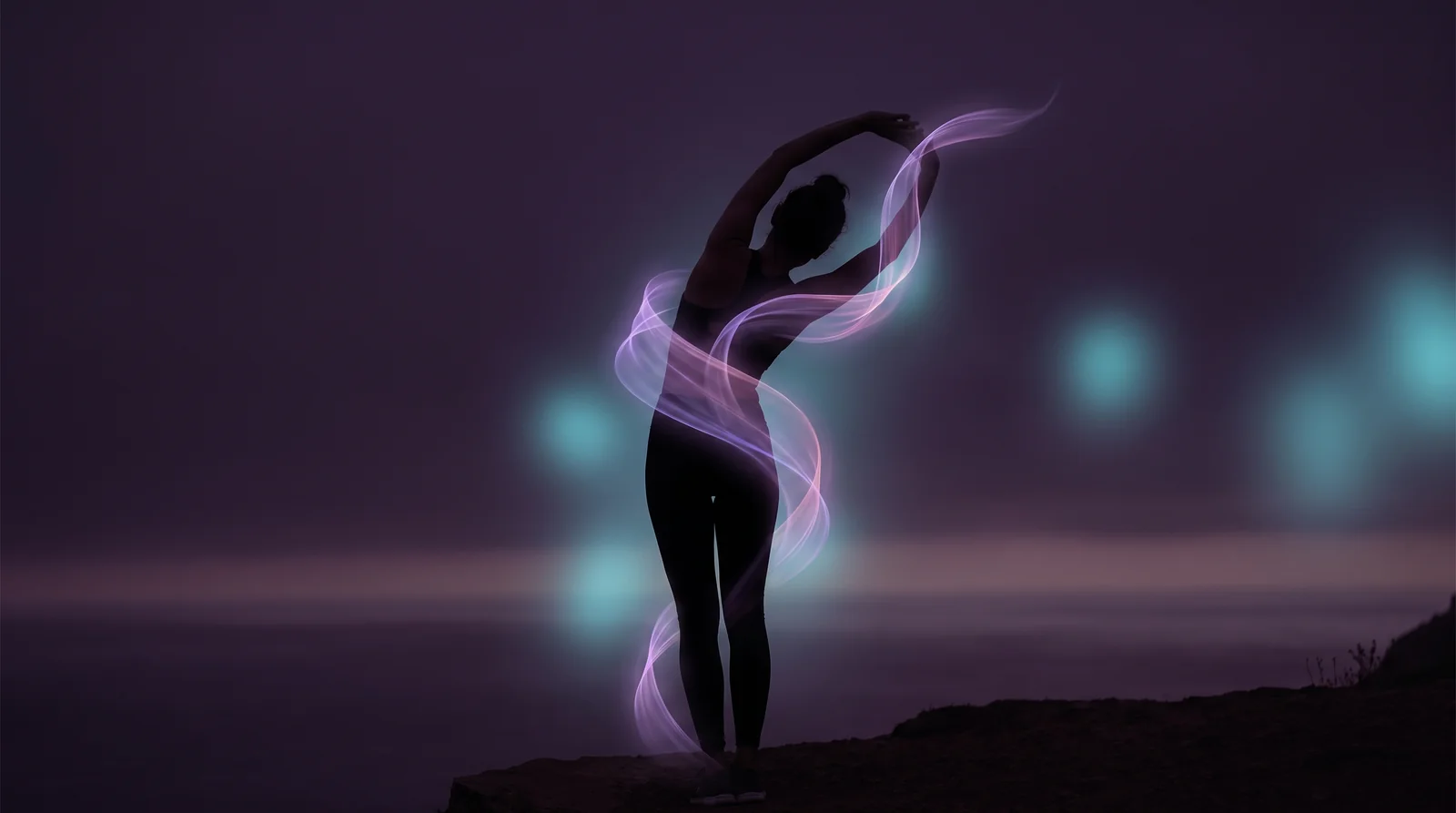
Watch anyone wake up, on any continent, in any century, and you'll see the same move: arms overhead, spine arched, face scrunched, maybe a yawn riding along. Cats do it. Dogs do it. The guy across the aisle on the 6 train does it at Union Square. Nobody taught us this, nobody needed to, and it feels so good it's almost suspicious. I got curious about why a movement that accomplishes apparently nothing feels like a small legal high. Turns out the answer runs through your nervous system, and it's useful, because stretching is one of the cheapest calm-down tools you own.
The built-in stretch: pandiculation
That involuntary morning reach has a name: pandiculation. It's the stretch-and-yawn combo your body runs automatically at sleep-wake transitions, and it shows up across the animal kingdom, which is usually a hint that something is load-bearing. The going explanation is that it's a system reboot for your muscles. After hours of stillness, your brain's map of your body has gone slightly stale. A big whole-body contraction and lengthening floods the brain with fresh sensory data from the muscles, re-syncing the map with the actual hardware. That wave of proprioceptive information, the felt sense of your own body turning back on, is a big part of why the morning stretch feels so weirdly satisfying. You're not just moving. You're logging back in.
What a stretch does to your nerves
Inside every muscle are sensors: spindles that report length and speed, and organs in the tendons that report load. When you ease into a stretch, you light up thousands of these at once, and that torrent of signal does a few nice things. It temporarily dials down the resting tension in the stretched muscle, which your brain reads as relief, especially in chronically clenched real estate like the neck, jaw and shoulders, where office workers store their unanswered emails. It also simply feels like something, and pleasant, low-threat body sensation is exactly the kind of input that pulls attention out of rumination. Hard to draft an angry reply in your head while your hamstrings are filing detailed reports.
There's a calming chemistry angle too, and it has actual measurements behind it. A study by Farinatti and colleagues took people with low flexibility through a simple stretching session and tracked heart rate variability, the standard window onto the autonomic nervous system. After stretching, markers of parasympathetic activity, the rest-and-digest side, rebounded and rose. It's a small study in a specific group, so file it as evidence rather than proof, but it matches what every stretcher already suspects from the inside: slow stretching tilts the nervous system toward calm. Your body treats an unhurried stretch as a signal that nothing is chasing you.
A slow stretch is a memo to your nervous system: nothing is chasing us right now.
Why it feels good after stillness in particular
Stretching feels best exactly when you've been parked: after sleep, after a flight, after four hours of spreadsheet posture. Stillness lets fluid settle, muscles adapt to shortened positions, and stiffness accumulate; movement and stretch reverse all that, and the contrast reads as pleasure. There's a lesson hiding in the timing. The good feeling isn't random, it's your body rewarding you for breaking up stillness, the same way food tastes best when you're hungry. Which suggests the dose that matters isn't the heroic Sunday flexibility session. It's the thirty-second interruption, many times a day, every time you notice you've fossilized into your chair.
Using it on purpose
Here's how I'd turn all this into a habit that costs nothing. Keep it slow and easy: drift into the stretch until you feel it clearly but comfortably, no bouncing, no heroics, and stay there for twenty or thirty seconds while breathing long and low. Exhale into the stretch; the long out-breath and the muscle release pull in the same direction, and the combination is more calming than either alone. In the evening this pairs absurdly well with a wind-down ritual. I do five minutes of floor stretching with Feelsy running a slow texture on the screen nearby, sound low, and let the eyes rest on something smooth while the hamstrings negotiate. By the end, the day's tension has usually dropped a full size. It's the closest thing I know to a physical sigh.
Two honest caveats. First, stretching feels good and calms you down, but the research on whether it prevents injuries or fixes chronic pain is far messier than the wellness industry implies, so hold those claims loosely. Second, stretching should never be sharply painful; pain means back off. The good kind of stretch sensation is strong but sighs on the exhale. If a spot stays angry no matter how gently you treat it, that's a question for a professional, not a deeper lunge.
The takeaway
Stretching feels good because it's information and instruction at once: a flood of body signal that refreshes the brain's map, releases stored tension, and nudges the nervous system toward its parasympathetic, rest-and-digest setting. It's free, it's portable, it requires no outfit, and it's been beta-tested by every mammal on earth. Somewhere between the morning reach and the evening floor session, there's a two-minute version with your name on it. Your nervous system will send a thank-you note. It'll feel like a sigh.
Feelsy is a wellness product, not medical advice. If stress, anxiety or sleep problems persist, please speak with a qualified professional.
References
- Farinatti, P. T., Brandão, C., Soares, P. P., & Duarte, A. F. (2011). Acute Effects of Stretching Exercise on the Heart Rate Variability in Subjects With Low Flexibility Levels. Journal of Strength and Conditioning Research, 25(6), 1579–1585.
Frequently Asked Questions
Why does stretching feel so good?
A stretch floods your brain with sensory information from muscle spindles and tendon sensors, refreshes the brain's map of your body after stillness, and temporarily lowers resting muscle tension, which registers as relief. Slow stretching also nudges the nervous system toward its parasympathetic, rest-and-digest side, so the good feeling is part sensation and part genuine calming.
What is pandiculation?
Pandiculation is the involuntary stretch-and-yawn your body performs around sleep and waking, the arms-overhead, spine-arching move you share with cats and dogs. It's thought to work as a reboot: a whole-body contraction and lengthening that re-syncs the brain's body map with your actual muscles after hours of stillness, which is why it feels so satisfying.
Does stretching calm your nervous system?
Slow, comfortable stretching appears to tilt the autonomic nervous system toward its calming, parasympathetic side. One study that measured heart rate variability found parasympathetic markers rose after a stretching session. Pairing each stretch with long, slow exhales strengthens the effect, since the out-breath and the muscle release pull in the same calming direction.
How long should you hold a stretch to relax?
For relaxation purposes, ease into a clear but comfortable stretch and hold it for around twenty to thirty seconds while breathing slowly, with no bouncing. Sharp pain means back off. Frequent short stretches through the day, especially after long sitting, tend to do more for how you feel than one long occasional session.
Is it good to stretch before bed?
Gentle stretching in the evening is a natural fit for a wind-down routine. It releases the tension the day parked in your neck, jaw and shoulders, and combined with dim light and slow breathing it signals your body that the day is over. Keep it easy and unhurried; the goal at night is a sigh, not a flexibility record.

About the author
Contributing writer
Kurt is a New York based writer covering the practical science of stress, sleep and focus. He is the resident sceptic of the Journal: if a technique cannot survive a crowded subway commute and a deadline week, he is not interested in it.
Feel it for yourself.
Feelsy turns reading about calm into practising it. Two minutes of a slow texture is often the whole difference.


Related reading
 Breath & Body
Why Do We Yawn? The Science of the World's Most Contagious Habit
Why do we yawn, and why is yawning contagious? The brain-cooling theory, the empathy link, and what your afternoon yawns are actually telling you.
 Breath & Body
Progressive Muscle Relaxation: A Complete Guide
Progressive muscle relaxation releases tension you did not know you were holding. A complete beginner's guide to the tense-and-release technique.
 Breath & Body
How to Stimulate Your Vagus Nerve (What's Real, What's Not)
The vagus nerve is the internet's favorite calm switch. Here's what it really does, what actually tones it, and which viral hacks are a waste of your time.
 Breath & BodyNew
Do Cold Showers Actually Work? A Skeptic Reads the Evidence
Cold showers are pitched as a cure for everything from low energy to weak character. Here's what the actual research says, and how to try one without the cult.
 Breath & BodyNew
Dopamine Detox: What It Gets Right and What It Gets Wrong
Dopamine detox promises a factory reset for your distracted brain. Here's what the neuroscience actually says, what helps, and what's just rebranded boredom.
 Breath & Body
How to Stop Overthinking: Quieting a Mind That Will Not Move On
Why overthinking loops and how to interrupt it: what rumination research shows, why you cannot argue with a spiral, and gentler ways to change the channel.