Does Working Out Before Bed Ruin Your Sleep? The Data Says Mostly No
The old rule said no exercise within hours of bedtime. The research mostly disagrees. Here's what evening workouts really do to sleep, and the one exception.
By Kurt Woleret
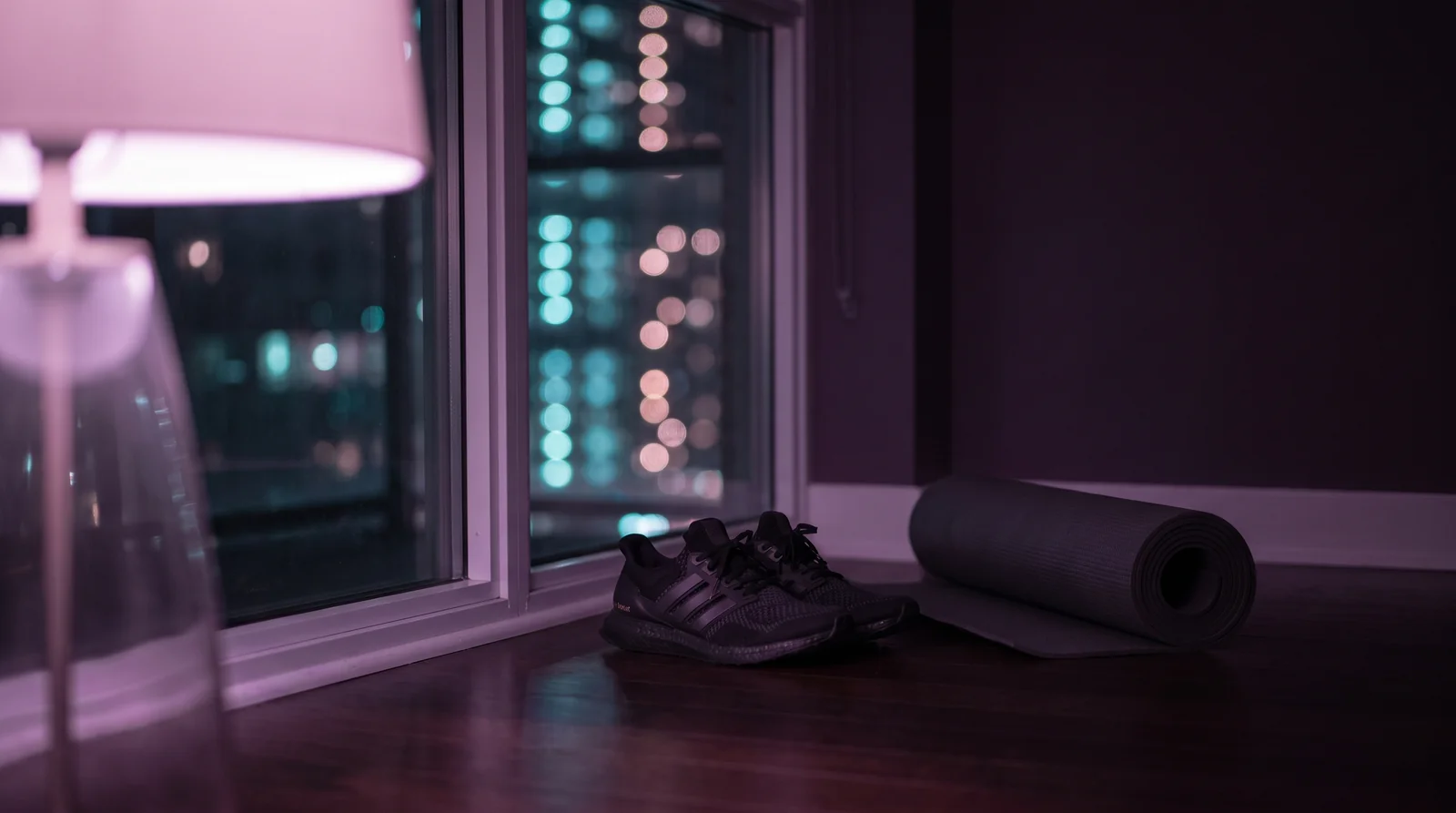
For years the official wisdom was that exercising at night was a sleep crime, right up there with espresso at dinner. Which was awkward for me, because in New York the only gym slot that exists between a job and a social life is 8 p.m., and the only alternative is a 5:30 a.m. run, and I have met 5:30 a.m. and we don't get along. So the question matters: is the evening workout quietly wrecking your sleep? Someone finally pooled the studies, and the answer is one of my favorite kinds. The rule was mostly wrong.
Where the rule came from
The logic behind the old advice was reasonable on paper. Exercise raises your core temperature, heart rate and adrenaline, and sleep likes the opposite of all three: falling temperature, slowing pulse, quiet nervous system. Stack a workout against bedtime and you'd expect a wired, overheated brain at lights-out. For decades that physiology-based hunch hardened into a blanket rule, no vigorous exercise within three hours of bed, repeated in every sleep hygiene handout ever photocopied. The trouble is that a hunch about physiology isn't data about people, and when researchers actually measured what happens, the picture came back different.
What the pooled evidence found
A systematic review and meta-analysis in Sports Medicine by Stutz and colleagues combined the results of experimental studies on evening exercise in healthy adults. The headline: exercising in the evening did not, on average, harm sleep. If anything, the pooled results tipped slightly positive, with a bit more deep, slow-wave sleep on evening-exercise nights. People fell asleep about as fast and slept about as well as on rest days. The blanket three-hour ban, in other words, doesn't survive contact with the evidence.
But there was one exception worth respecting, and it's the part I'd tattoo on every gym wall: vigorous exercise that ends within about an hour of bedtime was associated with worse sleep, longer time to nod off, less efficient nights. Finish a hard interval session at 10:15 and try to be unconscious by 11, and your still-elevated heart rate and core temperature are working against you. The problem was never evening exercise. It was sprinting straight from the barbell to the pillow with no runway.
The workout isn't the sleep crime. Skipping the landing is.
Building the runway
So the practical rule shrinks to something manageable: keep roughly an hour, ideally more, between the end of hard exercise and lights-out, and use it to actively come down. Cool the engine: a warm shower helps here, oddly, because the rebound heat loss afterward nudges core temperature in the sleep-friendly direction. Eat something small if you're ravenous, since a growling stomach is its own insomnia. Dim the apartment. Then slow the nervous system on purpose: some easy stretching, and a few minutes of long-exhale breathing. I do the 4-7-8 exercise in Feelsy with a slow texture drifting on screen, because after a workout my brain is still doing reps and it needs something soft to look at while the heart rate walks itself back down. By the time I'm horizontal, the workout is a fact of the past, not an ongoing event.
Intensity is the other dial. Late-evening easy sessions, a walk, gentle yoga, mobility work, need almost no buffer at all; the one-hour caution is about the workouts that leave you dripping. If your schedule truly forces hard training right against bedtime, consider trimming the intensity of the last stretch, finishing with ten minutes of easy movement so the cool-down happens inside the session instead of in bed.
The comparison that actually matters
Here's the framing the old rule always missed: the realistic alternative to an evening workout usually isn't a morning workout. It's no workout. And regular exercise is one of the most reliable things you can do for sleep overall; active people fall asleep faster and sleep deeper than inactive ones, whatever the hour they train. Skipping training to protect your sleep is almost always a worse trade than training at night with a sensible buffer. The best workout time, unhelpfully but truthfully, is the one that actually happens this week.
It's also worth saying that people differ. The meta-analysis reports averages, and averages hide the guy who does jumping jacks at 10 p.m. and sleeps like a sedated labrador, as well as the woman who's wired for three hours after any evening spin class. Your own experiment beats the literature: try your usual routine with a proper hour-plus wind-down for a week or two and judge by mornings, not by dogma from a photocopied handout. If you track anything, track two numbers: roughly how long it took to fall asleep, and how you rated the morning. Two weeks of that tells you more about your body than any pooled average ever will.
The short version
Evening exercise is fine for sleep, and possibly slightly good for the deep stages of it. The single exception is finishing vigorous work within an hour of bed. Protect a landing strip: warm shower, dim light, food if needed, slow breathing, something calm for the eyes. Judge the results by how you feel at 7 a.m., not by a rule written before anyone had checked. My 8 p.m. gym slot and I have never been happier together.
Feelsy is a wellness product, not medical advice. If stress, anxiety or sleep problems persist, please speak with a qualified professional.
References
- Stutz, J., Eiholzer, R., & Spengler, C. M. (2019). Effects of Evening Exercise on Sleep in Healthy Participants: A Systematic Review and Meta-Analysis. Sports Medicine, 49(2), 269–287.
Frequently Asked Questions
Is it bad to work out before bed?
For most people, no. A meta-analysis of experimental studies found that evening exercise did not harm sleep on average, and was even associated with slightly more deep sleep. The one consistent exception was vigorous exercise ending within about an hour of bedtime, which was linked to taking longer to fall asleep and less efficient sleep.
How long before bed should I stop exercising?
Aim to finish hard, sweaty workouts at least an hour before lights-out, and use that hour to wind down: a warm shower, dim lights, a small snack if you're hungry, and some slow breathing or easy stretching. Gentle activity like walking, mobility work or relaxed yoga needs little or no buffer.
Does evening exercise cause insomnia?
The research says evening exercise by itself doesn't cause insomnia in healthy adults. Problems show up mainly when intense sessions run right up against bedtime, while your heart rate and core temperature are still elevated. Individuals vary, though, so if you consistently feel wired after late training, either add more wind-down time or shift the intensity earlier.
Is it better to exercise in the morning or at night for sleep?
The best time is the time you'll actually keep. Regular exercise improves sleep overall, and the evidence doesn't show a meaningful sleep penalty for evening sessions when there's a reasonable buffer before bed. Skipping workouts to protect sleep is usually a worse trade than training at night with an hour of landing time.
Why does a warm shower after a workout help you sleep?
It sounds backwards, but warming your skin makes your body shed heat afterward, and that drop in core temperature is one of the signals your body associates with falling asleep. After an evening workout, a warm shower plus dim lights and slow breathing helps your system finish the transition from training mode to sleep mode.

About the author
Contributing writer
Kurt is a New York based writer covering the practical science of stress, sleep and focus. He is the resident sceptic of the Journal: if a technique cannot survive a crowded subway commute and a deadline week, he is not interested in it.
Feel it for yourself.
Feelsy turns reading about calm into practising it. Two minutes of a slow texture is often the whole difference.


Related reading
 Ancient Wisdom
The Warm Bath Before Bed: An Old Ritual Science Happens to Agree With
From Roman baths to the Japanese ofuro, cultures have always bathed before rest. Here is why a warm bath before bed helps you sleep, and how to time it.
 Sleep
SleepThe Best Temperature for Sleep (and Why Your Bedroom Runs Hot)
What's the best temperature for sleep? Why cooler rooms help you fall asleep faster, what the research says about heat, and how to fix a hot bedroom.
 Sleep
SleepHow to Fall Asleep Faster: Sound, Light and Ritual
Falling asleep is a skill, not a stroke of luck. Here is how sound, light and a 15-minute ritual can quiet a racing mind and shorten the trip to sleep.
 Breath & BodyNew
Do Cold Showers Actually Work? A Skeptic Reads the Evidence
Cold showers are pitched as a cure for everything from low energy to weak character. Here's what the actual research says, and how to try one without the cult.
 Breath & BodyNew
Dopamine Detox: What It Gets Right and What It Gets Wrong
Dopamine detox promises a factory reset for your distracted brain. Here's what the neuroscience actually says, what helps, and what's just rebranded boredom.
 Breath & Body
How to Stop Overthinking: Quieting a Mind That Will Not Move On
Why overthinking loops and how to interrupt it: what rumination research shows, why you cannot argue with a spiral, and gentler ways to change the channel.