Baduanjin: The Eight Brocades, China's Gentlest Morning Exercise
Baduanjin, the Eight Brocades, is a short qigong set practiced in Chinese parks for nearly a thousand years. What the eight movements are and how to begin.
By Mei Lin
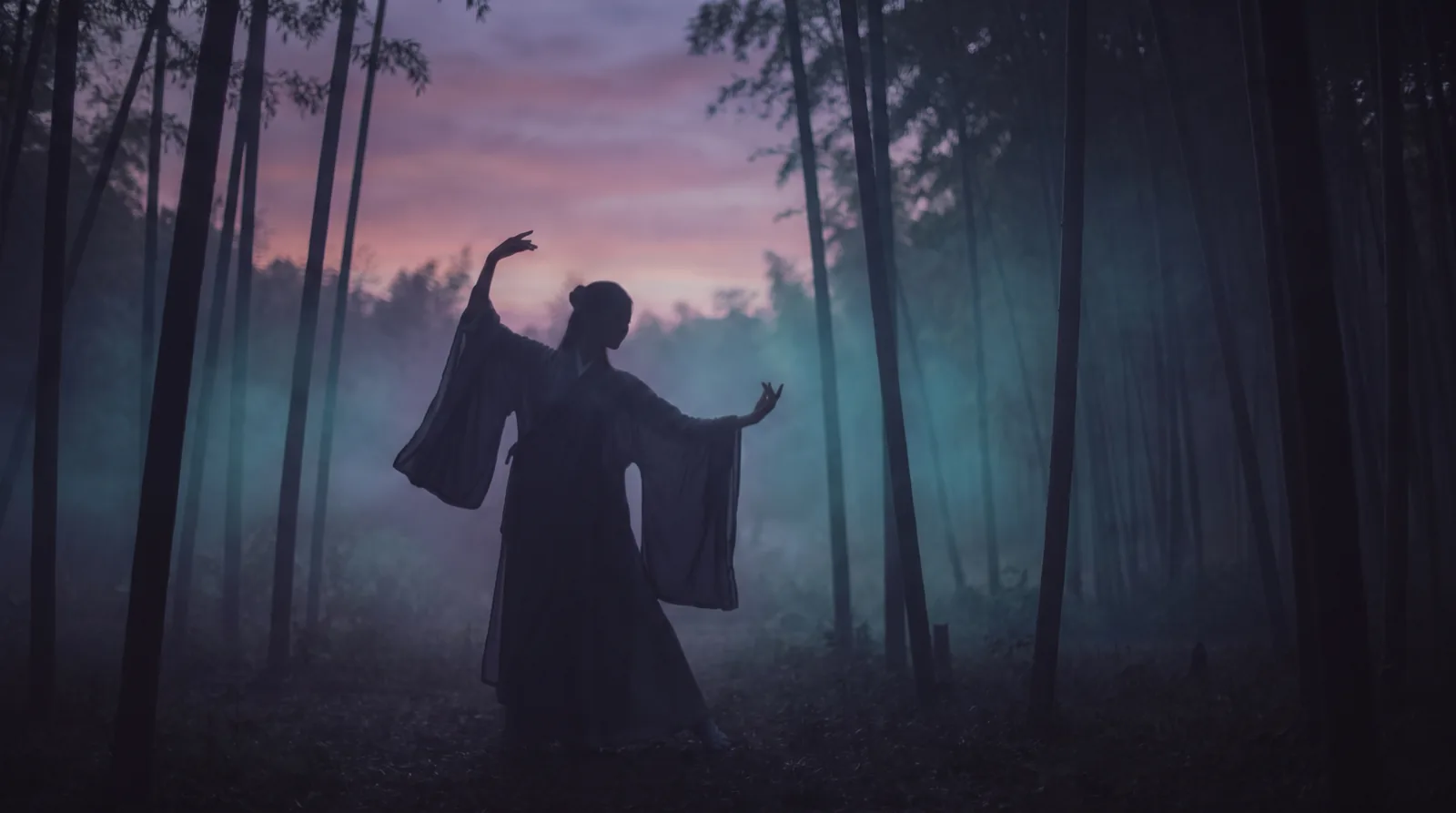
If you walk through any park in Shanghai just after sunrise, you will see them: men and women, many past seventy, standing in loose rows under the plane trees, raising their arms toward the sky with the unhurried certainty of plants growing. They are not performing for anyone. Most have done these same eight movements every morning for decades, the way other people drink coffee. The set is called Baduanjin, the Eight Brocades, and it may be the most practiced exercise routine in human history that almost nobody in the West can name.
The name is worth a pause. Jin is fine silk brocade, the most precious cloth; ba duan is eight sections. Eight lengths of brocade: the idea that a sequence of movements could be as valuable as bolts of woven silk tells you how the tradition regards them. Versions of the set appear in texts from the Song dynasty, nearly a thousand years ago, and legend credits the general Yue Fei with devising them to keep his soldiers strong. Whatever the true origin, the form has survived every dynasty since by being three things at once: short, gentle and complete.
What the eight movements are
Baduanjin is a fixed sequence of eight movements, each repeated slowly a handful of times, each with a name that is half instruction and half poem. A full round takes ten to fifteen minutes. The traditional names vary slightly between lineages, but a common set runs:
- Two Hands Hold Up the Heavens: a slow full-body stretch upward, as if lifting the sky.
- Drawing the Bow to Shoot the Hawk: an archer's stance, opening the chest to each side.
- Separate Heaven and Earth: one palm pressing up, one pressing down.
- Wise Owl Gazes Backwards: a gentle turn of the head and spine to look behind.
- Sway the Head and Shake the Tail: a slow circling of the torso from a low stance.
- Two Hands Hold the Feet: a careful fold forward to strengthen the back and waist.
- Clench the Fists and Glare Fiercely: the one burst of stored power, slow fists with bright eyes.
- Bouncing on the Heels: a soft rising and dropping of the heels, shaking the body loose.
Notice what the names do. You are not asked to abduct the shoulder or engage the core; you are asked to hold up the heavens and gaze backwards like an owl. The image does the coaching. Hold up the sky and your whole body organizes itself into the stretch without a single anatomical instruction. This is the old Chinese teaching method: give the body a picture and let it find the shape.
Eight movements, named like poems, short enough to finish before breakfast and gentle enough to do at ninety: that is why the Brocades have lasted a thousand years.
What the evidence says
The park grandmothers never needed trials, but the trials exist now. A systematic review and meta-analysis pooled randomized controlled studies of Baduanjin and found evidence of benefits across quality of life, sleep quality, balance, grip strength, leg strength and resting blood pressure, with the usual honest caveat that many of the underlying trials were small and imperfect (Zou et al., 2017, Evidence-Based Complementary and Alternative Medicine). For a practice requiring no equipment, no gym and no athletic history, that is a quietly remarkable report card.
Why might something so gentle do so much? Partly because it is exercise, however soft: squatting, folding, balancing and stretching, repeated daily for years, is a dose that compounds. Partly because it is breath training in disguise; every movement is paced to slow inhales and exhales, so a round of Brocades is also ten minutes of slow breathing, with everything we know that does for the nervous system. And partly because it is doable, and the exercise you actually do each morning outperforms the regimen you abandon by February.
How to begin, without ceremony
You do not need a teacher to start, though a good one deepens everything. Learn one movement at a time; Two Hands Hold Up the Heavens alone, done slowly for two minutes by a window, is a complete practice for the first week. Move at the speed of your own breath, which will feel strange for the first days, like walking slower than your habit. Soften the knees, soften the gaze, and let the repetitions be slightly boring; the boredom is the door. Morning suits the set best, before the day's speed gets into the body, but any ten minutes work.
The hardest part for a modern practitioner is not the movements but the pace, and here a small bridge helps. The quality the Brocades ask for, eyes soft, attention resting on something slow, is the same quality a drifting visual asks for; a few minutes watching a slow texture in Feelsy, breath matching the motion, teaches the tempo the park grandmothers carry in their bones, and the 4-7-8 exercise there makes a fine quiet coda, seated, after the eighth movement shakes the body loose. Then the day may begin, slightly later than planned and considerably better.
Feelsy is a wellness product, not medical advice. If stress, anxiety or sleep problems persist, please speak with a qualified professional.
References
- Zou, L., SasaKi, J. E., Wang, H., Xiao, Z., Fang, Q., & Zhang, M. (2017). A systematic review and meta-analysis of Baduanjin qigong for health benefits: Randomized controlled trials. Evidence-Based Complementary and Alternative Medicine, 2017, 4548706.
Frequently Asked Questions
What is Baduanjin qigong?
Baduanjin, usually translated as the Eight Brocades, is a short traditional Chinese qigong set of eight slow movements, each with a poetic name like Two Hands Hold Up the Heavens. A full round takes ten to fifteen minutes, needs no equipment, and versions of it have been practiced for roughly a thousand years, since at least the Song dynasty.
What are the health benefits of Baduanjin?
A meta-analysis of randomized controlled trials found evidence that regular Baduanjin practice benefits quality of life, sleep quality, balance, grip and leg strength, and resting blood pressure, though many underlying trials were small. It is also, in effect, ten minutes of daily slow-breathing practice, since every movement is paced to the breath.
Is Baduanjin suitable for beginners and older adults?
Yes, it is arguably the most beginner-friendly practice in the qigong family: the movements are gentle, done standing with soft knees, and are routinely practiced by people in their seventies, eighties and beyond in parks across China. Learning one movement at a time, starting with a slow two-minute daily practice, is a traditional and perfectly respectable way in.
What is the difference between Baduanjin and tai chi?
Baduanjin is a short, fixed set of eight repeated movements done mostly in place, which makes it far quicker to learn, while tai chi is a longer flowing form with footwork, weight shifts and a martial lineage that can take months to memorize. Many people use the Brocades as a daily practice or as a gateway into tai chi.
About the author
Contributing writer
Mei grew up in Shanghai around tea that could not be hurried and grandmothers who considered stillness a skill. She writes about slow hands and sensory ritual: tea, calligraphy, qigong, and the quiet crafts that taught the world how to pay attention.
Feel it for yourself.
Feelsy turns reading about calm into practising it. Two minutes of a slow texture is often the whole difference.


Related reading
 Breath & Body
Qigong for Beginners: Slow Hands, Quiet Mind
A gentle qigong guide for beginners: what qigong is, what research says about stress and anxiety, and three simple movements you can practice in ten minutes.
 Ancient Wisdom
Zhan Zhuang: The Chinese Art of Standing Like a Tree
Zhan zhuang, the 'standing post,' is a Chinese practice of complete stillness on your feet. How standing meditation works and a gentle way to begin today.
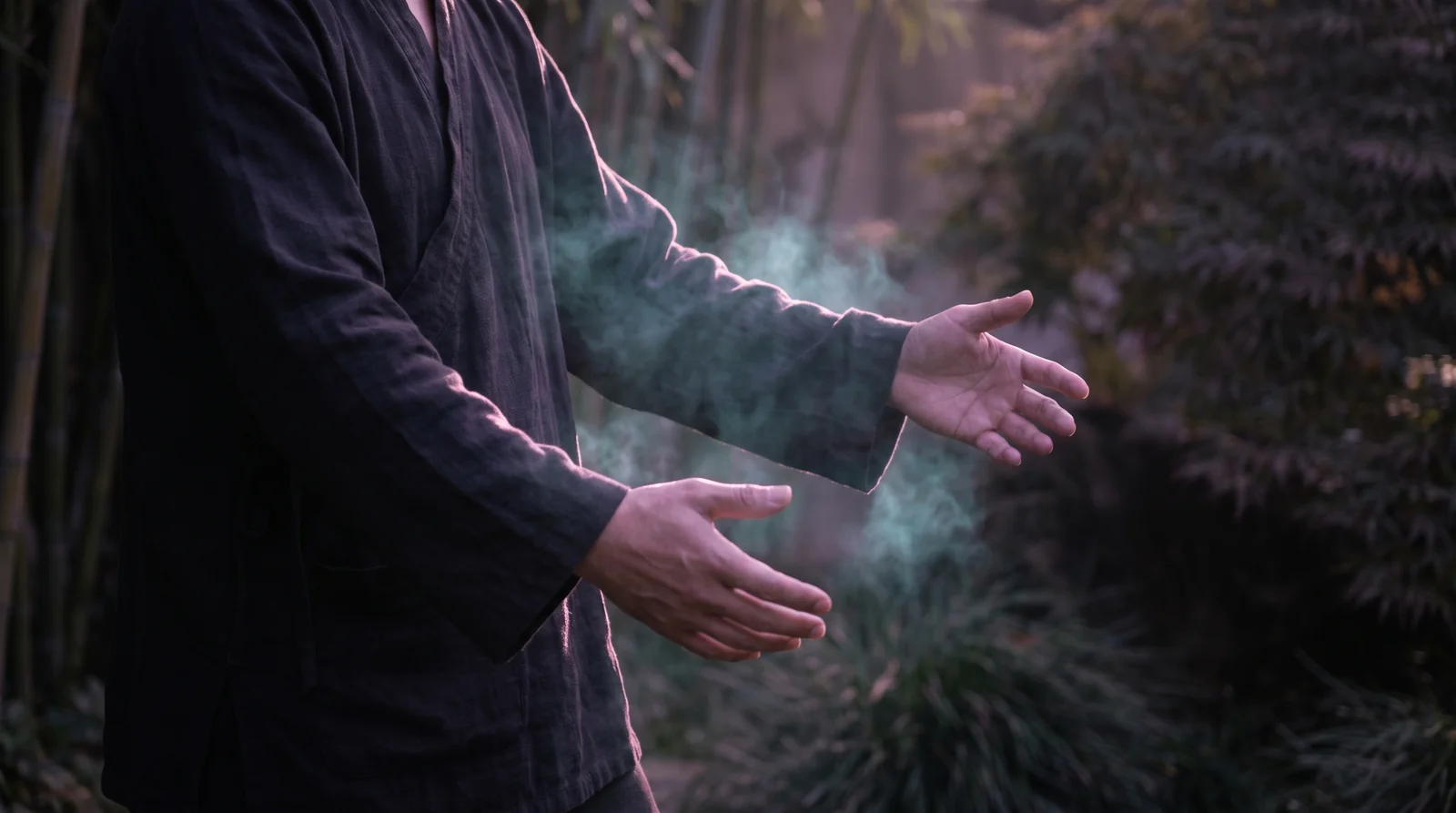 Ancient Wisdom
Tai Chi for Beginners: Learning to Move at the Speed of Calm
Tai chi for beginners: what the slow Chinese practice really is, why moving meditation calms an anxious mind, and how to begin at home in ten minutes.
 Ancient Wisdom
Yūgen: The Japanese Art of Beauty Half-Hidden
Yūgen is the Japanese word for beauty half-hidden: mist, moonlight, depths you sense but cannot see. What it means and how to practise noticing it.
 Ancient Wisdom
Ho'oponopono: The Hawaiian Practice of Setting Things Right
What ho'oponopono means, where the Hawaiian practice of reconciliation comes from, the four phrases, and how to fold forgiveness into a quiet evening.
 Ancient Wisdom
Sisu: The Finnish Art of Quiet Endurance
What sisu means in Finnish culture, how it differs from grit and resilience, and how to borrow its quiet endurance for ordinary hard days and long winters.