Tai Chi for Beginners: Learning to Move at the Speed of Calm
Tai chi for beginners: what the slow Chinese practice really is, why moving meditation calms an anxious mind, and how to begin at home in ten minutes.
By Mei Lin
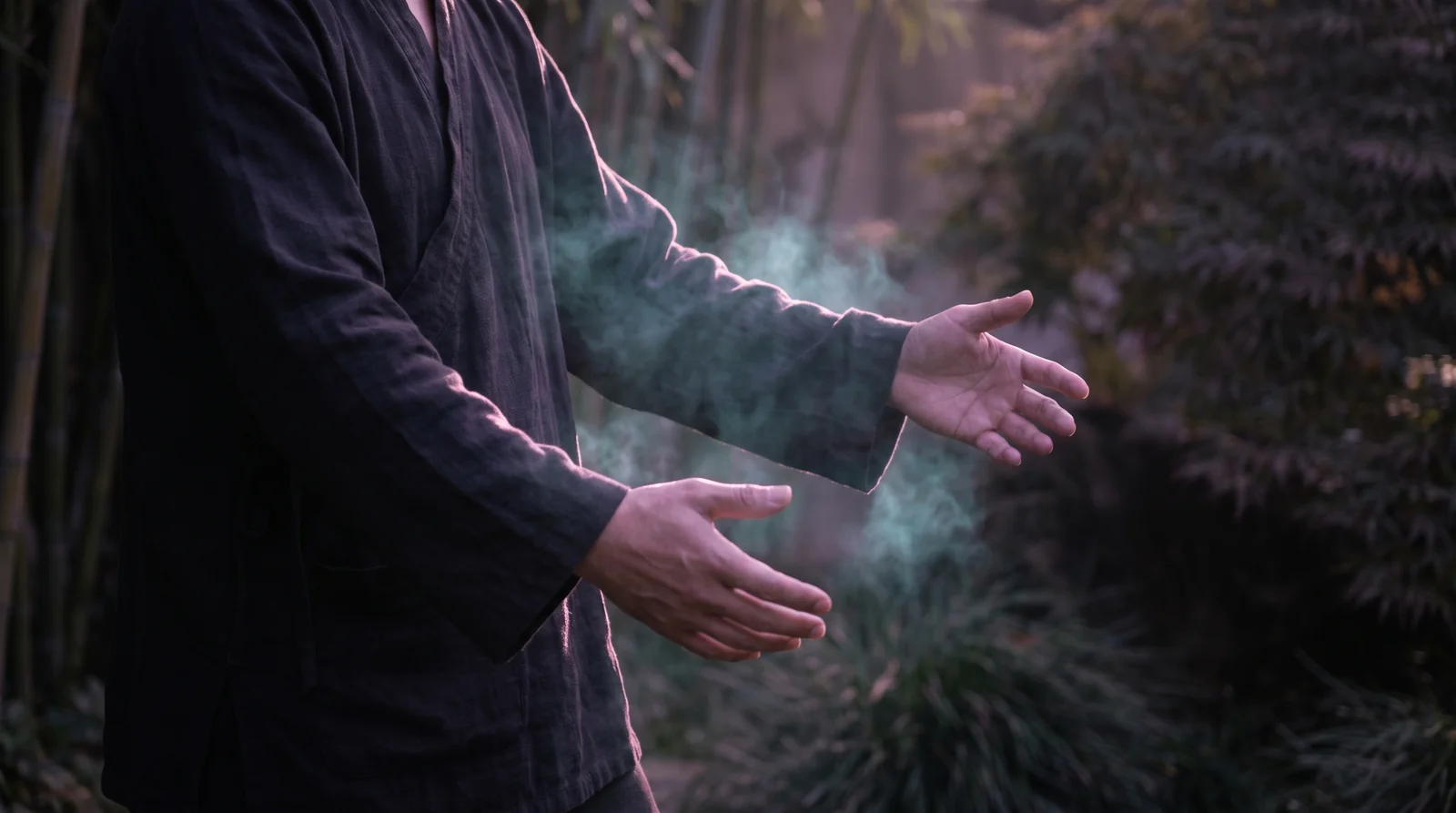
In the parks of Shanghai, the slowest people own the morning. I grew up watching them on the way to school: rows of elders in soft shoes, arms floating up as if lifted by water, one knee bending over the span of a full breath. Around them the city did its usual sprinting. Inside their loose circle, time ran at a different rate. My grandmother, who practiced for forty years, had a standing answer for anyone who called it exercise for old people. Slowness is not what is left when strength goes, she said. Slowness is the strength.
What those elders were practicing is taijiquan, known in the West as tai chi: a Chinese art, centuries old, that began as a martial discipline and matured into something closer to meditation that happens to be standing up. The movements have the names of a scroll painting, parting the wild horse's mane, white crane spreads its wings, hands like clouds, and they are performed at the speed of honey leaving a jar. That speed is not a limitation. It is the entire method.
What tai chi actually is
Strip away the mystique and tai chi is a sequence of shifting weight. The body moves from one leg to the other in long, continuous transfers, the arms drawing slow curves that follow the waist, the breath settling into the rhythm of the steps. A form, the choreographed sequence practiced daily, might contain twenty-four movements or a hundred and eight, but a beginner needs to know only this: nothing is ever still, and nothing is ever hurried. The classics describe it as moving like a great river, and the image is exact. A river is never rushing and never resting.
Because every movement is slow, the mind is given a job it can actually hold: where is my weight now, and where is it going? That question, asked continuously for ten minutes, crowds out most other questions. This is the same handrail that the breath offers in sitting meditation and the brushstroke offers in calligraphy, except here the whole body is the anchor. People who cannot sit still, and I write for them with sympathy, often find that tai chi is the first meditation that does not feel like a staring contest with their own thoughts.
A river is never rushing and never resting.
What the research says, gently
Tai chi has been studied for decades, and the literature is warmer than for most gentle practices. A systematic review and meta-analysis of forty studies found that tai chi practice was associated with reduced stress, anxiety and depression and improved mood, in both healthy people and those with chronic conditions (Wang et al., 2010, BMC Complementary and Alternative Medicine). Reviewers are careful to note that many trials are small, and that tai chi's benefits braid together several strands that are hard to separate: slow movement, deliberate breath, learned attention, and often the quiet company of other people practicing nearby. My grandmother would have found the confusion funny. Why pull apart the threads, she would say, when the cloth is what keeps you warm?
A word on styles, since the names confuse newcomers. Yang style is the slow, wide, even-tempered family most people picture, and the one most beginner classes teach; chen style keeps more of the martial coil and occasional bursts of speed; the simplified 24-movement form, composed in the 1950s so the practice could be taught widely, is where millions of people, my grandmother among them, actually began. For calm, the differences matter far less than the constants: slowness, continuity, and attention kept in the body. Choose whichever door is nearest and walk through it slowly.
Beginning at home, in ten minutes
You do not need a park, a teacher, or silk pajamas to meet the practice, though a good teacher is a gift if one is nearby. You need floor space the size of a doorway and a willingness to move at half the speed that feels natural, then half again. Here is a first practice, adapted from how beginners in China are actually started: not with a form, but with standing and shifting.
- Stand with feet parallel, a little wider than your hips, knees soft. Let your hands hang. Take one slow breath and imagine your weight draining down through your feet like sand.
- Shift your weight entirely to the right leg, taking a full breath to do it. Then shift entirely to the left, just as slowly. Repeat for two minutes. This transfer is the seed of every tai chi movement that exists.
- Add the arms: as you shift right, let both arms float up to chest height, wrists loose, as if resting on water. As you shift left, let them sink. The arms do not lift; the shifting lifts them.
- Let the eyes rest soft and unfocused a few feet ahead. If the mind wanders, return to the one question: where is my weight now?
- Finish by standing still for three breaths, weight even, and notice the quiet hum the body makes after slow movement. That hum is the point.
The speed underneath the day
What tai chi teaches, finally, is that calm is a tempo before it is a feeling, and tempo is something you can choose. Ten minutes of moving like a river leaves a residue; you carry a little of the slowness into the kitchen, the inbox, the crosswalk. On evenings when my legs are done but my eyes are still quick, I let one of Feelsy's slow textures play and watch it the way I watch a form, following one drift of color from its rise to its settling, and the app's autoplay pours the next movement without my asking, the way the sequence used to carry my grandmother from crane to cloud. Water in the body, water on the screen. The practice is the same: find the slowest moving thing in the room, and keep it company.
Feelsy is a wellness product, not medical advice. If stress, anxiety or sleep problems persist, please speak with a qualified professional.
References
- Wang, C., Bannuru, R., Ramel, J., Kupelnick, B., Scott, T., & Schmid, C. H. (2010). Tai Chi on psychological well-being: systematic review and meta-analysis. BMC Complementary and Alternative Medicine, 10, 23.
Frequently Asked Questions
What is tai chi exactly?
Tai chi, or taijiquan, is a Chinese art that began as a martial discipline and became a form of moving meditation. It is built from slow, continuous shifts of weight from one leg to the other, with the arms drawing slow curves that follow the waist and breath. A form can have twenty-four or a hundred and eight movements, but the essential rule is that nothing is ever still and nothing is ever hurried.
Does tai chi actually help with anxiety and stress?
A systematic review and meta-analysis of forty studies found tai chi practice was linked to reduced stress, anxiety and depression and improved mood in both healthy people and those with chronic conditions (Wang et al., 2010). Reviewers note many trials are small and that the benefits likely come from several things braided together: slow movement, deliberate breath, learned attention, and often practicing near other people.
What is the difference between Yang style and Chen style tai chi?
Yang style is the slow, wide, even-tempered version most beginner classes teach, while Chen style keeps more of the original martial coil and occasional bursts of speed. The simplified 24-movement form, created in the 1950s so the practice could be taught widely, is where most beginners actually start. For calming purposes the style matters far less than the constants of slowness, continuity, and body-based attention.
How do I start practicing tai chi at home?
You only need floor space the size of a doorway. Begin by standing with feet parallel and a little wider than your hips, then shift your weight entirely from one leg to the other over a full breath, repeating for two minutes, then add slow floating arm movements as you shift. Keep your eyes soft and unfocused, and if your mind wanders, return to the single question of where your weight is right now.
Why does tai chi feel easier to stick with than sitting meditation for some people?
Because every movement is slow, tai chi gives the mind a concrete, ongoing job, tracking where the weight is and where it is going, which crowds out most other thoughts. This makes it feel less like a staring contest with your own mind than sitting still can, which is why people who struggle to sit for meditation often find tai chi to be their first practice that actually sticks.
About the author
Contributing writer
Mei grew up in Shanghai around tea that could not be hurried and grandmothers who considered stillness a skill. She writes about slow hands and sensory ritual: tea, calligraphy, qigong, and the quiet crafts that taught the world how to pay attention.
Feel it for yourself.
Feelsy turns reading about calm into practising it. Two minutes of a slow texture is often the whole difference.


Related reading
 Breath & Body
Qigong for Beginners: Slow Hands, Quiet Mind
A gentle qigong guide for beginners: what qigong is, what research says about stress and anxiety, and three simple movements you can practice in ten minutes.
 Ancient Wisdom
Walking Meditation: The Art of Going Nowhere Slowly
Walking meditation turns an ordinary walk into practice. How kinhin works, what research says about mindful walking, and a simple way to begin today.
 Ancient Wisdom
Tea Meditation: The Slow Ritual of Gongfu Cha
How to turn tea into meditation: the Chinese gongfu tea ritual, why warm slow ritual calms the nervous system, and a ten-minute practice for any mug.
 Ancient Wisdom
Döstädning: The Gentle Swedish Art of Death Cleaning
What Swedish death cleaning really means: the calm philosophy of döstädning, how it differs from ordinary decluttering, and how to begin at any age.
 Ancient Wisdom
How to Start a Gratitude Journal You Will Actually Keep
How to start a gratitude journal that actually helps: what the research found, why most lists go stale, and the very old art of counting blessings.
 Ancient Wisdom
Haiku as Meditation: Seventeen Syllables of Attention
How writing haiku trains attention: why the tiny form works like meditation, what noticing small moments does for wellbeing, and how to write your first.