Brown Noise for Sleep and Focus: What It Is and Why It Works
Brown noise is the internet's favorite sleep and focus sound. What it actually is, how it differs from white and pink noise, and what research really shows.
By Kurt Woleret
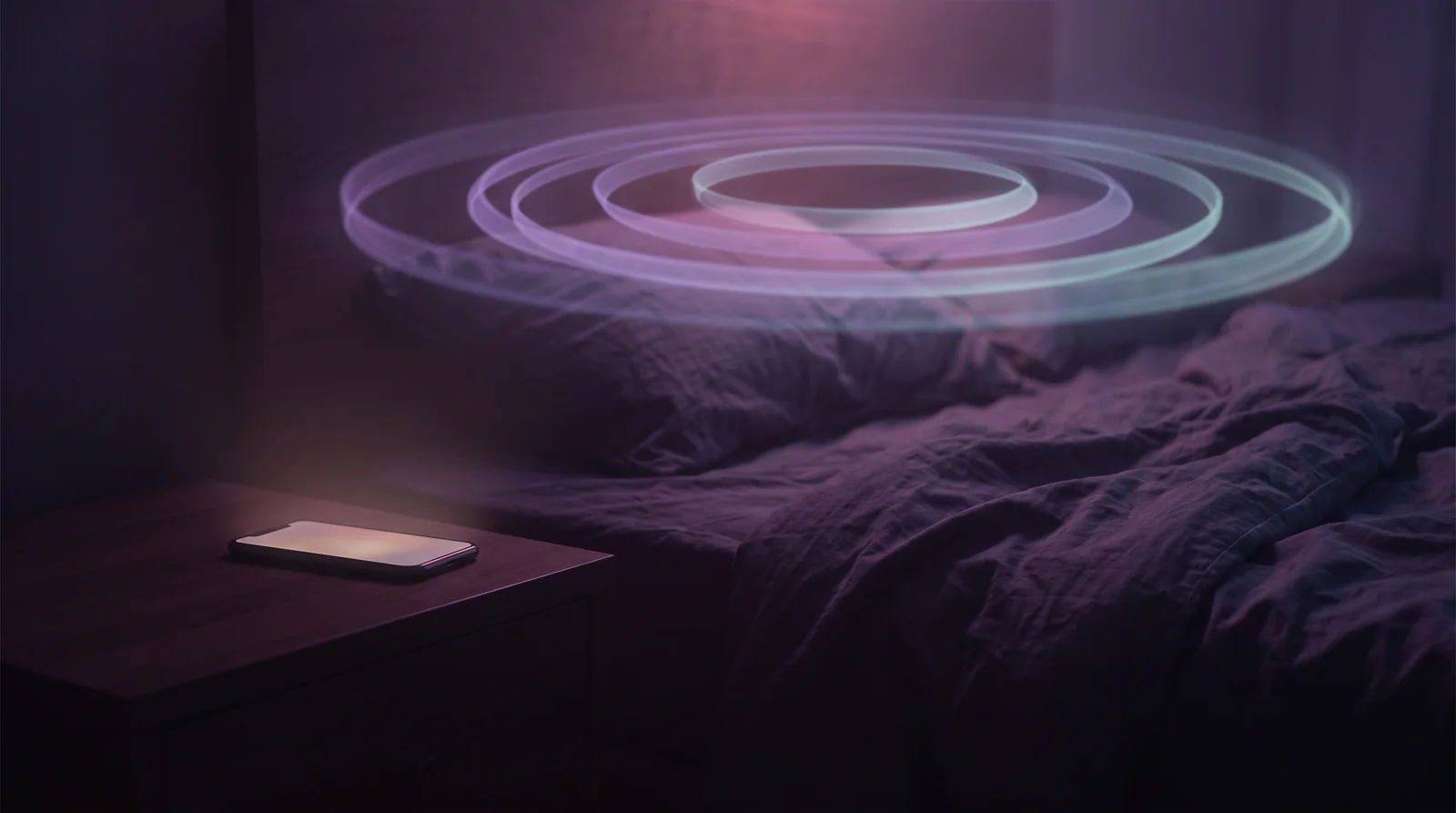
My apartment sits over a street that never once, in four years, has been quiet. Garbage trucks at five, a bar crowd at one, a neighbor who apparently bowls at home. So when the internet decided that brown noise was the sound that would fix everyone's sleep and focus, I didn't roll my eyes. I plugged in headphones and tried it. Then I went looking for the actual research, because that's the deal I have with myself: if a thing works, I want to know why, and if it doesn't, I want my evenings back.
Here's the short version: brown noise is real, useful, and much less magical than your feed suggests. The long version is more interesting.
White, pink, brown: the noise colors, decoded
Noise colors are just descriptions of how energy is spread across frequencies. White noise spreads energy evenly from low to high, which is why it sounds like TV static or an aggressive air conditioner: crisp, hissy, a little rude. Pink noise tilts the balance toward lower frequencies, so it sounds softer and more natural; steady rain and wind through trees sit in this neighborhood. Brown noise tilts even harder into the lows. It's the deep end of the pool: a jet cabin at cruising altitude, a waterfall heard from a distance, the subway rumbling under the floor of a building. No hiss, all rumble.
The name has nothing to do with the color brown, by the way. It comes from Brownian motion, the jittery random walk of particles that the signal is modeled on. The internet has largely decided not to know this, which is fine. The sound is the point.
What the research actually shows
Start with sleep, since that's where most people meet noise generators. A systematic review of noise as a sleep aid looked at the accumulated studies and found the evidence thinner than the marketing: results are mixed, effects are generally modest, and study quality varies a lot (Riedy et al., 2021, Sleep Medicine Reviews). What steady noise clearly does well is masking. Your brain is a threat-detection machine, and it startles at changes in sound, not at sound itself. A siren against silence is a wake-up call. A siren against a thick bed of rumble is a smaller bump on an already smooth surface. If your nights are punctuated by other people's lives, masking is a legitimately good trick.
Pink noise has one genuinely exciting research thread: in a lab study, short pulses of pink noise timed precisely to the slow oscillations of deep sleep deepened those brain waves and improved next-morning memory in older adults (Papalambros et al., 2017, Frontiers in Human Neuroscience). Worth knowing before you get excited: that was carefully timed acoustic stimulation delivered by a research setup, not an eight-hour YouTube loop. What it tells us is that the sleeping brain listens. What it doesn't tell us is that any rumble playlist will upgrade your memory.
Brown noise and the ADHD internet
The brown noise boom really took off as a focus hack, especially in ADHD circles, where people describe switching it on and feeling their thoughts line up like the 6 train finally running express. The honest research picture: most of the actual studies used white noise, not brown. The best-known one found that background noise improved memory performance in children with attention difficulties while slightly hindering their easily-focused classmates (Söderlund et al., 2007, Journal of Child Psychology and Psychiatry). The proposed explanation, called stochastic resonance, is roughly that a little random input can help an under-stimulated attention system find its signal.
Brown noise specifically has very little direct research behind it. That doesn't make the thousands of people who swear by it wrong; it makes them early. Low-frequency noise does the same masking job as white noise without the hiss that many people find grating over hours, which alone could explain the preference. If it lowers the cost of sitting down to work, it's earning its place.
Brown noise doesn't need to be magic to be useful. It just needs to be better than your neighbor's dog.
How to actually use it
- Pick the lowest, smoothest sound that covers your specific problem. If the problem is voices, you may need something with a bit more midrange; pure rumble slides under speech.
- Set the volume just above the noise you're masking and no higher. If you have to raise your voice to talk over it, it's too loud, especially for all-night use.
- Be consistent. Either run it all night or use a timer at lights-out; a sound that vanishes at 3 a.m. is itself a change your brain may notice.
- Give it three nights before judging. The first night is novelty, the second is adjustment, the third is data.
- Pair it with an actual wind-down. Noise masks the world; it doesn't file your thoughts for you.
This is also how sound works inside Feelsy: the soundscapes lean warm and low, built to sit under attention rather than on top of it. My own routine on loud nights is a dark, slow texture in autoplay mode with the sound doing the masking, while my eyes get something better to follow than the ceiling.
The honest bottom line
Brown noise is cheap, safe at sensible volumes, and works mainly through masking plus ritual: it smooths the audio landscape and tells your brain the day is over. That's not nothing; on a loud street it's a lot. But it's a support, not a cure. If sleep stays broken in a quiet room, the noise was never the real problem, and the fixes worth your time are the boring structural ones: consistent wake time, dim evenings, and a mind given somewhere soft to land.
Feelsy is a wellness product, not medical advice. If stress, anxiety or sleep problems persist, please speak with a qualified professional.
References
- Riedy, S. M., Smith, M. G., Rocha, S., & Basner, M. (2021). Noise as a sleep aid: A systematic review. Sleep Medicine Reviews, 55, 101385.
- Söderlund, G., Sikström, S., & Smart, A. (2007). Listen to the noise: noise is beneficial for cognitive performance in ADHD. Journal of Child Psychology and Psychiatry, 48(8), 840–847.
- Papalambros, N. A., Santostasi, G., Malkani, R. G., et al. (2017). Acoustic enhancement of sleep slow oscillations and concomitant memory improvement in older adults. Frontiers in Human Neuroscience, 11, 109.
Frequently Asked Questions
What is brown noise and how is it different from white or pink noise?
Noise colours describe how energy spreads across frequencies: white noise spreads energy evenly and sounds like static, pink noise tilts toward lower frequencies and sounds like steady rain, and brown noise tilts even harder into the lows, sounding like a jet cabin or a distant waterfall with no hiss and all rumble. The name comes from Brownian motion, the random particle movement the signal is modelled on, not the colour brown.
Does brown noise actually help you sleep?
A systematic review of noise as a sleep aid found the evidence thinner than the marketing suggests, with mixed results and generally modest effects (Riedy et al., 2021). What steady noise does clearly do well is masking sudden sound changes, since your brain startles at changes rather than at sound itself, so a smooth bed of rumble makes disruptions less noticeable.
Is there research specifically on brown noise for focus and ADHD?
Very little direct research exists on brown noise specifically for focus. The best-known related study used white noise and found it improved memory performance in children with attention difficulties while slightly hindering easily-focused classmates, an effect called stochastic resonance (Söderlund et al., 2007).
How should you actually use brown noise at night?
Pick the lowest, smoothest sound that covers your specific problem, set the volume just above the noise being masked and no higher, and be consistent by running it all night or using a timer at lights-out. The article also recommends giving it three nights before judging and pairing it with an actual wind-down routine, since noise masks the world but doesn't file your thoughts for you.
If a quiet room still doesn't help me sleep, is noise the answer?
No, the article's bottom line is that brown noise works mainly through masking plus ritual, which is meaningful on a loud street but is a support rather than a cure. If sleep stays broken in an already quiet room, the fixes worth pursuing are structural ones like a consistent wake time and dim evenings, not more noise.

About the author
Contributing writer
Kurt is a New York based writer covering the practical science of stress, sleep and focus. He is the resident sceptic of the Journal: if a technique cannot survive a crowded subway commute and a deadline week, he is not interested in it.
Feel it for yourself.
Feelsy turns reading about calm into practising it. Two minutes of a slow texture is often the whole difference.


Related reading
 Sleep
SleepWhite Noise for Sleep: What Works and What Does Not
White, pink and brown noise all promise better sleep. Here is what the evidence actually supports, how to choose, and how to set up sound for a quieter night.
 Sleep
SleepHow to Fall Asleep Faster: Sound, Light and Ritual
Falling asleep is a skill, not a stroke of luck. Here is how sound, light and a 15-minute ritual can quiet a racing mind and shorten the trip to sleep.
 Sleep
SleepHow to Stop Racing Thoughts at Night
Racing thoughts at night are a habit the brain can unlearn. Here is why minds speed up at bedtime and the techniques that quiet them, step by step.
 SleepNew
Night Owl vs Early Bird: The Science of Chronotypes
Night owl or early bird isn't a personality flaw or a virtue. It's a chronotype. Here's what the science says about your body clock and how to work with it.
 SleepNew
How to Wake Up Early (Without Hating Your Life)
Want to become a morning person? Here's how to wake up early using light, timing and consistency, based on what circadian science actually shows.
 Sleep
SleepCan't Sleep? Why Getting Out of Bed Is the Counterintuitive Fix
Lying awake trying harder is the one thing that makes insomnia worse. Here's the 20-minute rule, the science of stimulus control, and how to use it.