Calm vs Headspace: An Honest Comparison
The two giants of calm are built on different bets: a beautiful library versus a patient teacher. Here is the honest match report.
By Tomás Rivera

TL;DR
- Calm is a content library: sleep stories, music, meditations, something for every mood. Headspace is a curriculum: structured courses that teach you to meditate, step by step.
- Rule of thumb: Calm for sleep and variety, Headspace for learning the skill. Both are polished; neither is objectively better.
- Neither has a meaningful permanent free tier. Both are subscription apps with trials.
- If both feel like homework, a third kind of app exists (disclosure below: it is ours).
The real difference: a library vs. a school
Strip away the marketing and the two giants are built on different bets. Calm bets that what you need is a beautiful shelf: the Daily Calm, thousands of guided meditations, mindful movement sessions, a music catalog past 90 tracks, and the sleep stories that made it famous, read by Matthew McConaughey, Cillian Murphy and half of Hollywood's calmest voices. You browse, you pick, you press play. On a different night you pick something else.
Headspace bets that what you need is a teacher. Andy Puddicombe's courses build technique in sequence: Basics first, then themed programs for anxiety, focus and stress. Sessions run from one minute to about twenty, sleepcasts stretch to forty-five, and the app tracks progress the way a school would. The endgame is explicit: one day you can sit down and meditate with no app at all.
That is the whole choice, honestly. A bookshelf or a classroom. Everything below is detail.
Where Calm honestly wins
Sleep is Calm's kingdom. It invented the modern sleep story and the narrator roster is still unmatched; if being read to sleep is your thing, nothing else comes close. The music and soundscape catalog is deeper than Headspace's, the variety suits people who never want the same session twice, and it stretches across more devices, from Apple Watch to Apple TV to Kindle.
Where Headspace honestly wins
Teaching. Nothing mainstream teaches meditation technique better than the Basics-to-advanced course line, and the skill genuinely transfers: finish the curriculum and you own something no subscription can take back. The SOS exercises for spiraling moments are excellent, and for a true beginner who wants a hand on the shoulder, Headspace's first week is friendlier than Calm's open shelf.
Where both fall short
Neither has a real free tier. Both are trial-then-subscribe, both want a card, and both have user complaints about renewal and cancellation friction. Both libraries can start to feel samey with heavy daily use; Headspace especially has one house style, and if that voice stops working for you there is no second voice.
And both are audio-first. That is not a flaw, it is a design choice, but it matters: if narrated guidance has never held your attention, a bigger library of narrated guidance will not fix it.
Side by side
| Calm | Headspace | |
|---|---|---|
| Core approach | Guided audio meditation & sleep library | Structured guided meditation courses |
| Sleep content | Celebrity sleep stories, sleep music, soundscapes | Sleepcasts (45 min), sleep radio, wind-downs |
| Meditation depth | Broad library, daily sessions, beginner-to-advanced programs | Deepest structured curriculum (multi-day courses) |
| Typical session | ~10 min core sessions | 1 min to 45 min |
| Free tier | Free download; full library needs subscription after trial | No permanent free tier; trial only |
| Pricing transparency | Trial converts to paid; watch the renewal date | Trial requires card; no refunds after renewal |
| Weak point | Price is the #1 user complaint; library can overwhelm | Repetitive with heavy use; almost nothing free; cancellation friction reported |
| Best for | Sleep-story lovers; people who want one polished library of everything | Beginners who want a taught, structured path |
Who each app actually suits
Choose Calm if sleep content is the main event, you like variety over structure, and you will use the library enough to justify a subscription.
Choose Headspace if you want to actually learn meditation, you like courses that build on themselves, and you have the patience for a ten-day Basics program before judging results.
Honestly, neither suits people who want clinical treatment for insomnia or anxiety, and neither suits people whose minds wander thirty seconds into any audio meditation. The first group needs a professional. The second group is who the next section is for.
A third option: what if audio guidance is the problem?
Disclosure: Feelsy is our app, so take this section as a comparison, not a neutral referral.
Both giants assume listening works for you. Feelsy assumes it might not, and rests your attention on something you can see and touch instead: over 80 living textures with real slime physics, studio ASMR in 8D audio, short sessions with defined endings. There is no curriculum and no celebrity narrator, and we will be plain about what that means: if you want to be taught meditation, Headspace is better, and if you want star-read sleep stories, Calm is better. Feelsy is for the people both apps quietly lose, the ones who relax through their senses rather than through instructions. It is free to download, so testing that theory costs nothing. The full tables live at Feelsy vs Calm and Feelsy vs Headspace.
Pricing, honestly
We do not print prices here because they change over time, by region and by promotion. Both Calm and Headspace are subscription apps with free trials; check the App Store on the day you decide, and set a reminder for the trial end date. Every app should tell you that.
Frequently Asked Questions
Is Calm or Headspace better?
Neither in the abstract. Calm is the stronger library, especially for sleep; Headspace is the stronger teacher. Decide which job you are hiring for.
Is Calm or Headspace better for sleep?
Calm has the deeper sleep catalog and the famous narrators. Headspace's 45-minute sleepcasts are excellent if you prefer a wandering, plotless wind-down.
Is Calm or Headspace free?
Both are free to download with trials, but neither has a meaningful permanent free tier. Details change over time, check the App Store.
Is there a free alternative to Calm and Headspace?
Yes. Insight Timer's free library is enormous, and nonprofit apps like Medito are genuinely free. We compare them in our Calm Alternatives guide.
Can meditation apps replace therapy?
No. All of these are wellness tools, not treatment.

About the author
Apps & Comparisons
Tomás reviews calm, sleep and meditation apps the way a friend would: he pays for the subscriptions, sets a timer, and reports what actually happened. He believes an honest comparison is more calming than a perfect score, and he has the spreadsheet of cancelled free trials to prove it.
Feel it for yourself.
Feelsy turns reading about calm into practising it. Two minutes of a slow texture is often the whole difference.


Related reading
 Comparisons
Insight Timer vs Balance: Free Library or Personal Coach?
One app hands you the world's biggest free meditation library. The other removes every choice. The honest question is which sentence sounds like relief.
 Comparisons
7 Calm Alternatives for 2026 (Including Genuinely Free Ones)
People leave Calm for three different reasons. Each reason has a different best alternative, and two of the best are completely free.
 Comparisons
7 Headspace Alternatives for 2026 (Free and Paid, Honestly Ranked)
Whether you are leaving over the price, the sameness, or the format itself, there is a better-fitting app. Weak points included for every one.
 Comparisons
ASMR Apps vs Meditation Apps: Which Actually Calms You Down?
One trains your attention like a gym. The other triggers your senses like a warm bath. Picking wrong is why so many calm apps get deleted.
 Comparisons
Calm vs Headspace vs Feelsy: Three Ways to Calm Down
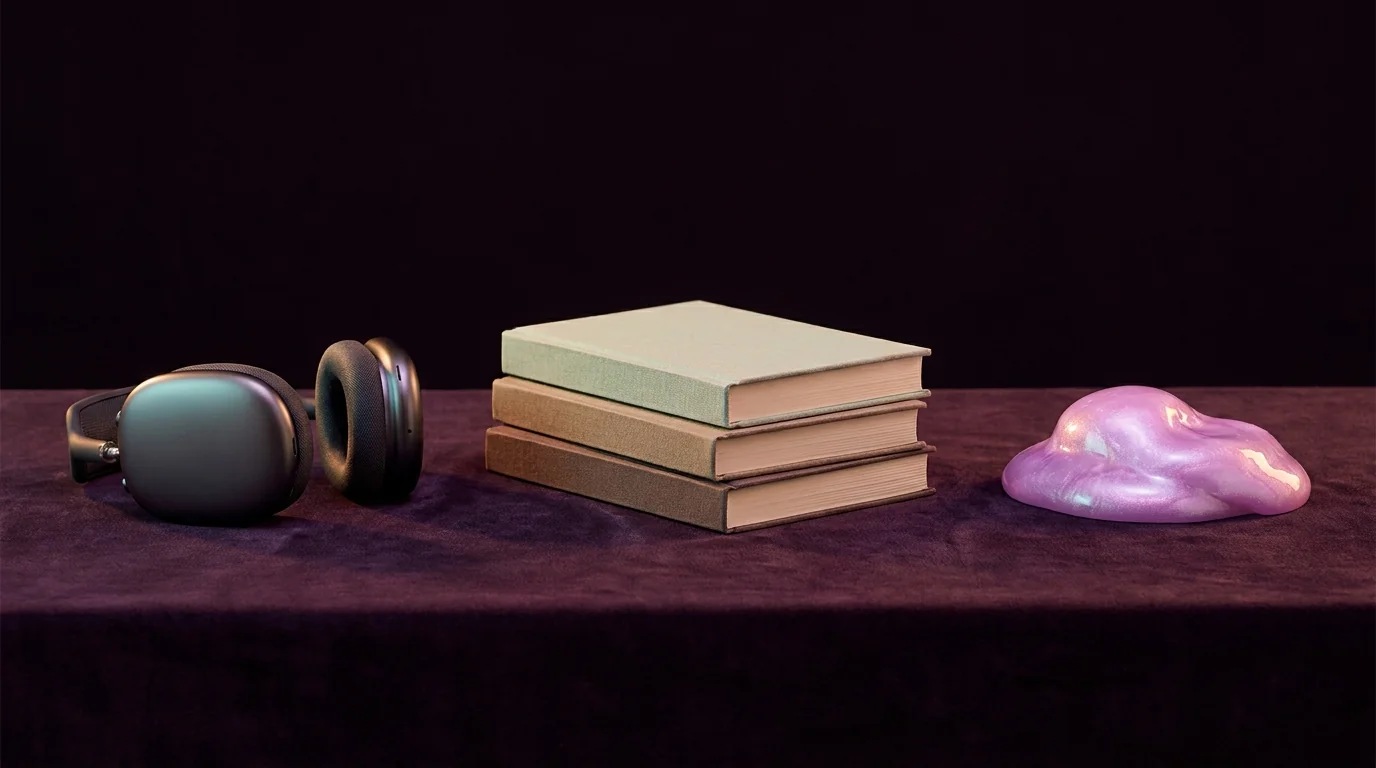
The library, the curriculum, and the sensory room. We made one of these three apps, and we referee the match anyway.
 Comparisons
Insight Timer Review: Is It Really Free?
The 120,000-session library really is free. The honest catches are volume, variance, and one paywall decision everyone complains about.