How to Meditate: A Beginner's Guide to the First Ten Minutes
Learn how to meditate as a complete beginner: what to actually do with your mind, how long to sit, why wandering is normal, and a kind ten-minute plan.
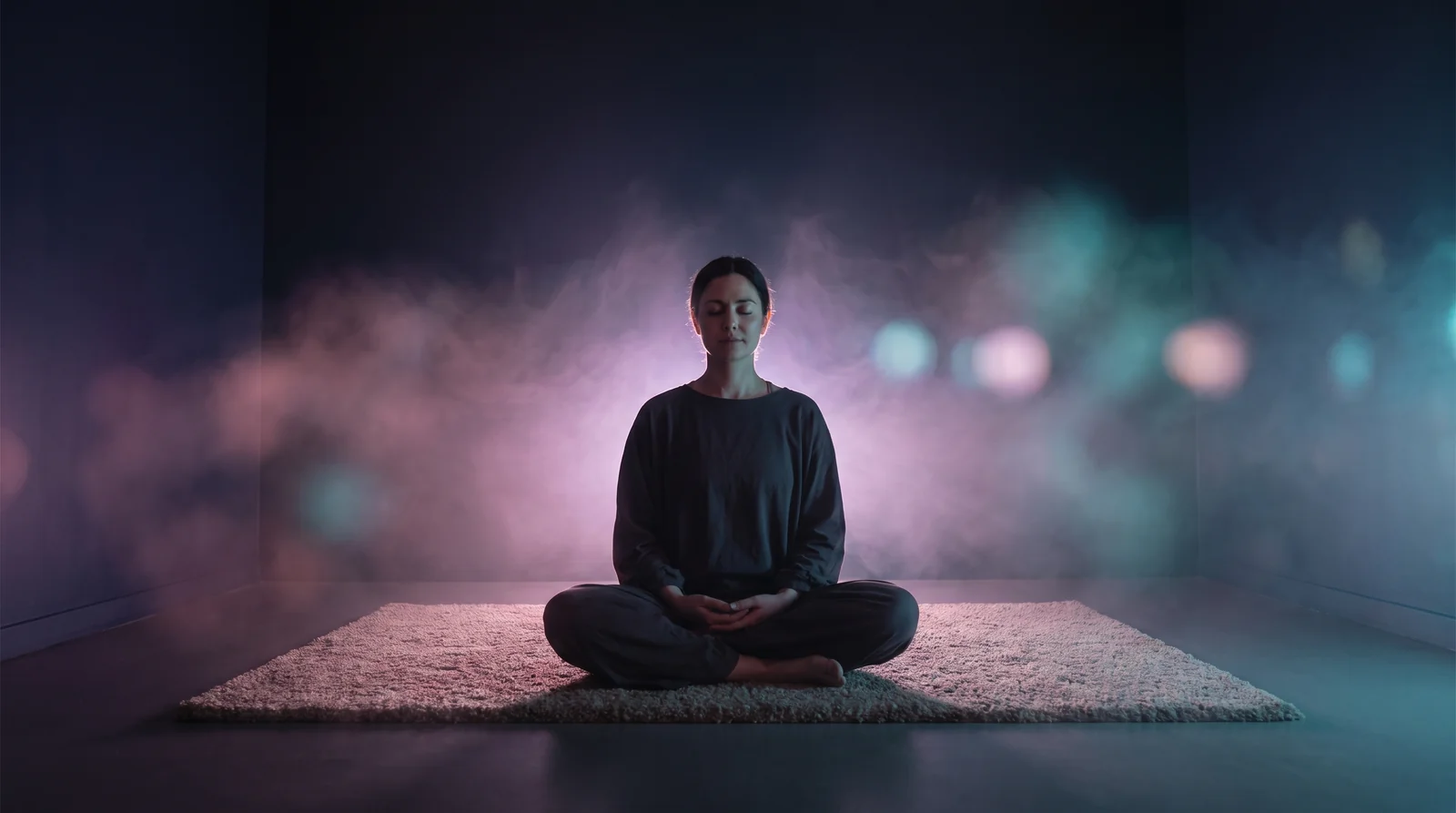
Nobody warns you how strange the first attempt at meditation feels. You sit down, close your eyes, and discover that your mind, far from settling, behaves like a kitchen drawer upended onto the floor: shopping lists, old conversations, a song you did not choose. Most beginners conclude within minutes that they are uniquely bad at this. They are not. They have simply met their own attention for the first time, and attention, untrained, is a lively thing.
This guide is for the person who has never meditated, or who has tried and quietly given up. It will not ask you to adopt a philosophy, buy a cushion, or sit for forty minutes. It will ask you for ten, and it will tell you honestly what those ten minutes are for.
What meditation actually is
Strip away the incense and the mountain photography and meditation is a modest activity: you choose something to rest your attention on, you notice when attention has wandered, and you bring it back. That is the whole mechanism. The anchor can be the breath, a candle flame, a sound, a slow visual, the sensations of the body. The wandering is not a malfunction. The wandering, and the returning, are the exercise, in the way that lifting and lowering are the exercise in a gym.
It helps to know that the evidence for meditation is real but sober. A well-known systematic review and meta-analysis of clinical trials found that mindfulness meditation programmes produced small to moderate improvements in anxiety, depression and stress (Goyal et al., 2014, JAMA Internal Medicine). Small to moderate is not nothing; it is roughly the effect size many people get from other well-regarded interventions. But it does mean you can lower the stakes. You are not chasing enlightenment by Friday. You are practising a skill that tends, over weeks, to make the inside of your head a slightly kinder place to live.
The wandering is not a malfunction. The wandering, and the returning, are the exercise.
Before you begin: three permissions
First, permission to be comfortable. You do not need the lotus position; a chair is fine, a sofa is fine, lying down is fine if you can stay awake. The spine likes to be tall-ish and the hands like to be still, and that is the extent of the posture requirements.
Second, permission to think. You will think. Ten thousand hours of practice do not silence a mind; they change the relationship with it. Your job as a beginner is not to stop thoughts but to notice them a little sooner, the way one notices having walked into the wrong room.
Third, permission to keep it short. Ten minutes is a real practice. So is five. Consistency beats duration so thoroughly that a daily five minutes will teach you more in a month than a heroic hour attempted twice.
The ten-minute starting plan
- Minutes one and two: arrive. Sit down, set a gentle timer, and let your eyes close or lower. Take three slower breaths, feeling the exhale leave. Do not try to meditate yet; just stop moving.
- Minutes three to five: find the breath. Rest your attention wherever breathing is most obvious, the nostrils, the chest, the belly. Follow one inhale from beginning to end, then one exhale. That is one repetition.
- Minutes six to nine: work the return. When you notice you have drifted, and you will, perhaps twenty times, silently name it, thinking, and come back to the next breath. No commentary, no marks deducted.
- Minute ten: widen. Let go of the breath and simply sit, hearing the room, feeling the weight of your body. Open your eyes slowly. Notice, before you stand, whether anything is different, even by a degree.
That is the entire session. If you did it while thinking the whole time, you did it. The noticing that you were thinking, however late it came, was the practice working.
If closed eyes feel impossible
Some minds find that shutting the eyes turns the inner volume up rather than down, and for them there is an older doorway: open-eyed practice. Traditions have always known this. Trataka rests the gaze on a candle flame; Zen practitioners sit facing a wall with eyes half open; whole lineages of visual meditation exist precisely because some nervous systems settle faster through the eyes than through the breath.
The modern version is simply to give your gaze something slow and pleasing to hold. A fire, an aquarium, rain on a window. On a screen, a slowly folding texture does the same work: in Feelsy, many people begin with two minutes of watching slime or fluid move, sometimes with the 4-7-8 breathing exercise pacing them, and only then close their eyes for the remaining minutes. The visual acts as a landing strip. There is no rule that meditation must begin in the dark.
The mistakes that are not mistakes
Falling asleep occasionally means you were tired, not unspiritual. Feeling bored means the mind is downshifting from its usual stimulation diet, and boredom sat with kindly often turns into something quieter and more interesting. Feeling worse for a few minutes, more aware of tension or worry, usually means you have finally noticed what was already there; awareness arrives before ease does. None of these are signs to stop. They are the ordinary weather of a beginning practice.
The one genuine mistake is turning meditation into another performance review. If you finish a session and immediately grade it, gently note that grading, too, is just a thought. There are no good sessions and bad sessions. There are only sessions, and the slow accumulation they build.
Making it stick
Attach the ten minutes to something that already happens: after the kettle in the morning, after brushing teeth at night, on the train if you commute. An anchor in the day matters more than the hour on the clock. Keep the same seat if you can; bodies learn places, and a chair that has held fifty quiet sittings begins to invite the fifty-first.
And when a day collapses and ten minutes is absurd, do one minute. One breath followed properly is not a failure of practice. It is practice, in its smallest denomination, and it keeps the habit alive until the calmer week returns.
Feelsy is a wellness product, not medical advice. If stress, anxiety or sleep problems persist, please speak with a qualified professional.
References
- Goyal, M., Singh, S., Sibinga, E. M. S., et al. (2014). Meditation programs for psychological stress and well-being: A systematic review and meta-analysis. JAMA Internal Medicine, 174(3), 357–368.
Frequently Asked Questions
How do I start meditating as a complete beginner?
The article recommends a simple ten-minute plan: spend the first couple of minutes just sitting still and settling, then rest attention on the breath for a few minutes, spend the middle stretch practicing returning attention whenever it wanders, and finish by widening awareness to the room before opening your eyes. You don't need a cushion, a philosophy, or forty minutes to begin.
Is it normal for your mind to wander constantly when meditating?
Yes, completely normal. The article explains that meditation is essentially choosing something to rest attention on, noticing when it wanders, and bringing it back, and the wandering and returning are the actual exercise, not a sign of failure. Even experienced practitioners still think; the practice changes your relationship with thoughts rather than eliminating them.
Does meditation actually work, according to research?
A well-known systematic review and meta-analysis of clinical trials found that mindfulness meditation programmes produced small to moderate improvements in anxiety, depression, and stress. That's a real but modest effect, similar in size to what many other well-regarded interventions produce, so beginners shouldn't expect dramatic transformation right away.
What if I can't meditate with my eyes closed?
Some minds find that closing the eyes turns up inner noise rather than settling it, and the article points to an older alternative: open-eyed practice, such as trataka candle gazing or Zen wall-facing meditation. A modern version is simply giving your gaze something slow to hold, like a fire, an aquarium, or a slowly folding visual texture, using it as a landing strip before optionally closing your eyes.

About the author
Contributing writer
Eleonor writes about contemplative traditions, attention and the cultural history of calm. She has spent two decades collecting the rituals humans use to slow down, from zazen halls to hammams, and translating them for modern, screen-lit lives.
Feel it for yourself.
Feelsy turns reading about calm into practising it. Two minutes of a slow texture is often the whole difference.


Related reading
 Visual Meditation
Meditation for People Who Can't Meditate
If sitting still with your eyes closed feels impossible, you are not broken. Here is a gentler on-ramp built around senses, movement and very small doses.
 Breath & Body
Body Scan Meditation: A Guided Tour of Your Own Weight
Learn how to do a body scan meditation step by step: what it is, why moving attention through the body calms the mind, and how to practise it tonight.
 Breath & Body
The 4-7-8 Breathing Technique, Step by Step
A focused walkthrough of the 4-7-8 breath: what it is, how to do it, why the long exhale calms you, and when to use it during the day and before sleep.
 Visual MeditationNew
Highway Hypnosis: Why You Can't Remember the Last Ten Miles
You arrive at your exit with no memory of driving there. Highway hypnosis is real and common: here's the science of the road trance and how to use it safely.
 Visual Meditation
Why the Northern Lights Mesmerise Us: Aurora Watching as Visual Meditation
What causes the northern lights, why the aurora feels so calming to watch, and how to turn sky watching into a simple visual meditation practice.
 Visual Meditation
Blue Mind: Why Being Near Water Calms the Brain
What blue mind theory says about why oceans, lakes and rivers soothe us: the research on blue space, water's pull on the eye, and how to use it daily.