Can't Sleep? Why Getting Out of Bed Is the Counterintuitive Fix
Lying awake trying harder is the one thing that makes insomnia worse. Here's the 20-minute rule, the science of stimulus control, and how to use it.
By Kurt Woleret
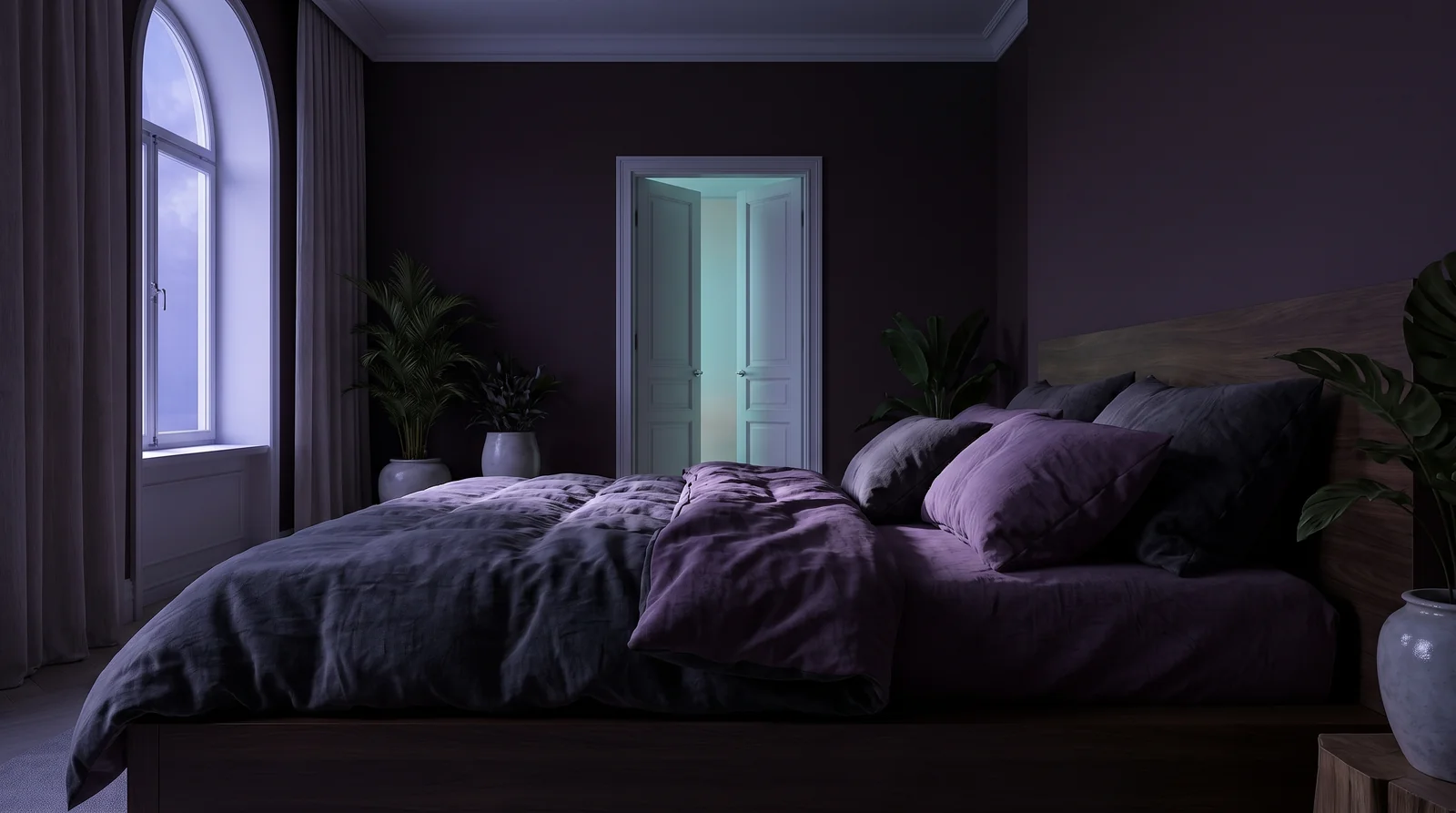
Every insomniac I know, and I live in New York, so I know plenty, has the same core strategy: stay in bed and try harder. Lie there. Grind it out. Surely sleep rewards effort, like everything else in this city. Except sleep is the one arena where effort works against you, and the best-supported behavioral fix in the entire insomnia literature says the opposite: when you can't sleep, get up. Leave the bed. It sounds like giving up. It's actually the treatment.
Your bed is a classroom, and it's teaching the wrong lesson
The idea is called stimulus control, and it was developed by the psychologist Richard Bootzin back in the 1970s. The logic is almost embarrassingly simple. Brains learn by association. If you spend night after night lying in bed frustrated, checking the clock, doing arithmetic on how ruined tomorrow will be, your brain starts filing the bed under stress, not sleep. The mattress becomes a cue for arousal. That's why so many bad sleepers report getting drowsy on the couch at 10 p.m., then snapping wide awake the moment their head hits the actual pillow. The bed itself has become the trigger.
Researchers call this conditioned arousal, and once you see it, the fix explains itself: stop rehearsing wakefulness in bed. Every frustrated hour you log on the mattress is a training session for the wrong association. Getting up isn't surrender, it's refusing to keep teaching the class.
The 20-minute rule
Here's the classic protocol. Go to bed only when you're actually sleepy, not just tired, sleepy, the eyes-heavy kind. If you're awake for what feels like twenty minutes or so, and estimate it, don't clock-watch, the clock is a stress machine, get up. Go to another room, or at least another chair. Keep the lights low. Do something calm and unstimulating until sleepiness returns, then go back to bed. Repeat as many times as it takes. Get up at the same time every morning no matter how the night went, and skip the revenge naps. The bed is for sleep; everything else lives elsewhere.
The first few nights of this can be rough, and I won't pretend otherwise. You're trading short-term comfort for a retrained association, and the retraining takes a couple of weeks of consistency. But this isn't folk wisdom. Stimulus control has been tested for five decades, and the American Academy of Sleep Medicine's clinical practice guideline on behavioral treatments for chronic insomnia recommends it as an effective approach, both on its own and as a core ingredient of cognitive behavioral therapy for insomnia, which is the field's gold standard. In a market full of sleep gadgets, the intervention with the strongest paper trail is: leave the room. Free of charge.
You can't force sleep. You can only stop teaching your bed to expect a fight.
What to do at 2 a.m. while you're up
The goal of the out-of-bed time is to be boring on purpose. Dim light, low stakes, nothing with a scoreboard or a scroll. Read something dull on paper. Fold the laundry badly. Sit in the armchair and do slow breathing; the 4-7-8 pattern is a good one because counting gives your brain a small dumb job. This is also the one time of day I'll defend a screen, with conditions: brightness at minimum, nothing interactive, nothing with news in it. I keep Feelsy's autoplay mode on for this, slow textures drifting by with quiet sound, because it occupies my eyes just enough to crowd out the 2 a.m. board meeting my brain wants to convene, without asking anything of me. The moment the eyelids get heavy, screen off, back to bed. The bed gets you only when sleep is actually on offer.
The mistakes that keep people stuck
A few failure modes come up constantly. Clock-checking is the big one: every glance is a fresh calculation of tomorrow's ruin, and it spikes exactly the arousal you're trying to unlearn, so turn the clock around. Second: going back to bed because you're bored rather than sleepy, which just restarts the frustration loop; wait for the real signal. Third: sleeping in after a bad night. It feels like justice, but it drains the sleep pressure you need for the next night and keeps the whole cycle rolling. The fixed wake time is non-negotiable; it's the metronome the rest of the system tunes to.
And one clarification, because people ask: this is a tool for the lying-awake-frustrated kind of sleeplessness. If you're in bed calm and drowsy, drifting pleasantly, stay put. The rule targets frustration, not quiet rest. Resting peacefully in the dark has value even when it isn't technically sleep.
Why this beats trying harder
Sleep is one of those systems, like laughter or appetite, that responds to invitation and not command. Trying harder raises effort, effort raises arousal, arousal blocks sleep; the harder you push, the further it backs away. Stimulus control works because it quits the tug-of-war entirely. You make the bed mean one thing, you keep the wake time steady, and you let sleep pressure and a calmer association do work that willpower never could. It's the rare case where the lazy-sounding option is the disciplined one. Took me years to accept that. My mattress and I are on much better terms now.
Feelsy is a wellness product, not medical advice. If stress, anxiety or sleep problems persist, please speak with a qualified professional.
References
- Edinger, J. D., Arnedt, J. T., Bertisch, S. M., et al. (2021). Behavioral and psychological treatments for chronic insomnia disorder in adults: an American Academy of Sleep Medicine clinical practice guideline. Journal of Clinical Sleep Medicine, 17(2), 255–262.
Frequently Asked Questions
Should I get out of bed if I can't sleep?
If you've been lying awake frustrated for around twenty minutes, yes. Get up, keep lights low, do something calm and boring, and return to bed only when you feel properly sleepy. This is called stimulus control, and it's one of the best-supported behavioral treatments for insomnia. Staying in bed frustrated trains your brain to associate the bed with stress instead of sleep.
What is the 20-minute rule for sleep?
It's a guideline from stimulus control therapy: if you're awake in bed for roughly twenty minutes, leave the bed and do something quiet in dim light until sleepiness returns. You estimate the time rather than watching a clock, since clock-checking itself raises arousal. You repeat the cycle as often as needed and keep a fixed wake time in the morning.
What should I do when I get up in the middle of the night?
Be boring on purpose. Keep lights dim and choose something calm with no scoreboard and no scrolling: dull reading, slow breathing like the 4-7-8 pattern, or a quiet, non-interactive wind-down. The point is to let arousal fade without stimulating yourself, then return to bed the moment your eyes get heavy.
Why do I fall asleep on the couch but not in bed?
That's conditioned arousal. If you've spent many nights frustrated in bed, your brain has learned to treat the bed as a cue for stress and alertness, while the couch carries no such baggage. Stimulus control reverses this by making sure the bed is only paired with sleepiness and sleep, never with lying awake upset.
Does getting up at night ruin the next day?
A rough night costs less than most people fear, and the retraining pays it back within a couple of weeks of consistency. The key is refusing to compensate: same wake time every morning, no long naps, no sleeping in. That protects the sleep pressure that makes the next night better.

About the author
Contributing writer
Kurt is a New York based writer covering the practical science of stress, sleep and focus. He is the resident sceptic of the Journal: if a technique cannot survive a crowded subway commute and a deadline week, he is not interested in it.
Feel it for yourself.
Feelsy turns reading about calm into practising it. Two minutes of a slow texture is often the whole difference.


Related reading
 Sleep
SleepTired but Can't Sleep? Why You're Wired at Bedtime
Exhausted all day, wide awake at midnight. Here's the science of being tired but wired, and what actually works to switch your brain off at bedtime.
 Sleep
SleepHow to Stop Racing Thoughts at Night
Racing thoughts at night are a habit the brain can unlearn. Here is why minds speed up at bedtime and the techniques that quiet them, step by step.
 Sleep
SleepWhy You Wake Up at 3 AM (and How to Get Back to Sleep)
Waking at 3 AM isn't a curse or a sign something's broken. Here's the sleep science behind those small-hours wake-ups, and what actually gets you back down.
 SleepNew
Night Owl vs Early Bird: The Science of Chronotypes
Night owl or early bird isn't a personality flaw or a virtue. It's a chronotype. Here's what the science says about your body clock and how to work with it.
 SleepNew
How to Wake Up Early (Without Hating Your Life)
Want to become a morning person? Here's how to wake up early using light, timing and consistency, based on what circadian science actually shows.
 Sleep
SleepHow to Get Over Jet Lag: A Body-Clock Owner's Manual
Jet lag isn't ordinary tiredness, it's your body clock running on the wrong city. Here's how light, timing and a little planning reset it faster.