Tired but Can't Sleep? Why You're Wired at Bedtime
Exhausted all day, wide awake at midnight. Here's the science of being tired but wired, and what actually works to switch your brain off at bedtime.
By Kurt Woleret
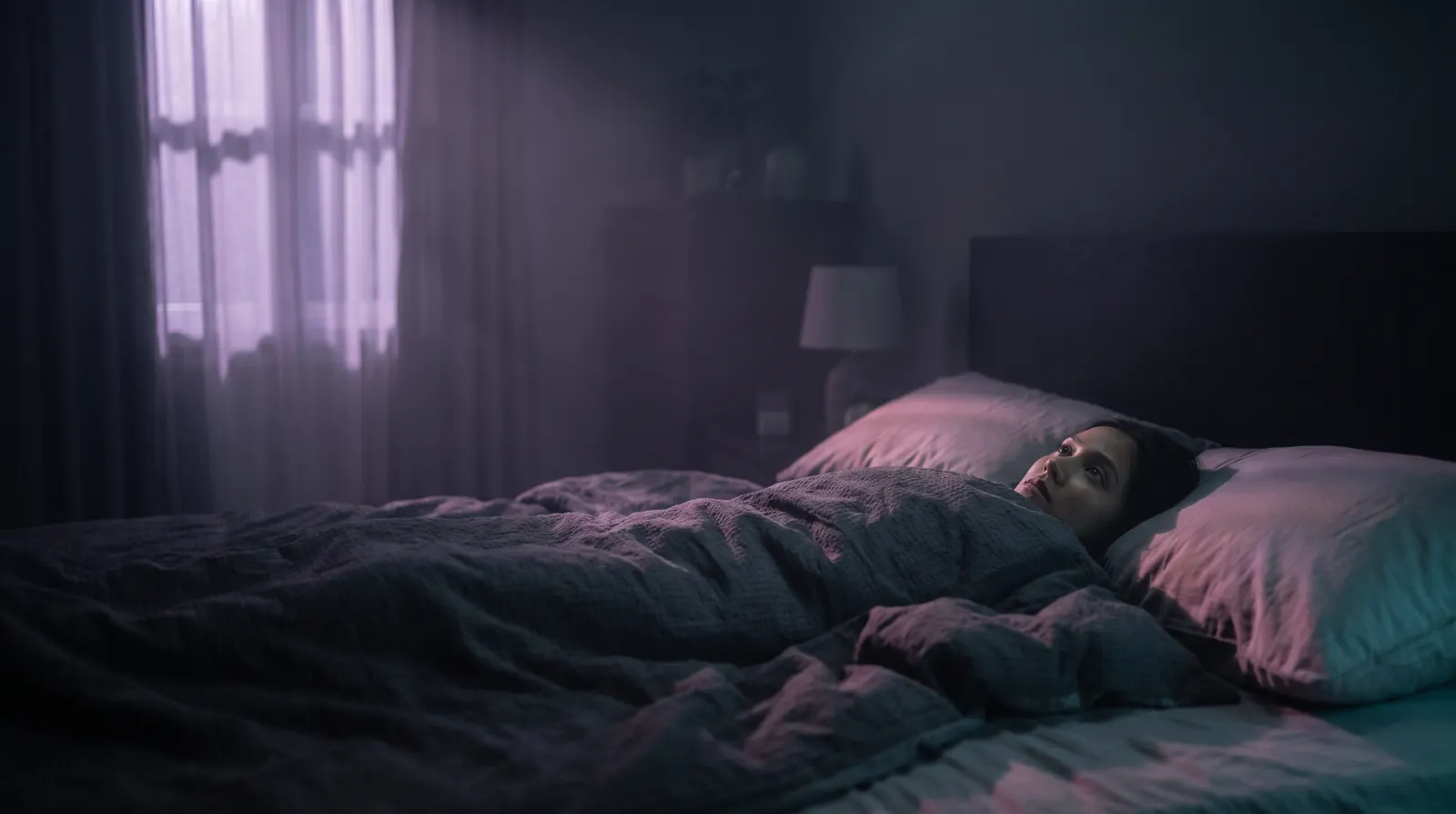
Here's a trick my body loves. I'll spend a whole day running on fumes. Yawning on the subway. Zoning out in meetings. Fantasizing about my pillow the way other people fantasize about vacations. Then I get into bed, turn off the light, and my brain snaps awake like it just heard a fire alarm. Suddenly I'm replaying a conversation from 2019 and planning next week in high definition. Tired all day, wired all night. If that's you too, you're not broken. You're just running two systems at once, and the wrong one is winning.
Sleepy and tired are not the same thing
This is the core mistake most of us make. Tired means your body and mind are depleted. Sleepy means your brain is actually ready to switch off. They feel related, but they're run by different machinery. Sleep pressure builds all day as a byproduct of being awake, and it's real. But there's a second dial: arousal, your nervous system's level of alertness. Stress, deadlines, bright screens, late coffee, and doomscrolling all push that dial up. And here's the annoying part: arousal beats sleep pressure. Every time. You can be carrying sixteen hours of exhaustion, but if your alert system thinks something is happening, it will keep the lights on.
There's a timing wrinkle too. Your body clock runs an alerting signal that actually peaks in the evening, a few hours before your natural bedtime. Sleep scientists call the zone right before that peak drops off a second wind. It's why you can feel wrecked at 6 p.m., inexplicably fine at 9, and betrayed at midnight. If you use that evening lift to start a new project or a new season of anything, you're pouring fuel on the exact system you need to power down.
You can't be exhausted and on high alert at the same time and expect sleep to referee. Alert wins.
The hyperarousal problem
Sleep researchers have a name for this: hyperarousal. A major review by Riemann and colleagues in Sleep Medicine Reviews pulled together decades of evidence and concluded that chronic insomnia isn't mainly a nighttime problem. People with insomnia show elevated arousal around the clock: faster heart rates, higher stress hormone activity, a brain that stays busier than it should even during sleep itself. In other words, the wired feeling at 11 p.m. isn't a random glitch. It's the evening peak of a nervous system that's been idling too high all day.
You don't need clinical insomnia to get a taste of this. One brutal deadline week will do it. Your body spends the day marinating in low-grade alert mode, and then you ask it to go from sixty to zero the moment your head hits the pillow. It can't. Nothing about human biology works like that. Sleep is not an off switch. It's a landing, and landings need a descent.
What's revving you up
Before we get to fixes, it helps to know what's pushing the arousal dial. The usual suspects, in rough order of how often I catch them in my own apartment:
- Working, or even just checking work, until the minute you lie down. Your brain doesn't have a loading dock. It can't drop the day's cargo instantly.
- Screens that are bright, fast, and interesting. The problem isn't only the light. It's that the content keeps your prediction machinery engaged.
- Caffeine after mid-afternoon. It has a long half-life, and it quietly masks the sleepiness signal you need to feel.
- Revenge bedtime procrastination. Staying up late to reclaim personal time feels like freedom and bills you like a loan shark.
- The bed-as-office problem. If you answer emails from bed, your brain files the mattress under work.
What actually works
The goal is a descent. Not a perfect routine, not a forty-step ritual from a wellness influencer. Just a ramp from alert to dim. Start thirty to sixty minutes before bed. Lights lower. Work closed. Phone boring. If your mind is loud, dump it onto paper: tomorrow's tasks, the thing you're worried about, all of it. It's not poetry. It's cargo unloading.
Then give your body an actual downshift signal. Slow breathing is the most portable one we have. Long exhales nudge the nervous system toward its rest state, which is exactly the dial we're trying to move. The 4-7-8 pattern is a solid template, and if counting in your head at midnight sounds like a chore, the guided 4-7-8 exercise in Feelsy paces it for you so you just follow along. Two or three minutes is plenty to start the descent.
If your eyes want something to do, don't fight it. Give them something with no plot. This is where slow visuals earn their keep: a texture folding over itself, drifting particles, anything smooth and repetitive. I keep Feelsy's autoplay mode running dim on my nightstand for exactly this. It's the visual equivalent of watching rain: enough to occupy the restless part of the brain, nothing for the alert part to grab onto. Compare that to one more episode, which is engineered to do the opposite.
One more rule, borrowed from the clinicians: if you've been lying awake for what feels like twenty minutes or more, get up. Sit somewhere dim and do something quiet and dull until you feel actual sleepiness, then go back. It feels counterproductive. It isn't. It stops your brain from learning that bed is where the wide-awake arguing happens.
When to take it seriously
A wired night here and there is life. But if you're tired but can't sleep most nights for a month or more, and it's wrecking your days, that's worth a conversation with a professional. Cognitive behavioral therapy for insomnia is the gold-standard treatment, it works better long-term than sleeping pills for most people, and it directly targets the hyperarousal loop we've been talking about. There's no prize for white-knuckling it.
Feelsy is a wellness product, not medical advice. If stress, anxiety or sleep problems persist, please speak with a qualified professional.
References
- Riemann, D., Spiegelhalder, K., Feige, B., et al. (2010). The hyperarousal model of insomnia: A review of the concept and its evidence. Sleep Medicine Reviews, 14(1), 19-31.
Frequently Asked Questions
Why am I tired all day but wide awake at night?
Being tired and being sleepy are run by different systems. Tiredness is depletion, while sleepiness requires your nervous system's arousal level to drop. Stress, late screens, caffeine, and working right up until bedtime keep arousal high, and high arousal overrides sleep pressure no matter how exhausted you are. The fix is a deliberate wind-down ramp, not more willpower.
What is hyperarousal?
Hyperarousal is a state where your nervous system idles too high around the clock, with faster heart rate, elevated stress hormone activity, and a busier brain. A major research review by Riemann and colleagues found that people with chronic insomnia show this elevated arousal both day and night, which is why the problem can't be solved only at bedtime. Lowering your overall stress load during the day helps the night take care of itself.
Should I stay in bed if I can't sleep?
No. If you've been lying awake for around twenty minutes or more, get up, sit somewhere dim, and do something quiet and boring until real sleepiness shows up, then return to bed. This keeps your brain from associating the bed with frustrated wakefulness. Resting in bed is not worthless, but training your brain that bed means sleep matters more in the long run.
How long before bed should I stop working and looking at screens?
Aim for thirty to sixty minutes of descent before lights out. Close work, lower the lights, and switch your inputs to something slow and low-stakes. Fast, interesting content keeps your brain's alert systems engaged, which is exactly what you're trying to power down. A slow visual texture or a paced breathing exercise like 4-7-8 makes a better final input than one more episode.
When should I see someone about not sleeping?
If most nights for a month or more you're tired but can't sleep, and your days are suffering, talk to a professional. Cognitive behavioral therapy for insomnia is the gold-standard treatment and outperforms sleeping pills long-term for most people. Occasional wired nights are normal, but a persistent pattern deserves real help rather than more sleep hacks.

About the author
Contributing writer
Kurt is a New York based writer covering the practical science of stress, sleep and focus. He is the resident sceptic of the Journal: if a technique cannot survive a crowded subway commute and a deadline week, he is not interested in it.
Feel it for yourself.
Feelsy turns reading about calm into practising it. Two minutes of a slow texture is often the whole difference.


Related reading
 Sleep
SleepHow to Stop Racing Thoughts at Night
Racing thoughts at night are a habit the brain can unlearn. Here is why minds speed up at bedtime and the techniques that quiet them, step by step.
 Sleep
SleepWhy Anxiety Feels Worse at Night (and What Actually Helps)
Why is anxiety worse at night? How hormones, darkness and an undistracted mind amplify worry after dark, and the gentle evening practices that help.
 Sleep
SleepRevenge Bedtime Procrastination: Why You Won't Go to Sleep
Revenge bedtime procrastination is staying up late to steal back your day. Here's why exhausted people do it, and how to stop without giving up your evening.
 SleepNew
Night Owl vs Early Bird: The Science of Chronotypes
Night owl or early bird isn't a personality flaw or a virtue. It's a chronotype. Here's what the science says about your body clock and how to work with it.
 SleepNew
How to Wake Up Early (Without Hating Your Life)
Want to become a morning person? Here's how to wake up early using light, timing and consistency, based on what circadian science actually shows.
 Sleep
SleepCan't Sleep? Why Getting Out of Bed Is the Counterintuitive Fix
Lying awake trying harder is the one thing that makes insomnia worse. Here's the 20-minute rule, the science of stimulus control, and how to use it.