Haiku as Meditation: Seventeen Syllables of Attention
How writing haiku trains attention: why the tiny form works like meditation, what noticing small moments does for wellbeing, and how to write your first.
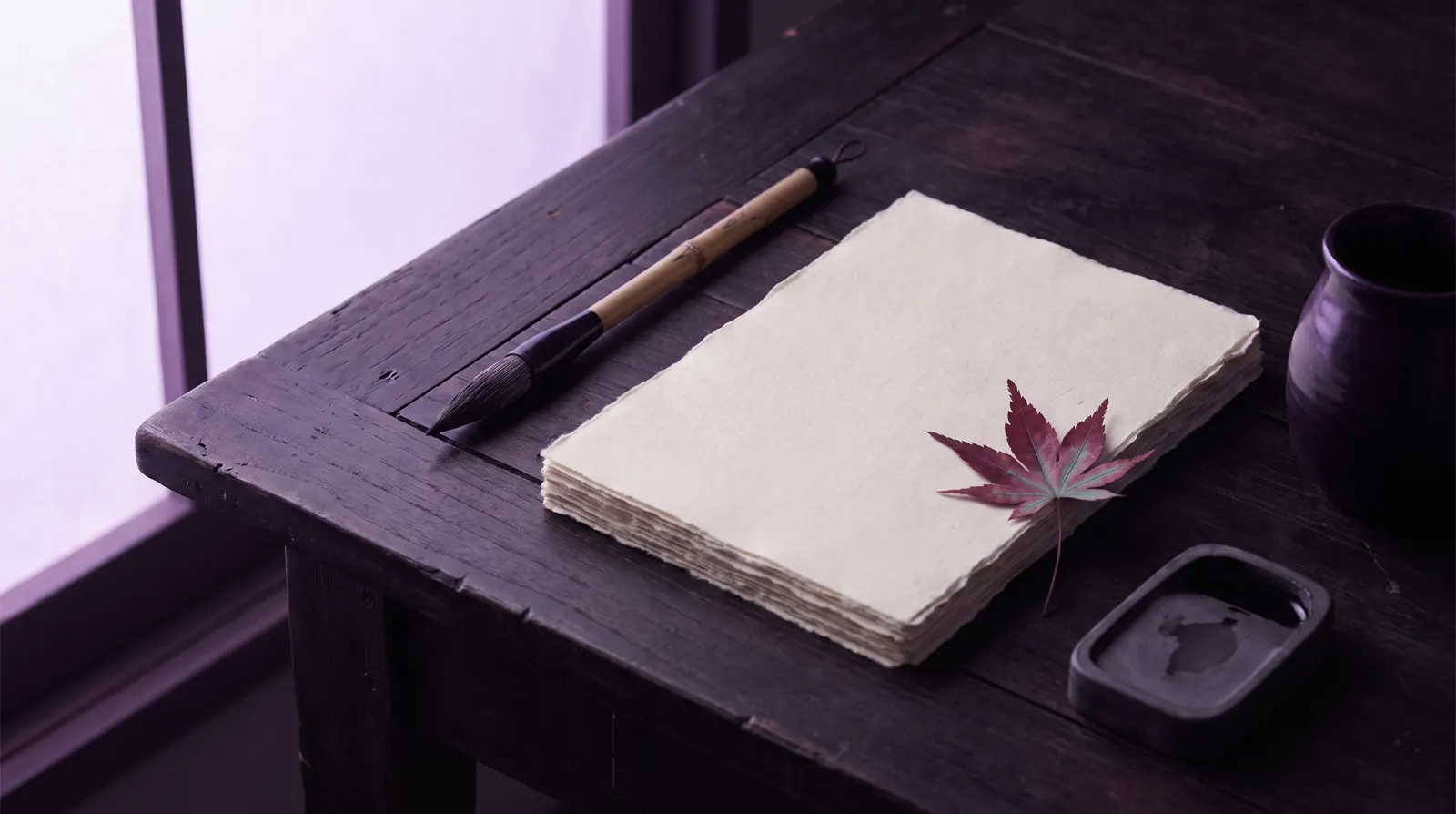
In the spring of 1686, the poet Matsuo Bashō heard a frog jump into an old pond, and wrote seventeen syllables about it that Japan has been repeating for three and a half centuries. An old pond; a frog leaps in; the sound of water. That is the whole poem. No moral, no metaphor explained, no poet visible in the frame. Just one small event, witnessed completely.
This is the strange power of haiku, and the reason I want to argue for it here not as literature but as a practice. You do not need to be a poet to write one, any more than you need to be an athlete to take a walk. A haiku is, at bottom, a container for a single moment of full attention, and writing one does something remarkably similar to what sitting meditation does: it stops the day, narrows the aperture, and asks you to actually be where you are. The difference is that at the end you have a small object to show for it, seventeen syllables long.
The smallest room in literature
The traditional form is brief to the point of austerity. Three lines, arranged five, seven and five syllables in English adaptations of the Japanese sound units. A kigo, or season word: something that anchors the poem in a particular moment of the year, frost or cicadas or plum blossom. And, classically, a kireji or cutting word, a small hinge that divides the poem into two parts which illuminate each other; English versions often manage this with a dash or a colon, though we shall use a colon, naturally.
What the form excludes is more important than what it includes. There is no room for abstraction: seventeen syllables cannot hold an essay on loneliness, only the single crow on the bare branch at dusk. There is no room for the poet's opinions; the classical haiku keeps the self out of the frame and lets the image do the feeling. And there is no room for elaboration, which means every word must be a load-bearing wall. The form is a small room that fits exactly one moment, and nothing else can be moved in.
Why a tiny poem focuses the mind
Consider what you must actually do to write one. First, you must notice something: not remember, not opine, but catch a live moment as it happens, steam rising off the pavement after rain, the neighbour's cat asleep in the last wedge of sun. This is precisely the muscle mindfulness practice trains, the redirection of attention from commentary to experience. The haiku simply gives the redirection a purpose and a deadline.
Second, you must compress. Seventeen syllables force a triage: what is the one detail that carries the whole scene? The wet pavement or the steam; the cat or the wedge of sun; you cannot keep both. This sounds like a writing problem, but it is really an attention problem, because to choose the essential detail you must look again, and harder, at the original moment. People who write haiku regularly report that the world starts offering them material everywhere, which is another way of saying they have begun noticing on purpose. The poem is almost a by-product; the noticing is the practice.
The poem is the receipt; the noticing is the purchase.
What noticing does for wellbeing
There is respectable evidence that this kind of deliberate noticing pays. In a two-week study, researchers asked ordinary people to notice how everyday nature made them feel, photographing or jotting a brief note about moments they encountered in their daily routine, no wilderness required; compared with control groups, the noticers ended the fortnight with higher wellbeing and a stronger sense of connection, and the effects came from bus stops and car parks as much as from parks (Passmore & Holder, 2017, The Journal of Positive Psychology). A haiku habit is essentially that intervention with better formatting. The season word even smuggles nature in on principle: to find your kigo, you must first find the season, and to find the season you must look up from the phone.
How to write your first haiku
Tonight, ideally. The steps are short:
- Go to a window, a doorstep or a kettle, and wait for one concrete thing to catch your eye. Not an idea: a thing. Rain on the bins is a classic of the genre.
- Say what season it belongs to. If your detail could happen in any month, look again until you find the one that could only be now.
- Write three lines of roughly five, seven and five syllables: the scene, the small event, the turn. Do not count on your fingers more than twice; near enough is traditional in English.
- Cut every word that explains. If a line tells the reader how to feel, replace it with what you actually saw.
- Read it aloud once, then stop improving it. A haiku is a moment, not a monument; tomorrow deserves its own.
A practice that fits in a pocket
What I love most about the haiku habit is its scale. Sitting meditation asks for a cushion, a timer and a fifteen-minute defence of your own calendar. A haiku asks for ninety seconds and something to look at, which makes it very nearly the only contemplative practice that fits inside a queue. Some evenings, when it is too dark and too late for windows, I let one of Feelsy's slow textures play and write my three lines about that instead: colour folding into colour is a legitimate landscape, and it holds still better than the cat. The point was never the pond or the frog. The point is that for seventeen syllables, you were entirely there to hear the water.
Feelsy is a wellness product, not medical advice. If stress, anxiety or sleep problems persist, please speak with a qualified professional.
References
- Passmore, H.-A., & Holder, M. D. (2017). Noticing nature: Individual and social benefits of a two-week intervention. The Journal of Positive Psychology, 12(6), 537–546.
Frequently Asked Questions
What is a haiku?
A haiku is a very short poem, traditionally three lines of five, seven and five syllables in English adaptations. Classical haiku include a season word, called a kigo, anchoring the poem in a particular time of year, and a cutting word or pause dividing it into two parts that illuminate each other. It records one concrete moment, keeping the poet's opinions out of the frame and letting the image do the feeling.
How is writing haiku like meditation?
Both train the same movement of mind: redirecting attention from commentary to direct experience. To write a haiku you must catch a live moment as it happens, then look at it again and harder in order to compress it into seventeen syllables. Regular practitioners find themselves noticing on purpose throughout the day; the poem is almost a by-product of the attention.
Does noticing small everyday moments actually improve wellbeing?
There is encouraging evidence that it does. In a two-week study, people asked to notice how everyday nature made them feel, jotting notes or taking photos during their normal routine, reported higher wellbeing and a stronger sense of connection than control groups. The moments came from ordinary places such as bus stops as much as from parks, so no wilderness is required.
Do haiku have to be exactly 5-7-5 syllables?
In English, near enough is traditional. The five-seven-five pattern adapts Japanese sound units that do not map perfectly onto English syllables, so treat it as a guide that forces compression rather than a law. The essential features are brevity, one concrete moment, a sense of season, and cutting every word that explains rather than shows.

About the author
Contributing writer
Eleonor writes about contemplative traditions, attention and the cultural history of calm. She has spent two decades collecting the rituals humans use to slow down, from zazen halls to hammams, and translating them for modern, screen-lit lives.
Feel it for yourself.
Feelsy turns reading about calm into practising it. Two minutes of a slow texture is often the whole difference.


Related reading
 Ancient Wisdom
Shoshin: Why Beginner's Mind Is the Expert's Secret
Shoshin, or beginner's mind, is the Zen practice of meeting familiar things as if for the first time. Learn what it means and how to practise it daily.
 Visual Meditation
Slow Looking: The Lost Art of Paying Attention
What slow looking means, why spending ten minutes with one painting changes what you see, and simple ways to practise deliberate attention anywhere.
 Ancient Wisdom
Mono no Aware: Japan's Word for the Beautiful Sadness of Passing Things
Mono no aware is Japan's term for the gentle sadness of passing things. Here is what the phrase means, where it comes from, and why it deepens everyday calm.
 Ancient Wisdom
Döstädning: The Gentle Swedish Art of Death Cleaning
What Swedish death cleaning really means: the calm philosophy of döstädning, how it differs from ordinary decluttering, and how to begin at any age.
 Ancient Wisdom
How to Start a Gratitude Journal You Will Actually Keep
How to start a gratitude journal that actually helps: what the research found, why most lists go stale, and the very old art of counting blessings.
 Ancient Wisdom
Ma: The Japanese Art of Negative Space
What is ma? The Japanese concept of negative space explained: why pauses, silence and empty room calm the mind, and how to practise ma in a crowded day.