Mono no Aware: Japan's Word for the Beautiful Sadness of Passing Things
Mono no aware is Japan's term for the gentle sadness of passing things. Here is what the phrase means, where it comes from, and why it deepens everyday calm.
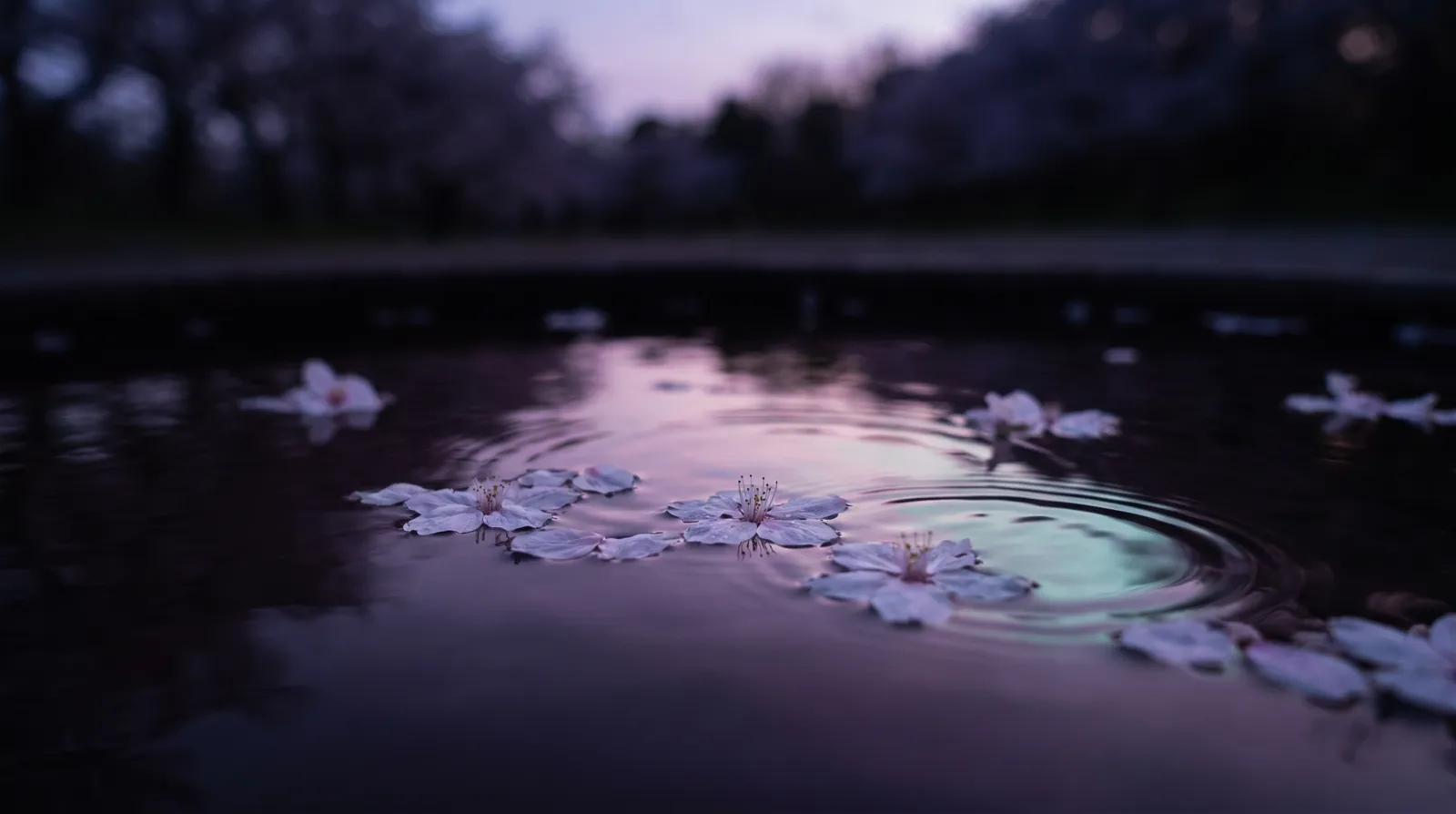
There is a particular feeling that arrives at the end of good things. The last evening of a holiday, when the light on the water seems suddenly urgent. The final page of a novel you have lived inside for a week. A child's outgrown shoes by the door. English speakers know the feeling intimately and have never quite named it; we reach for bittersweet, which is close, or nostalgia, which is wrong, since the thing has not yet gone. Japanese has had a name for it for a thousand years: mono no aware, usually rendered as the pathos of things, or, more tenderly, the gentle sadness of things passing. It is not grief, and it is not melancholy. It is the small ache of noticing that what you love is temporary, felt at the very moment you love it, and Japanese aesthetics regards it not as a mood to be managed but as a faculty to be cultivated.
A scholar, a novel, and a name
The phrase is old, but its career as an idea owes most to Motoori Norinaga, an eighteenth-century scholar of Japanese literature who spent decades with The Tale of Genji, the sprawling court novel written by Murasaki Shikibu around the year 1000. Earlier commentators had mined Genji for moral instruction, treating its love affairs as cautionary tales. Norinaga argued that this missed the point entirely. The novel's purpose, he wrote, was to awaken mono no aware: a refined sensitivity to things and to the feelings that pass through them. The person of depth, in this reading, is not the one who judges rightly but the one who feels precisely; who registers the weight of a farewell, the exact colour of a late-autumn afternoon, the way a voice changes when something is ending. Aware itself began as a simple exclamation, an ah of the heart, the sound one makes on being moved. Mono means things. The whole phrase, literally, is the ah-ness of things, and there are days when no translation improves on that.
Why the cherry blossom, and not the plastic flower
The emblem of mono no aware is the cherry blossom, and the reason repays a moment's thought. Sakura are not the most spectacular flowers in Japan, nor the rarest. They are beloved because they fall. The blossom lasts a week, perhaps two if the weather is kind, and the finest moment of hanami, blossom viewing, is generally agreed to be not the peak but the fall: petals letting go in their thousands at the first serious breeze, an unhurried pink snow that everyone stands still to watch. A plastic blossom, permanent and perfect, moves nobody. The real one moves everyone, and it moves them because it is already leaving. This is the quiet logic at the centre of the idea: transience is not the tax on beauty but the source of it. The value of the evening is not diminished by its brevity; the brevity is doing much of the work.
Transience is not the tax on beauty but the source of it.
Not wabi sabi, and not despair
Mono no aware is often shelved beside wabi sabi, and the two are cousins, but they attend to different things. Wabi sabi is an aesthetic of objects: the cracked glaze, the weathered timber, the beauty of imperfection and age. Mono no aware is an emotion about time: the feeling that rises when we perceive impermanence directly. One admires a mended bowl; one is pierced by a falling petal. Nor should the idea be mistaken for pessimism. The sadness in it is famously gentle, closer to tenderness than to sorrow, and it points not towards resignation but towards attention. If everything passes, then this, now, the steam off the tea, the particular light of this particular evening, will not come again, and deserves to be actually seen. Far from darkening life, the sensibility polishes it. People who have sat with the idea often report the same paradox: expecting it to make them mournful, they find it has made them present.
Practising the perishable
Can a sensibility be practised? The Japanese tradition assumes so; that was Norinaga's whole case for reading novels. The training is simply exposure, taken slowly. Seasonal attention is the classic form: the Japanese calendar's small festivals of transience, blossom in spring, fireflies and summer rain, the moon of mid-autumn, first snow, are essentially appointments for noticing time pass. You need none of the festivals to keep the appointments. Watch one sunset through to the end, rather than the highlight. Let a piece of music finish in silence before the next begins. When the season turns, as it is turning now, notice one specific ending, the last warm evening, the first lamp lit at five o'clock, and let it be felt rather than scrolled past. I find slow, dissolving imagery a good rehearsal room for this: watching one of Feelsy's textures fold and vanish into the next, no frame repeating, is a small, low-stakes practice in loving something while letting it leave. The petals fall either way. The practice is in the watching.
There is one more gift in the idea, and it may be the most practical. A mind braced against endings spends a great deal of its energy on the bracing. Mono no aware proposes the opposite posture: endings are not the enemy of the good but part of its grammar, and a life that admits this can hold its evenings more lightly. The ache, when it comes, is not a malfunction. It is the receipt for having loved something. The tradition asks only that we read it slowly before putting it away.
Feelsy is a wellness product, not medical advice. If stress, anxiety or sleep problems persist, please speak with a qualified professional.
Frequently Asked Questions
What does mono no aware mean?
Mono no aware is a Japanese phrase usually translated as the pathos of things, or the gentle sadness of things passing. It names the small ache of noticing that what you love is temporary, felt at the very moment you love it. Literally, mono means things and aware began as an exclamation of the heart, so the phrase amounts to the ah-ness of things.
Where does the concept of mono no aware come from?
The phrase is around a thousand years old, but it became a central idea through Motoori Norinaga, an eighteenth-century scholar of Japanese literature. Studying The Tale of Genji, he argued the novel's purpose was to awaken a refined sensitivity to things and the feelings that pass through them, rather than to teach moral lessons.
What is the difference between mono no aware and wabi sabi?
Wabi sabi is an aesthetic of objects: it finds beauty in imperfection and age, such as a cracked glaze or weathered timber. Mono no aware is an emotion about time: the tender feeling that rises when you perceive impermanence directly, as when cherry blossom falls. One admires a mended bowl; the other is moved by a falling petal.
Why is the cherry blossom the symbol of mono no aware?
Cherry blossom lasts only a week or two, and the most treasured moment of blossom viewing is the fall itself, when petals let go by the thousands. The blossom is beloved precisely because it is already leaving, which captures the idea at the heart of mono no aware: transience is the source of beauty, not its tax.
How can I practise mono no aware in daily life?
The training is slow, deliberate exposure to endings. Watch one sunset through to the end, let a piece of music finish in silence, and notice one specific seasonal ending, such as the last warm evening of the year, rather than scrolling past it. The practice is simply in the watching, and in letting the feeling be felt.

About the author
Contributing writer
Eleonor writes about contemplative traditions, attention and the cultural history of calm. She has spent two decades collecting the rituals humans use to slow down, from zazen halls to hammams, and translating them for modern, screen-lit lives.
Feel it for yourself.
Feelsy turns reading about calm into practising it. Two minutes of a slow texture is often the whole difference.


Related reading
 Ancient Wisdom
Wabi-Sabi: The Japanese Art of Finding Calm in Imperfection
What wabi-sabi really means: the Japanese aesthetic of imperfect, impermanent beauty, and how its quiet philosophy softens perfectionism and stress.
 Ancient Wisdom
Memento Mori: The Ancient Practice of Remembering You Will Die
Memento mori, the old discipline of remembering death, was never meant to be morbid. Here is its history, and why the reminder tends to produce gratitude.
 Visual Meditation
Komorebi: The Japanese Word for Sunlight Through Leaves, and Why It Calms the Mind
Komorebi is the Japanese word for sunlight filtering through leaves. Here is what the word holds, why dappled light soothes the brain, and how to practise it.
 Ancient Wisdom
Döstädning: The Gentle Swedish Art of Death Cleaning
What Swedish death cleaning really means: the calm philosophy of döstädning, how it differs from ordinary decluttering, and how to begin at any age.
 Ancient Wisdom
How to Start a Gratitude Journal You Will Actually Keep
How to start a gratitude journal that actually helps: what the research found, why most lists go stale, and the very old art of counting blessings.
 Ancient Wisdom
Haiku as Meditation: Seventeen Syllables of Attention
How writing haiku trains attention: why the tiny form works like meditation, what noticing small moments does for wellbeing, and how to write your first.