Slow Looking: The Lost Art of Paying Attention
What slow looking means, why spending ten minutes with one painting changes what you see, and simple ways to practise deliberate attention anywhere.
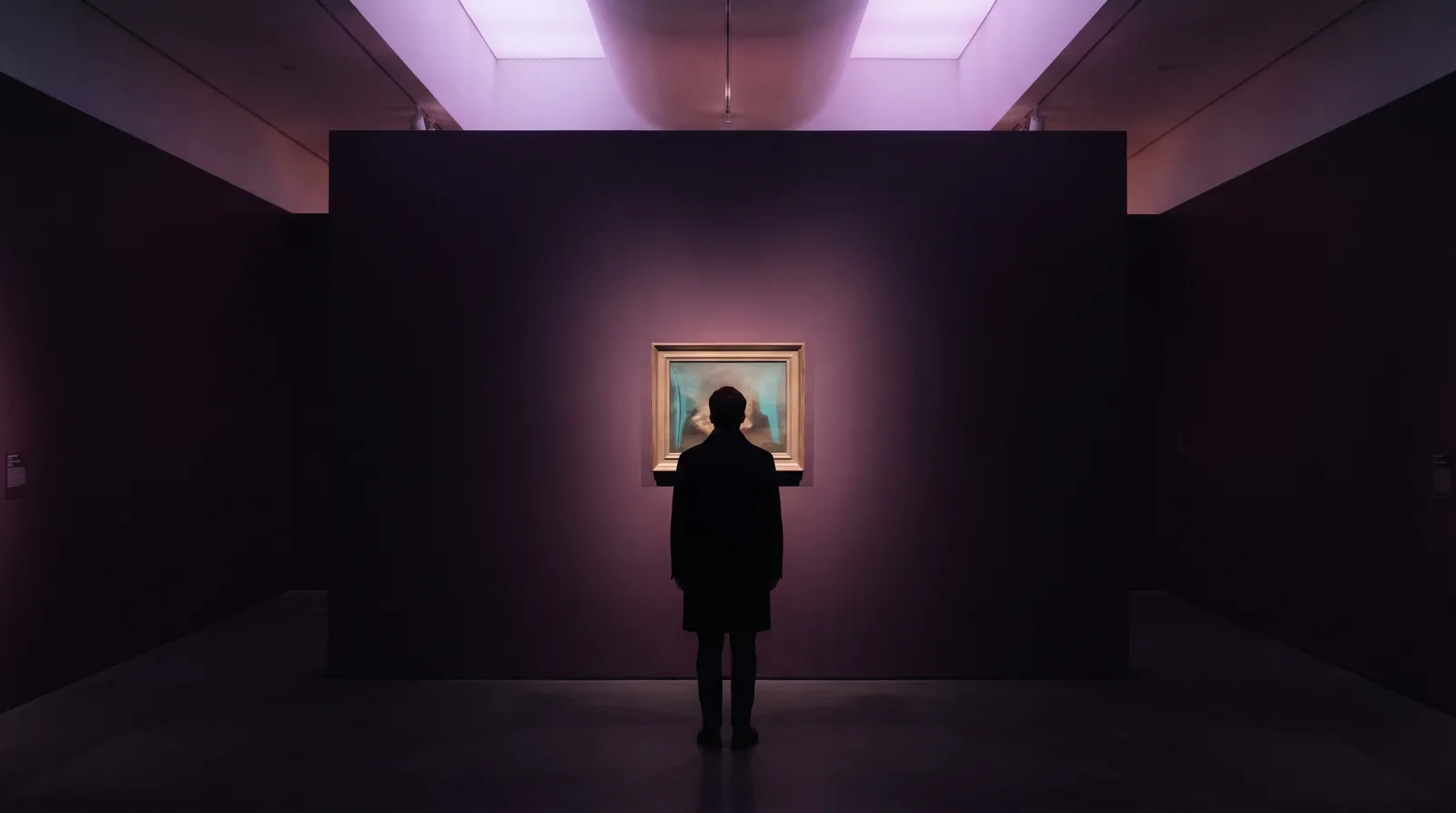
Watch visitors move through any great museum and you will witness one of the quiet comedies of modern life: masterpieces that took years to paint receiving a few seconds of attention each, often through a phone screen, before the crowd drifts on. We have become fluent skimmers of images, thousands a day, each glance shallower than the last. Against this current stands a small, stubborn practice with an unglamorous name: slow looking. The premise is almost embarrassingly simple. Choose one thing, a painting, a leaf, a building, a stranger's shoes if you must, and look at it for far longer than feels natural. Ten minutes, perhaps more. What happens next is the interesting part, because it turns out that most of what there is to see only surrenders itself after the glance has given up.
What slow looking is
The term has been given its fullest treatment by Shari Tishman, a researcher at Harvard's Project Zero, whose book Slow Looking defines the practice plainly: taking the time to carefully observe more than meets the eye at first glance. Tishman's central argument is worth underlining, because it rescues the practice from sounding like mere leisurely dawdling. Slow looking, she argues, is not simply a slower version of ordinary looking; it is a different cognitive act altogether, a form of learning in its own right that complements thinking and reading rather than decorating them. The glance identifies and categorises: that is a tree, that is a Rembrandt, moving on. Sustained observation does something else. It keeps the question open after the label has been applied, and in the space of that open question, detail after detail arrives that the category had rendered invisible.
Museum educators have built beloved rituals on this insight, inviting visitors to sit with a single work for ten minutes or more, and those who try it tend to report the same arc: restlessness, then a strange settling, then the painting quietly doubling in size, not on the wall but in the mind.
The first two minutes are the toll gate
Anyone who attempts slow looking discovers the same obstacle immediately: the itch. Two minutes in, the mind announces that it has seen everything, files the object under done, and reaches for the exit, or the phone. This moment deserves respect, because it is the whole game. The itch is not evidence that the looking is finished; it is the feeling of the glance-trained mind hitting the limit of its habitual attention span. Sit through it, and something loosens. The eyes stop hunting for a summary and begin to wander on their own: into corners, along edges, across textures. Colours separate into their components. Relationships appear, this shadow answering that one, a diagonal you had not registered organising the whole composition. Slow looking shares this structure with meditation, and the kinship is no accident: both are practices of staying past the point where novelty runs out, and both reveal that what felt like boredom was merely the threshold of a quieter kind of interest.
The glance tells you what a thing is. Only the long look tells you what it is like.
A simple practice for one artwork
No museum is required; a postcard, a book plate or a good online reproduction will serve. The method could hardly be plainer:
- Choose one work and commit to ten minutes with it, timer set and phone silenced, so the clock is no longer your responsibility.
- Spend the first minutes simply inventorying what is literally there, objects, colours, light, edges, without interpretation. Description before opinion is the discipline.
- When the itch to leave arrives, stay seated and let the eyes drift without an errand. Note what they keep returning to.
- Ask one generative question and look for the answer visually: where does the light come from, what happened just before this moment, what is the loneliest thing in the picture?
- In the final minute, look away, recall the work in as much detail as you can, then look back and notice what memory dropped. The gap is a portrait of your own attention.
Slow looking beyond the gallery
The museum is merely the training ground; the practice is portable to anywhere there is something to see, which is everywhere. The commute contains architecture no one looks at twice. A cup of tea, given two silent minutes, offers steam, colour and a wobbling reflection of the kitchen window. A houseplant repays scrutiny with an architecture of veins that no glance has ever once perceived. Tishman's insight holds across all of it: sustained observation is a way of knowing, and the world becomes more interesting in exact proportion to the attention paid to it. I would add that the practice pairs naturally with the digital textures many of us already reach for at day's end. Feelsy's slow-moving surfaces are built for precisely this lingering gaze, rewarding the third minute differently from the first, and an evening session there makes a gentle rehearsal for the harder discipline of looking slowly at the unmoving world. The skill transfers in both directions.
The dividend of the long look
We are unlikely to glance less; the world is arranged to prevent it. But slow looking was never a campaign against the glance, only a reminder that another gear exists. Ten minutes with one painting, one tree or one teacup is a small rebellion with a disproportionate dividend: the discovery, repeated as often as you care to practise it, that things withhold their best details from hurried eyes, and that attention, given time to settle, turns almost anything into something worth having seen.
Feelsy is a wellness product, not medical advice. If stress, anxiety or sleep problems persist, please speak with a qualified professional.
References
- Tishman, S. (2017). Slow Looking: The Art and Practice of Learning Through Observation. Routledge.
Frequently Asked Questions
What is slow looking?
Slow looking is the practice of observing one thing, a painting, an object or a scene, for far longer than feels natural, often ten minutes or more, in order to notice what a first glance misses. The term was given its fullest treatment by researcher Shari Tishman, who describes it as taking time to carefully observe more than meets the eye at first glance, and argues it is a genuine form of learning rather than mere dawdling.
How long should you look at a painting?
Most museum visitors spend only a few seconds per artwork, but slow looking practices typically suggest committing around ten minutes to a single work. The first two minutes usually feel restless; staying past that point is where the practice begins, as the eyes stop hunting for a summary and start finding details, relationships and structures the quick glance filtered out.
Is slow looking a form of meditation?
It shares meditation's essential structure: staying with one object of attention past the point where novelty runs out, and discovering that the restlessness that arrives early is a threshold rather than a conclusion. Slow looking differs in being outward-facing and content-rich, which makes it an approachable practice for people who find eyes-closed meditation difficult.
Do I need to visit a museum to practise slow looking?
No. A postcard, a book illustration or a good online reproduction works, and the practice extends well beyond art: a houseplant, a building on your commute or a cup of tea all repay sustained observation. The method is the same anywhere: commit to a set time, describe before interpreting, stay through the urge to stop, and let attention settle into detail.
What are the benefits of slow looking?
Slow looking trains sustained attention in an age of skimming, and it reliably reveals that objects hold far more detail than hurried eyes perceive. Practitioners typically experience a settling effect similar to contemplative practice: restlessness gives way to absorption, and the object seems to grow richer the longer it is observed. Over time it cultivates the general habit of noticing, which makes the everyday world more interesting.
About the author
Contributing writer
Eleonor writes about contemplative traditions, attention and the cultural history of calm. She has spent two decades collecting the rituals humans use to slow down, from zazen halls to hammams, and translating them for modern, screen-lit lives.
Feel it for yourself.
Feelsy turns reading about calm into practising it. Two minutes of a slow texture is often the whole difference.


Related reading
 Visual Meditation
Shan Shui: Why Misty Mountain Paintings Quiet the Mind
Why Chinese landscape painting calms the mind: what shan shui is, the psychology of mist and negative space, and how to look at a painting as meditation.
 Visual Meditation
In Defense of Staring Out the Window
Staring out the window isn't wasted time. The science of soft fascination and attention restoration, and why your brain needs unfocused minutes.
 Visual Meditation
Colouring In: Why Adult Colouring Books Quiet an Anxious Mind
Why colouring calms adult minds: what research on mandala colouring and anxiety found, and how to turn ten minutes with pencils into a visual meditation.
 Visual MeditationNew
Highway Hypnosis: Why You Can't Remember the Last Ten Miles
You arrive at your exit with no memory of driving there. Highway hypnosis is real and common: here's the science of the road trance and how to use it safely.
 Visual Meditation
Why the Northern Lights Mesmerise Us: Aurora Watching as Visual Meditation
What causes the northern lights, why the aurora feels so calming to watch, and how to turn sky watching into a simple visual meditation practice.
 Visual Meditation
Blue Mind: Why Being Near Water Calms the Brain
What blue mind theory says about why oceans, lakes and rivers soothe us: the research on blue space, water's pull on the eye, and how to use it daily.