Highway Hypnosis: Why You Can't Remember the Last Ten Miles
You arrive at your exit with no memory of driving there. Highway hypnosis is real and common: here's the science of the road trance and how to use it safely.
By Kurt Woleret
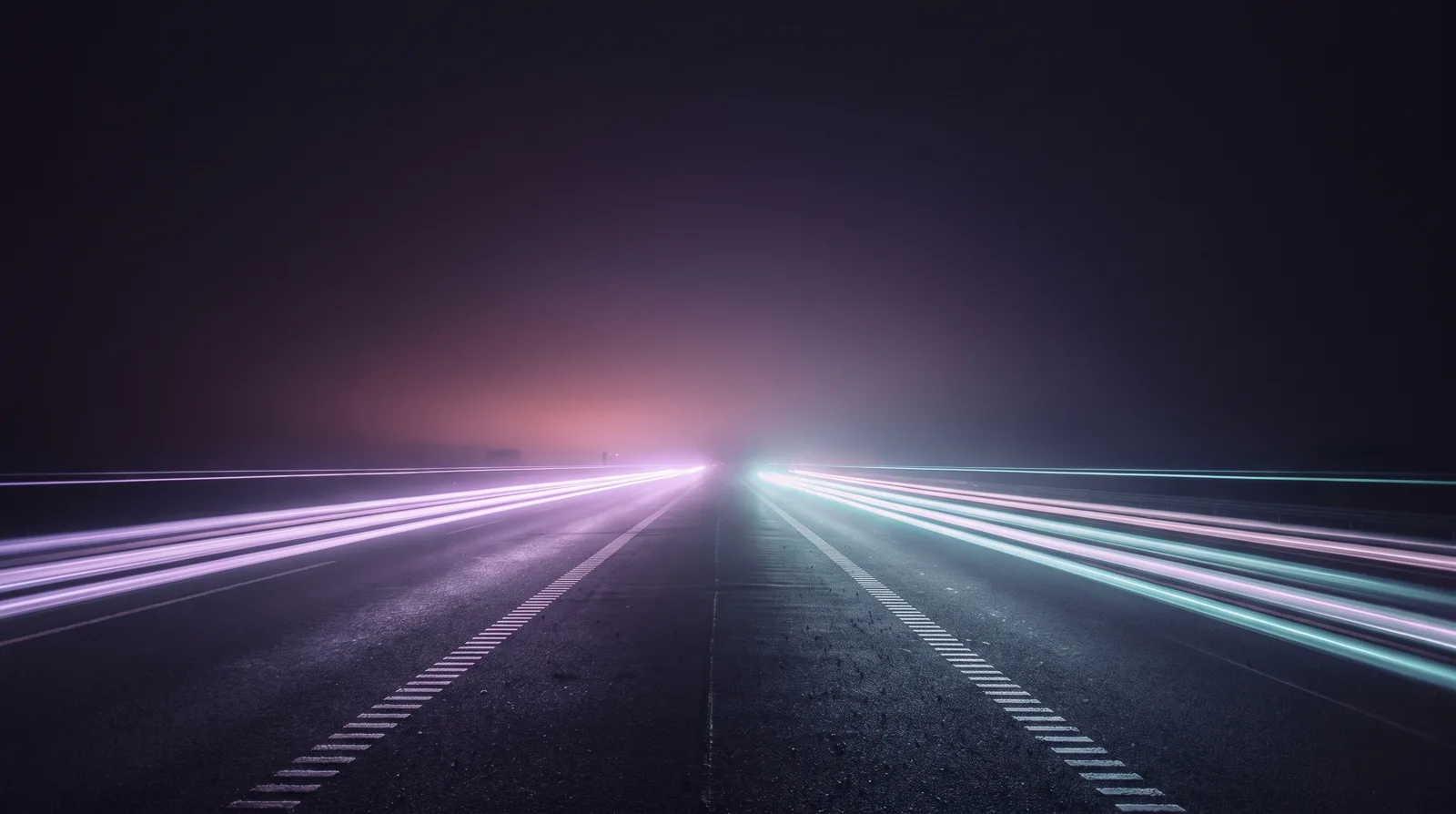
I don't own a car, because I live in New York, where a parking spot costs more than my first apartment. But a few times a year I rent one and drive upstate, and somewhere around the two-hour mark on the Thruway it happens: I surface, like coming up from a dive, and realize I have no memory of the last ten miles. Hands on the wheel, lane perfectly held, brain apparently out of office. It's unnerving every time. It's also so common it has a name, highway hypnosis, and the science behind it says something interesting about how attention actually works, and how to borrow the trance without the two-ton vehicle.
Where your brain went
First, the reassuring part: you weren't asleep. Driving a familiar road is one of the most overlearned skills adults have, and overlearned skills get delegated. Your brain runs the lane-keeping, the speed regulation, the small steering corrections on a kind of trained autopilot, while conscious attention drifts elsewhere: to a podcast, a grudge, dinner. The miles don't make it into memory because memory needs attention at the front door, and attention was in the back room. You've done the same thing walking a daily commute or washing dishes. The difference on a highway is that the stakes make the absence feel eerie in retrospect.
What flips a normal drive into the full trance is monotony. In a driving-simulator experiment, researchers had people drive both a monotonous roadside environment and a more varied one, and the monotonous road produced fatigue signs faster, with larger steering oscillations appearing within the first twenty minutes or so of driving (Thiffault & Bergeron, 2003, Accident Analysis & Prevention). The road itself, endless dashes, unchanging asphalt, metronomic lane lines, is a lullaby. Rhythmic, predictable, low-information input tells the alert systems there's nothing here worth watching, and arousal sags to match.
The missing memory, by the way, is the least mysterious part, even though it's the part that spooks people. You don't remember the miles for the same reason you don't remember brushing your teeth this morning: routine, attention-free experience doesn't get written down. The brain saves storage for surprises. So the blank stretch in your memory isn't evidence that you were driving with nobody home; the autopilot systems were home the whole time. It's evidence that nothing happened worth filing. Which is fine for teeth, and worth taking seriously on an interstate, because the same monotony that empties your memory also slows your reactions when something finally does happen.
The highway is a lullaby: rhythmic, predictable, low-information. Your alert systems conclude there's nothing worth watching, and arousal sags to match.
A trance with a steering wheel
Here's what I find fascinating: described neutrally, highway hypnosis sounds like something people pay for. Attention loosely held by slow, repetitive motion. Mental chatter quieted. Time dissolving. That's the state a fish tank, a fireplace loop or a folding slime texture produces on purpose, and it's close to what meditators spend years cultivating. The ingredients are identical, rhythm, predictability, gentle visual flow. The difference is context. On a couch, low arousal is the whole point. At 70 miles an hour, low arousal is a hazard, because the one thing the trance costs you, fast response to surprises, is the one thing driving occasionally demands.
So the honest framing isn't 'highway hypnosis is dangerous' or 'trance states are good.' It's that your brain has a well-worn slide into restful, narrowed attention whenever the input gets rhythmic and predictable, and it will take that slide wherever it finds it, couch or interstate, invited or not. The skill is choosing the venue.
Keeping the trance off the road
Behind the wheel, you want to interrupt the slide. What works is changing the input, not gritting your teeth:
- Add variety on purpose: switch from music to a talky podcast, crack the window, change temperature. New input wakes the monitoring systems.
- Break the monotony physically. Stop every 90 minutes or so, get out, look at something that isn't a lane line.
- Treat drowsiness as a stop sign, not a challenge. Zoning out is attention drifting; struggling to keep your eyes open is sleep arriving. Only a nap or a driver swap fixes the second one.
- Skip the trance-adjacent audio. Save the rain loops and slow ambient mixes for home; in the car they're working against you.
Taking the trance home
And then, once you're parked, consider stealing the mechanism back. The same rhythmic, predictable, softly moving input that shouldn't run your evening commute is exactly what should run your evening. That's the entire design brief of visual meditation, and it's what Feelsy's slow textures are for: the lane lines' hypnotic rhythm with zero consequences attached, plus autoplay so the scenes keep flowing without a single decision from you. Put one on after a long drive, add a round of the 4-7-8 breathing exercise, and you get the dissolved-time, quiet-head state the Thruway kept trying to give you, minus the part where you're piloting two tons of steel.
Your brain is going to trance out on rhythm and repetition. It's built that way, it's been built that way since long before asphalt, and no amount of coffee or self-scolding changes it. The move isn't to fight the tendency; it's to schedule it. Alert on the road, hypnotized on the couch. Ten missing miles is a bug. Ten missing minutes on a slow texture before bed is the feature.
Feelsy is a wellness product, not medical advice. If stress, anxiety or sleep problems persist, please speak with a qualified professional.
References
- Thiffault, P., & Bergeron, J. (2003). Monotony of road environment and driver fatigue: a simulator study. Accident Analysis & Prevention, 35(3), 381-391.
Frequently Asked Questions
What is highway hypnosis?
Highway hypnosis is the common experience of driving a stretch of road, often miles of it, with no memory of doing so. Your trained driving skills keep running on a kind of autopilot while conscious attention drifts, and because memory requires attention, the miles never get recorded. It happens most on familiar, monotonous roads.
Is highway hypnosis the same as falling asleep at the wheel?
No. In highway hypnosis you're awake and your lane-keeping and speed control continue on autopilot; attention has drifted, not shut down. Struggling to keep your eyes open is a different and more dangerous state: actual sleep onset. Zoning out calls for changing your input and taking a break; drowsiness calls for a nap or another driver, full stop.
What causes highway hypnosis?
Monotony. Rhythmic lane lines, unchanging scenery and steady speed give your alert systems almost no new information, so arousal drops and attention loosens. Simulator research found that a monotonous road environment produced signs of driver fatigue faster than a varied one, with degraded steering control appearing within roughly the first twenty minutes.
How do you prevent highway hypnosis?
Fight the monotony rather than your own willpower: switch to speech-heavy audio, adjust temperature, open a window, and stop roughly every 90 minutes to move and reset your eyes. Avoid sleepy ambient soundscapes while driving. And if you feel actual drowsiness rather than mere drifting, stop and rest; no in-car trick fixes approaching sleep.

About the author
Contributing writer
Kurt is a New York based writer covering the practical science of stress, sleep and focus. He is the resident sceptic of the Journal: if a technique cannot survive a crowded subway commute and a deadline week, he is not interested in it.
Feel it for yourself.
Feelsy turns reading about calm into practising it. Two minutes of a slow texture is often the whole difference.


Related reading
 Visual Meditation
In Defense of Staring Out the Window
Staring out the window isn't wasted time. The science of soft fascination and attention restoration, and why your brain needs unfocused minutes.
 Visual Meditation
Why Train Journeys Calm the Mind
Why do train rides feel so relaxing? The psychology of window gazing, gentle motion and effortless attention, plus ways to turn any journey into rest.
 Visual Meditation
Slow TV: Why Millions Watched a Seven-Hour Train Ride
In 2009 Norway aired a seven-hour train journey, minute by minute, and a nation tuned in. Why slow TV calms the mind, and how to borrow the effect at home.
 Visual Meditation
Why the Northern Lights Mesmerise Us: Aurora Watching as Visual Meditation
What causes the northern lights, why the aurora feels so calming to watch, and how to turn sky watching into a simple visual meditation practice.
 Visual Meditation
Blue Mind: Why Being Near Water Calms the Brain
What blue mind theory says about why oceans, lakes and rivers soothe us: the research on blue space, water's pull on the eye, and how to use it daily.
 Visual Meditation
Why Autumn Leaves Calm the Mind: The Quiet Art of Leaf-Peeping
Why do autumn leaves make us feel calm and a little wistful? The psychology of leaf-peeping, soft fascination and letting go, plus how to practise it.