How to Use Mala Beads: A Beginner's Guide to Meditating With 108 Beads
Mala beads give restless hands a job and wandering minds an anchor. Learn what the 108 beads mean and how to use a mala for breath or mantra meditation.
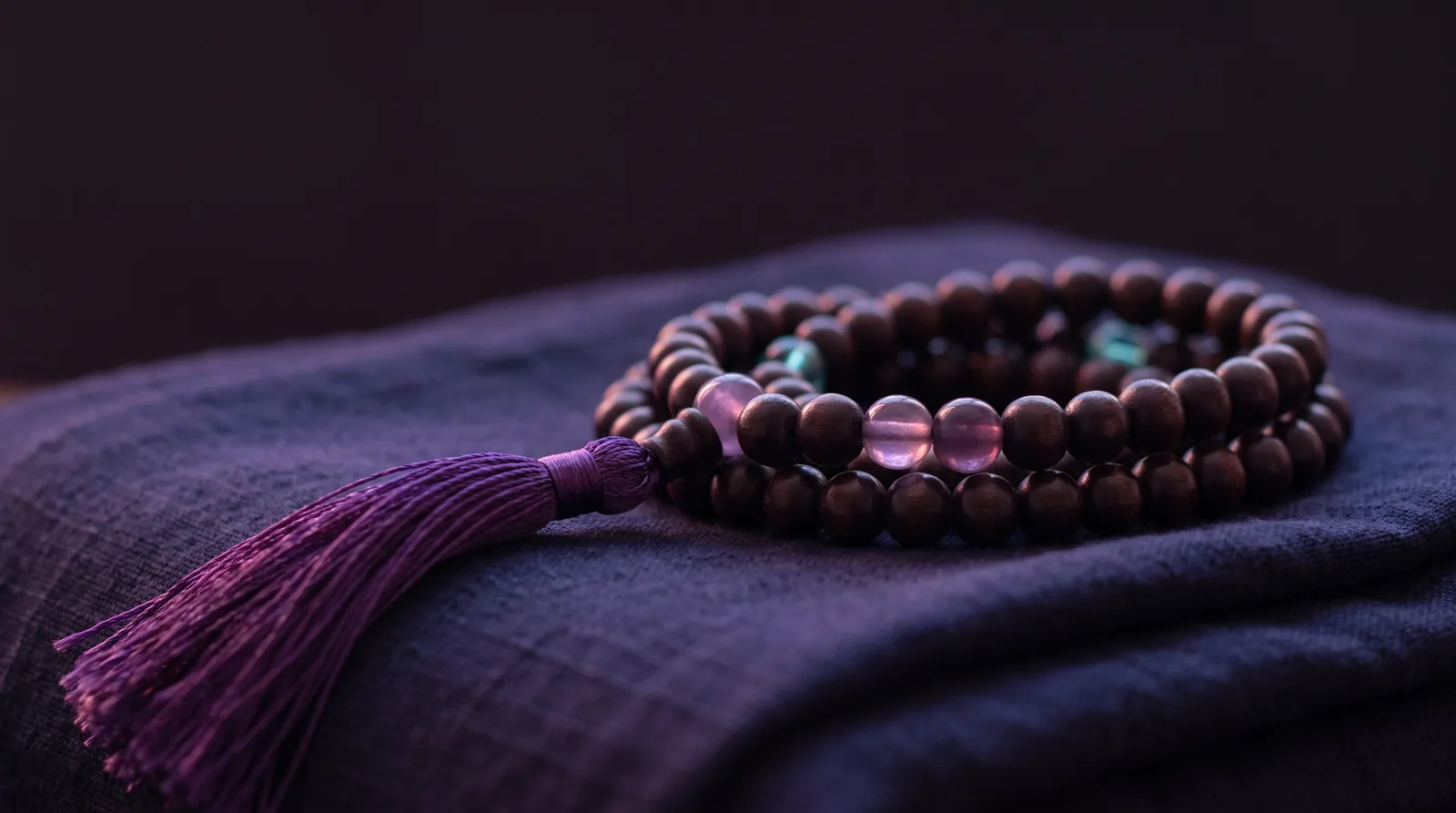
Long before anyone thought to count steps or minutes of mindfulness, people counted prayers, and they counted them on beads. The mala, a loop of 108 beads used across Hindu and Buddhist traditions for well over two thousand years, is among the oldest pieces of contemplative technology we possess. Its descendants and cousins are everywhere: the Catholic rosary, the Orthodox prayer rope, the Muslim misbaha, the worry beads clicking through Greek fingers at cafe tables. Wherever human beings have tried to steady the mind, a string of beads seems to have appeared in their hands.
This is not a coincidence, and it is not merely tradition. The mala solves a problem every meditator discovers within the first minute: the mind will not stay put, and the hands want something to do. Rather than fighting either tendency, the beads enlist both. The fingers are given a slow, repeating task; the wandering mind is given a place to return to; and progress through the loop becomes something felt rather than counted, freeing attention from its own bookkeeping.
What a mala is, and why 108
A traditional mala carries 108 beads, plus one larger bead, often tasselled, called the guru or meru bead, which marks the beginning and end of the circuit and is not counted. Why 108? Ask three teachers and you will receive four answers: the number of worldly desires to be overcome, the product of auspicious numbers, echoes of early astronomy. I have come to find the multiplicity of explanations more honest than any single one. The number is old enough that its origins have worn smooth, like the beads themselves. What matters practically is that 108 slow repetitions take somewhere between five and fifteen minutes: long enough to settle, short enough to finish.
Materials vary by tradition: rudraksha seeds, sandalwood, bodhi seeds, stone. Choose by feel rather than by any promised property. A mala you enjoy touching is a mala you will use, and the only bead that does anything is the one moving under your fingers.
How to use mala beads, step by step
There is no single authorised method, but the common practice runs like this. Sit comfortably and hold the mala in one hand, traditionally the right, draped over the middle finger. Begin at the bead beside the guru bead. With each repetition, use the thumb to draw one bead towards you, then move to the next. One bead, one breath, or one bead, one mantra. When your fingers arrive back at the guru bead, you have completed a round: pause there, and either finish or reverse direction for another circuit.
What do you recite? A traditional mantra if you have one; but the practice asks only for something rhythmic and steady. A slow breath in and out per bead is a complete method in itself, and for many people the most natural. It is worth noting that the pace such practices settle into appears to matter physiologically: a study in the BMJ found that reciting the rosary's Ave Maria or a yoga mantra naturally slowed practitioners' breathing to around six breaths per minute, a rhythm that enhanced heart rate variability and the body's slow autonomic oscillations (Bernardi et al., 2001, BMJ). The beads, the prayer and the breath conspire, in other words, to walk the nervous system down to a gentler tempo, and they seem to do so across traditions that never met.
The fingers are given a task, the mind is given a home, and the counting takes care of itself.
Why beads help a wandering mind
The genius of the mala is that it makes meditation multisensory. Attention held on the breath alone has one anchor; attention held on breath, bead and mantra has three, woven together, and a mind that slips off one often lands on another. The fingertips are unusually rich in nerve endings, so the small event of a bead passing under the thumb is vivid in a way that thinking is not. Restlessness, which sabotages so many attempts at stillness, is not suppressed but employed: the fidget becomes the practice. Anyone who has found ordinary sitting meditation impossible, and this includes a great many people with busy or restless minds, tends to find beads forgiving in exactly the places where silence is strict.
There is also the quiet psychology of the loop itself. A mala is a circle: it proposes a beginning, a middle and an arrival, and the hand always knows roughly where it is. This gives the practice a shape that formless sitting lacks, and the finishing of a round delivers a small, wordless sense of completion. One need not believe anything in particular for this to work. The beads are ecumenical; they ask only for a thumb.
A modern practice, gently kept
How might one keep a mala practice today, without pretending to a monastery one does not live in? Modestly. A round of 108 breaths upon waking, before the phone is touched, is a strong start to a day. A round in the evening pairs well with something slow for the eyes: some people like to run their beads while watching a candle, rain on a window, or the drifting textures in Feelsy, letting the thumb keep time while the gaze rests on something equally unhurried; the 4-7-8 breathing exercise in the app can serve as the rhythm for a round on nights when sleep is being difficult. And a mala travels: in a coat pocket it turns a bus stop or a waiting room into somewhere a practice can quietly happen, unnoticed by anyone.
Two small cautions. First, let the counting stay soft: the round is a container, not a performance target, and a distracted round completed means less than ten beads travelled with full attention. Second, resist the merchandise. The mala trade will happily sell you promises about energies and stones; the tradition's own claim is humbler and better, that repetition, rhythm and touch steady the human mind. Twenty centuries of thumbs agree, and you can test it yourself this evening for the price of a string of seeds.
Feelsy is a wellness product, not medical advice. If stress, anxiety or sleep problems persist, please speak with a qualified professional.
References
- Bernardi, L., Sleight, P., Bandinelli, G., et al. (2001). Effect of rosary prayer and yoga mantras on autonomic cardiovascular rhythms: comparative study. BMJ, 323(7327).
Frequently Asked Questions
What are mala beads used for?
A mala is a loop of 108 beads used in Hindu and Buddhist traditions to count repetitions of a mantra or breath during meditation. The fingers draw one bead per repetition, which keeps count without thinking, gives restless hands a job, and provides the wandering mind with a physical anchor to return to. Related bead practices exist in many traditions, including the rosary, the prayer rope and the misbaha.
Why do malas have 108 beads?
Traditions offer many explanations for the number 108, from the count of worldly desires to combinations of auspicious numbers, and no single origin is settled. Practically, 108 slow repetitions take roughly five to fifteen minutes, which is long enough to settle the mind and short enough to complete. A larger guru bead marks the start and end of the loop and is not counted.
How do you meditate with mala beads?
Sit comfortably, hold the mala draped over the middle finger of one hand, and begin at the bead next to the large guru bead. With each breath or mantra repetition, draw one bead towards you with your thumb and move to the next. When you arrive back at the guru bead you have completed a round; pause, then finish or reverse direction. One slow breath per bead is a complete method on its own.
Do you need a mantra to use mala beads?
No. A traditional mantra is one option, but the practice only requires something rhythmic and steady, and one slow breath in and out per bead works well for many people. Research published in the BMJ found that both rosary prayer and yoga mantras naturally slowed breathing to around six breaths per minute, a rhythm associated with beneficial effects on heart rate variability, suggesting the steadying power lies in the rhythm itself.
Are mala beads good for people who cannot sit still?
They are particularly forgiving for restless minds and fidgety hands. Because the practice weaves together touch, breath and rhythm, attention that slips off one anchor often lands on another, and the fingertips' rich nerve endings make each passing bead vivid in a way thinking is not. The fidget is not suppressed but employed: it becomes the practice itself.

About the author
Contributing writer
Eleonor writes about contemplative traditions, attention and the cultural history of calm. She has spent two decades collecting the rituals humans use to slow down, from zazen halls to hammams, and translating them for modern, screen-lit lives.
Feel it for yourself.
Feelsy turns reading about calm into practising it. Two minutes of a slow texture is often the whole difference.


Related reading
 Ancient Wisdom
Mantra Meditation: Why Repeating One Word Quiets the Mind
What a mantra actually does to a busy mind: the science of repetition, how to choose a word, and a simple way to practise mantra meditation tonight.
 Breath & Body
Bhramari: The Humming Bee Breath That Quietens a Racing Mind
Bhramari, the humming bee breath, uses your own voice to settle the nervous system. Here is how to practise it, why humming soothes, and what research suggests.
 Visual Meditation
Meditation for People Who Can't Meditate
If sitting still with your eyes closed feels impossible, you are not broken. Here is a gentler on-ramp built around senses, movement and very small doses.
 Ancient Wisdom
Döstädning: The Gentle Swedish Art of Death Cleaning
What Swedish death cleaning really means: the calm philosophy of döstädning, how it differs from ordinary decluttering, and how to begin at any age.
 Ancient Wisdom
How to Start a Gratitude Journal You Will Actually Keep
How to start a gratitude journal that actually helps: what the research found, why most lists go stale, and the very old art of counting blessings.
 Ancient Wisdom
Haiku as Meditation: Seventeen Syllables of Attention
How writing haiku trains attention: why the tiny form works like meditation, what noticing small moments does for wellbeing, and how to write your first.