Sleep Talking: Why You Chat in Your Sleep (and What You Say)
Sleep talking is common, mostly harmless, and weirder than you'd guess. What researchers heard when they recorded sleep talkers, and what makes it worse.
By Kurt Woleret
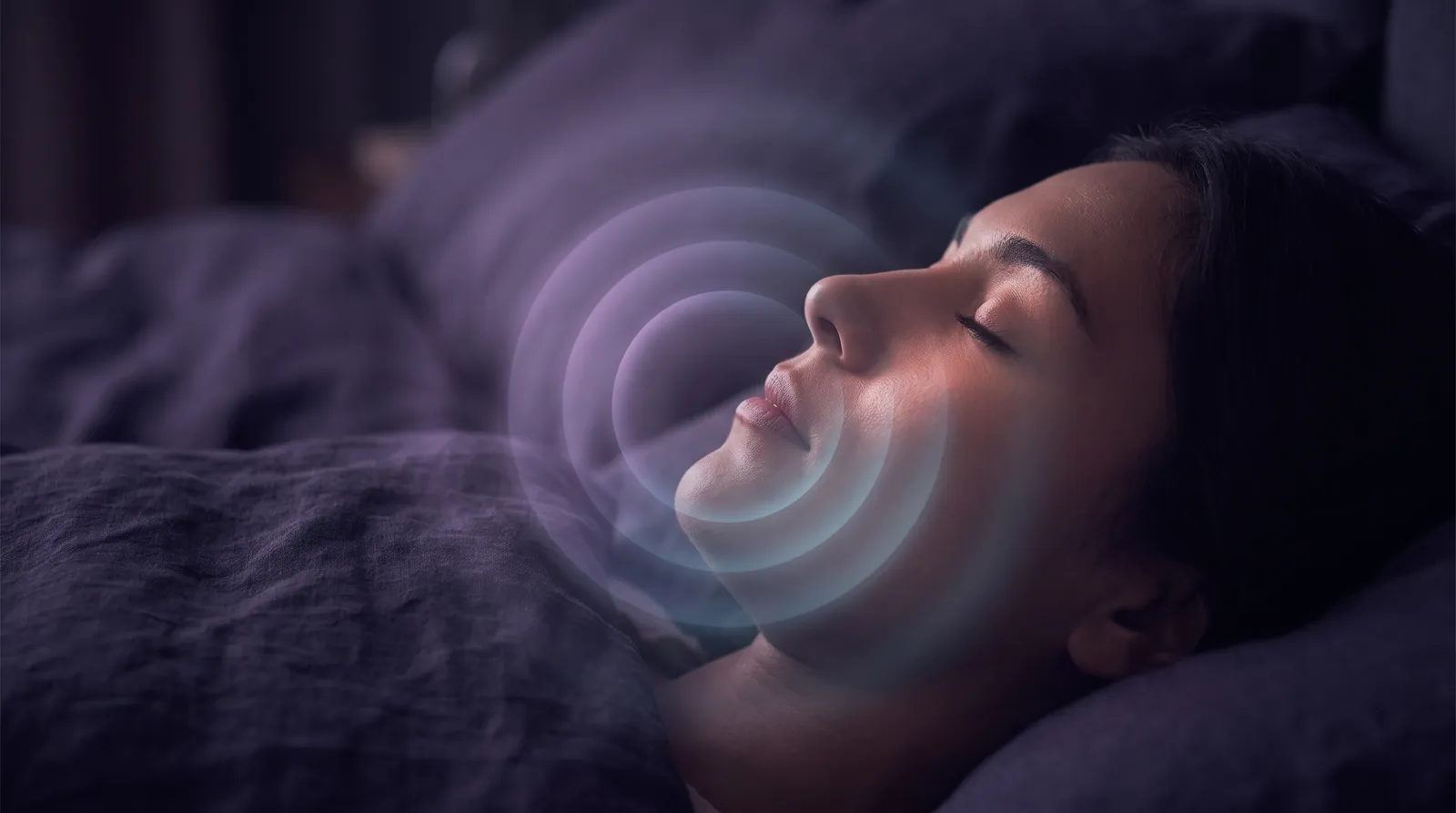
A former roommate of mine, a gentle man who apologized to furniture, once sat up at 3 a.m. and announced, with total authority, 'The invoices are in the river.' Then he lay back down. He remembered nothing. The invoices were never found. Sleep talking is one of those behaviors that feels like it should mean something: a leak from the subconscious, a confession, a window into the real you. The research says it's mostly none of that, and what it actually is turns out to be funnier and more interesting than the folklore. Let's get into it.
What sleep talking is
The clinical name is somniloquy, and it's classified as a parasomnia: an unwanted behavior that happens during sleep, in the same family as sleepwalking and sleep paralysis, though far more benign than either. It can happen in any sleep stage, which is unusual. During REM, talking tends to track dream content; during deep non-REM sleep, it's more like the brain's speech machinery firing without a story attached. Episodes are usually seconds long: a phrase, a mumble, occasionally a full sentence delivered with the confidence of a keynote speaker. The talker almost never remembers any of it, which is why most people only learn they do it when a partner, roommate, or horrified weekend guest files a report.
It's also extremely common. Most people talk in their sleep at least once in their lives, it's especially frequent in kids, and a solid chunk of adults do it occasionally. If you're a sleep talker, you are not broken. You're a demographic.
What sleep talkers actually say
Here's my favorite study in this entire literature. French researchers recorded hundreds of sleepers across consecutive nights and analyzed every utterance they produced, ending up with a corpus of hundreds of speech episodes (Arnulf et al., 2017, Sleep). The findings deserve a plaque. First, the single most common word was 'no'; sleep speech skews heavily negative. Second, the swearing rate was wildly higher than in waking speech, with profanity showing up at a rate that would embarrass most people's daytime vocabulary. Third, and this is the part I love, the grammar was almost always correct. Sentences had proper syntax, pauses for a (hallucinated) conversation partner, and appropriate tone. The sleeping brain, it turns out, keeps the language department fully staffed; it just hands the microphone to someone who's angry about invoices.
The sleeping brain keeps the grammar and loses the filter.
Why it happens, and what cranks it up
The honest answer on mechanism is that nobody fully knows; sleep talking seems to be a partial awakening, where the brain's speech systems switch on while the rest of consciousness stays off. What's much better mapped is what makes it more frequent. Sleep deprivation tops the list: fragmented, rebound-heavy sleep produces more partial arousals, and partial arousals are when the talking happens. Stress and anxiety are reliable amplifiers, which is why deadline weeks turn quiet sleepers into orators. Alcohol before bed fragments sleep in exactly the wrong way. Fever does it. Irregular schedules do it. And there's a genetic thread: sleep talking runs in families, often alongside sleepwalking. Notice the pattern: nearly everything on that list is a general sleep disruptor. The talking is less a disorder than a symptom of a noisy night.
Does it mean anything? And should you worry?
The folklore question first: no, your sleeping confessions are not reliable testimony. Sleep speech is fragmentary, often disconnected from real events, and heavily skewed toward negative emotional tone regardless of what's actually going on in your life. If your partner says your name and someone else's at 3 a.m., the research position is: that is not evidence, and the grammar being correct doesn't make the content true. As for health: occasional sleep talking needs exactly zero intervention. The flags worth taking seriously are different behaviors that sometimes get lumped in with it: violently acting out dreams, punching or leaping from bed, which can indicate REM sleep behavior disorder and deserves a professional evaluation, especially in older adults; or talking paired with gasping and choking sounds, which points toward sleep apnea. Talking alone, even nightly, is cosmetically embarrassing and medically boring.
How to talk less (and sleep through your roommate)
There's no off switch, but since sleep talking tracks sleep disruption, the volume knob is the usual boring one: more consistent, less fragmented sleep. Keep a steady schedule. Go easy on late alcohol. Land your stress before your head lands on the pillow; a wind-down buffer genuinely matters here, because partial arousals feed on a revved-up nervous system. Mine is low-tech: dim lights, ten minutes of a slow texture in Feelsy with the volume barely on, a couple of long 4-7-8 exhales, bed. The goal is handing your brain a quiet, settled night, because quiet, settled nights produce fewer partial awakenings and therefore fewer speeches. If you're the audience rather than the performer, the fix is even simpler: earplugs or a steady noise source, and the comfort of knowing the monologue means nothing. Recording your partner to play it back at brunch is, I'm told, a relationship decision rather than a sleep intervention, so proceed at your own risk. And if you're losing actual sleep to someone else's nightly broadcasts, separate blankets, a white noise machine, or in stubborn cases separate rooms are all legitimate tools; we've covered that last option in our piece on sleep divorce. The invoices, for the record, were never in the river.
Feelsy is a wellness product, not medical advice. If stress, anxiety or sleep problems persist, please speak with a qualified professional.
References
- Arnulf, I., Uguccioni, G., Gay, F., Baldayrou, E., Golmard, J.-L., Gayraud, F., & Barbera, A. (2017). What does the sleeping brain say? Syntax and semantics of sleep talking in healthy subjects and in parasomnia patients. Sleep, 40(11).
Frequently Asked Questions
Why do I talk in my sleep?
Sleep talking, or somniloquy, appears to be a partial awakening: the brain's speech systems switch on while the rest of consciousness stays asleep. It can happen in any sleep stage, is usually brief, and the talker almost never remembers it. It's extremely common, runs in families, and becomes more frequent when sleep is disrupted by stress, sleep deprivation, alcohol, fever, or an irregular schedule.
What do people actually say when they sleep talk?
When researchers recorded hundreds of sleepers, the most common word was 'no', profanity appeared far more often than in waking speech, and the tone skewed negative. Strikingly, the grammar was almost always correct, with proper syntax and pauses as if for a conversation partner. Utterances were mostly short phrases or single sentences.
Does sleep talking reveal secrets?
No. Sleep speech is fragmentary, frequently disconnected from real events, and heavily biased toward negative emotional tone regardless of what's happening in your life. Something said during sleep isn't reliable information about a person's feelings, actions, or intentions, no matter how coherent it sounds.
Is sleep talking a sign of something serious?
On its own, almost never; occasional or even nightly talking is considered benign. The behaviors worth evaluating are different: violently acting out dreams, which can indicate REM sleep behavior disorder, or talking mixed with gasping and choking sounds, which points toward sleep apnea. Those deserve a professional's attention; plain talking doesn't.
How do I stop talking in my sleep?
There's no direct off switch, but sleep talking tracks sleep disruption, so the lever is steadier, less fragmented sleep: a consistent schedule, less alcohol in the evening, lower stress at bedtime, and a calm wind-down routine before lights out. For partners, earplugs or steady background noise usually solve the practical problem.

About the author
Contributing writer
Kurt is a New York based writer covering the practical science of stress, sleep and focus. He is the resident sceptic of the Journal: if a technique cannot survive a crowded subway commute and a deadline week, he is not interested in it.
Feel it for yourself.
Feelsy turns reading about calm into practising it. Two minutes of a slow texture is often the whole difference.


Related reading
 Sleep
Sleep Cycles, Explained: What Actually Happens Every 90 Minutes
What a sleep cycle actually is, how long one really lasts, why deep sleep front-loads your night, and how to time your alarm so mornings hurt less.
 Sleep
Sleep Paralysis: Why You Wake Up Frozen (and What's Actually Happening)
Why you wake up unable to move, where the shadowy figure comes from, and what actually helps: the science of sleep paralysis, minus the demons.
 Sleep
Hypnic Jerks: Why You Twitch Awake Right as You Fall Asleep
That full-body jolt just as you drift off has a name: the hypnic jerk. Here's why sleep starts happen, what makes them worse, and how to calm them down.
 Sleep
Falling Back: A Survival Guide for the End of Daylight Saving Time
Clocks fall back this weekend, and the free hour is slightly fake. What the end of daylight saving time really does to your sleep, and how to land it well.
 Sleep
The Best Alarm Sound to Wake Up To, According to Research
Harsh beeping may be making your mornings worse. What research says about the best alarm sound to wake up to, and how to choose one your brain won't fight.
 Sleep
Can You Learn While You Sleep? What the Science Actually Says
Sleep learning is an old dream and mostly a myth, but not entirely. What research really shows about learning, memory and your sleeping brain.