Hypnic Jerks: Why You Twitch Awake Right as You Fall Asleep
That full-body jolt just as you drift off has a name: the hypnic jerk. Here's why sleep starts happen, what makes them worse, and how to calm them down.
By Kurt Woleret
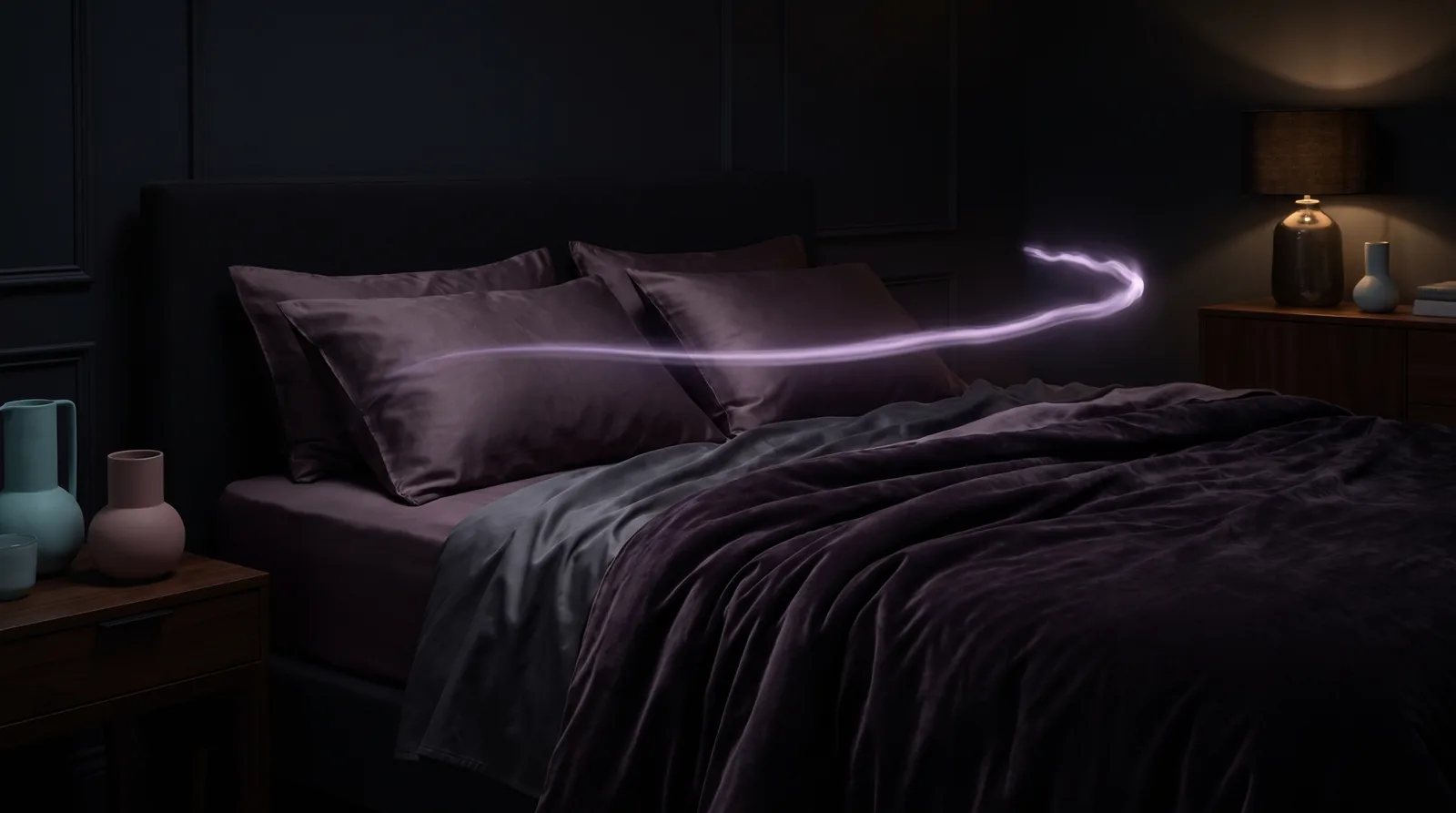
You know the moment. You're finally drifting off, thoughts going pleasantly soupy, and then your body decides you've just stepped off a curb that doesn't exist. Full-system jolt. Leg kicks, heart pounds, and you're staring at the ceiling wondering why your own nervous system just pulled a fire alarm over nothing. Congratulations: you've had a hypnic jerk, also called a sleep start. I get them most reliably during deadline weeks, usually accompanied by a dream fragment of missing a subway step. Here's what's actually happening, why it's almost always harmless, and what to do if yours are frequent enough to be annoying.
What a hypnic jerk actually is
A hypnic jerk is a sudden, brief, involuntary contraction of one or more muscle groups that fires as you're transitioning from wakefulness into sleep. Sleep medicine files it under benign sleep-related movement phenomena, and a clinical review in Current Sleep Medicine Reports describes sleep starts as common, harmless in the vast majority of cases, and mainly important to recognize so they don't get mistaken for something scarier (Whitney & Weiss, 2018). They're often paired with a sensory hallucination: the famous falling feeling, a flash of light, a bang, or a micro-dream with a built-in stumble. Most people get them at least occasionally. They are, in the most literal sense, a glitch in the handover.
Why your brain does this to you
Falling asleep is not a light switch, it's a negotiation. As you slide into stage one sleep, your brain starts powering down the motor system, muscle tone drops, breathing slows, and attention lets go of the room. But the systems don't all clock out at the same second. In that in-between state, a leftover burst of motor activity can escape while the brakes are still being applied, and the sudden muscle drop can be misread by a half-awake brain as actual falling, which triggers the startle. Hence the dream fragment: your brain, caught mid-shutdown with a jolt to explain, invents the missing curb after the fact. It writes the story to fit the evidence, in about a quarter of a second, which is honestly impressive work from an organ that's supposed to be going offline.
What makes them worse
The pattern in the literature and in every sleep clinician's anecdotes is consistent: hypnic jerks love an overstimulated nervous system meeting an undertrained wind-down. The usual suspects, and yes, I've personally audited all of them, are late caffeine, which keeps the alert circuits humming right up to lights-out; intense exercise in the late evening, which does something similar with adrenaline; genuine sleep deprivation, which makes the wake-to-sleep handover faster and sloppier; and plain old stress, which keeps the vigilance system half-staffed all night. None of these cause jerks in some clean mechanical way. They just widen the gap between a body that's exhausted and a brain that's still refreshing the feed, and hypnic jerks live in that gap.
A hypnic jerk is your motor system leaving the office while the lights are still being switched off. Sometimes it bumps the furniture.
What actually helps
You can't consciously prevent a hypnic jerk, and trying hard not to twitch is a great way to stay awake, so the play is indirect: make the descent into sleep slower and smoother, and the handover gets cleaner. Move your caffeine cutoff earlier; early afternoon is the honest number for most people. Shift hard workouts away from the last two hours before bed. Most of all, build an actual ramp instead of going from screen glare to darkness in ninety seconds. Mine is short and repeatable: lights down, a few minutes of something slow and dim, lately a Feelsy texture folding on autoplay with the sound low, then a couple of rounds of the 4-7-8 exercise once I'm horizontal. The point isn't mysticism, it's physics. A nervous system that's been decelerating for twenty minutes hits the wake-sleep boundary gently. One that's been doomscrolling hits it like a pothole.
Don't fear the twitch
One trap deserves its own paragraph, because I've watched people fall into it. A bad run of hypnic jerks can make you start bracing for them, lying there monitoring your own descent like a nervous air traffic controller. This is the worst possible strategy. Vigilance is arousal, arousal delays sleep, delayed sleep means more time spent hovering in the exact transitional zone where jerks happen, which produces more jerks, which produces more vigilance. It's a perfectly engineered anxiety loop, and the exit is not trying harder, it's caring less. The jerk is a spark, not a symptom. It has no memory and no meaning. People who successfully break the loop do it by giving their attention somewhere else to be during the descent: a breath count, a boring mental exercise like cognitive shuffling, anything absorbing enough to keep the air traffic controller off duty. The twitch may still come. It matters roughly as much as a floorboard creaking in a settling house, which is what it is.
When it's worth mentioning to a professional
The boring reassurance, which happens to be true: occasional hypnic jerks are normal and need exactly zero treatment. The exceptions worth flagging to a clinician are jerks so frequent or violent that they're causing real insomnia or injury, movements that happen repeatedly through the night rather than just at sleep onset, or twitching that shows up during the day too. Those patterns can point to other sleep-related movement conditions that are worth ruling out properly instead of diagnosing from a search bar at 3 a.m., an activity I cannot recommend on any front. For the rest of us, the twitch is just the price of the transition: one last spark as the machine powers down. Step over the imaginary curb and go to sleep.
Feelsy is a wellness product, not medical advice. If stress, anxiety or sleep problems persist, please speak with a qualified professional.
References
- Whitney, R., & Weiss, S. K. (2018). Sleep-Related Movement Disorders: Hypnic Jerks. Current Sleep Medicine Reports, 4, 19-27.
Frequently Asked Questions
Why do I jerk awake right as I'm falling asleep?
That jolt is a hypnic jerk, or sleep start: a brief involuntary muscle contraction that fires during the handover from wakefulness to sleep. As your brain powers down the motor system, a leftover burst of activity can escape before the brakes are fully applied, and your half-awake brain often misreads the sudden muscle change as actual falling, which triggers a startle and sometimes a dream fragment of stumbling.
Are hypnic jerks dangerous?
In the vast majority of cases, no. Sleep medicine classifies them as benign sleep-related movement phenomena, and clinical reviews describe them as common and harmless. Most people experience them at least occasionally, and occasional jerks need no treatment at all.
What makes hypnic jerks worse?
The usual suspects are late caffeine, intense exercise in the last couple of hours before bed, genuine sleep deprivation, and stress. Each of these keeps the alert systems running while the body is trying to shut down, widening the gap where sleep starts happen.
How do I stop twitching awake at night?
You cannot consciously prevent a hypnic jerk, so the strategy is to make your descent into sleep slower and smoother. Move your caffeine cutoff to early afternoon, keep hard workouts out of the late evening, and build a real wind-down ramp: lights down, a few minutes of something slow and dim instead of a bright feed, then slow breathing such as the 4-7-8 exercise once you are in bed.
When should I see a doctor about sleep jerks?
Talk to a clinician if the jerks are so frequent or violent that they cause real insomnia or injury, if movements repeat through the night rather than only at sleep onset, or if twitching also shows up during the day. Those patterns can point to other sleep-related movement conditions worth ruling out properly.

About the author
Contributing writer
Kurt is a New York based writer covering the practical science of stress, sleep and focus. He is the resident sceptic of the Journal: if a technique cannot survive a crowded subway commute and a deadline week, he is not interested in it.
Feel it for yourself.
Feelsy turns reading about calm into practising it. Two minutes of a slow texture is often the whole difference.


Related reading
 Sleep
SleepWhy You Wake Up at 3 AM (and How to Get Back to Sleep)
Waking at 3 AM isn't a curse or a sign something's broken. Here's the sleep science behind those small-hours wake-ups, and what actually gets you back down.
 Sleep
SleepHow to Fall Asleep Faster: Sound, Light and Ritual
Falling asleep is a skill, not a stroke of luck. Here is how sound, light and a 15-minute ritual can quiet a racing mind and shorten the trip to sleep.
 Sleep
SleepHow Late Is Too Late for Coffee? Your Caffeine Cutoff, Explained
Caffeine six hours before bed can still cut an hour of sleep. What the research says about your last-cup cutoff, half-lives, and smarter timing.
 SleepNew
Night Owl vs Early Bird: The Science of Chronotypes
Night owl or early bird isn't a personality flaw or a virtue. It's a chronotype. Here's what the science says about your body clock and how to work with it.
 SleepNew
How to Wake Up Early (Without Hating Your Life)
Want to become a morning person? Here's how to wake up early using light, timing and consistency, based on what circadian science actually shows.
 Sleep
SleepCan't Sleep? Why Getting Out of Bed Is the Counterintuitive Fix
Lying awake trying harder is the one thing that makes insomnia worse. Here's the 20-minute rule, the science of stimulus control, and how to use it.