Sobremesa: The Spanish Art of Lingering at the Table
What sobremesa means, why Spaniards stay talking at the table long after a meal ends, and how this unhurried ritual can slow down an anxious day.
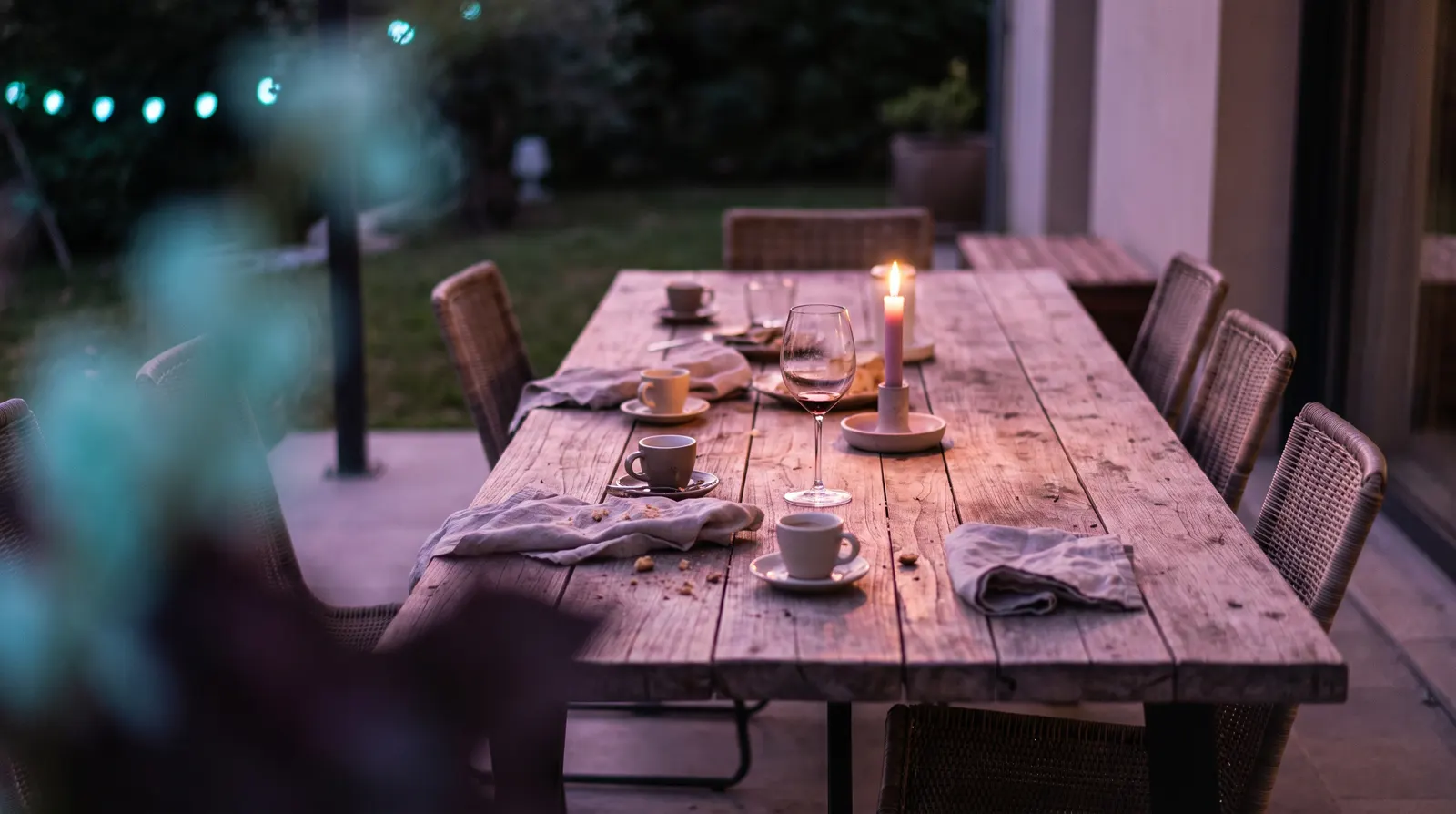
There is a moment in a Spanish meal that has no equivalent in the Anglophone world, which is perhaps why we never built a word for it. The plates are empty. The serious eating is done. And nobody moves. The conversation, which had been trotting along amiably through the courses, settles into a slower gait; someone pours the last of the wine, someone else orders a coffee, and an hour dissolves. This is sobremesa, literally 'over the table', and it is not the aftermath of the meal. In Spain, many would tell you it is the point of it.
A word for what happens after
Sobremesa names the stretch of time spent at the table after eating has finished: talking, laughing, arguing gently about nothing, letting the afternoon reshape itself around the company rather than the clock. It has no set duration. On an ordinary working day it might be twenty minutes; on a Sunday with family it can outlast the meal itself by hours. What defines it is not length but the absence of agenda. Nobody is summarising action items. Nobody is performing busyness. The table, having done its work of feeding people, quietly performs its second function, which is holding them together a while longer.
I remember the first time I encountered it properly, as a bewildered visitor waiting for someone to signal that we could leave. The signal never came. Slowly it dawned on me that there was nothing to leave for; that the lingering was not a failure of scheduling but the schedule itself. It rearranged something in me. I had spent years treating meals as refuelling stops between obligations, and here was an entire culture treating the table as a destination.
Why lingering soothes
It is worth asking what sobremesa actually does, because its ingredients read like a quiet inventory of things frayed nerves need. There is satiety, the body's oldest all-clear signal: digestion underway, blood sugar settled, the animal in you briefly convinced that the world is safe. There is unhurried conversation, which is social connection with the performance stripped out; talk without a meeting to get to acquires a different texture, looser and more honest. And there is the simple, radical fact of not reaching for the next thing. For the length of a sobremesa, the future is politely asked to wait outside.
For the length of a sobremesa, the future is politely asked to wait outside.
Notice, too, what the ritual removes. Screens sit badly with sobremesa; the whole practice is an implicit agreement that the people present are more interesting than the people elsewhere. In this it resembles other slow rituals we have explored on these pages, the Swedish fika, the Japanese care with tea: cultures keep inventing containers for the same medicine, which is attention given freely to the moment and the company, with consumption merely the excuse. And like those rituals, sobremesa is protected by its ordinariness. Because it happens every day, nobody has to decide to relax, announce an intention or download anything; the calm arrives on schedule, disguised as coffee and gossip, which is exactly how the most durable calming practices tend to travel.
Borrowing the ritual without the climate
You do not need a Mediterranean afternoon or a large Catholic family to practise sobremesa, though I concede both help. What you need is the willingness to let a meal end without ending the sitting. Practically, that means not clearing the plates the instant the last fork settles; the standing-up is what kills it. It means leaving your phone in another room, because the lingering only works if the exits are closed. If you eat with others, it means asking one unhurried question after the food is gone and seeing where it walks. And if you eat alone, as many of us often do, the spirit survives translation: stay seated, finish your tea slowly, look out of the window rather than at a feed, and let the meal have a coda instead of a cut.
I have taken to giving my evening meal ten minutes of deliberate afterwards, even on the greyest of London Tuesdays. Sometimes it is conversation; sometimes it is just me, the empty bowl and something slow to rest my eyes on. On solitary nights I will let one of Feelsy's honeyed, slow-moving textures drift on the screen across the table, less company than candlelight, while the day loosens its grip. It is a small, borrowed ceremony, and like most borrowed ceremonies it works regardless of whether you can pronounce it properly.
The table as a slow technology
What sobremesa understands, and what our productivity culture has largely forgotten, is that endings need widths, not edges. A meal that stops the moment the food is gone is a transaction; a meal allowed to trail off into talk and stillness is an event with a shape, and the shape is what the nervous system remembers. The Spaniards did not design a relaxation technique. They simply declined, generation after generation, to treat the table as a filling station, and in doing so preserved one of the gentlest technologies we have for digesting not just food but the day itself. The plates can wait. They always could.
Feelsy is a wellness product, not medical advice. If stress, anxiety or sleep problems persist, please speak with a qualified professional.
Frequently Asked Questions
What does sobremesa mean?
Sobremesa is a Spanish word meaning literally 'over the table'. It names the stretch of time spent lingering at the table after a meal has finished: talking, sharing coffee or the last of the wine, with no agenda and no hurry to leave. In Spain it is treated as part of the meal itself rather than an aftermath.
How long does a sobremesa last?
There is no set duration. On an ordinary working day it might be twenty minutes, while a Sunday meal with family can produce a sobremesa that outlasts the meal itself by hours. What defines it is not length but the absence of agenda: nobody is rushing to the next thing.
Why is lingering after a meal relaxing?
Several calming things overlap at once: satiety signals the body that all is well, unhurried conversation offers social connection without performance, and for the length of the sitting you simply stop reaching for the next task. Together they give the day a gentle pause that ends the meal with a shape rather than a cut.
How can I practise sobremesa at home?
Let the meal end without ending the sitting. Resist clearing the plates the moment eating stops, leave your phone in another room, and ask one unhurried question if you have company. If you eat alone, stay seated, finish your tea slowly, and give the meal ten minutes of deliberate afterwards instead of standing straight up.

About the author
Contributing writer
Eleonor writes about contemplative traditions, attention and the cultural history of calm. She has spent two decades collecting the rituals humans use to slow down, from zazen halls to hammams, and translating them for modern, screen-lit lives.
Feel it for yourself.
Feelsy turns reading about calm into practising it. Two minutes of a slow texture is often the whole difference.


Related reading
 Ancient Wisdom
What Is Fika? Sweden's Daily Coffee Ritual and the Art of the Proper Pause
Fika is Sweden's daily ritual of coffee, something sweet and a real pause. Here is what fika means, why small breaks work, and how to practise it anywhere.
 Ancient Wisdom
Hara Hachi Bu: The Okinawan Art of Stopping at Eight Parts Full
Hara hachi bu is Okinawa's practice of eating until about 80 percent full. Here is where the saying comes from, why it works, and how to practise it gently.
 Breath & Body
Mindful Eating: How to Slow Down at the Table (a Beginner's Guide)
Mindful eating, explained simply: how slowing down at the table changes the way you eat, what research shows, and a first-bite practice to start tonight.
 Ancient WisdomNew
Lectio Divina: The Ancient Art of Reading Slowly
What lectio divina is, where the monastic practice of sacred slow reading comes from, its four classic steps, and how to adapt it to any book you love.
 Ancient WisdomNew
Sashiko and Visible Mending: The Slow Stitch That Repairs More Than Cloth
What sashiko is, how Japan's white-on-indigo stitching became the heart of visible mending, and why slow, rhythmic needlework settles a busy mind.
 Ancient Wisdom
What Is a Zen Koan? The Question You Cannot Think Your Way Out Of
Zen koans are questions designed to exhaust the thinking mind. What koans are, where they came from, and why sitting with one is so strangely calming.