Hara Hachi Bu: The Okinawan Art of Stopping at Eight Parts Full
Hara hachi bu is Okinawa's practice of eating until about 80 percent full. Here is where the saying comes from, why it works, and how to practise it gently.
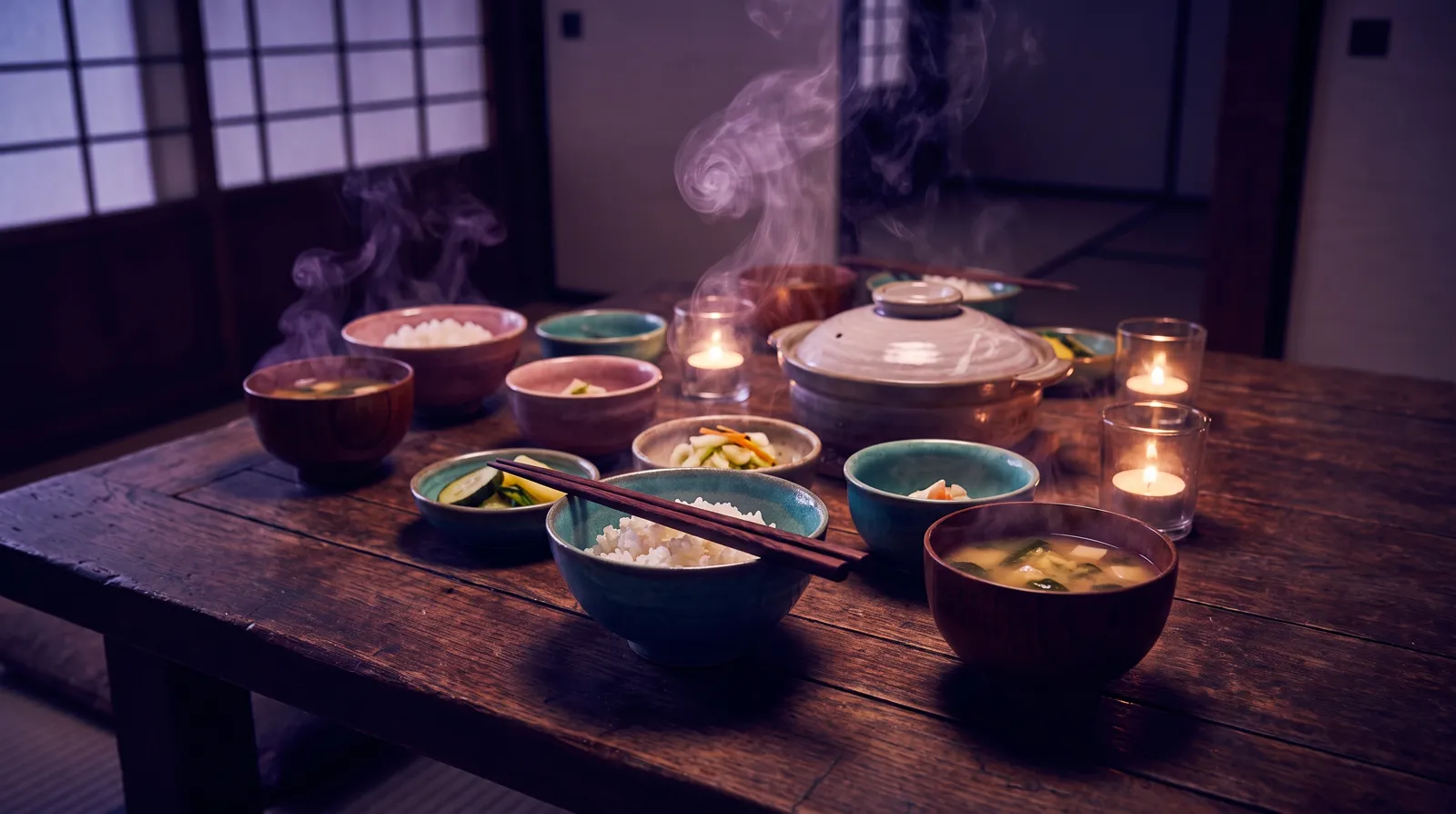
On the islands of Okinawa, at the southern end of Japan, some elders still say a small phrase before or during a meal, the way others might say grace: hara hachi bu. It translates, more or less, as belly, eight parts of ten, and it functions as an instruction. Eat until you are eight parts full, then stop. Not until the plate is clean, not until the waistband complains, not until the last profiterole has been honourably dispatched; until the body reports, quietly, that it has had nearly enough. It is one of the shortest pieces of dietary advice in the world, it contains no forbidden foods and no arithmetic, and it belongs to a population that became famous in the study of longevity. For those of us raised in the membership of the clean-plate club, it is also surprisingly difficult, which is exactly what makes it interesting.
A Confucian instruction with a long tail
The saying is old, with roots in a Confucian teaching that travelled to Japan centuries ago; the fuller proverb holds that eight parts of a full belly keep the doctor away, while ten parts wear him out. What gives the phrase its modern fame is Okinawa itself. The islands' older generations drew decades of scientific attention for their remarkable numbers of healthy centenarians, and researchers who studied them noted that traditional Okinawan eating was modestly restrained: the elders consumed fewer calories than mainland or Western counterparts, without hunger or measurement, in a pattern resembling the mild caloric restriction that laboratory science had long associated with slower ageing (Willcox et al., 2007, Annals of the New York Academy of Sciences). The researchers pointed to hara hachi bu as one of the cultural habits that made this possible. No one was dieting. The culture had simply built the stopping point into the table manners, one meal at a time, for life.
Why eight parts, and not ten
The wisdom in the number is a wisdom about lag. Fullness is not a live broadcast; the signals that tell the brain the meal is sufficient take time to arrive, which is why the sensation of having eaten too much so often lands after the fork is down. Eating to ten parts full, in other words, usually means having eaten past it. Stopping at eight parts is a way of aiming where the target will be, like a sailor steering slightly upwind. It asks a different question at the table. Clean-plate eating asks, is there food left? Appetite eating asks, do I still want this? Hara hachi bu asks something gentler and more precise: am I still actually hungry? The three questions produce three quite different meals, and only the last one requires you to pay attention, which is why the practice belongs in a magazine about calm at all. It is mindfulness with a napkin. The meal becomes something you attend rather than something you administer.
The culture had simply built the stopping point into the table manners, one meal at a time, for life.
The practice, at an actual table
Like most contemplative practices, this one is simple to describe and slippery to do, so the traditional supports matter. A few that translate readily:
- Serve, then sit. Plate the meal once, away from the pots, and let seconds require a decision and a walk rather than a ladle within reach.
- Use smaller vessels. Okinawan meals arrive in small bowls, and the eye calibrates fullness to the container; a modest bowl finished feels complete in a way a vast plate half-eaten does not.
- Slow the instrument. Chopsticks, a teaspoon, a fork set down between bites: anything that lowers the tempo gives the lagging signal time to catch up.
- Pause at the plausible end. Somewhere past the middle of the meal, stop for a minute, breathe, and ask the eight-parts question before deciding to continue.
- Begin with the brothy and the green. Soup and vegetables first is the traditional order, and it takes the edge off appetite before the denser dishes arrive.
Arriving at the table calm helps more than any of it. A meal begun ravenous and rushed will outrun the most sincere intentions, which is one reason the unhurried rituals around Okinawan eating matter as much as the rule itself. I have taken to a single slow round of breathing before supper, the 4-7-8 pattern in the Feelsy app takes under a minute, and the difference is unglamorous but real: it is much easier to hear the body's eight-parts signal when the body is not shouting about the day. The phrase before the meal serves the same purpose. Saying hara hachi bu, aloud or silently, is less an order than a doorway; it marks the meal as a practice rather than a refuelling stop.
What this is not
It is worth being plain about the boundaries. Hara hachi bu is not a diet, prescribes nothing, bans nothing, and counts nothing; it is a manner of eating, not a menu. It is not a tool for shrinking yourself, and anyone with a complicated history around food restriction should treat it with care and proper support, since deliberately stopping short is not a neutral act for every eater. And it makes no promises. The Okinawan elders were not performing a technique; they were living inside a whole culture of gardens, walking, purpose and company, of which the eight-parts table manner was one thread. What the practice reliably offers is humbler and available tonight: a meal eaten with attention, finished without heaviness, and a small daily rehearsal of the rarest domestic skill there is, the art of enough.
Feelsy is a wellness product, not medical advice. If stress, anxiety or sleep problems persist, please speak with a qualified professional.
References
- Willcox, B. J., Willcox, D. C., Todoriki, H., Fujiyoshi, A., Yano, K., He, Q., Curb, J. D., & Suzuki, M. (2007). Caloric restriction, the traditional Okinawan diet, and healthy aging: the diet of the world's longest-lived people and its potential impact on morbidity and life span. Annals of the New York Academy of Sciences.
Frequently Asked Questions
What does hara hachi bu mean?
Hara hachi bu is a Japanese phrase from Okinawa meaning, roughly, belly, eight parts of ten. It is a table instruction: eat until you are about 80 percent full, then stop. The fuller proverb holds that eight parts of a full belly keep the doctor away, while ten parts wear him out.
Why stop eating at 80 percent full?
Fullness signals lag behind eating, so the feeling of having eaten too much often arrives after the meal is over. Stopping at eight parts full aims where the target will be: by the time the signals catch up, you are comfortably satisfied rather than overfull. It replaces the question is there food left with am I still actually hungry.
Is hara hachi bu a diet?
No. It prescribes nothing, bans no foods and counts no calories; it is a manner of eating rather than a menu. In Okinawa it works as ordinary table manners, said before or during meals the way others say grace. Anyone with a complicated history around food restriction should approach it carefully and with proper support.
How do I practise hara hachi bu at home?
Plate the meal once and sit away from the pots, use smaller bowls, set your fork or chopsticks down between bites, and pause for a breath somewhere past the middle of the meal to ask whether you are still hungry. Beginning with soup and vegetables, and arriving at the table calm rather than ravenous, both make the stopping point much easier to hear.
Is hara hachi bu linked to longevity?
Researchers studying Okinawa's long-lived elders noted that traditional Okinawan eating was modestly restrained, resembling the mild caloric restriction that laboratory science has associated with slower ageing, and they pointed to hara hachi bu as one of the cultural habits behind it. The practice itself makes no promises; it was one thread in a whole way of life.

About the author
Contributing writer
Eleonor writes about contemplative traditions, attention and the cultural history of calm. She has spent two decades collecting the rituals humans use to slow down, from zazen halls to hammams, and translating them for modern, screen-lit lives.
Feel it for yourself.
Feelsy turns reading about calm into practising it. Two minutes of a slow texture is often the whole difference.


Related reading
 Breath & Body
Mindful Eating: How to Slow Down at the Table (a Beginner's Guide)
Mindful eating, explained simply: how slowing down at the table changes the way you eat, what research shows, and a first-bite practice to start tonight.
 Ancient Wisdom
Walking After Eating: The Wisdom of a Hundred Steps
An old Chinese saying promises that a hundred steps after a meal bring a long life. Modern research on post-meal walks agrees more than you might expect.
 Ancient Wisdom
Why Chinese Grandmothers Prescribe Hot Water for Everything
In China, plain hot water is comfort, care and daily ritual in a single cup. The story of he re shui, thermos culture, and what a warm slow sip can teach.
 Ancient Wisdom
Döstädning: The Gentle Swedish Art of Death Cleaning
What Swedish death cleaning really means: the calm philosophy of döstädning, how it differs from ordinary decluttering, and how to begin at any age.
 Ancient Wisdom
How to Start a Gratitude Journal You Will Actually Keep
How to start a gratitude journal that actually helps: what the research found, why most lists go stale, and the very old art of counting blessings.
 Ancient Wisdom
Haiku as Meditation: Seventeen Syllables of Attention
How writing haiku trains attention: why the tiny form works like meditation, what noticing small moments does for wellbeing, and how to write your first.