Gua Sha as an Evening Ritual: Stone, Oil and Attention
Gua sha has become a skincare trend, but at heart it is a slow ritual: warm oil, a smooth stone, unhurried strokes. How to treat it as five minutes of calm.
By Mei Lin
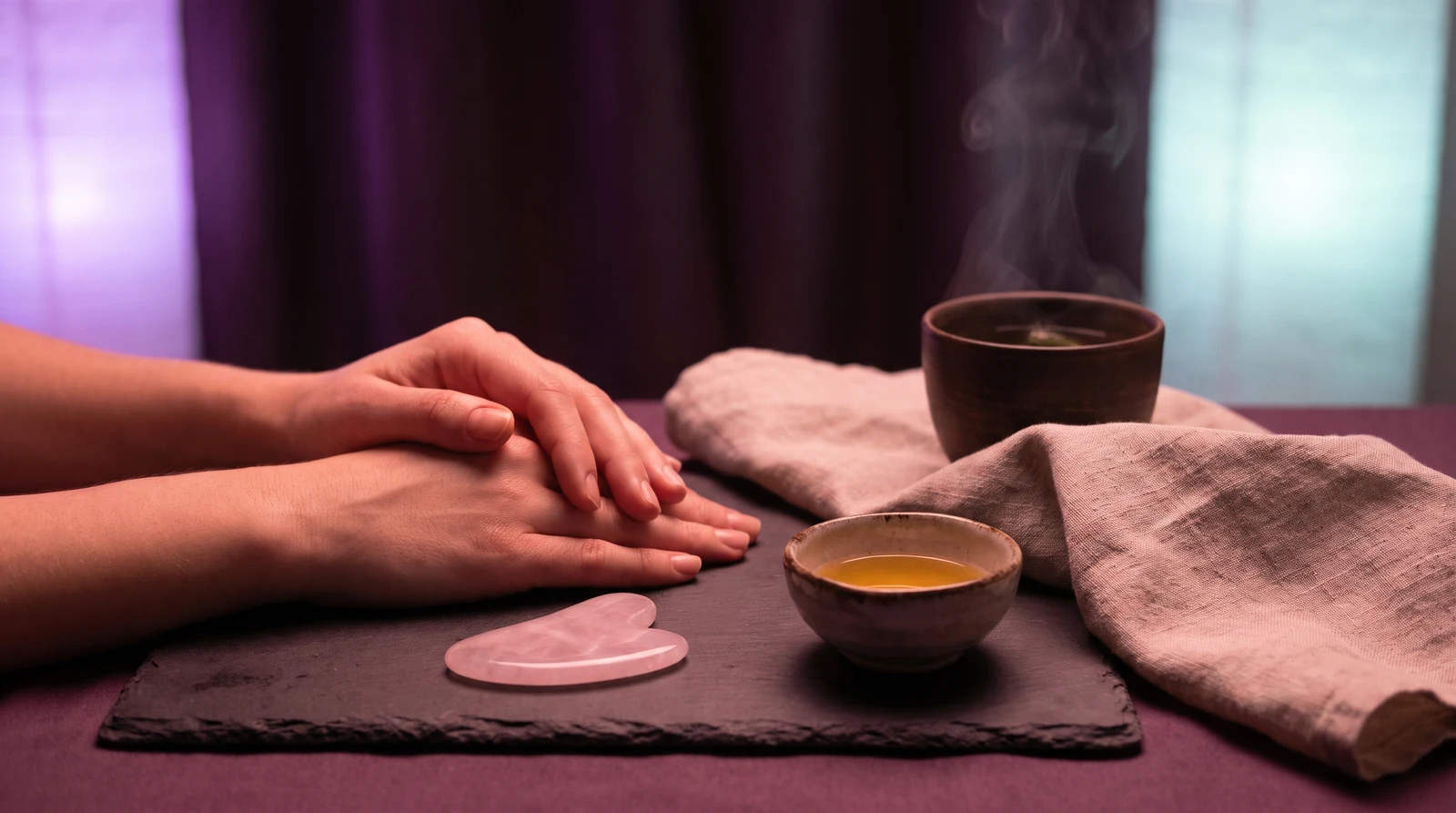
In my grandmother's drawer there was a white porcelain soup spoon that never touched soup. When someone in the family caught a chill or carried a week's tiredness in their shoulders, out came the spoon and a little dish of oil, and the kitchen became, for twenty minutes, a clinic. The spoon moved in long, patient strokes. The one being treated complained, then went quiet, then usually fell asleep at the table.
That spoon was a gua sha tool, long before rose quartz versions appeared in cosmetics shops. Gua means to scrape or press-stroke; sha refers to the redness the vigorous form of the technique deliberately raises. The practice is centuries old across East and Southeast Asia, where it also goes by coining, spooning and cao gio. Today it is having a second life as a facial ritual, and somewhere between the clinic and the trend is the version I want to write about: gua sha as five unhurried minutes at the end of the day.
Two traditions, one tool
It helps to separate the strands. Traditional therapeutic gua sha is a firm technique, applied by practitioners to the back, neck and shoulders, strong enough to leave temporary red speckling that fades over days. The modern facial version is a different creature: featherlight pressure, a smooth cool stone, slow strokes over oiled skin, nothing marked, nothing forced. They share a tool shape and a name, but the evening ritual borrows only the gentle end of the spectrum, and that is the end this article stays on.
What we actually know, said plainly
Because gua sha is sold hard right now, it is worth being honest about the evidence. The most cited physiological study is small: a pilot in which researchers measured skin microcirculation in eleven healthy volunteers before and after a traditional gua sha treatment, and recorded a marked temporary increase in surface blood flow in the treated area (Nielsen et al., 2007, Explore). That is an interesting finding about the vigorous clinical technique. It is not proof of sculpted cheekbones, drained lymph or any of the other promises printed on packaging, and claims of that kind outrun the research.
So I will not promise you a different face. I will suggest something more reliable: the calm belongs less to the stone and more to what the stone makes you do. Slow down. Touch with care. Breathe while you do it.
The calm belongs less to the stone and more to what the stone makes you do: slow down, touch with care, breathe.
Why slow strokes settle us
Gentle, rhythmic, predictable touch is one of the oldest signals of safety the body understands; it is how we soothe babies, how we calm animals, how friends comfort each other without words. When the touch comes from your own hand, something else is added: for five minutes, you become the person being cared for and the person doing the caring, both at once. The ritual scaffolding, the warm oil, the cool weight of the stone, the same strokes in the same order, tells the nervous system that this is a familiar, low-stakes moment, the way a wind-down routine tells the body that sleep is near.
The stone's coolness matters too, in a plain sensory way. A smooth, cool edge drawn slowly across warm skin is simply pleasant, the tactile cousin of the textures that make ASMR videos so absorbing. You are, in effect, giving yourself a very slow, very quiet trigger.
A five-minute evening sequence
- Set the scene first: dim the lights, put the kettle on, and let a slow texture play on Feelsy with the sound low, so the room has something soft to hold onto. Autoplay mode means you will not touch the phone again.
- Warm a few drops of a simple facial oil between clean palms and smooth it over your face and neck so the stone can glide without dragging.
- Hold the stone's curved edge almost flat against the skin and draw it slowly from the centre of the face outward: along the jaw, across the cheek, over the brow. Featherlight pressure; the stroke should feel like being drawn, not pressed.
- Match each stroke to a long exhale. One stroke, one breath. Repeat each path three or four times before moving on.
- Finish with the neck, strokes gliding gently downward, then sit for one quiet minute with your tea before doing anything else.
A few cautions, because care is the whole point: keep the pressure light, clean the tool after each use, skip the ritual entirely on broken, irritated or acne-flared skin, and stop if anything feels uncomfortable. This is a wellness ritual, not a treatment, and nothing here replaces a dermatologist or doctor when skin or pain problems are real.
The spoon, again
I do not know whether my grandmother believed everything the tradition said about what the spoon was doing. I suspect she would have found the question strange. What she knew was that twenty minutes of slow, attentive strokes turned a tense person into a sleepy one, and that the ritual said something the family did not say out loud very often: sit down, be still, let someone take care of you. The rose quartz tool on your shelf can say the same thing. You just have to let the slow part be the point.
Feelsy is a wellness product, not medical advice. If stress, anxiety or sleep problems persist, please speak with a qualified professional.
References
- Nielsen, A., Knoblauch, N. T. M., Dobos, G. J., Michalsen, A., & Kaptchuk, T. J. (2007). The effect of Gua Sha treatment on the microcirculation of surface tissue: A pilot study in healthy subjects. Explore, 3(5), 456–466.
Frequently Asked Questions
What is gua sha?
Gua sha is a centuries-old East and Southeast Asian technique in which a smooth-edged tool, traditionally even a porcelain spoon, is drawn across oiled skin; gua means to scrape or press-stroke and sha refers to the redness the vigorous therapeutic form deliberately raises. The modern facial version is much gentler: featherlight pressure, slow strokes, nothing marked or forced.
Does gua sha actually do anything?
The most cited physiological study is a small 2007 pilot in which researchers measured skin microcirculation in eleven healthy volunteers and recorded a marked temporary increase in surface blood flow after a traditional gua sha treatment. That is an interesting finding about the vigorous clinical technique, but it is not proof of sculpted cheekbones or drained lymph, and many marketing claims outrun the research. The more reliable benefit is the ritual itself: slow, careful, self-administered touch.
How do I do a gentle gua sha ritual at home?
Dim the lights, warm a few drops of facial oil between clean palms, and hold the stone's curved edge almost flat against the skin. Draw it slowly from the centre of the face outward along the jaw, cheek and brow with featherlight pressure, matching each stroke to a long exhale, then finish with gentle downward strokes on the neck. The whole sequence takes about five minutes.
When should I avoid gua sha?
Skip the ritual on broken, irritated or acne-flared skin, keep the pressure light, clean the tool after each use, and stop if anything feels uncomfortable. Gua sha at home is a wellness ritual, not a treatment, and it does not replace a dermatologist or doctor when skin or pain problems are real.

About the author
Contributing writer
Mei grew up in Shanghai around tea that could not be hurried and grandmothers who considered stillness a skill. She writes about slow hands and sensory ritual: tea, calligraphy, qigong, and the quiet crafts that taught the world how to pay attention.
Feel it for yourself.
Feelsy turns reading about calm into practising it. Two minutes of a slow texture is often the whole difference.


Related reading
 Ancient Wisdom
Ancient Practices for Modern Calm: A World Tour
Humans have engineered calm for thousands of years. A tour through Zen, pranayama, hammam culture, forest bathing and the ancestors of visual meditation.
 ASMR
ASMR, Explained: What Science Says About the Tingles
ASMR is more than a trend. Here is what the tingles are, who feels them, and what studies have measured about their effects on heart rate, mood and calm.
 Sleep
How to Fall Asleep Faster: Sound, Light and Ritual
Falling asleep is a skill, not a stroke of luck. Here is how sound, light and a 15-minute ritual can quiet a racing mind and shorten the trip to sleep.
 Ancient Wisdom
The View from Above: A Stoic Exercise in Perspective
The view from above is a Stoic visualisation that shrinks your worries by widening the frame. Here is where it comes from and how to practise it in five minutes.
 Ancient Wisdom
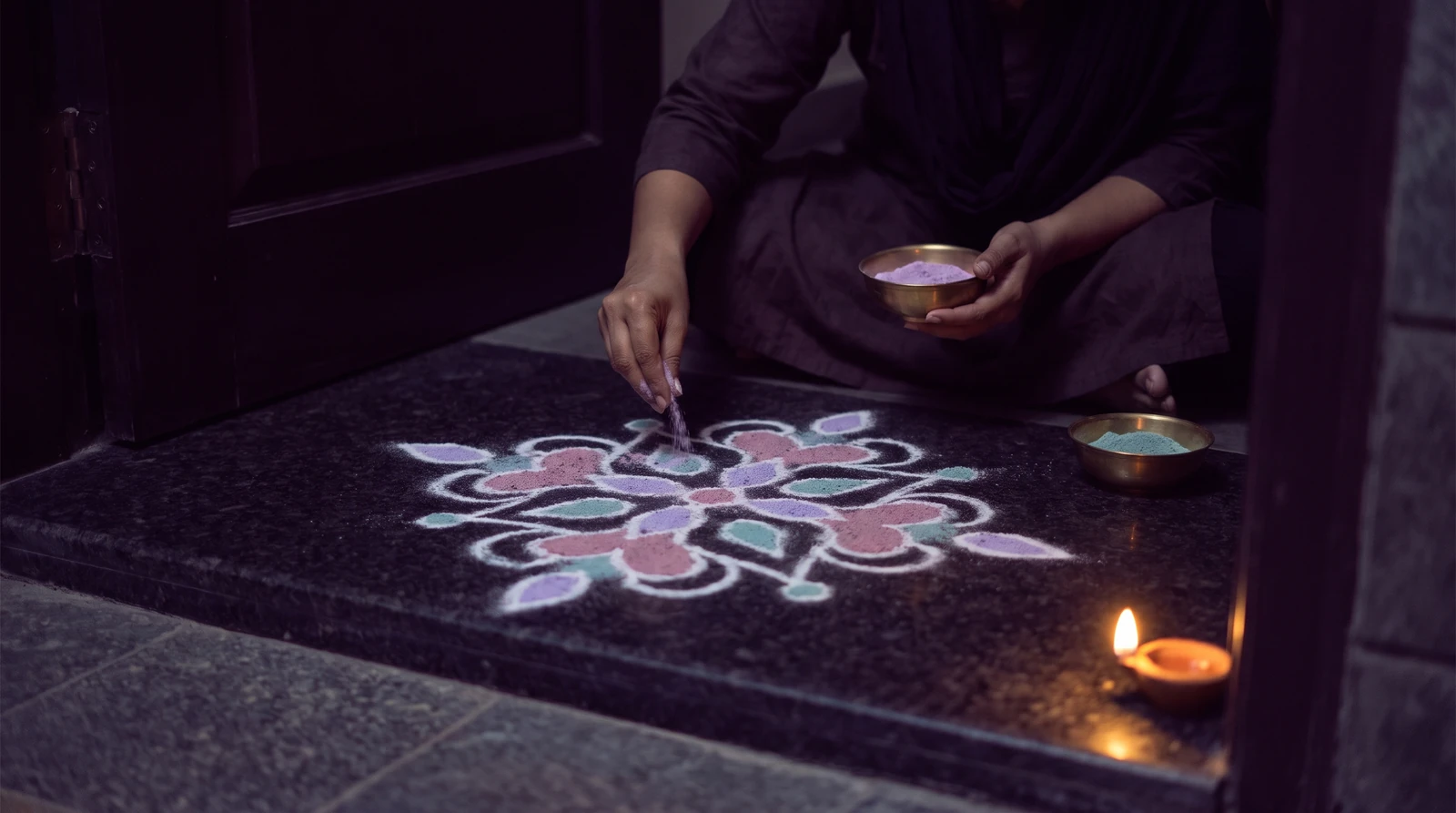
What Is Rangoli? The Ephemeral Art of the Threshold
Rangoli is the Indian practice of drawing bright, temporary patterns at the doorstep. Here is its history, its regional cousins, and why impermanent art calms.
 Ancient Wisdom
Ataraxia: The Ancient Greek Art of an Untroubled Mind
Ataraxia is the ancient Greek word for an untroubled mind, prized by Epicureans, Stoics and Sceptics alike. Here is what it means and how they reached it.