Chado: Meditation Disguised as Hospitality
The Japanese tea ceremony choreographs an hour of complete presence around a single bowl of tea. What chado teaches about ritual, slowness and ichigo ichie.
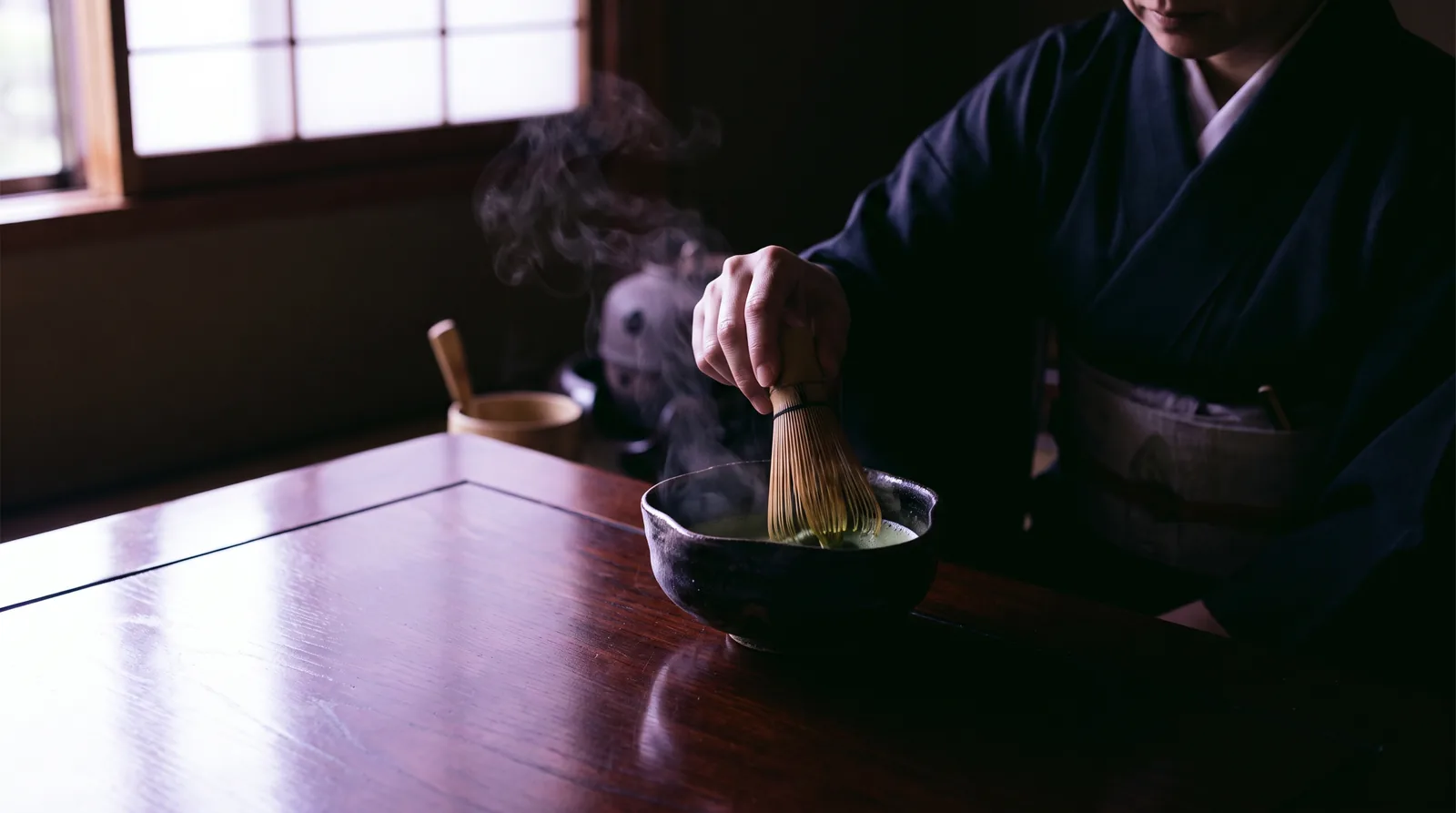
There is a moment in a formal Japanese tea gathering when the host folds a small silk cloth, the fukusa, to wipe an already clean tea container. The fold has a fixed sequence. It is practised for years. To an efficiency-minded observer it is absurd: an unnecessary cleaning performed with ceremonial precision. To the tradition, that observer has it exactly backwards. Nothing in the tea room is necessary, and that is what the room is for.
Chado, the way of tea, grew out of Zen monastery culture and was shaped into its enduring form by the sixteenth-century master Sen no Rikyu. On paper it is a way of preparing and serving powdered green tea. In practice it is one of the most complete systems ever devised for manufacturing presence: an architecture, an etiquette and a choreography that make it almost impossible to be anywhere but here.
The choreography of attention
Every element of the ceremony is designed to slow and focus the participants. Guests crawl through a deliberately low door, leaving status outside. The room is nearly empty: a scroll, a flower, the utensils. Each movement of the host, how the ladle rests, how the bowl turns, follows a form refined over centuries, and the guests' attention follows the movements the way an audience follows a dancer. Conversation is spare and prescribed. For the length of the gathering, there is exactly one thing happening in the world, and everyone present is watching it together.
This is the same principle that trataka applies to a flame and forest bathing applies to a canopy, scaled up into social ritual: give attention one worthy object, remove everything that competes with it, and calm follows as a byproduct.
Ichigo ichie: one time, one meeting
The phrase most associated with tea culture is ichigo ichie, one time, one meeting. It means that this exact gathering, these people, this light, this bowl, will never occur again, and should be honoured accordingly. It is impermanence again, the sand mandala's lesson served warm: the moment is precious precisely because it cannot be kept. A practitioner who really absorbs ichigo ichie stops treating ordinary moments as rehearsals for better ones.
One time, one meeting. This moment is precious precisely because it cannot be kept.
Wabi-sabi in the bowl
Rikyu's aesthetic revolution was to reject imported perfection, flawless Chinese porcelain, in favour of irregular, humble Japanese bowls. A raku tea bowl is asymmetrical, its glaze pooled and cracked, and the most treasured examples carry visible repairs. This is wabi-sabi as a held object: beauty in the imperfect and incomplete. Drinking from a slightly crooked bowl, made precious by use rather than flawlessness, is a quiet argument against perfectionism that you can hold in two hands.
A tea ritual of your own
- Choose one drink you already make daily and declare it the ritual one.
- Make it slower than necessary, on purpose. Watch the water pour. Listen to it.
- Do nothing else while you drink it. No phone, no inbox. Five minutes is enough.
- Use the same cup, the same spot, the same sequence. Repetition is what turns an act into a ritual your body recognises.
- End it cleanly: wash the cup, put it back. The closing is part of the practice.
You will not be performing chado; a lifetime is short for that. But you will be borrowing its engine, the deliberate slowing of one small, sensory, repeated act, and that engine fits inside any life. It also fits inside a screen: a slow honey texture poured and folded for three unhurried minutes is closer to a tea ceremony than to a game, if you bring the same attention to it.
Feelsy is a wellness product, not medical advice. If stress, anxiety or sleep problems persist, please speak with a qualified professional.
Frequently Asked Questions
What is chado, the Japanese tea ceremony?
Chado, the way of tea, grew out of Zen monastery culture and was shaped by the sixteenth-century master Sen no Rikyu. On the surface it is a way of preparing and serving powdered green tea, but in practice it is a complete system of architecture, etiquette and choreography designed to manufacture presence.
What does ichigo ichie mean?
Ichigo ichie means one time, one meeting. It refers to the idea that this exact gathering, these people, this light and this bowl will never occur again, and should be honoured accordingly, treating ordinary moments as precious rather than rehearsals for better ones.
Why do tea bowls used in the ceremony look imperfect?
Rikyu rejected imported, flawless Chinese porcelain in favour of irregular, humble Japanese bowls, sometimes with visible repairs. This reflects wabi-sabi, the aesthetic of finding beauty in the imperfect and incomplete, made precious by use rather than flawlessness.
How can someone create a simple tea ritual at home?
Choose one drink you already make daily and declare it the ritual one, make it slower than necessary on purpose, and do nothing else while drinking it, no phone or inbox. Use the same cup and spot each time, and end cleanly by washing the cup, since repetition and closure are what turn the act into a ritual.
What is the underlying principle behind the tea ceremony's calming effect?
The ceremony gives attention exactly one worthy object and removes everything that competes with it, the same principle trataka applies to a flame and forest bathing applies to a canopy. Calm follows as a byproduct of that focused, uncompeted attention.

About the author
Contributing writer
Eleonor writes about contemplative traditions, attention and the cultural history of calm. She has spent two decades collecting the rituals humans use to slow down, from zazen halls to hammams, and translating them for modern, screen-lit lives.
Feel it for yourself.
Feelsy turns reading about calm into practising it. Two minutes of a slow texture is often the whole difference.


Related reading
 Ancient Wisdom
Ancient Practices for Modern Calm: A World Tour
Humans have engineered calm for thousands of years. A tour through Zen, pranayama, hammam culture, forest bathing and the ancestors of visual meditation.
 Ancient Wisdom
Sand Mandalas and the Art of Letting Go
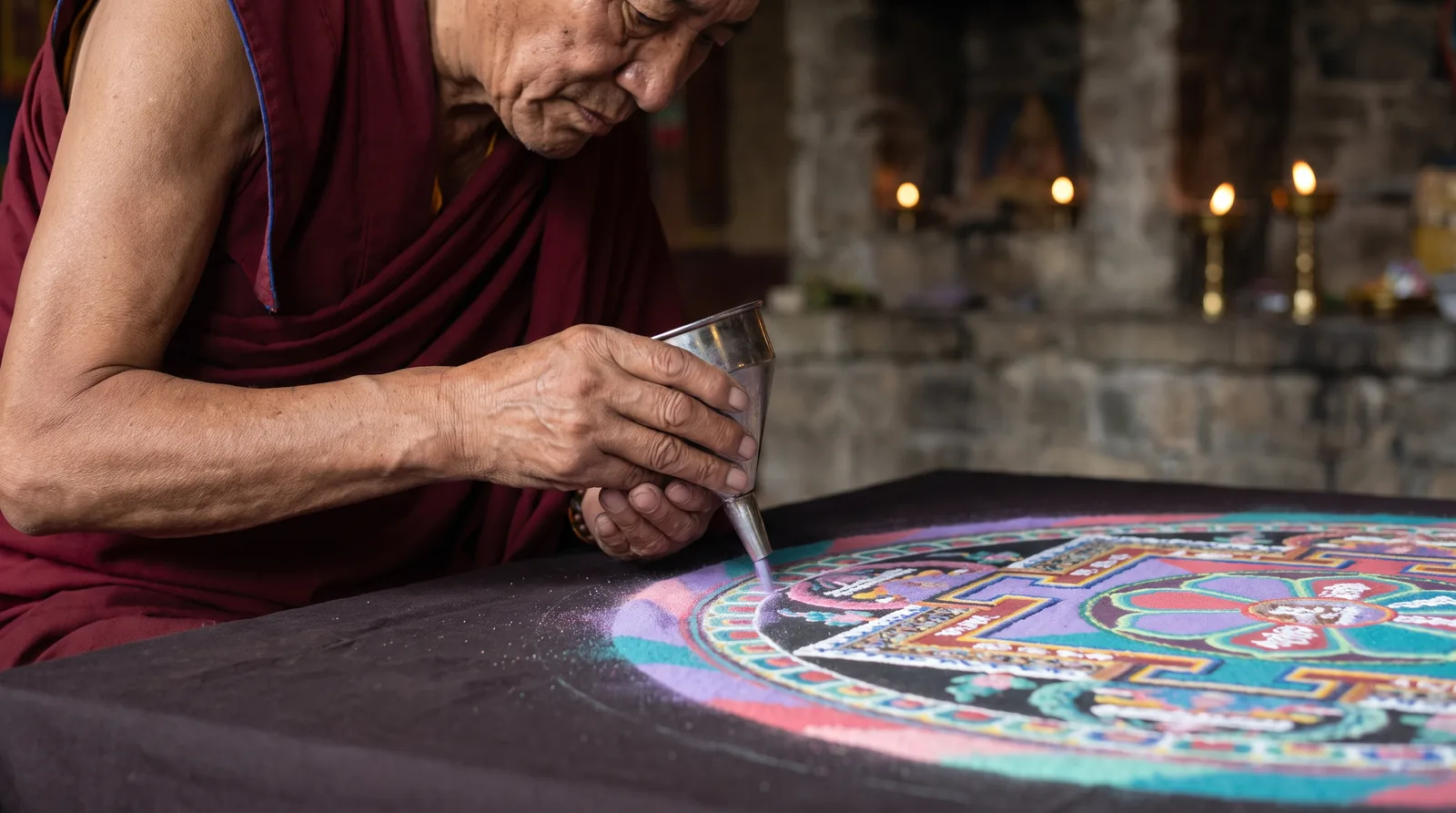
Tibetan monks spend days building an intricate sand mandala, then sweep it away. What the ritual teaches about impermanence, process and why watching can be meditation.
 Visual Meditation
Meditation for People Who Can't Meditate
If sitting still with your eyes closed feels impossible, you are not broken. Here is a gentler on-ramp built around senses, movement and very small doses.
 Ancient Wisdom
Döstädning: The Gentle Swedish Art of Death Cleaning
What Swedish death cleaning really means: the calm philosophy of döstädning, how it differs from ordinary decluttering, and how to begin at any age.
 Ancient Wisdom
How to Start a Gratitude Journal You Will Actually Keep
How to start a gratitude journal that actually helps: what the research found, why most lists go stale, and the very old art of counting blessings.
 Ancient Wisdom
Haiku as Meditation: Seventeen Syllables of Attention
How writing haiku trains attention: why the tiny form works like meditation, what noticing small moments does for wellbeing, and how to write your first.