Ancient Practices for Modern Calm: A World Tour
Humans have engineered calm for thousands of years. A tour through Zen, pranayama, hammam culture, forest bathing and the ancestors of visual meditation.

The idea that our generation invented stress is a flattering one, but it is not true. Every era has had its own version of too much, and every era has left behind a set of practices for making it bearable. Some of those practices are stunningly sophisticated. The reason you have not heard of most of them is not that they do not work. It is that the modern wellness market has to keep selling new things.
Here is a short world tour. None of these are prescriptions. They are permission slips: humans have been engineering calm for millennia, in dozens of ways, and you get to borrow from all of them.
Zen zazen: just sitting
In the Zen tradition, the core practice is zazen, which translates roughly as seated meditation. The instruction is famously spare: sit, notice, do not chase. There is no visualisation, no mantra, no goal beyond being present. What makes zazen powerful is not the technique but the container: a cushion, a wall, a bell, a schedule, and a room where everyone else is doing the same thing. It is a design lesson in the value of ritual and shared attention.
Vipassana: seeing things as they are
Vipassana, from the Theravada Buddhist tradition, means insight or clear seeing. In its most well-known modern form (the ten-day silent retreats), it teaches you to observe the sensations of the body without reacting. The premise is subtle: reactivity to sensation is where most of our suffering lives. Practise noticing without pushing away, and the noise gradually quiets.
Vipassana is not gentle in the way it is often marketed. It is honest. If you want the slower on-ramp, most modern visual meditation is a first step towards the same skill: rest attention on something, notice reactions, do not chase them.
Pranayama and yogic breath
The yogic traditions of India have the most fully developed system of breath practice in the world. Pranayama is not a single technique but an entire family: alternate nostril breathing to balance the two hemispheres, ujjayi to steady the mind through sound, kapalabhati to energise, extended-exhale patterns to sedate. Every one of the modern breathing techniques you see in apps is, in some form, a translation of these older tools. See breathing exercises for anxiety for the direct lineage.
Yoga Nidra: conscious rest
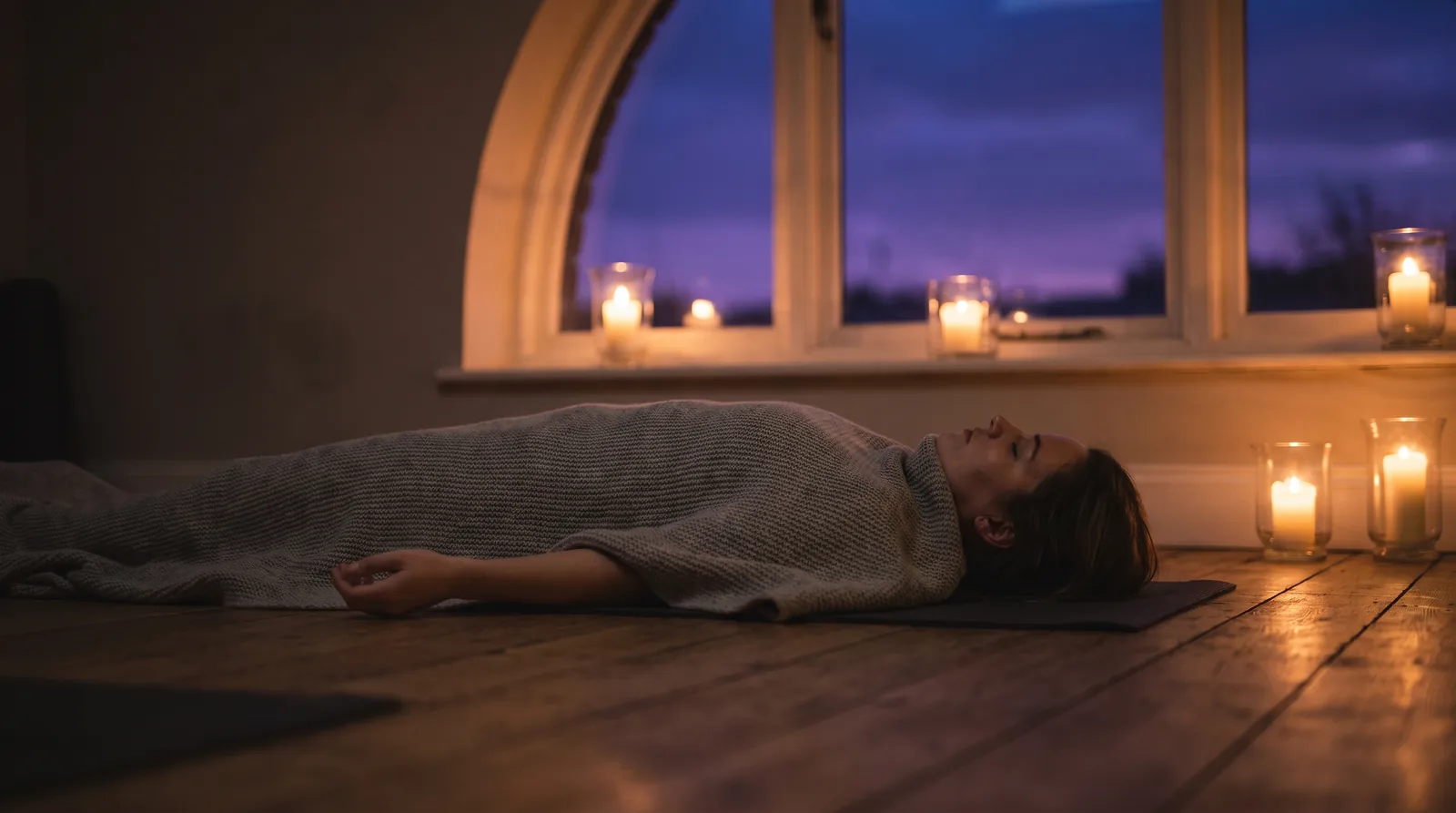
Also from the yogic tradition, Yoga Nidra (yogic sleep) is a lying-down practice in which a teacher guides your attention through the body in a specific rotation of awareness. You do not fall asleep, but your body enters a state near sleep while you remain barely conscious. Practitioners describe an hour of Yoga Nidra as feeling like several hours of rest. It is the direct ancestor of the sleepcast and body scan formats now used in most modern sleep apps, including our own; the full picture lives in the Yoga Nidra guide.
Shinrin-yoku: forest bathing
In 1982 the Japanese Ministry of Agriculture, Forestry and Fisheries coined the term shinrin-yoku, which literally translates as forest bath. The idea is simple: walk slowly through a forest, without a destination, engaging every sense. The practice was formalised in part as a public-health response to urbanisation, and it draws on the same intuition that Attention Restoration Theory in psychology later measured: natural environments quietly restore depleted attention.
Wabi-sabi: the beauty of imperfection
Wabi-sabi is not a practice so much as a way of seeing. It is the Japanese aesthetic that finds beauty in the imperfect, the impermanent and the incomplete: a cracked bowl, weathered wood, a slightly asymmetrical arrangement of stones. As a mental habit, it is remarkably restful. It gives you permission to stop chasing the perfect version of anything, including the perfect meditation.
The tea ceremony as moving meditation
The Japanese tea ceremony, chado, is meditation disguised as hospitality. Every gesture is choreographed: the folding of the cloth, the whisking of the matcha, the presentation of the bowl. Nothing in the ceremony is efficient. Every step is a small opportunity to be entirely present. It is one of the best case studies in human history for the idea that slowing something down is often what makes it meaningful.
Hammam culture
Across North Africa, the Levant and Turkey, the hammam is more than a bath. It is a communal ritual of steam, warmth, scrubbing and slow washing, often ending in tea and quiet conversation. The pace is not accidental. Warmth relaxes muscles, the sequence relaxes the mind, and the shared quiet relaxes the social nervous system in a way no solo practice can. If sauna culture in the Nordic countries is a cousin, hammam is the older sibling.
Friluftsliv and hygge
The Norwegian concept of friluftsliv (open-air life) treats time outdoors as a psychological necessity rather than a hobby. A short walk in bad weather is still friluftsliv. The Danish concept of hygge (cosiness, warmth, low-stakes togetherness) is its indoor counterpart. Between them they cover a full year of small anti-stress practices, and both are backed by the same simple principle: pay attention to the environment you spend most of your time in, and shape it kindly.
Trataka and mandala gazing: the ancestors of visual meditation
Long before slime loops on phone screens, humans were resting their attention on soft, contained visuals on purpose. Trataka is a yogic technique of steady gazing at a single point, most often a candle flame, until the eyes water and close and the image lingers behind the eyelids. Mandala gazing, common across Buddhist and Hindu traditions, uses geometric patterns as a kind of visual mantra: complex enough to hold attention, symmetrical enough to be restful.
This is where the deepest thread of Feelsy lives. The kaleidoscopes are mandalas. The slow candles of our meditation loops are trataka. The design brief is the same as it was a thousand years ago: give the eye something worth resting on, and the mind will follow. Modern visual meditation is one more link in that chain.
Humans have been engineering calm for a very long time. You get to borrow from all of it.
What all these practices share
The traditions in this tour look nothing alike. A Zen zendo, a hammam, a Norwegian trail and a phone screen are wildly different objects. But the underlying ingredients are almost identical.
- Rhythm. A slower cadence than daily life.
- Ritual. A repeatable sequence your body learns to recognise.
- Sensory focus. One or two senses gently engaged rather than all of them jammed.
- Permission to stop. A clear, cultural signal that doing very little is allowed.
That last one is quietly the most important. Most of the practices in this list are less about learning a new skill and more about being given permission to do less, in a form our culture takes seriously. Visual meditation is one small, modern permission slip. Use it as often as you need.
Feelsy is a wellness product, not medical advice. If stress, anxiety or sleep problems persist, please speak with a qualified professional.
Frequently Asked Questions
What are some ancient practices for calm besides meditation apps?
The article tours Zen zazen, Vipassana, yogic pranayama, Yoga Nidra, Japanese shinrin-yoku forest bathing, wabi-sabi, the tea ceremony, hammam culture, Norwegian friluftsliv, Danish hygge, and trataka candle gazing. None of these are prescriptions, they are described as permission slips, since humans have been engineering calm for millennia in dozens of ways.
What is trataka and how does it relate to modern visual meditation?
Trataka is a yogic technique of steady gazing at a single point, most often a candle flame, until the eyes water and close, letting the image linger behind the eyelids. It is described as the direct ancestor of modern visual meditation, since kaleidoscopes are mandalas and slow candle loops are trataka, following the same design brief of giving the eye something worth resting on.
What is Yoga Nidra according to this article?
Yoga Nidra, or yogic sleep, is a lying-down practice in which a teacher guides your attention through the body in a specific rotation of awareness, letting your body enter a state near sleep while you remain barely conscious. It is described as the direct ancestor of the sleepcast and body scan formats used in most modern sleep apps.
What do all these ancient calming traditions have in common?
Despite looking completely different, from a Zen zendo to a hammam to a Norwegian trail to a phone screen, they share the same underlying ingredients: a slower rhythm than daily life, a repeatable ritual the body learns to recognise, one or two senses gently engaged rather than all of them at once, and a clear cultural permission to stop and do very little.

About the author
Contributing writer
Eleonor writes about contemplative traditions, attention and the cultural history of calm. She has spent two decades collecting the rituals humans use to slow down, from zazen halls to hammams, and translating them for modern, screen-lit lives.
Feel it for yourself.
Feelsy turns reading about calm into practising it. Two minutes of a slow texture is often the whole difference.


Related reading
 Visual Meditation
What Is Visual Meditation? The Complete Guide
Visual meditation rests your attention on slow, pleasing motion so calm happens almost on its own. Here is how it works, what the research says, and how to practise it in three minutes.
 Ancient Wisdom
Yoga Nidra: A Guide to Conscious Rest
Yoga Nidra is one of the oldest and most forgiving relaxation practices. Here is what it is, why it works, and how to try your first 20-minute session.
 Breath & Body
Breathing Exercises for Anxiety: From Pranayama to 4-7-8
Breath is the remote control of your nervous system. Here is what slow breathing does, three techniques with steps, and when not to force it.
 Ancient Wisdom
Döstädning: The Gentle Swedish Art of Death Cleaning
What Swedish death cleaning really means: the calm philosophy of döstädning, how it differs from ordinary decluttering, and how to begin at any age.
 Ancient Wisdom
How to Start a Gratitude Journal You Will Actually Keep
How to start a gratitude journal that actually helps: what the research found, why most lists go stale, and the very old art of counting blessings.
 Ancient Wisdom
Haiku as Meditation: Seventeen Syllables of Attention
How writing haiku trains attention: why the tiny form works like meditation, what noticing small moments does for wellbeing, and how to write your first.