The Overview Effect: Why Seeing Earth From Space Quiets the Mind
What the overview effect is, why astronauts describe awe and lasting calm after seeing Earth from space, and how to borrow that shift in perspective at home.
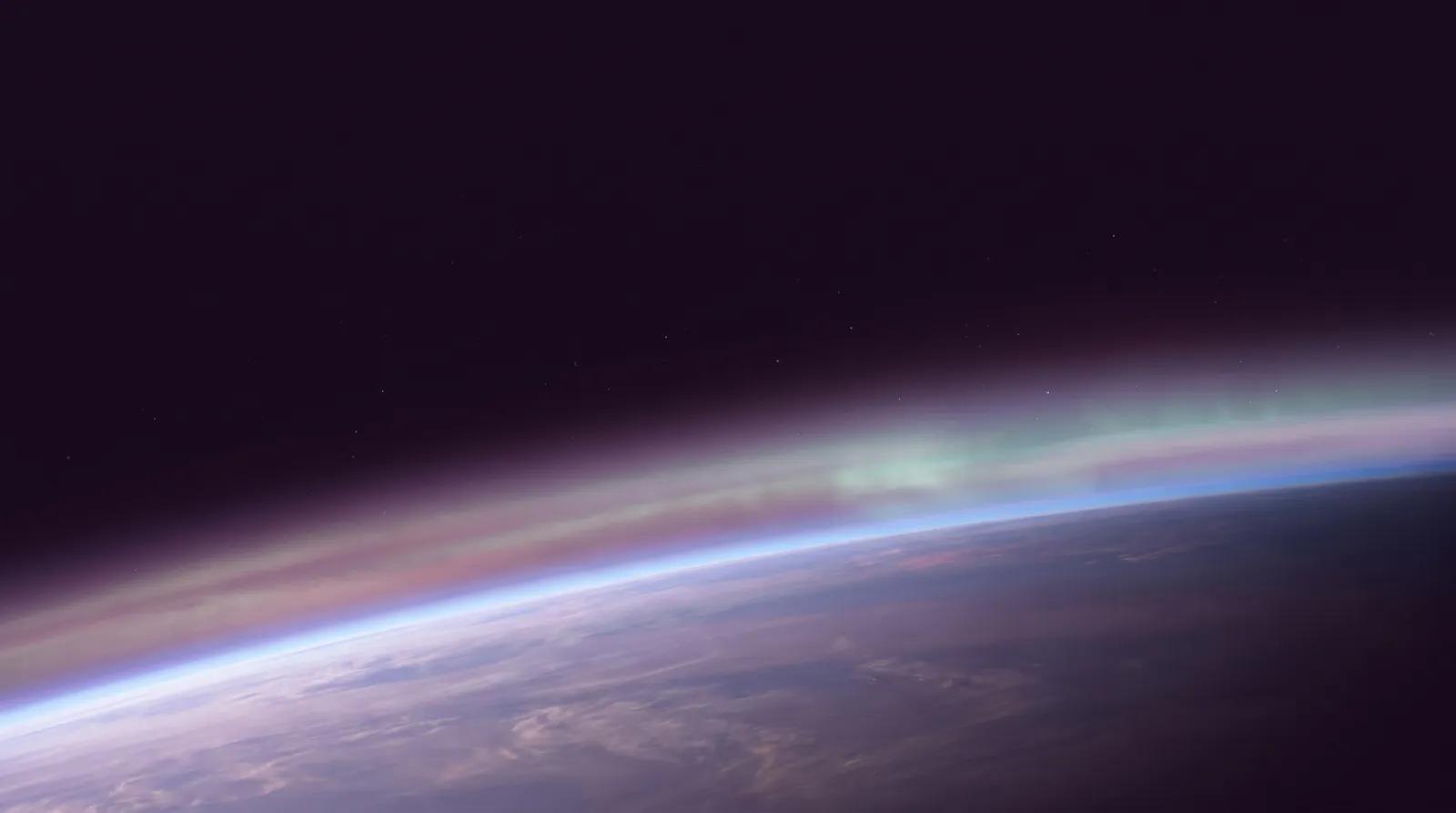
In 1971, on the way back from the Moon, the astronaut Edgar Mitchell looked out of the window of his spacecraft and found himself undone. Not by fear, and not by the mechanics of re-entry, but by the sight of the Earth itself: a small, luminous, borderless thing hanging in an immensity of black. He later described the experience as an instant, overwhelming sense of connectedness, a feeling that the quarrels and categories of the world below had been revealed as somewhat beside the point. He was not the first to feel it and he would not be the last. Enough spacefarers have come home changed in this particular way that the phenomenon has a name: the overview effect.
A view that rearranges the viewer
The phrase was coined in 1987 by the writer Frank White, who interviewed astronauts and noticed the same testimony recurring across nationalities, missions and temperaments. From orbit, the Earth appears as one system: weather flowing over continents with no regard for borders, a film of atmosphere so thin it looks like the bloom on a plum, cities glittering like phosphorescence on a dark sea. The scale does something to the mind. Personal worries do not vanish, astronauts report, but they resize. What felt enormous from the ground looks, from four hundred kilometres up, like part of a single fragile whole that deserves gentleness.
What interests me about this, as someone who will almost certainly never leave the ground, is that the overview effect is not really about space. It is about perspective, and perspective is a faculty rather than a location. The astronauts were given an extreme dose of something the rest of us can practise in smaller measures: the deliberate widening of the frame until the self becomes one small element of a larger pattern, rather than the anxious centre of everything.
What the research says about awe
Psychologists who study the overview effect place it within the wider science of awe: the emotion we feel in the presence of something vast that our existing mental categories cannot quite contain. In a 2016 paper, David Yaden and colleagues analysed astronauts' accounts and described the experience as a powerful form of awe and self-transcendence, in which attention shifts away from the self and towards something larger, often accompanied by a sense of unity and, notably, calm (Yaden et al., 2016, Psychology of Consciousness: Theory, Research, and Practice). The vastness does not agitate; it settles. Rumination, which is by nature a small, tight, self-referential loop, struggles to survive contact with a view of the whole planet.
Rumination is a small, tight, self-referential loop. It struggles to survive contact with a view of the whole Earth.
This is consistent with what awe researchers find on the ground. Awe tends to produce what they call the small self: not a diminished self, but a rightsized one, less preoccupied, more porous, more inclined towards patience. If you have ever stood beneath a night sky far from city lights and felt your week's worries quietly lose their grip, you have run the same programme at a lower dose.
Borrowing the view without leaving the ground
You cannot book a seat on the next resupply mission, but you can practise the perspective. The materials are surprisingly available. Photographs and films of Earth from orbit carry a measurable trace of the real thing; many people find that even the famous Blue Marble and Earthrise images produce a faint, useful echo of what the astronauts describe. The practice is to look slowly, the way you would look at a painting rather than a notification: let the eye travel the terminator line between night and day, notice the thinness of the atmosphere, find the place where you are sitting and let it be exactly as small as it is.
Imagination will also serve. There is a long contemplative tradition, older than spaceflight, of zooming out on purpose: the Stoics practised what they called the view from above, picturing their city, then their country, then the whole turning world, until their troubles took up a more honest proportion of the frame. Ten minutes with closed eyes, rising in imagination through the ceiling, above the roofline, above the weather, is a form of visual meditation that requires no equipment at all.
And on evenings when imagination feels like effort, screens can be recruited for the same purpose rather than against it. I sometimes end a scattered day with Feelsy's slow orb and nebula textures drifting on autoplay: not Earth from orbit, but the same grammar of vast, dark, softly glowing things moving without urgency. A few unhurried minutes of that, followed by a round of the 4-7-8 breath, and the frame has usually widened enough for sleep to find me. The point is not the technology. The point is the direction of gaze: outwards and upwards, until the self resumes its proper, restful size.
The Earth is also where you live
There is a lovely coda to the overview effect that is easy to miss. Astronauts do not come home despising the ground. They come home tender towards it. Mitchell spent the rest of his life talking about connectedness; others became conservationists, or simply reported that they never again saw a sunset carelessly. The widened frame does not estrange you from your small life; it returns you to it with more patience. That, I think, is the test of any contemplative practice, orbital or otherwise: not whether it lifts you out of your circumstances, but whether it lands you back in them gentler than it found you.
Feelsy is a wellness product, not medical advice. If stress, anxiety or sleep problems persist, please speak with a qualified professional.
References
- Yaden, D. B., Iwry, J., Slack, K. J., Eichstaedt, J. C., Zhao, Y., Vaillant, G. E., & Newberg, A. B. (2016). The overview effect: Awe and self-transcendent experience in space flight. Psychology of Consciousness: Theory, Research, and Practice, 3(1), 1-11.
Frequently Asked Questions
What is the overview effect?
The overview effect is a shift in perspective reported by many astronauts after seeing Earth from space: a powerful sense of awe, connectedness and calm, in which the planet appears as one fragile, borderless whole. The term was coined by the writer Frank White in 1987 after he noticed the same testimony recurring across many spacefarers.
Why does seeing Earth from space cause awe?
Psychologists describe awe as the emotion we feel in the presence of something vast that our mental categories cannot quite contain, and a view of the whole planet is about as vast as human experience gets. Research on astronauts' accounts found the experience shifts attention away from the self and towards something larger, often bringing a sense of unity and calm rather than agitation.
Can you experience the overview effect without going to space?
Not at full strength, but you can practise the same perspective shift. Looking slowly at photographs of Earth from orbit, stargazing far from city lights, or using the old Stoic exercise of imagining your view rising above your city and country all produce a smaller dose of the same widening of the frame, which tends to rightsize worries rather than erase them.
Does awe actually calm you down?
Awe researchers find that vast views tend to produce what they call the small self: not a diminished self but a rightsized one, less preoccupied and more patient. Rumination is a tight, self-referential loop, and it struggles to persist while attention is absorbed by something much larger than the self.

About the author
Contributing writer
Eleonor writes about contemplative traditions, attention and the cultural history of calm. She has spent two decades collecting the rituals humans use to slow down, from zazen halls to hammams, and translating them for modern, screen-lit lives.
Feel it for yourself.
Feelsy turns reading about calm into practising it. Two minutes of a slow texture is often the whole difference.


Related reading
 Visual Meditation
Why Stargazing Calms the Mind: The Science of Awe
Why looking at the night sky quiets an anxious mind: the research on awe and the small self, and how to practise stargazing without a telescope.
 Visual Meditation
Awe Walks: The Simple Practice of Walking Until the World Grows Large
An awe walk is an ordinary stroll taken with attention tuned to vastness and wonder. Here is the research behind awe walks and how to take one this week.
 Visual Meditation
Cloud Watching: The Easiest Meditation There Is
Why drifting clouds restore tired attention when screens cannot: the science of soft fascination, and how to practise the art of looking up.
 Visual MeditationNew
How to Be More Present: The Quiet Art of Actually Being Here
Why being present feels so difficult, what a wandering mind costs us, and gentle, practical ways of returning to the moment without forcing attention.
 Visual Meditation
Why Fog Is So Calming: The Strange Peace of a World Gone Soft
Foggy mornings quiet something in us. The psychology of why fog feels so calming, from softened light and sound to the restful pull of a smaller world.
 Visual Meditation
Why Glassblowing Videos Are So Mesmerising: Breath, Fire and Molten Patience
Glassblowing videos hold millions of viewers in a happy trance. Why molten glass, furnace glow and a maker's steady breath are so satisfying to watch.