What Is Kaizen? The Gentle Japanese Art of Tiny Improvements
Kaizen is the Japanese philosophy of improving by small, continuous steps. Here is what the word really means, and how one-minute changes quiet a busy mind.

There is a particular kind of exhaustion that comes not from doing too much, but from intending too much. The five-year plan, the total transformation, the new self scheduled to arrive on the first of January. Most of us know how those stories end. Kaizen, a Japanese word that has travelled from factory floors to therapy rooms, offers the opposite proposal: change so small it slips beneath the mind's defences, repeated so gently it barely registers as effort, continued so long it quietly rearranges a life.
The word itself is modest. Kai means change; zen, in this compound, simply means good. Change for the better. Not dramatic change, not heroic change: better, by a step so small you could take it today without telling anyone.
From ruined factories to a philosophy of living
Kaizen entered the world's vocabulary through industry. In the decades after the Second World War, Japanese manufacturers, most famously Toyota, rebuilt themselves around a striking idea: rather than waiting for management to decree grand innovations, every worker was invited to notice small frictions and suggest small fixes, every single day. A tool moved closer to the hand. A step removed from a process. Thousands of tiny improvements, compounding like interest. The organisational consultant Masaaki Imai carried the concept to Western readers in his 1986 book Kaizen: The Key to Japan's Competitive Success, and business culture has been borrowing the word ever since.
But it would be a shame to leave kaizen in the boardroom, because its deeper roots are contemplative. The practice draws on an older Japanese comfort with gradualness, the same sensibility that shapes bonsai cultivation and tea ceremony, where mastery is understood as the patient accumulation of near-invisible refinements. Kaizen is what happens when a culture decides that the smallest possible step, taken continuously, is not a compromise. It is the method.
Why tiny steps succeed where grand plans fail
Anyone who has abandoned an ambitious resolution by February knows the pattern: the bigger the intended change, the louder the mind's resistance. Sweeping change asks the brain to leave everything familiar at once, and the brain, sensibly enough, treats that as a threat. It responds with the very sensations we interpret as laziness or self-sabotage: dread, avoidance, the sudden magnetic pull of anything else.
Kaizen works by refusing to trigger that alarm. A step small enough cannot be threatening. One press-up. One sentence in a journal. One minute of quiet breathing before opening the laptop. The mind waves it through, and something subtle happens on the other side: the identity begins to shift. You become, almost without noticing, a person who exercises, who writes, who pauses. The size of the step turns out to matter far less than the fact that it is taken again tomorrow.
A step small enough cannot be threatening. The mind waves it through, and the identity begins to shift.
Kaizen as a practice of attention
There is a quieter gift inside kaizen that the productivity literature tends to miss. To improve something by one per cent, you must first see it clearly, and that seeing is itself a contemplative act. The factory worker who notices the awkward reach of a tool is practising a form of mindfulness; so is the person who notices that their evenings dissolve into scrolling at precisely 9pm, or that their shoulders climb towards their ears during certain conversations. Kaizen begins not with willpower but with observation, patient and unjudging.
This is why the philosophy pairs so naturally with meditative practice. Both ask you to attend to what is actually happening rather than what ought to be happening. Both prefer honest smallness to imaginary grandeur. And both trust process over outcome: in kaizen there is no finish line, only the next small step, which is a remarkably restful way to hold a life. Perfection stops being the point. Direction is the point.
The one-minute principle
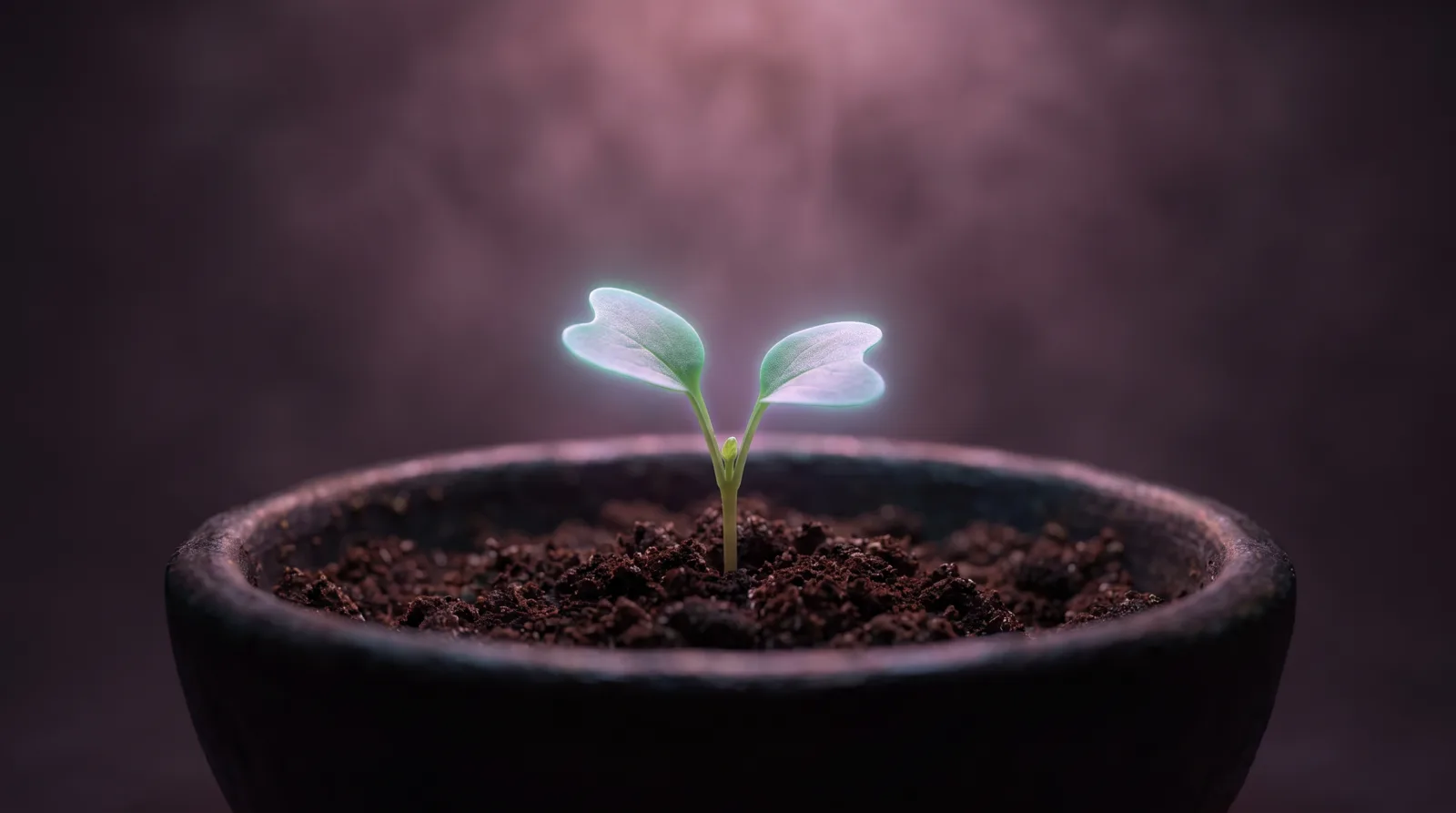
A lovely doorway into kaizen is the one-minute principle: choose a practice you wish you had, and do it for a single minute, at the same time each day. Not ten minutes on a good day and none for the rest of the week. One minute, daily, until it feels strange to skip it. The consistency teaches the nervous system that the practice is safe, and in time the minute tends to grow of its own accord, the way a well-watered seedling does not need to be pulled upward.
If you would like somewhere concrete to begin, here are small steps that honour the spirit of the practice:
- One minute of unhurried breathing before your first cup of tea or coffee, perhaps the 4-7-8 exercise if your mornings tend to start at a sprint.
- One object returned to its home each evening, rather than an entire tidied house.
- One line in a notebook at bedtime recording something you noticed today, not something you achieved.
- One minute of simply watching something slow and pleasing, a candle, rain on the window, or a drifting texture in Feelsy, as a deliberate rest for the eyes and the mind.
What kaizen is not
It is worth saying plainly that kaizen is not a demand for endless optimisation, and it is certainly not the anxious self-surveillance that fitness trackers and habit apps can encourage. A practice that leaves you feeling monitored has drifted from the spirit of the thing. The improvement kaizen seeks is often a subtraction: one fewer hurried decision, one fewer harsh inner sentence, one small friction smoothed away. Some days the most faithful kaizen step is to make the practice smaller, not larger, until it fits inside the day you are actually having rather than the day you had planned.
Nor does kaizen ask you to believe anything mystical. It asks only that you respect arithmetic: small numbers, added daily, become large numbers. Gentleness, it turns out, scales.
A three-minute kaizen to try tonight
This evening, choose the smallest version of a calmer night you can imagine. Dim one lamp an hour before bed. Set your phone to open something slow instead of something loud; many people keep Feelsy's autoplay mode for exactly this, letting a soft visual drift while the day's residue settles. Breathe out longer than you breathe in, four or five times. That is all. It will feel almost embarrassingly minor, which is precisely the sign that your mind will let you do it again tomorrow. And tomorrow, as the practitioners of kaizen have always known, is where the real change lives.
Feelsy is a wellness product, not medical advice. If stress, anxiety or sleep problems persist, please speak with a qualified professional.
References
- Imai, M. (1986). Kaizen: The Key to Japan's Competitive Success. Random House.
Frequently Asked Questions
What does kaizen mean in Japanese?
Kaizen combines kai, meaning change, and zen, which in this compound means good. Together they mean change for the better. The word describes a philosophy of improving through small, continuous steps rather than dramatic transformations, and it is applied to everything from manufacturing to personal habits.
Where does kaizen come from?
The philosophy became famous in post-war Japanese industry, most notably at Toyota, where every worker was encouraged to suggest small daily improvements. Masaaki Imai introduced the concept to Western readers in his 1986 book Kaizen: The Key to Japan's Competitive Success, and it has since spread well beyond business into personal wellbeing.
How do I practise kaizen in daily life?
Choose one practice you wish you had and do the smallest possible version of it daily, such as one minute of slow breathing, one line in a journal, or one object tidied each evening. The step should feel almost too easy. Consistency matters far more than size, and the practice tends to grow naturally once it feels routine.
Why do small changes work better than big ones?
Large changes tend to trigger the mind's resistance, which shows up as dread, avoidance and procrastination. A tiny step is too small to feel threatening, so it actually gets done, and repeating it day after day gradually shifts both the habit and your sense of who you are.
Is kaizen the same as habit stacking or atomic habits?
They are close cousins. Modern habit methods borrow heavily from kaizen's central insight that small, consistent actions compound over time. Kaizen is the older tradition, and it carries a contemplative emphasis on patient observation and process over outcome that purely productivity-focused systems sometimes lose.

About the author
Contributing writer
Eleonor writes about contemplative traditions, attention and the cultural history of calm. She has spent two decades collecting the rituals humans use to slow down, from zazen halls to hammams, and translating them for modern, screen-lit lives.
Feel it for yourself.
Feelsy turns reading about calm into practising it. Two minutes of a slow texture is often the whole difference.


Related reading
 Ancient Wisdom
What Is Ikigai? The Japanese Sense of a Life Worth Living
Ikigai is the Japanese sense of a life worth living. What the word really means, what the famous Venn diagram gets wrong, and how to notice your own.
 Ancient Wisdom
Shoshin: Why Beginner's Mind Is the Expert's Secret
Shoshin, or beginner's mind, is the Zen practice of meeting familiar things as if for the first time. Learn what it means and how to practise it daily.
 Ancient Wisdom
Wu Wei: The Chinese Art of Effortless Action
What wu wei means in Daoist thought, why effortless action is not laziness, and how to practice trying softer in your work, your hobbies, and your rest.
 Ancient WisdomNew
Zhan Zhuang: The Chinese Art of Standing Like a Tree
Zhan zhuang, the 'standing post,' is a Chinese practice of complete stillness on your feet. How standing meditation works and a gentle way to begin today.
 Ancient Wisdom
Döstädning: The Gentle Swedish Art of Death Cleaning
What Swedish death cleaning really means: the calm philosophy of döstädning, how it differs from ordinary decluttering, and how to begin at any age.
 Ancient Wisdom
How to Start a Gratitude Journal You Will Actually Keep
How to start a gratitude journal that actually helps: what the research found, why most lists go stale, and the very old art of counting blessings.