What Is Ikigai? The Japanese Sense of a Life Worth Living
Ikigai is the Japanese sense of a life worth living. What the word really means, what the famous Venn diagram gets wrong, and how to notice your own.
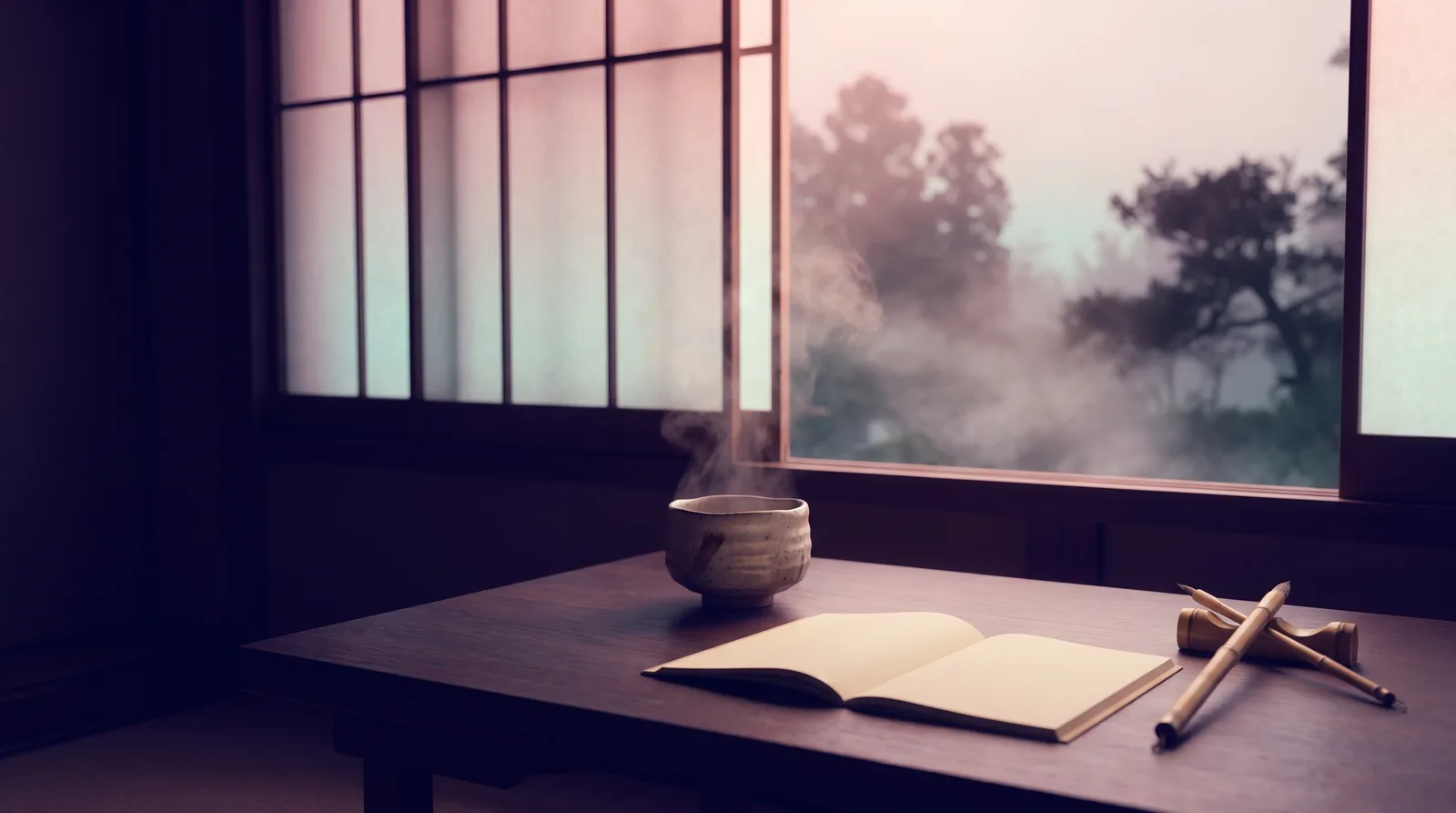
There is a Japanese word for the thing that gets you out of bed in the morning, and it is not ambition. Ikigai, usually translated as a reason for living, has travelled the world in recent years dressed as a productivity diagram: four overlapping circles promising that if you can only find the intersection of what you love, what you are good at, what the world needs and what you can be paid for, a purposeful life will click into place. The original word is both humbler and, I think, far more useful. In Japan, ikigai is less a career destination than a daily texture: the small, reliable sense that this day, this ordinary Tuesday, contains something worth waking for.
What the word actually means
Ikigai joins iki, meaning life, with gai, meaning worth or value. The word is old and entirely unglamorous in its native use. When Japanese researchers survey people about their ikigai, the answers are rarely grand. A garden that needs tending. Grandchildren. The morning walk to buy bread. A craft half-mastered and still improving. The word carries a feeling of being needed by your own life, of having something that quietly asks for you each day and is glad when you arrive.
Crucially, ikigai has never required an audience or a salary. A retired postman who lives for his allotment has ikigai in the fullest sense of the word. The notion that it must sit at the centre of a Venn diagram, balanced neatly between passion and profession, is a modern Western graft. The diagram is a perfectly pleasant career tool, but it borrows the word rather than translating it. The psychiatrist and writer Mieko Kamiya, whose 1966 book on ikigai remains the classic treatment, described it as closer to a sense of life being worth living, something felt in the body on ordinary mornings, than to any achievement one could list.
Ikigai is the small, reliable sense that this day, this ordinary Tuesday, contains something worth waking for.
What happened when researchers asked the question
The most striking evidence that this quiet feeling matters comes from the Ohsaki study, a large cohort study in northern Japan. Researchers asked more than 43,000 adults a disarmingly simple question: do you have ikigai in your life? They then followed the participants for seven years. Those who had answered no died at meaningfully higher rates over the follow-up period than those who had answered yes, with the difference especially visible in cardiovascular deaths (Sone et al., 2008, Psychosomatic Medicine). A single question, a one-word answer, and a measurable shadow cast seven years long.
Correlation is not destiny, and the researchers were careful to say so. People in poor health may lose their sense of ikigai rather than the other way round. But the finding sits comfortably beside a wider literature suggesting that a felt sense of purpose, however modest its object, is associated with better sleep, lower stress and longer life. The body appears to keep track of whether its days feel worth having.
Small mornings, not grand missions
What I find most consoling about the Japanese understanding of ikigai is its scale. We are used to purpose being discussed in the language of callings and legacies, which leaves most of us feeling that purpose is something other people have. Ikigai points the other way: downward and inward, toward the texture of a single day. The tea made properly. The dog walked along the same beloved street. The row of stitches added to something growing slowly on the needles. In Okinawa, whose long-lived residents are often asked for their secret, elders tend to name exactly these kinds of things, not careers.
This scale matters because it makes ikigai available on difficult days. A life mission can collapse under one redundancy or one diagnosis. A reason to get up tomorrow morning is a smaller, sturdier thing, and there can be many of them, so that when one is taken away the day does not go entirely dark.
How to notice your own
Ikigai is discovered more than designed, and the discovering is mostly a matter of attention. If you would like to know what yours already is, the following noticing practice takes a week and costs nothing.
- Each evening, name the moment of the day you would be sorriest to lose. Not the most impressive moment; the one you would miss. Write it down in a line.
- Notice what you do without being asked. The things you return to when no one is watching, however small, are speaking.
- Notice who or what seems to need you: a person, an animal, a garden, a craft. Ikigai often lives where being needed and being glad overlap.
- At the week's end, read the list. The entries that repeat are not chores or achievements. They are candidates.
The main obstacle to this practice is noise. A mind that spends every spare minute being entertained never hears its own quieter preferences. This is where I find a few minutes of deliberate stillness earns its keep: sitting with a slow visual texture drifting in Feelsy, or three rounds of its 4-7-8 breathing exercise, is enough to let the day's static settle so the evening's one-line answer can surface. The stillness is not the ikigai. It is the quiet in which you can hear it.
A life worth waking for
It is tempting to treat ikigai as one more thing to optimise, a slot to fill on the way to a well-designed life. The word resists this. It does not ask you to become anything; it asks you to notice what already holds you to your days, and to protect it with the seriousness we usually reserve for obligations. A reason for living, it turns out, rarely announces itself. It waits in the garden, on the walk, in the half-finished craft, for you to realise it was the point all along.
Feelsy is a wellness product, not medical advice. If stress, anxiety or sleep problems persist, please speak with a qualified professional.
References
- Sone, T., Nakaya, N., Ohmori, K., et al. (2008). Sense of life worth living (ikigai) and mortality in Japan: Ohsaki study. Psychosomatic Medicine, 70(6), 709-715.
- Kamiya, M. (1966). Ikigai ni tsuite (On the Meaning of Life). Misuzu Shobo.
Frequently Asked Questions
What does ikigai mean?
Ikigai joins the Japanese words iki, meaning life, and gai, meaning worth or value, and is usually translated as a reason for living. In everyday Japanese use it describes the quiet, daily sense that your life contains something worth waking for: a garden, a craft, a person, a morning routine. It does not require a career, an audience or a salary.
Is the ikigai Venn diagram accurate?
Not really. The four-circle diagram, which places ikigai at the intersection of what you love, what you are good at, what the world needs and what you can be paid for, is a modern Western creation that borrows the word. Traditional ikigai has never required payment or profession; a retiree who lives for their allotment has ikigai in the fullest sense.
Is there any science behind ikigai?
There is suggestive evidence. In the Ohsaki study, researchers asked more than 43,000 Japanese adults whether they had ikigai and followed them for seven years. Those who said no died at higher rates over the follow-up, particularly from cardiovascular causes. The finding is correlational, but it fits a wider literature linking a felt sense of purpose with better health.
How do I find my ikigai?
Ikigai is noticed more than designed. For a week, write down each evening the moment of the day you would be sorriest to lose, notice what you do without being asked, and notice who or what seems to need you. The small things that repeat on that list are your candidates. Grand missions are optional; a sturdy reason to get up tomorrow is enough.
Do you need a job to have ikigai?
No. In its original Japanese sense, ikigai is independent of work and money. Surveys in Japan find people naming grandchildren, gardens, walks, crafts and friendships as their ikigai. Work can be a source of it, but it is one source among many, and the smaller everyday sources are often the more durable ones.

About the author
Contributing writer
Eleonor writes about contemplative traditions, attention and the cultural history of calm. She has spent two decades collecting the rituals humans use to slow down, from zazen halls to hammams, and translating them for modern, screen-lit lives.
Feel it for yourself.
Feelsy turns reading about calm into practising it. Two minutes of a slow texture is often the whole difference.


Related reading
 Ancient Wisdom
Wabi-Sabi: The Japanese Art of Finding Calm in Imperfection
What wabi-sabi really means: the Japanese aesthetic of imperfect, impermanent beauty, and how its quiet philosophy softens perfectionism and stress.
 Ancient Wisdom
Wu Wei: The Chinese Art of Effortless Action
What wu wei means in Daoist thought, why effortless action is not laziness, and how to practice trying softer in your work, your hobbies, and your rest.
 Ancient Wisdom
Kintsugi: The Japanese Art of Golden Repair
The meaning of kintsugi, how the Japanese craft of mending broken pottery with gold became a philosophy of resilience, and how to practise its lessons daily.
 Ancient Wisdom
Döstädning: The Gentle Swedish Art of Death Cleaning
What Swedish death cleaning really means: the calm philosophy of döstädning, how it differs from ordinary decluttering, and how to begin at any age.
 Ancient Wisdom
How to Start a Gratitude Journal You Will Actually Keep
How to start a gratitude journal that actually helps: what the research found, why most lists go stale, and the very old art of counting blessings.
 Ancient Wisdom
Haiku as Meditation: Seventeen Syllables of Attention
How writing haiku trains attention: why the tiny form works like meditation, what noticing small moments does for wellbeing, and how to write your first.