What Is Qi? The Breath That Runs Through Chinese Tradition
Qi is the Chinese concept of vital breath or life energy that flows through qigong, tai chi, and daily speech. What qi means, and how to explore it yourself.
By Mei Lin
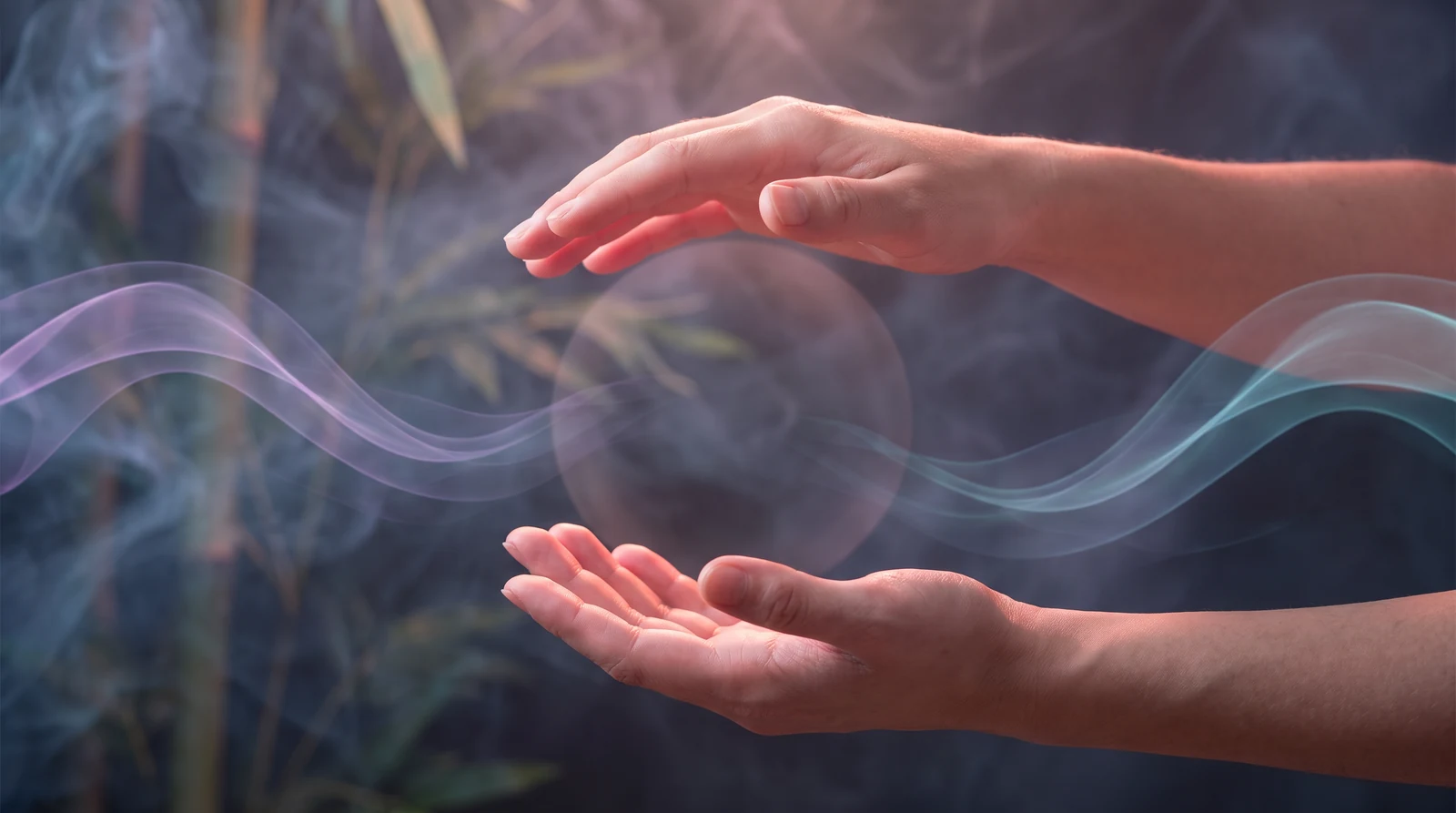
The first time most Westerners meet the word qi, it arrives wearing mystical robes: an invisible energy, a life force, something a master in a film gathers between his palms. The first time I met it, it was weather. In Mandarin, the everyday word for weather is tianqi, the qi of the sky. If you are angry, you shengqi, you generate qi. If you are polite, you are keqi, guest qi. A person who looks unwell has poor qise, qi color. Long before qi is a doctrine, it is simply how the language talks about aliveness: the moving, breathing, changeable quality of things. That is the best door into the concept, and it is much less exotic than the robes suggest.
A word that began as breath and steam
The Chinese character for qi, written 气 in its simplified form, is often explained through its older form, which pictures vapor rising, as from cooking rice: steam, mist, breath visible on a cold morning. From that root the word grew outward. Qi came to mean the air we breathe, then the breath in the body, then by extension the vitality that breath so obviously carries, since the difference between a living body and a dead one is, to the naked eye, the breathing. Classical Chinese thought took this observable fact and made it a cosmology: the understanding that one subtle substance, condensing and dispersing, animates bodies, moves weather, and flows through landscapes. Mountains and rivers have qi in this view, which is why a classical Chinese garden or a shan shui painting is composed the way it is, with winding paths and unfilled space for the qi, and the eye, to move through.
Qi in the body: the traditional picture
Traditional Chinese medicine built its map of the body around qi: a circulation of vital breath along channels called meridians, with health understood as smooth flow and illness as blockage or depletion. Acupuncture, acupressure, and herbal practice all grew from this picture. The movement arts grew from it too. Qigong means, roughly, the skill of working with qi: slow, repeated movements coordinated with breath, designed to gather and settle it. Taijiquan, tai chi, shares the same vocabulary. Even feng shui is a qi practice, an attempt to arrange rooms and buildings so the vital breath of a place pools gently instead of rushing through or going stale.
Does the meridian map correspond to anything an anatomist can find? No, and an honest article should say so plainly. Qi is not a substance you can measure, and modern science has not found one behind it. What research can measure is the practices. A 2013 systematic review and meta-analysis of randomized controlled trials found qigong practice associated with reduced depressive and anxiety symptoms. You do not need to settle the metaphysics to notice what a slow movement practice does to your nervous system. The map may be poetry, but the walking is real.
The map may be poetry, but the walking is real.
Feeling what the word points at
There is a simple experiment my qigong teacher liked. Stand comfortably, rub your palms together until they are warm, then hold them a few inches apart, as if holding a ball of dough. Breathe slowly. Within a minute, most people feel something between the hands: warmth, tingling, a faint magnetic thickness. A skeptic will say, correctly, that this is circulation, attention, and the physiology of still hands. A traditionalist will say you are feeling qi. Notice that both descriptions change nothing about the experience, which is pleasant, absorbing, and deeply quieting. My grandmother never once used the word metaphysics. She simply did her slow exercises at dawn by the window, because, she said, the morning qi is the freshest. The habit gave her forty years of unhurried breathing. The explanation was never the point.
If you want to explore the feeling of qi without learning a form, begin with attention and breath, which is all the old practices are made of at their root. Settle somewhere quiet and try the 4-7-8 breathing exercise built into Feelsy: in for four, hold for seven, out for eight. As the breath slows, rest your eyes on something that moves the way qi is said to move. I often use Feelsy's ink-like drifting textures for this, because watching a slow swirl teaches the attention the same unhurried pace the breath is learning. Ten minutes of that is a fair taste of what a qigong class spends years refining.
A word worth keeping
You can treat qi as physiology dressed in poetry, or as poetry that got the physiology roughly right two thousand years early: breath matters, movement matters, stagnation feels bad, flow feels good. Either way, the word holds a piece of wisdom that clinical language still struggles to say so compactly. Aliveness is not a possession but a current. It can be cultivated, wasted, settled, and shared. The cultures of the qi arts built daily practices around that insight, slow ones, patient ones, mostly done at dawn in parks by people who do not argue about mechanisms. Join them for a week, in spirit or in person, and the word will explain itself better than any article can.
Feelsy is a wellness product, not medical advice. If stress, anxiety or sleep problems persist, please speak with a qualified professional.
References
- Wang, C. W., et al. (2013). The effect of qigong on depressive and anxiety symptoms: A systematic review and meta-analysis of randomized controlled trials. Evidence-Based Complementary and Alternative Medicine.
Frequently Asked Questions
What does qi mean in Chinese?
Qi (气) originally pictured rising vapor, like steam or visible breath, and came to mean air, breath, and by extension vitality itself. In everyday Mandarin it is ordinary vocabulary: weather is tianqi, getting angry is shengqi, being polite is keqi. In traditional thought it names the vital breath believed to animate bodies, landscapes, and weather alike.
Is qi scientifically proven?
No. Qi is not a measurable substance, and the meridian map of traditional Chinese medicine does not correspond to structures anatomists can find. What research can study is the practices built around qi: a 2013 meta-analysis of randomized trials found qigong associated with reduced depressive and anxiety symptoms. The benefits of slow movement and breath do not depend on the metaphysics.
What is the difference between qi and qigong?
Qi is the concept: vital breath or life energy. Qigong is a practice, roughly the skill of working with qi, made of slow repeated movements coordinated with breathing. Tai chi shares the same vocabulary and logic, and feng shui applies the idea of flowing qi to the arrangement of spaces rather than bodies.
How can I feel qi for myself?
A classic beginner's experiment: rub your palms warm, hold them a few inches apart as if holding a ball, and breathe slowly. Most people soon feel warmth or a faint tingling thickness between the hands. Whether you call that circulation and attention or call it qi, the exercise is absorbing and quieting, which is what the old practices are after.

About the author
Contributing writer
Mei grew up in Shanghai around tea that could not be hurried and grandmothers who considered stillness a skill. She writes about slow hands and sensory ritual: tea, calligraphy, qigong, and the quiet crafts that taught the world how to pay attention.
Feel it for yourself.
Feelsy turns reading about calm into practising it. Two minutes of a slow texture is often the whole difference.


Related reading
 Breath & Body
Qigong for Beginners: Slow Hands, Quiet Mind
A gentle qigong guide for beginners: what qigong is, what research says about stress and anxiety, and three simple movements you can practice in ten minutes.
 Ancient Wisdom
Zhan Zhuang: The Chinese Art of Standing Like a Tree
Zhan zhuang, the 'standing post,' is a Chinese practice of complete stillness on your feet. How standing meditation works and a gentle way to begin today.
 Ancient Wisdom
Tai Chi for Beginners: Learning to Move at the Speed of Calm
Tai chi for beginners: what the slow Chinese practice really is, why moving meditation calms an anxious mind, and how to begin at home in ten minutes.
 Ancient WisdomNew
Ataraxia: The Ancient Greek Art of an Untroubled Mind
Ataraxia is the ancient Greek word for an untroubled mind, prized by Epicureans, Stoics and Sceptics alike. Here is what it means and how they reached it.
 Ancient WisdomNew
Ma: The Japanese Art of Negative Space
Ma is the Japanese concept of negative space: the pause, the gap, the emptiness that gives everything else meaning. Here is how to invite more of it into a day.
 Ancient Wisdom
Negative Visualisation: The Stoic Habit of Imagining Loss
Negative visualisation, the Stoic practice of briefly imagining losing what you have, sounds grim but works as a gratitude exercise. Here is how to do it well.