Why Do We Dream? What Your Brain Is Actually Up to at 3 A.M.
Science still argues about why we dream, but the leading theories agree on one thing: dreaming is work. Here's what your brain does all night, and why.
By Kurt Woleret
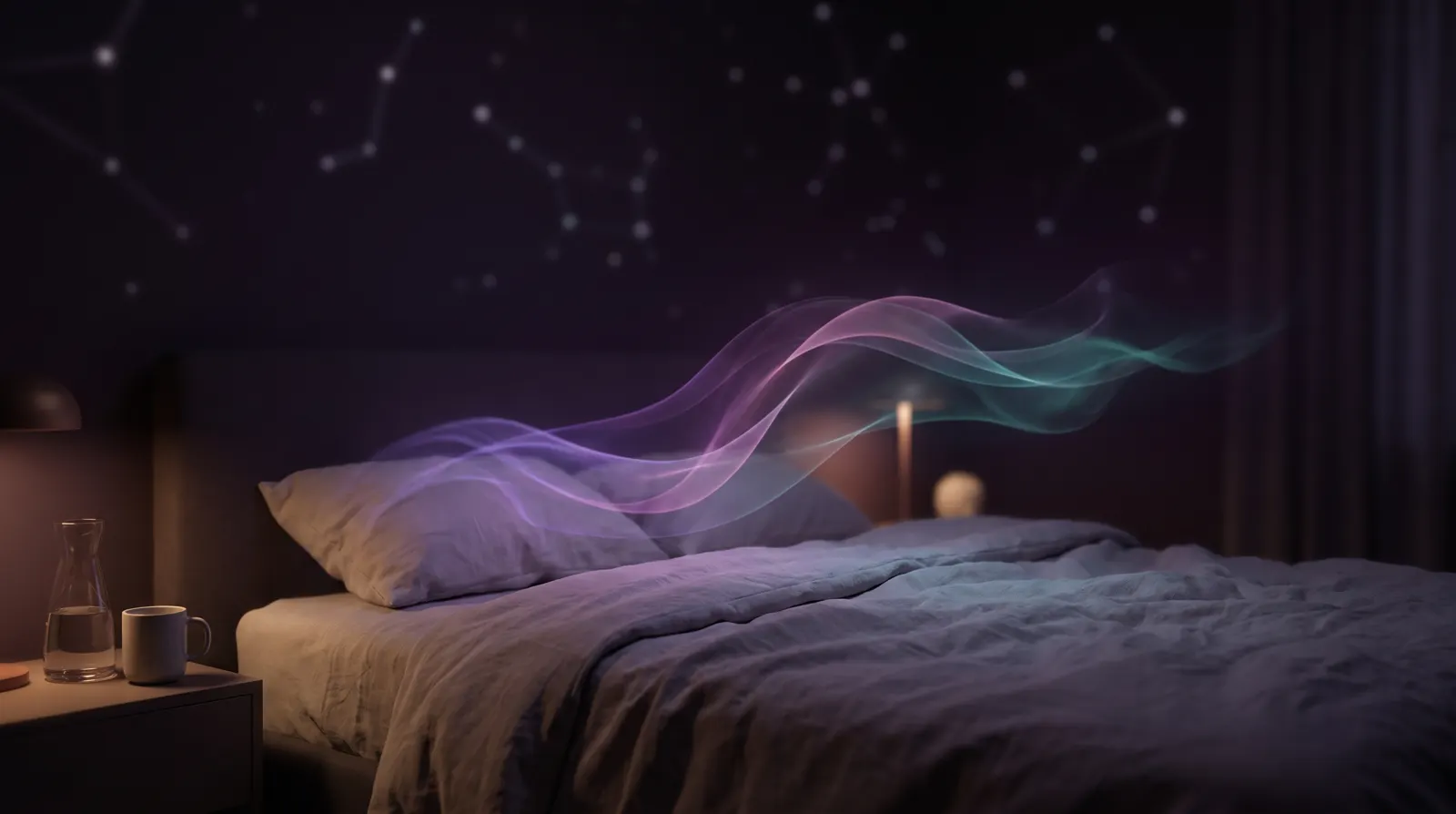
Last Tuesday I dreamed I was late for the F train, except the F train was in my elementary school, and my editor was driving it. I woke up at 3 a.m. genuinely annoyed at a fictional commute. Every night, your brain does this: it powers down the outside world, then spends about two hours producing surreal, emotional, occasionally terrifying cinema for an audience of one who won't even remember most of it. From an efficiency standpoint this looks insane. Evolution doesn't usually keep expensive features that do nothing. So why do we dream? Science doesn't have one settled answer, but it has several good ones, and they agree on more than you'd think.
First, the mechanics
You dream in every stage of sleep, but the vivid, plot-heavy stuff mostly happens during REM sleep, the phase where your eyes dart around, your brain lights up to near-waking levels, and your body is temporarily paralyzed so you don't act out the show. REM comes in cycles, roughly every 90 minutes, with the longest episodes stacked toward morning. That's why the dream you remember is usually the one the alarm interrupted, and why a short night quietly amputates your most dream-dense hours. Whatever dreaming is for, sleeping six hours means doing less of it.
Theory one: dreams are your brain filing the day
The best-supported modern idea is that dreaming is connected to memory consolidation, the overnight process of sorting new experiences and wiring the keepers into long-term storage. The classic evidence: researchers at Harvard had people learn a virtual maze, then take a nap. The ones who dreamed about the maze improved dramatically more at it than the ones who slept without maze dreams, and the effect has since been replicated across a full night of sleep (Wamsley, 2019, Journal of Sleep Research). The dreams weren't accurate replays, either; they were fragments, the maze's music, the feeling of being lost. That suggests dreaming isn't the filing itself so much as the visible spray from it, your consciousness catching glimpses while the brain cross-references new material with everything it already knows. It would explain why dreams are surreal: you're watching your memory system free-associate at industrial speed.
Dreams may be the visible spray from the brain's overnight filing, not the filing itself.
Theory two: dreams are a flight simulator for bad days
Notice how rarely you dream about things going fine. Dream reports are heavy on being chased, falling, showing up unprepared, losing people in crowds. A Finnish researcher named Antti Revonsuo turned that bias into a theory: dreaming evolved as threat simulation, a nightly rehearsal space where the brain practices detecting and surviving dangers at zero real-world cost (Revonsuo & Valli). It's a flight simulator that runs on anxiety. The theory fits the data on nightmares after stressful periods, and it reframes the classic exam dream: your brain isn't tormenting you about the deadline, it's drilling you for it, with the subtlety of a smoke alarm. Whether that rehearsal still earns its keep in a world where the predators are mostly email is a fair question, but your brain shipped a long time ago.
Theory three: overnight emotional maintenance
A third line of research treats REM sleep as emotional processing: during REM, the brain reactivates charged memories while some of its alarm chemistry is turned down, which may let it keep the information from a hard experience while sanding the emotional spike off it. It's why a rough day often genuinely looks different after a night of sleep, and why chronically shorted sleep leaves people reactive and raw. The theories aren't rivals, really. Filing memories, rehearsing threats, defusing emotions: it's all the same night shift, one department with three job duties.
For what it's worth, we're probably not alone in this. Sleeping rats show their hippocampus replaying the day's maze runs, dogs twitch and paddle through something, and octopuses flash color patterns in their sleep like they're rehearsing camouflage. Nobody can ask them what they saw. But the fact that brains across the animal kingdom seem to run some version of the night shift suggests dreaming, or whatever dreaming is the surface of, is old, useful and deeply built in. It's not a bug in human consciousness. It's standard equipment.
What this means in practice
First, protect the late-morning REM hours; they're the ones a 2 a.m. bedtime and a 6 a.m. alarm destroy. Getting to bed on time isn't just about feeling rested, it's about giving the night shift its full shift, and if racing thoughts are what keep you from clocking in, a boring wind-down helps: I use a slow Feelsy texture and the 4-7-8 breathing exercise to bore my brain past its own headlines. Second, don't over-read the cinema. Dreams draw from your memories and worries, so they're about your life in a loose sense, but there's no evidence for universal symbol dictionaries; your dream about teeth means whatever teeth mean to you, probably nothing invoiceable. Third, remembering few dreams is normal and fine; recall depends mostly on when you wake, not on whether the work got done. The show runs whether or not you catch it. Best thing you can do is show up, lights out, and let the department work.
Feelsy is a wellness product, not medical advice. If stress, anxiety or sleep problems persist, please speak with a qualified professional.
References
- Wamsley, E. J. (2019). Dreaming of a learning task is associated with enhanced memory consolidation: Replication in an overnight sleep study. Journal of Sleep Research, 28(1), e12749.
- Revonsuo, A., & Valli, K. (2000). Dreaming and consciousness: Testing the threat simulation theory of the function of dreaming. Psyche, 6.
Frequently Asked Questions
Why do we dream every night?
Science hasn't settled on one answer, but the leading theories agree that dreaming is work, not noise. During sleep the brain files new memories into long-term storage, rehearses responses to threats, and reprocesses emotional experiences with the alarm chemistry turned down. Dreams appear to be what consciousness glimpses while that overnight maintenance runs.
Do dreams help you learn and remember?
There's real evidence they're connected. In studies where people learned a virtual maze and then slept, those who dreamed about the maze improved at it far more than those who didn't, an effect replicated across a full night of sleep. The dreams were fragments rather than replays, suggesting dreaming reflects the brain cross-referencing new material with older memories.
Why are so many dreams stressful or scary?
One influential idea, the threat simulation theory, holds that dreaming evolved as a nightly rehearsal for danger: the brain practices detecting and surviving threats at zero real-world cost. That would explain why dream reports lean so heavily on being chased, falling or arriving unprepared, and why nightmares increase after stressful periods.
Is it bad if I never remember my dreams?
No. Dream recall depends mostly on when you happen to wake, since the dream you remember is usually the one your alarm interrupted. The overnight work of dreaming appears to happen whether or not you catch any of it, so remembering little or nothing is normal and not a sign of poor sleep.
How can I get more REM sleep?
Mostly by giving the night its full length. REM episodes get longer toward morning, so a late bedtime with an early alarm cuts disproportionately into your most dream-dense hours. A consistent schedule and a boring, screen-free wind-down that settles racing thoughts are the most reliable ways to protect them.

About the author
Contributing writer
Kurt is a New York based writer covering the practical science of stress, sleep and focus. He is the resident sceptic of the Journal: if a technique cannot survive a crowded subway commute and a deadline week, he is not interested in it.
Feel it for yourself.
Feelsy turns reading about calm into practising it. Two minutes of a slow texture is often the whole difference.


Related reading
 Sleep
SleepSleep Cycles, Explained: What Actually Happens Every 90 Minutes
What a sleep cycle actually is, how long one really lasts, why deep sleep front-loads your night, and how to time your alarm so mornings hurt less.
 Sleep
SleepSleep Paralysis: Why You Wake Up Frozen (and What's Actually Happening)
Why you wake up unable to move, where the shadowy figure comes from, and what actually helps: the science of sleep paralysis, minus the demons.
 Sleep
SleepHypnic Jerks: Why You Twitch Awake Right as You Fall Asleep
That full-body jolt just as you drift off has a name: the hypnic jerk. Here's why sleep starts happen, what makes them worse, and how to calm them down.
 SleepNew
Night Owl vs Early Bird: The Science of Chronotypes
Night owl or early bird isn't a personality flaw or a virtue. It's a chronotype. Here's what the science says about your body clock and how to work with it.
 SleepNew
How to Wake Up Early (Without Hating Your Life)
Want to become a morning person? Here's how to wake up early using light, timing and consistency, based on what circadian science actually shows.
 Sleep
SleepCan't Sleep? Why Getting Out of Bed Is the Counterintuitive Fix
Lying awake trying harder is the one thing that makes insomnia worse. Here's the 20-minute rule, the science of stimulus control, and how to use it.