Why Popping Bubble Wrap Is So Satisfying
Popping bubble wrap measurably calms people, and a 1992 study showed it. The psychology of the pop, why your hands crave it, and digital stand-ins that work.
By Kurt Woleret
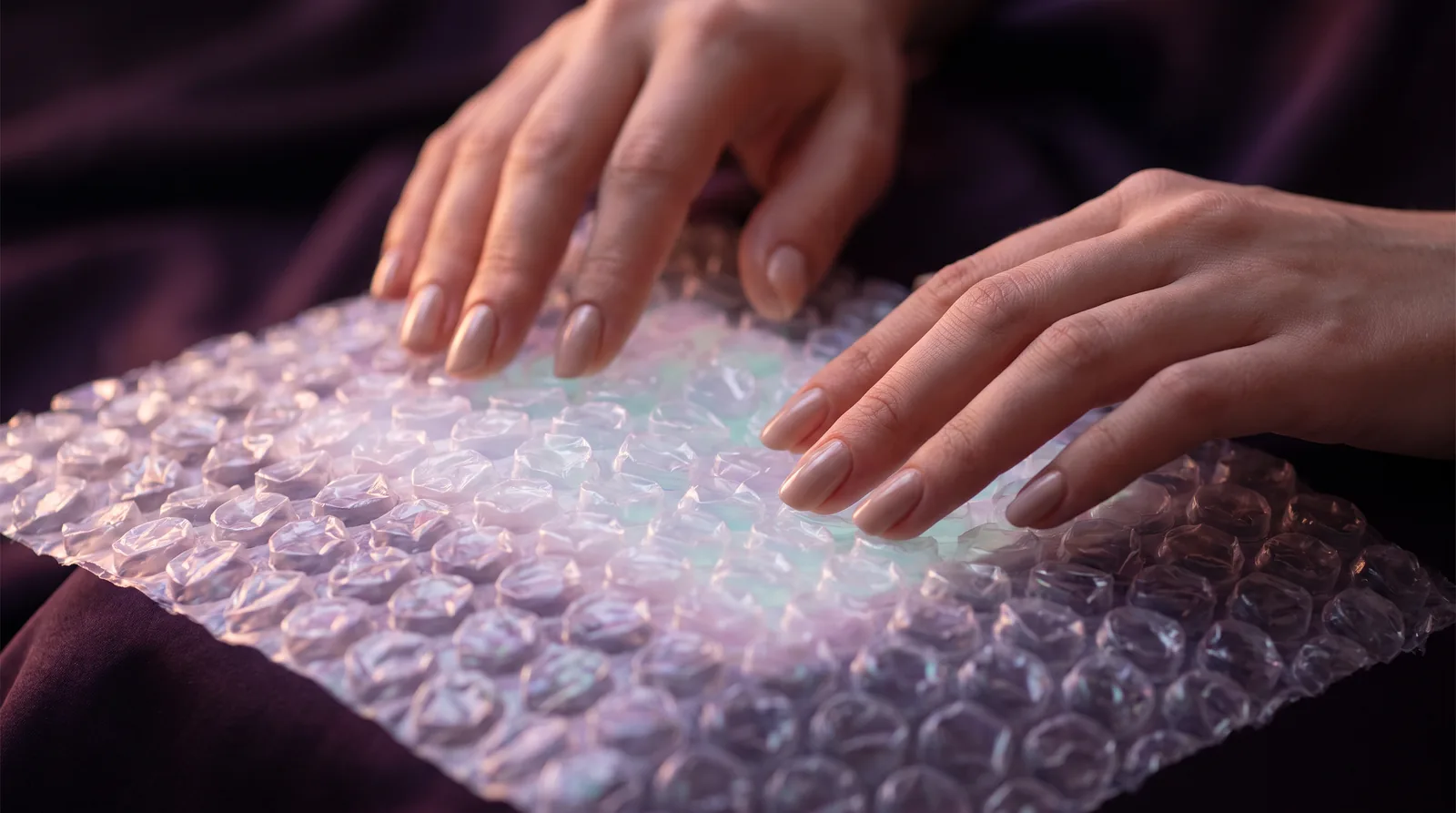
There's a reason the office fights over packing material. Somebody opens a box, a sheet of bubble wrap slides out, and three adults with mortgages briefly become seagulls circling a french fry. The pop is irresistible. And unlike most irresistible things, this one has an actual study behind it.
The 1992 study, yes really
In 1992, psychologist Kathleen Dillon published a small experiment in Psychological Reports under the magnificent title 'Popping sealed air-capsules to reduce stress.' Thirty undergraduates popped two sheets of bubble wrap while their mood was measured before and after. The result: participants reported feeling significantly more energized, less tired and calmer after popping (Dillon, 1992, Psychological Reports). A bonus finding for the connoisseurs: people preferred the big bubbles to the small ones.
It's one small study from three decades ago, so let's not build a clinic on it. But it measured something millions of hands already knew: a minute of popping leaves you looser than it found you, and somehow more awake at the same time.
Why the pop works on your brain
A bubble pop is a tiny, perfect loop of prediction and payoff. Your fingers squeeze, tension builds, and then: crisp, instant resolution. No ambiguity, no waiting, no consequences. Your hands get a completed action roughly once per second, a rate of resolution almost nothing else in adult life offers. Compare that to your inbox, where nothing ever pops.
Dillon's own theory ran through the body: fidgety motions like finger tapping and foot jiggling seem to bleed off stress-related muscle tension, and popping is the same release with better sound design. That connects bubble wrap to the wider world of fidgeting and stimming, where repetitive motion helps a nervous system regulate itself. Your hands weren't being childish in the office kitchen. They were self-regulating, mildly, legally, and at the expense of the shipping department.
A bubble pop is a complete story in half a second: tension, climax, resolution. Your inbox should be so generous.
The ASMR crossover
The pop also lives in the audio family that ASMR built: crinkles, taps, snaps and squishes. Crinkling plastic is one of the classic trigger categories, and a slow bubble-wrap session recorded close to the microphone is a staple of the genre. You don't need to experience tingles for it to work on you. The predictable, non-threatening percussion does the same quiet favor for most nervous systems: it gives attention something small and safe to chew on.
The digital question
Can a screen replace the sheet? Partially, and the details matter. The poke-it-and-it-responds loop survives the translation: interactive textures with good visuals and sound scratch a recognizable version of the itch, which is roughly the design brief behind Feelsy's poppable, foldable textures. What's harder to fake is the full fingertip mechanics of a physical pop, the resistance and the give. So my honest ranking: real bubble wrap first, a well-made interactive texture a close second, and a silent video of someone else popping a distant third. The agency is most of the magic. Watching someone else pop is like watching someone else eat.
Using it on purpose
Here's the practical version. Keep a sheet in your desk drawer, or a texture on your phone, and treat it as a 90-second circuit breaker rather than background fidgeting. After the tense call, before the hard email: pop for a minute, breathe out longer than you breathe in, then proceed. Pairing the pops with a long exhale turns a toy into a legitimate downshift, and the 4-7-8 exercise in Feelsy gives the exhale a count if you want one. Dillon's poppers felt calmer and more awake at once, which is precisely the state you want between meetings. Not sedated. Reset.
The shipping industry accidentally invented one of the most reliable tiny stress tools of the modern era. The least we can do is use it with intention, and recycle the evidence afterward.
Feelsy is a wellness product, not medical advice. If stress, anxiety or sleep problems persist, please speak with a qualified professional.
References
- Dillon, K. M. (1992). Popping sealed air-capsules to reduce stress. Psychological Reports, 71(1), 243-246.
Frequently Asked Questions
Why is popping bubble wrap so satisfying?
Each pop is a tiny, complete loop of prediction and payoff: your fingers squeeze, tension builds, and a crisp resolution arrives instantly, with no ambiguity and no consequences. Your hands get a completed action roughly once per second, a rate of resolution very little in adult life offers. The repetitive motion also appears to bleed off stress-related muscle tension, the way finger tapping or foot jiggling does.
Is there research on bubble wrap and stress?
Yes, a small 1992 study by psychologist Kathleen Dillon in Psychological Reports had thirty undergraduates pop two sheets of bubble wrap and measured their mood before and after. Participants reported feeling significantly more energized, less tired and calmer afterward, and they preferred popping the larger bubbles. It's one small, decades-old study, so it's suggestive rather than definitive.
Is popping bubble wrap a form of stimming?
It sits in the same family. Stimming and fidgeting are repetitive motions that help a nervous system regulate itself, and Dillon's theory was that popping releases stress-related muscle tension much like finger tapping or foot jiggling, just with better sound design. The predictable pops also give attention something small and safe to rest on.
Do digital bubble wrap apps work as well as the real thing?
Partially. The poke-it-and-it-responds loop translates well when an interactive texture has good visuals and sound, though the physical resistance and give of a real pop is hard to fake. An honest ranking: real bubble wrap first, a well-made interactive texture a close second, and passively watching someone else pop a distant third, because the sense of agency carries most of the effect.

About the author
Contributing writer
Kurt is a New York based writer covering the practical science of stress, sleep and focus. He is the resident sceptic of the Journal: if a technique cannot survive a crowded subway commute and a deadline week, he is not interested in it.
Feel it for yourself.
Feelsy turns reading about calm into practising it. Two minutes of a slow texture is often the whole difference.


Related reading
 ASMR
Why Slime Videos Are So Satisfying
There is a real reason your shoulders drop when you watch slime being folded and poked. A look at ASMR, soft fascination and the design of satisfying motion.
 ASMR
ASMR, Explained: What Science Says About the Tingles
ASMR is more than a trend. Here is what the tingles are, who feels them, and what studies have measured about their effects on heart rate, mood and calm.
 Visual Meditation
Meditation for People Who Can't Meditate
If sitting still with your eyes closed feels impossible, you are not broken. Here is a gentler on-ramp built around senses, movement and very small doses.
 ASMR
Phantom Phone Vibrations: Why You Feel Buzzes That Aren't There
Most phone users have felt a buzz that never happened. What phantom vibration research found, why an alert brain invents signals, and how to quiet the ghost.
 ASMR
Video Game Music for Focus: Why Boss Fight Composers Beat Your Study Playlist
Why video game music helps you focus: it's composed to keep you engaged for hours without stealing attention. How to use soundtracks for deep work.
 ASMR
The Mozart Effect: How One Small Study Launched a Thousand Baby CDs
One 1993 study convinced the world that Mozart raises IQ. What the research actually found, what the meta-analysis says, and what music really does for focus.