Why Pressure Washing Videos Are So Satisfying
A filthy patio, one clean stripe at a time: why pressure washing videos hook your brain, what the satisfaction is made of, and how to use it to unwind.
By Kurt Woleret
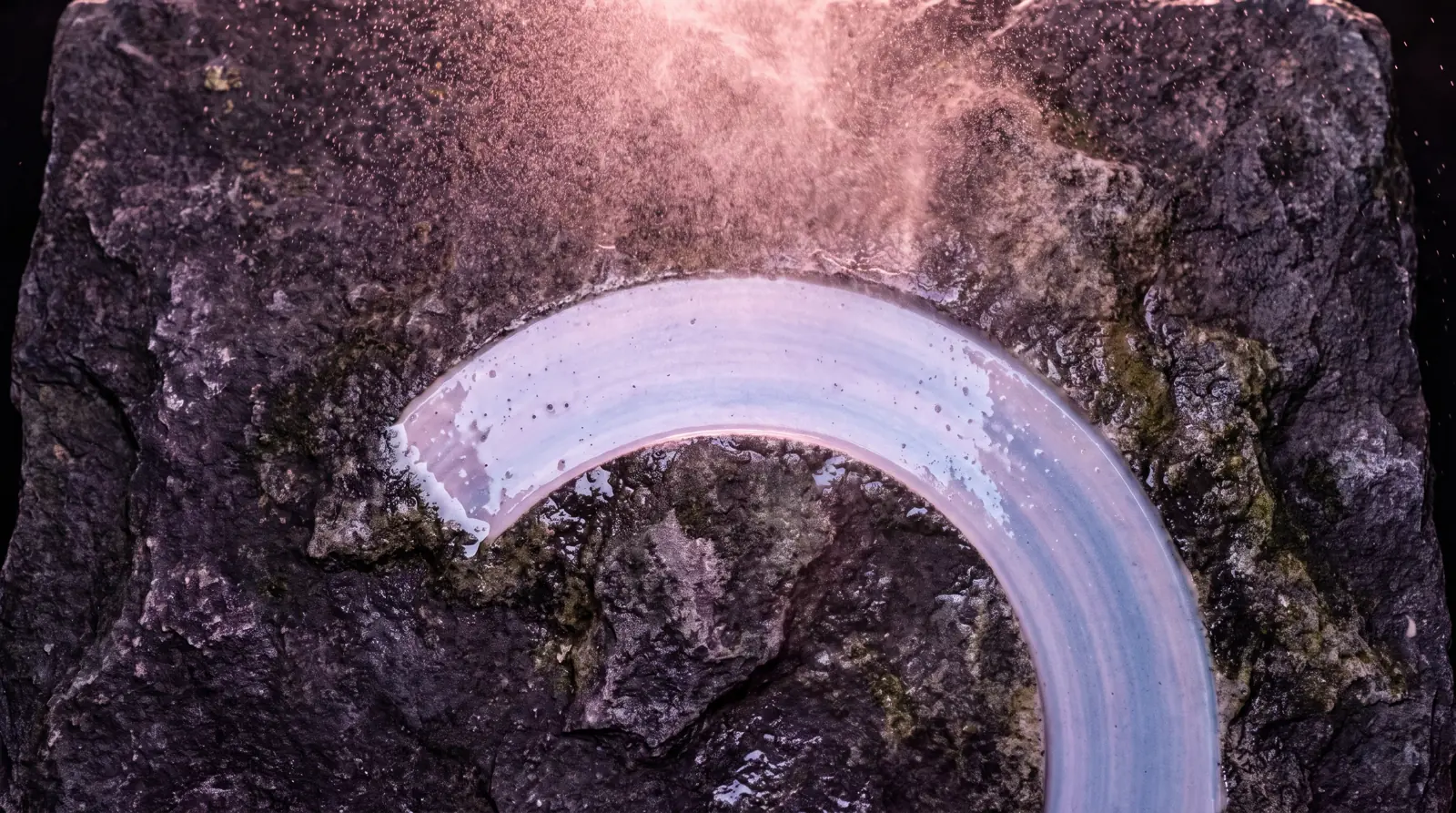
It's 1 a.m. and I'm watching a man in Ohio clean a driveway I will never see in person, owned by someone I will never meet. He's doing the edges first. Good man. I have watched roughly four hundred of these videos, and I'm not alone: pressure washing content racks up views in the hundreds of millions, which means a meaningful fraction of humanity winds down by watching strangers hose geometry into filth. As the designated 'but why' guy around here, I had to take this one apart.
The genre has its own grammar, if you watch enough of it. The slow reveal of just how bad the grime is. The first test stripe, which functions as a promise. The debates in the comments about technique, conducted with the seriousness of a chess forum. And the finale, the full reversed shot of the finished surface, which the camera holds for exactly as long as you need it to. None of this is accidental. The creators found, by iteration, the precise sequence that scratches the itch, and the itch turns out to be ancient.
Your brain is a progress meter
The core engine is feedback. Most of adult life runs on delayed, ambiguous progress: you work for months and maybe the project ships, you eat salads for weeks and the mirror shrugs. Pressure washing is the opposite. Every second of spray produces visible, permanent, unarguable progress. The line between clean and dirty is sharp enough to read from orbit, and it only moves one direction. Your brain, which evolved to seek evidence that effort produces results, gets that evidence at sixty frames per second. It's the purest progress bar in nature.
High contrast, zero ambiguity
The before-and-after contrast does heavy lifting too. Grimy concrete next to freshly washed concrete is a massive visual difference, and the videos exploit it with the stripe: one clean band through the muck, the frame's whole story told in a single image. There's no interpretation required, no nuance, no 'well, it depends.' In a world of ambiguous outcomes, something in us exhales at a result you could verify from across the street. Completion matters here too. An unfinished pattern itches; a finished one releases. The best creators know this, which is why they always, always finish the driveway.
It's the purest progress bar in nature: effort in, clean stripe out.
Clean floors, zero effort
There's also the small miracle of vicarious labor. Watching someone else do satisfying work delivers the transformation without the wet socks, the rental fees, or the sixty minutes of your Saturday. You get the completed pattern, they get the blisters. This is the same trade that makes cooking videos and restoration videos so watchable: the human appetite for seeing competence applied to a problem, enjoyed from a couch at zero cost. Some viewers report the videos even motivate them to clean their own places, which may be the only time an algorithm has accidentally improved someone's kitchen.
The sound is half the product
Mute a pressure washing video and it loses most of its magic. The soundtrack is a steady, broadband hiss, mechanically similar to the white noise people run all night, with a soft rhythmic variation as the wand sweeps. Steady broadband sound masks the chaos around you and gives the ear one predictable thing to rest on. Layer that under slow, repetitive motion and you've accidentally built a relaxation machine out of a Home Depot rental. Plenty of viewers describe tingles or a trance-like calm, which puts these videos in the same family as unintentional ASMR: content that soothes without ever meaning to.
Why it calms instead of excites
Notice what the videos don't have: stakes, plot, faces, or anyone wanting anything from you. Nothing bad can happen to a driveway. The outcome is certain from the first frame, so your threat-monitoring systems get to stand down completely, and attention settles into a soft, open watching, closer to staring at a fire than to following a show. The motion is slow and repetitive, the progress is certain, and you are gloriously not responsible for any of it. That's the recipe for the specific flavor of calm these videos produce: engagement without demand.
The repetition does one more quiet job: it gives your attention a rhythm to lock onto. Sweep, overlap, sweep, overlap. Predictable rhythm is one of the oldest calming signals we respond to, from rocking chairs to waves on a beach, and a wand moving in even strokes across concrete is, improbably, a member of the same family. Your breathing tends to slow to match it without being asked.
Using it on purpose
If satisfying-cleaning content is your wind-down of choice, use it deliberately instead of ambiently. The failure mode is the feed: one driveway becomes forty minutes of algorithmic drift through progressively louder content, and the calm you came for gets traded for just one more. Pick a video, watch it, done. Better yet, notice which ingredients actually work on you, slow certain motion, steady sound, visible transformation, and get them without the feed attached. That exact recipe is what Feelsy's textures are built from: slow visual change, soft audio, no ads, no algorithm steering you anywhere at 1 a.m. The man in Ohio will still be there tomorrow. He's very reliable.
Feelsy is a wellness product, not medical advice. If stress, anxiety or sleep problems persist, please speak with a qualified professional.
Frequently Asked Questions
Why are pressure washing videos so satisfying?
They deliver instant, unambiguous visual progress. Every pass of the wand produces a sharp line between dirty and clean that only moves in one direction, which feeds the brain's appetite for clear evidence that effort produces results. Add the high before-and-after contrast and the pull to see the pattern completed, and you get a nearly perfect satisfaction loop.
Why do pressure washing videos help me sleep or relax?
The sound is a steady broadband hiss, similar to the white noise many people sleep to, paired with slow repetitive motion and zero stakes. There's no plot, no faces, and nothing required of you, so your attention can rest in a soft, open watching mode closer to staring at a fire than following a show. Many viewers find it works like unintentional ASMR.
Are satisfying cleaning videos bad for you?
The videos themselves are harmless, and as a wind-down they're a reasonable choice. The risk is the delivery: autoplay and feeds can stretch one calming driveway into forty minutes of drift toward louder content, especially late at night. Watch deliberately, one video and done, or use a calming visual source that doesn't have an algorithm attached.

About the author
Contributing writer
Kurt is a New York based writer covering the practical science of stress, sleep and focus. He is the resident sceptic of the Journal: if a technique cannot survive a crowded subway commute and a deadline week, he is not interested in it.
Feel it for yourself.
Feelsy turns reading about calm into practising it. Two minutes of a slow texture is often the whole difference.


Related reading
 Visual Meditation
Why Cleaning Videos Are So Satisfying, According to Science
Power washing, carpet scraping, soap cutting: why does watching other people clean feel this good? The psychology of cleaning videos as a visual reset.
 Visual Meditation
Why Restoration Videos Are So Satisfying: Rust, Patience and the Payoff
Rusty knives, muddy rugs, tarnished lamps made new again. Here's the psychology of why restoration videos are so satisfying, and how to watch them to unwind.
 ASMR
The Quiet Pleasure of Oddly Satisfying Videos
Why are oddly satisfying videos so satisfying? The psychology of perfect fits, clean sweeps and slow swirls, and how to turn watching into meditation.
 Visual MeditationNew
Apricity: The Forgotten Pleasure of Winter Sun
Apricity is a forgotten English word for the warmth of the sun in winter. Here is why a few minutes of low winter sunlight can soften the darkest months.
 Visual MeditationNew
Momijigari: The Japanese Art of Autumn Leaf Viewing
Momijigari is the old Japanese tradition of travelling to see autumn leaves. Here is why fiery foliage calms the mind, and how to practise it anywhere.
 Visual MeditationNew
Why Libraries Feel So Calming
Step into a library and your shoulders drop. Here is the psychology of hush, tall shelves and shared silence, and how to borrow that feeling for your rooms.