Why Sacred Spaces Feel Calming, Even If You Are Not Religious
Step into a cathedral or temple and something in you goes quiet. Here is why sacred architecture calms the mind, whatever you happen to believe.
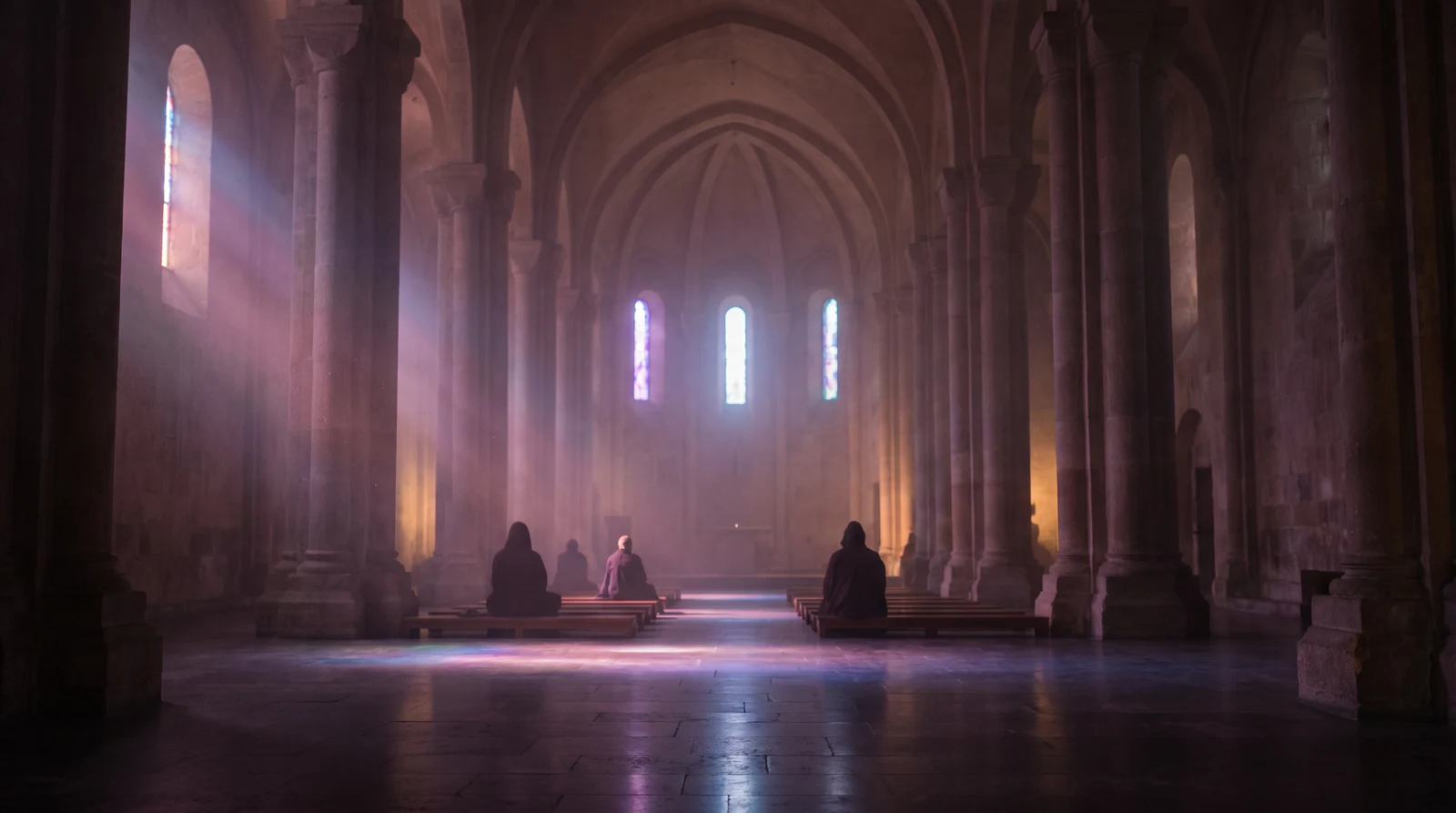
You do not have to believe a word of it. You can walk into a cathedral as a tourist, a sceptic, a person killing time before a train, and the building will still do its work on you. Your voice drops without being asked. Your pace slows. Your eyes travel up, because the architecture gives them nowhere else to go, and somewhere between the floor and the vaulting something in your chest unclenches. The same thing happens in a mosque's courtyard, a Kyoto temple garden, a stone circle on a windswept hill. Whatever is going on, it is not doctrine. It is older and stranger than that.
Buildings that were designed to slow you down
Sacred architecture is perhaps the longest-running experiment in applied psychology that our species has conducted. For thousands of years, across cultures that never met, builders have converged on the same toolkit: height that dwarfs the visitor, light that arrives indirectly and changes by the hour, materials that hush footsteps or make them echo, thresholds that force a pause, and a deliberate scarcity of things to do. None of this is accidental. These spaces were engineered, with extraordinary patience, to move a human being from the register of the street to the register of the interior.
Consider what a great sacred building removes. There is nothing to buy. There is very little to read. The temperature drops, the light dims, the soundscape narrows to footsteps and murmur. In a world that competes ferociously for every glance, a cathedral is a vast machine for not demanding your attention, and the nervous system notices the difference within seconds.
The science of awe
Psychology has a name for the emotion these buildings manufacture: awe. In a foundational paper, Dacher Keltner and Jonathan Haidt proposed that awe arises from two ingredients, vastness and accommodation: the perception of something much larger than the self, and the mental stretch required to take it in (Keltner & Haidt, 2003, Cognition and Emotion). Mountains and night skies supply the vastness naturally. Sacred architecture is the human attempt to build it to order, which is why the ceiling of a great mosque or minster behaves, psychologically, rather like a canyon.
Awe does measurable things to the mind. In a series of experiments, researchers found that inducing awe expanded people's sense of time: participants felt less hurried, more willing to give their time to others, and more satisfied with their lives in that moment (Rudd, Vohs & Aaker, 2012, Psychological Science). That finding will not surprise anyone who has sat at the back of an empty church at four in the afternoon. The clock does not stop in such places, but it loosens its grip.
A cathedral is a vast machine for not demanding your attention, and the nervous system notices within seconds.
The small self, and why it is a relief
Researchers who study awe often describe its signature effect as the small self: in the presence of vastness, the ego and its anxieties shrink in proportion. This sounds like it ought to be unpleasant, and it is in fact one of the most reliable comforts available. Most of what exhausts us is self-sized. The unanswered message, the awkward meeting, the running tally of things undone: all of it is scaled to the self, and when the self contracts, the whole catalogue contracts with it.
Sacred spaces achieve this shrinkage gently, through proportion rather than argument. A nave does not tell you that your worries are small. It simply places you under sixty feet of stone and lets you draw your own conclusions. This is also why the effect survives unbelief. The architecture is speaking to the body, and the body has no theological commitments.
Borrowing the effect for ordinary days
Most of us do not live within strolling distance of a great temple, and the feeling is too useful to reserve for holidays. The ingredients, happily, travel well. What the buildings teach is a recipe: soft and indirect light, a long sightline for the eyes, quiet or a single steady sound, an absence of demands, and a few unhurried minutes. You can assemble a modest version in an ordinary room at dusk, with the lights low and a window open to the last of the day.
A screen can hold a corner of it too, if it behaves itself. The slow drifts of colour and light in Feelsy's visual textures are built on the same principles as candlelight under stone: gradual change, soft luminance, nothing to click and nothing to win. Paired with a long exhale, or the 4-7-8 breathing exercise the app walks you through, two or three minutes of that register can mark the same threshold a church porch does, the moment where the street is asked to wait outside.
And when you do pass a sacred building with ten minutes to spare, go in. They remain among the only interiors on earth where a stranger may sit in silence, unbothered and unsold to, for as long as they please. That is a rarer amenity than it used to be.
A quiet that belongs to everyone
There is a long human habit of building rooms for the express purpose of feeling small, slow and quiet, and the habit predates every scripture that later moved into them. Whatever you believe, that inheritance is yours. The hush under the vaulting is not checking your credentials. It asks only what it has always asked: that you lower your voice, lift your eyes, and stay a little longer than you meant to.
Feelsy is a wellness product, not medical advice. If stress, anxiety or sleep problems persist, please speak with a qualified professional.
References
- Keltner, D., & Haidt, J. (2003). Approaching awe, a moral, spiritual, and aesthetic emotion. Cognition and Emotion, 17(2), 297–314.
- Rudd, M., Vohs, K. D., & Aaker, J. (2012). Awe expands people's perception of time, alters decision making, and enhances well-being. Psychological Science, 23(10), 1130–1136.
Frequently Asked Questions
Why do churches and temples feel so peaceful?
Sacred buildings were engineered over thousands of years to slow people down: height that dwarfs the visitor, indirect light, hushed acoustics, thresholds that force a pause, and almost nothing to buy, read or do. In a world that competes for every glance, a cathedral is a vast machine for not demanding your attention, and the nervous system notices the difference within seconds.
What is the psychology of awe?
Psychologists Dacher Keltner and Jonathan Haidt proposed that awe arises from vastness and accommodation: perceiving something much larger than the self and mentally stretching to take it in. Later experiments by Rudd, Vohs and Aaker found that awe expands people's sense of time, leaving them feeling less hurried, more generous with their time and more satisfied in the moment.
Why do sacred spaces calm you even if you are not religious?
The architecture speaks to the body rather than to belief, and the body has no theological commitments. Proportion, light and quiet shrink the self and its anxieties without making any argument, which is why the effect works on tourists and sceptics just as it does on believers.
How can I get the calming effect of a sacred space at home?
Borrow the recipe the buildings use: soft, indirect light, a long sightline for the eyes, quiet or one steady sound, an absence of demands, and a few unhurried minutes. An ordinary room at dusk with the lights low and a window open can hold a modest version of the same register, especially when paired with slow breathing.

About the author
Contributing writer
Eleonor writes about contemplative traditions, attention and the cultural history of calm. She has spent two decades collecting the rituals humans use to slow down, from zazen halls to hammams, and translating them for modern, screen-lit lives.
Feel it for yourself.
Feelsy turns reading about calm into practising it. Two minutes of a slow texture is often the whole difference.


Related reading
 ASMR
Why Gregorian Chant Is So Calming: Slow Music from the Monastery
A thousand-year-old melody still lowers the modern pulse. Here is what makes Gregorian chant so soothing, what slow music does to the body, and how to listen.
 ASMR
The Benefits of Silence: What Happens When the Sound Stops
Silence is not merely the absence of noise; the body treats it as an event in itself. Here is what research says quiet does for the heart and mind.
 Ancient Wisdom
Why Incense Calms the Mind: The Slow Ritual of Scent and Smoke
Why incense calms the mind: the Chinese ritual of scent and rising smoke, what research suggests, and a simple incense meditation for focus or evening rest.
 Visual MeditationNew
Apricity: The Forgotten Pleasure of Winter Sun
Apricity is a forgotten English word for the warmth of the sun in winter. Here is why a few minutes of low winter sunlight can soften the darkest months.
 Visual MeditationNew
Momijigari: The Japanese Art of Autumn Leaf Viewing
Momijigari is the old Japanese tradition of travelling to see autumn leaves. Here is why fiery foliage calms the mind, and how to practise it anywhere.
 Visual MeditationNew
Why Libraries Feel So Calming
Step into a library and your shoulders drop. Here is the psychology of hush, tall shelves and shared silence, and how to borrow that feeling for your rooms.