Why Gregorian Chant Is So Calming: Slow Music from the Monastery
A thousand-year-old melody still lowers the modern pulse. Here is what makes Gregorian chant so soothing, what slow music does to the body, and how to listen.
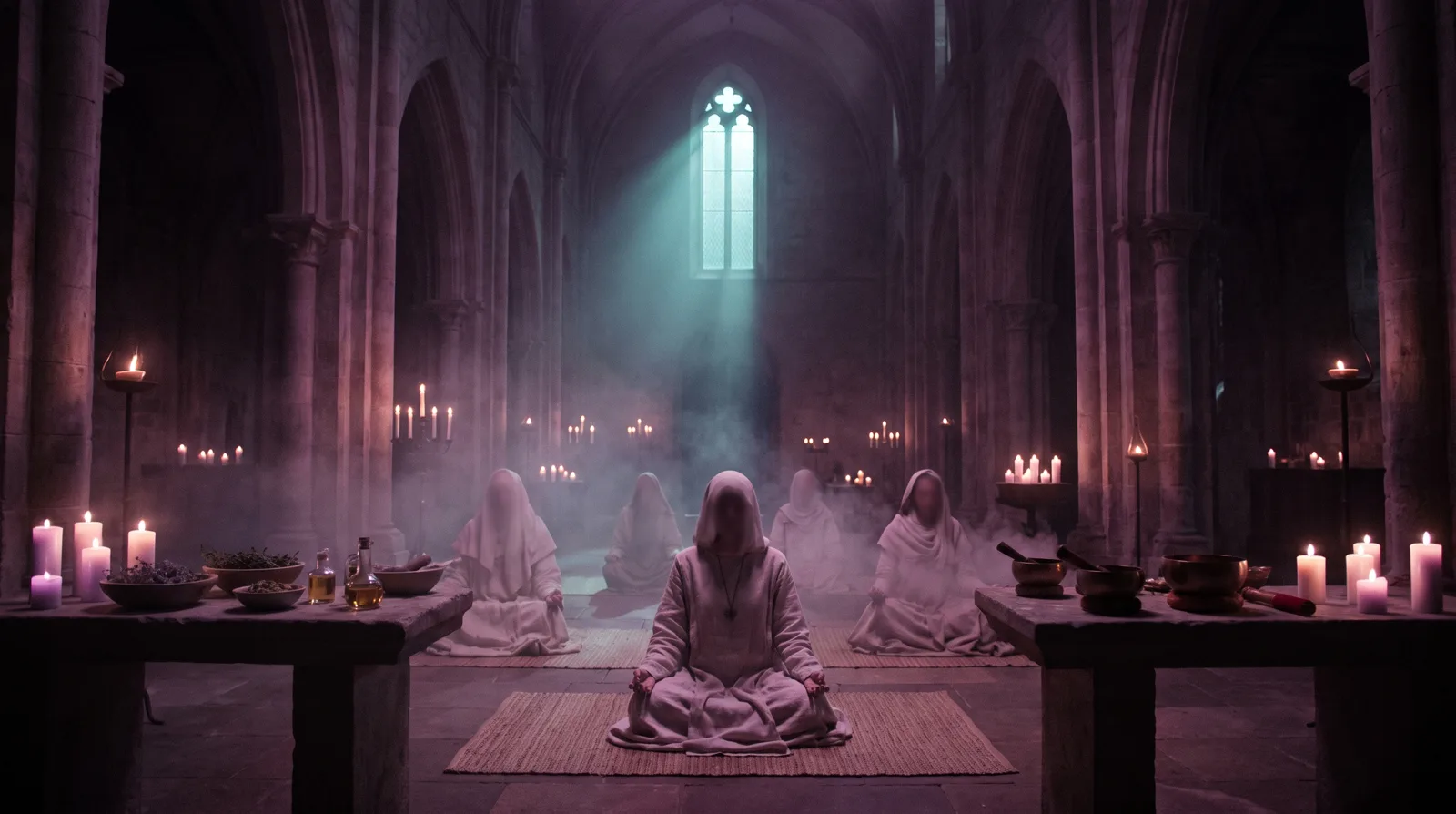
In 1994, to everyone's surprise including the monks', an album of Gregorian chant recorded by the Benedictines of Santo Domingo de Silos in Spain climbed the pop charts across Europe and America and sold millions of copies. The buyers were not, on the whole, devout. They were commuters, students and insomniacs who had discovered what monasteries have known for over a millennium: that this particular way of singing does something unusually kind to the human nervous system. Thirty years later the streaming era has only confirmed it. Chant playlists sit alongside rain sounds and brown noise in the world's sleep libraries, a medieval technology quietly outlasting almost everything invented since.
A thousand years of one melody
Gregorian chant is the traditional sung prayer of Western monasteries, named after Pope Gregory I and shaped between roughly the eighth and tenth centuries. Its defining feature is radical simplicity. It is monophonic, meaning everyone sings a single melodic line together, with no harmony, no counterpoint and no instruments. There is no drum and no regular beat; the rhythm follows the natural stresses of the Latin words, the way speech does. Melodies move mostly by small steps within a narrow range, rising and settling like breathing.
Almost everything that makes modern music exciting has been deliberately left out. No tension and release, no drop, no hook. What remains is closer to weather than to performance: a line of sound that arrives, unhurried, and passes.
The mechanics of a calm sound
Heard purely as sound design, chant is a catalogue of soothing choices. Voices in unison are one of the oldest safety signals we have; a group singing softly together sounds like a group at peace. The absence of percussion removes the startle element that keeps attention alert for the next hit. The narrow melodic range means no sudden leaps for the ear to track, and the long phrases, each sung on a single breath, are paced at the tempo of a slow exhalation.
Then there is the room. Chant evolved inside stone churches with long reverberation, and the recordings carry that acoustic with them: every phrase blooms and decays slowly, edges softened, like light through frosted glass. Reverberant space tells the ear the environment is large, stable and empty of threat. It is the sonic opposite of a notification.
Chant is closer to weather than to performance: a line of sound that arrives, unhurried, and passes.
What slow music does to the body
The calming effect is not only aesthetic. In a study that has become a small classic, researchers played people six styles of music, from techno to raga to slow classical, and measured breathing, blood pressure and heart rate throughout (Bernardi, Porta and Sleight, 2006, Heart). The pattern was clear: faster tempos sped the body up, slower tempos slowed it down, and the effect tracked the pace of the music regardless of whether listeners liked or knew the style. Most strikingly, the deepest relaxation of all arrived in the pauses, the two minutes of silence inserted between tracks, which lowered heart rate and blood pressure below where they had started.
Gregorian chant is, in effect, that experiment's ideal stimulus assembled by accident. It is slow, even-paced and unaccented, and it is full of silence: phrases end, the reverberation fades, and there is a breath of nothing before the next line begins. A body listening to chant is being walked, phrase by phrase, down a slow staircase of sound and pause.
It is worth pausing on how strange this is. The monks who shaped these melodies had no physiology, no charts of heart rate variability, no word for the parasympathetic nervous system. What they had was a daily schedule that required singing the same unhurried lines at fixed hours, year after year, and centuries in which to notice what that did to a room full of people. Chant is what slow listening sounds like after a thousand years of trial and error. The laboratory has mostly confirmed what the choir stalls already knew.
Attention, not just atmosphere
There is a second, quieter mechanism at work. For most listeners the words are in Latin, which means the language centres of the brain are given music without meaning to chase. You cannot follow the argument, so you stop trying, and the voice becomes pure contour, the way a lullaby works on a child too young for words. Attention rests on the line the way the eye rests on a slow-moving texture: engaged enough to stay, free enough to soften. Monks would add that the chant was never meant as background at all but as prayer, sung attention, and even a secular listener can borrow that posture. Follow one phrase from beginning to end, then the silence after it, then the next.
How to listen
Chant asks very little: low volume, an unhurried stretch of time, and ideally the evening, when its long exhalations agree with what your body is already trying to do. Let it play quietly in a lamplit room while you read, bathe or lie down, and let the pauses be part of the music rather than gaps in it. If you like an anchor for the eyes as well as the ears, pair it with something equally slow, a candle flame, or a dark drifting texture in Feelsy with the app's own sound turned off, so the chant carries the whole evening at one tempo.
And if you find yourself breathing in time with a melody written twelve centuries ago, you are not imagining it. That is the design working exactly as intended, on precisely the instrument it was written for.
Feelsy is a wellness product, not medical advice. If stress, anxiety or sleep problems persist, please speak with a qualified professional.
References
- Bernardi, L., Porta, C., & Sleight, P. (2006). Cardiovascular, cerebrovascular, and respiratory changes induced by different types of music in musicians and non-musicians: the importance of silence. Heart, 92(4), 445–452.
Frequently Asked Questions
Why is Gregorian chant so relaxing?
Almost every element of chant is a soothing choice: a single melodic line sung softly in unison, no percussion or regular beat, a narrow range that moves by small steps, and long phrases paced like slow exhalations. Recorded in reverberant stone churches, each phrase blooms and fades gently, and research on slow music shows that tempo of this kind slows breathing and heart rate in listeners.
What does slow music actually do to the body?
In a well-known study, researchers played listeners six styles of music and found that faster tempos sped up breathing, heart rate and blood pressure while slower tempos calmed them, regardless of whether people liked or knew the style. The deepest relaxation came during the silent pauses between tracks, which lowered heart rate and blood pressure below their starting point.
Do I need to be religious to benefit from listening to chant?
No. The calming effect comes from the sound itself: slow unaccented pacing, unison voices, soft reverberation and generous silence. For most listeners the Latin words carry no meaning to follow, which lets the voice work as pure melodic contour, much like a lullaby. Anyone can borrow the practice of following one phrase at a time with relaxed attention.
When is the best time to listen to Gregorian chant?
Evening suits it best, when its long exhalations match what your body is already trying to do. Keep the volume low, let it play in a dim room while you read, bathe or lie down, and treat the pauses as part of the music. Pairing it with something equally slow for the eyes, such as a candle or a dark drifting visual, keeps the whole evening at one tempo.

About the author
Contributing writer
Eleonor writes about contemplative traditions, attention and the cultural history of calm. She has spent two decades collecting the rituals humans use to slow down, from zazen halls to hammams, and translating them for modern, screen-lit lives.
Feel it for yourself.
Feelsy turns reading about calm into practising it. Two minutes of a slow texture is often the whole difference.


Related reading
 ASMR
ASMRWhat Is a Sound Bath? Bathing the Nervous System in Tone
What is a sound bath and what does it actually do? The history of singing bowls and gongs, what research suggests, and how to try one at home tonight.
 Ancient Wisdom
Mantra Meditation: Why Repeating One Word Quiets the Mind
What a mantra actually does to a busy mind: the science of repetition, how to choose a word, and a simple way to practise mantra meditation tonight.
 ASMR
ASMRWhy Lullabies Work (Even on Adults)
Lullabies calm babies in every culture on Earth, and the machinery they work on never leaves us. Here is the science of the world's oldest sleep sound.
 ASMRNew
Why Ambient Music Calms the Mind: Sound You Can Live Inside
Ambient music was designed to be ignorable and interesting at once. Here is where it came from, why beatless sound settles the body, and how to listen well.
 ASMRNew
Why Whale Songs Are So Calming: The Science of the Ocean's Slowest Music
Whale songs slow the racing mind like little else. Here is why these deep, unhurried voices calm us, what the recordings changed, and how to listen for sleep.
 ASMR
ASMRWhy Podcasts Put You to Sleep Faster Than Silence
Press play, someone starts talking, you're out in ten minutes. Why podcasts knock you out faster than silence, and how to set them up so they help your sleep.