Yin Yoga for Beginners: The Quiet Art of Staying Still
Yin yoga holds simple floor poses for three to five minutes at a time. What it is, how it differs from other styles, and how to begin at home tonight.
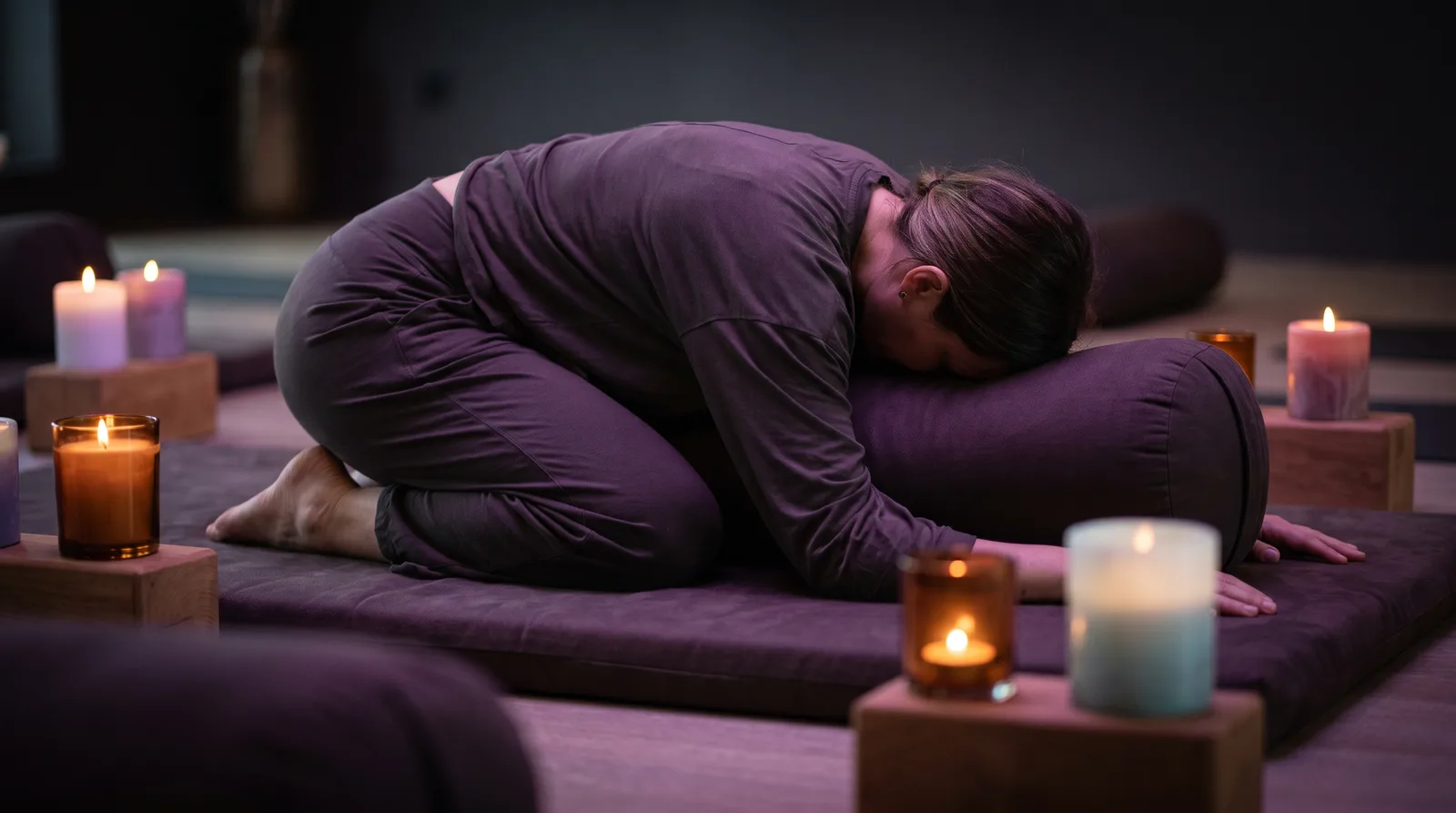
Most yoga asks something of you. Strength, balance, the ability to breathe gracefully while your thighs protest. Yin yoga asks for almost nothing except the one thing modern life has made hardest: that you stay. You fold into a simple shape close to the floor, arrange cushions until nothing hurts, and then you remain there, doing nothing at all, for three, four, five minutes. The first time I tried it I assumed I had chosen the easy class. By the second minute of the second pose I understood that I had, in fact, chosen the confronting one. There was nothing to do, and I was entirely unprepared for nothing.
What yin yoga actually is
Yin yoga is a slow, floor-based practice in which passive poses are held for long stretches, typically three to five minutes and sometimes longer. There are no flowing sequences and no effortful standing shapes. Instead of working the muscles, which are the body's yang tissues, active and elastic, the long gentle holds are aimed at the yin tissues: the fascia, ligaments and joints that respond not to repetition but to time. Muscles like rhythm; connective tissue likes patience.
The modern form of the practice took shape in the late twentieth century, drawing on older Taoist traditions of long-held floor postures, and was popularised by teachers such as Paul Grilley and Sarah Powers. Its vocabulary is small. Butterfly, sphinx, dragon, caterpillar: a dozen or so shapes, most of them recognisable to anyone who has ever sat on a floor. The novelty is not the shapes. It is the length of the stay.
Yin and yang, on a mat
The name comes from the Taoist pairing of yin and yang: the receptive and the active, the still and the moving, the shaded and the sunlit side of the hill. Neither is superior; each completes the other. A culture, or a nervous system, that runs entirely on yang eventually frays. Most exercise, and most of life, is yang: effortful, goal-directed, measured. Yin yoga is deliberately the other thing. You are not trying to progress through the pose. The pose is finished the moment you settle into it; everything after that is simply time doing its slow work.
The pose is finished the moment you settle into it; everything after that is simply time doing its slow work.
What happens in a long hold
Physically, the long hold applies a gentle, sustained stress to tissues that brief stretches never reach, and the body answers slowly, the way dough relaxes under a resting cloth. Teachers speak of finding your edge: a sensation of significant stretch that is entirely free of pain, and then backing off a little from even that. Yin is emphatically not about pushing. Sharp, electrical or joint-centred pain means the shape is wrong for your body today, and cushions or a shallower fold are the answer.
The more interesting weather, though, is mental. Around the first minute, the mind, deprived of tasks, begins to negotiate. It offers itches, plans, grievances, a sudden urgent need to check the timer. This is not a failure of the practice; it is the practice. With nowhere to go, you get to watch urgency arise and, for once, decline to obey it. Somewhere in the third minute the negotiation usually stops, and what is left is unusually close to meditation, arrived at through the body rather than in spite of it.
What the research says
The evidence base is young but encouraging. In a randomised controlled trial at Lund University in Sweden, stressed adults who completed five weeks of yin yoga based practice showed reduced stress and worry and increased psychological wellbeing compared with a control group, and the arm that combined yin yoga with mindfulness psychology also showed a decrease in plasma adrenomedullin, a biomarker associated with stress-related risk (Daukantaitė et al., 2018, PLOS ONE). Five weeks is a short time, and one trial is one trial, but it is notable that so gentle a practice moved both questionnaires and blood chemistry.
How to begin at home tonight
You need a patch of floor, something soft to sit on, two cushions, and fifteen unclaimed minutes. Evening suits yin well; the practice inclines the body toward sleep rather than away from it.
- Butterfly: sit, bring the soles of the feet together well away from the hips, and fold forward onto cushions. Stay for three minutes.
- Sphinx: lie on your front, propped gently on your forearms, and let the lower back soften. Three minutes.
- Caterpillar: sit with legs long and fold forward, letting the spine round completely, head heavy. Three minutes.
- Finish on your back, legs resting up against a wall or knees dropped to one side, for whatever time remains.
Two companions make the holds kinder. The first is slow breathing: I pace the beginning of each pose with a few rounds of the 4-7-8 exercise in Feelsy, which gives the fidgeting mind a banister for the first difficult minute. The second is something unhurried for the eyes; a candle works, and so does a slow texture drifting on autoplay, light moving with no more agenda than the pose has. When the eyes and breath both slow, the body concludes the matter is settled and lets go a layer further.
The skill under the stillness
It would be easy to file yin yoga under stretching, but the deeper skill it trains is rarer: the capacity to remain, comfortably and kindly, in a moment that offers no stimulation and demands no achievement. That capacity leaks generously into the rest of life. Queues, waiting rooms, the long unglamorous middles of difficult weeks: all of them are, in their way, three-minute holds. Practise staying on a mat, where the stakes are cushions, and you will find you have been practising for everything else.
Feelsy is a wellness product, not medical advice. If stress, anxiety or sleep problems persist, please speak with a qualified professional.
Frequently Asked Questions
What is yin yoga?
Yin yoga is a slow, floor-based style of yoga in which simple passive poses are held for long periods, usually three to five minutes. Rather than working the muscles the way active styles do, the long gentle holds are aimed at the connective tissues, the fascia, ligaments and joints, which respond to time rather than repetition. The practice is quiet, propped with cushions, and closer to meditation than to exercise.
How long do you hold yin yoga poses?
Typically three to five minutes per pose, and experienced practitioners sometimes stay longer. The length of the hold is the whole point: it gives connective tissue time to respond to the gentle stretch, and it gives the mind time to move through its initial restlessness into something like stillness. Beginners can start with two to three minutes and build up.
Is yin yoga good for beginners?
Yes, it is one of the most beginner-friendly styles there is. The shapes are simple seated and lying poses, everything happens close to the floor, and cushions are used freely so that nothing hurts. No strength, flexibility or yoga experience is required. The only real challenge is the stillness itself, and that is precisely the skill the practice trains.
What is the difference between yin yoga and restorative yoga?
They look similar but aim differently. Restorative yoga props the body into completely supported shapes with no stretch at all, seeking pure rest. Yin yoga seeks a gentle but noticeable stretch sensation, held patiently at an edge that is never painful, to give the connective tissues a sustained, productive stress. Restorative is a warm bath; yin is a slow, kind lengthening.
How often should you practise yin yoga?
Two or three short sessions a week is a generous beginning, and even one fifteen-minute evening sequence is worthwhile. Because yin is gentle on the muscles it does not need recovery days, and many people practise a few poses nightly as a wind-down before bed. Consistency matters far more than duration.
About the author
Contributing writer
Eleonor writes about contemplative traditions, attention and the cultural history of calm. She has spent two decades collecting the rituals humans use to slow down, from zazen halls to hammams, and translating them for modern, screen-lit lives.
Feel it for yourself.
Feelsy turns reading about calm into practising it. Two minutes of a slow texture is often the whole difference.


Related reading
 Ancient Wisdom
Yoga Nidra: A Guide to Conscious Rest
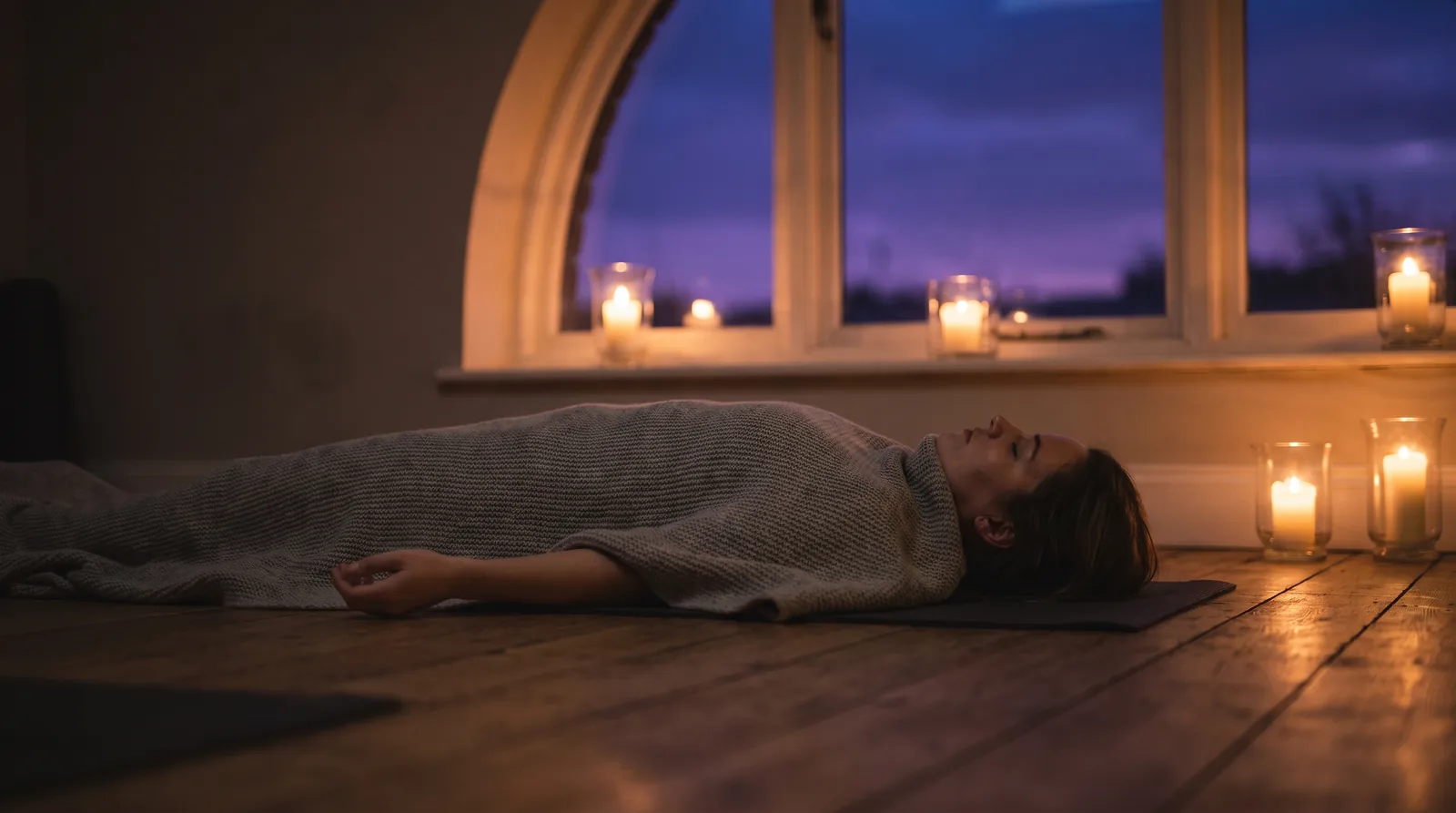
Yoga Nidra is one of the oldest and most forgiving relaxation practices. Here is what it is, why it works, and how to try your first 20-minute session.
 Breath & Body
Body Scan Meditation: A Guided Tour of Your Own Weight
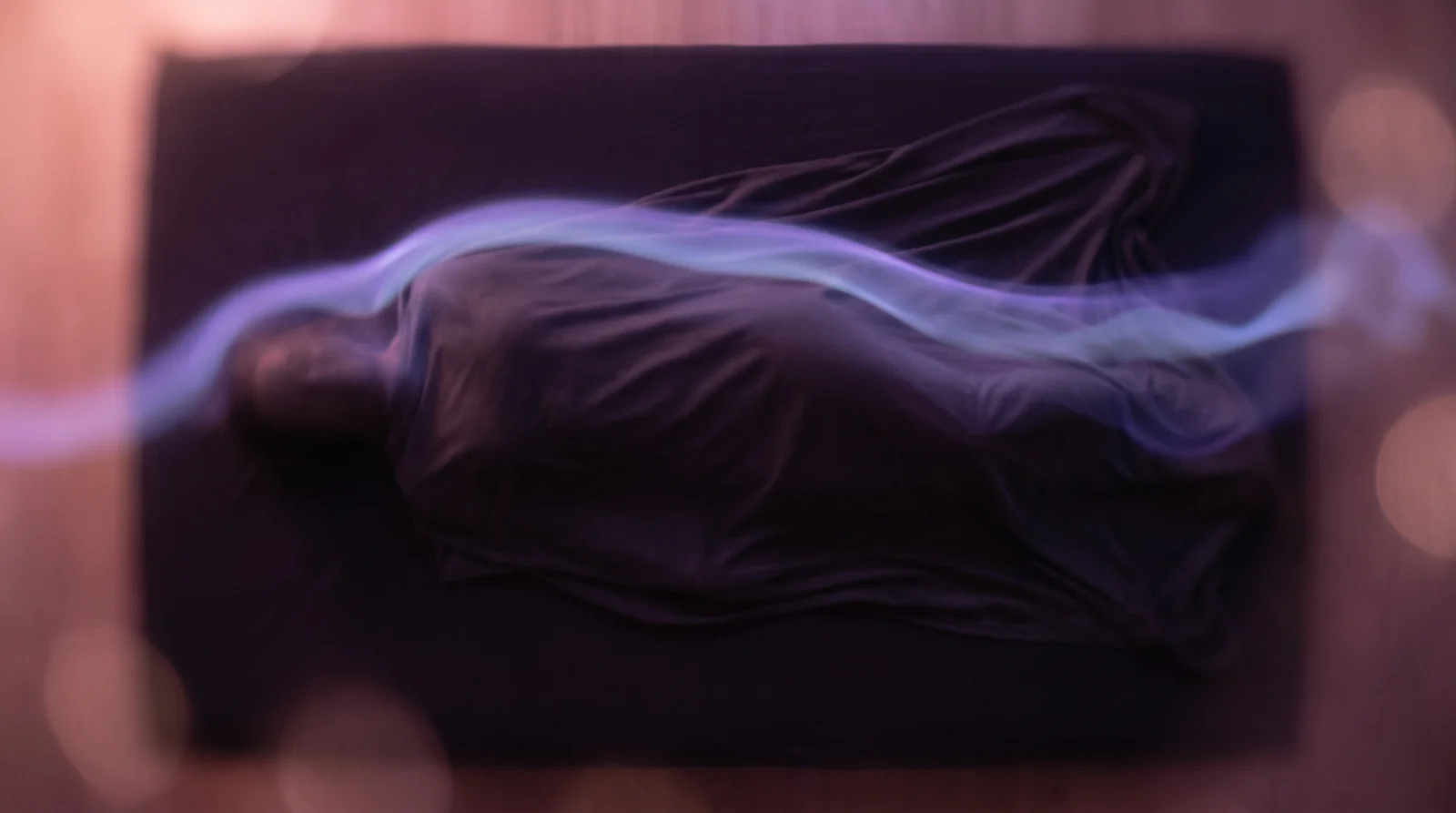
Learn how to do a body scan meditation step by step: what it is, why moving attention through the body calms the mind, and how to practise it tonight.
 Ancient Wisdom
Tai Chi for Beginners: Learning to Move at the Speed of Calm
Tai chi for beginners: what the slow Chinese practice really is, why moving meditation calms an anxious mind, and how to begin at home in ten minutes.
 Breath & BodyNew
Do Cold Showers Actually Work? A Skeptic Reads the Evidence
Cold showers are pitched as a cure for everything from low energy to weak character. Here's what the actual research says, and how to try one without the cult.
 Breath & BodyNew
Dopamine Detox: What It Gets Right and What It Gets Wrong
Dopamine detox promises a factory reset for your distracted brain. Here's what the neuroscience actually says, what helps, and what's just rebranded boredom.
 Breath & Body
How to Stop Overthinking: Quieting a Mind That Will Not Move On
Why overthinking loops and how to interrupt it: what rumination research shows, why you cannot argue with a spiral, and gentler ways to change the channel.