Día de los Muertos: What the Day of the Dead Teaches About Remembering
Día de los Muertos, Mexico's Day of the Dead, is a festival of remembrance, not a Mexican Halloween. Its history, the ofrenda, and why ritual memory calms.
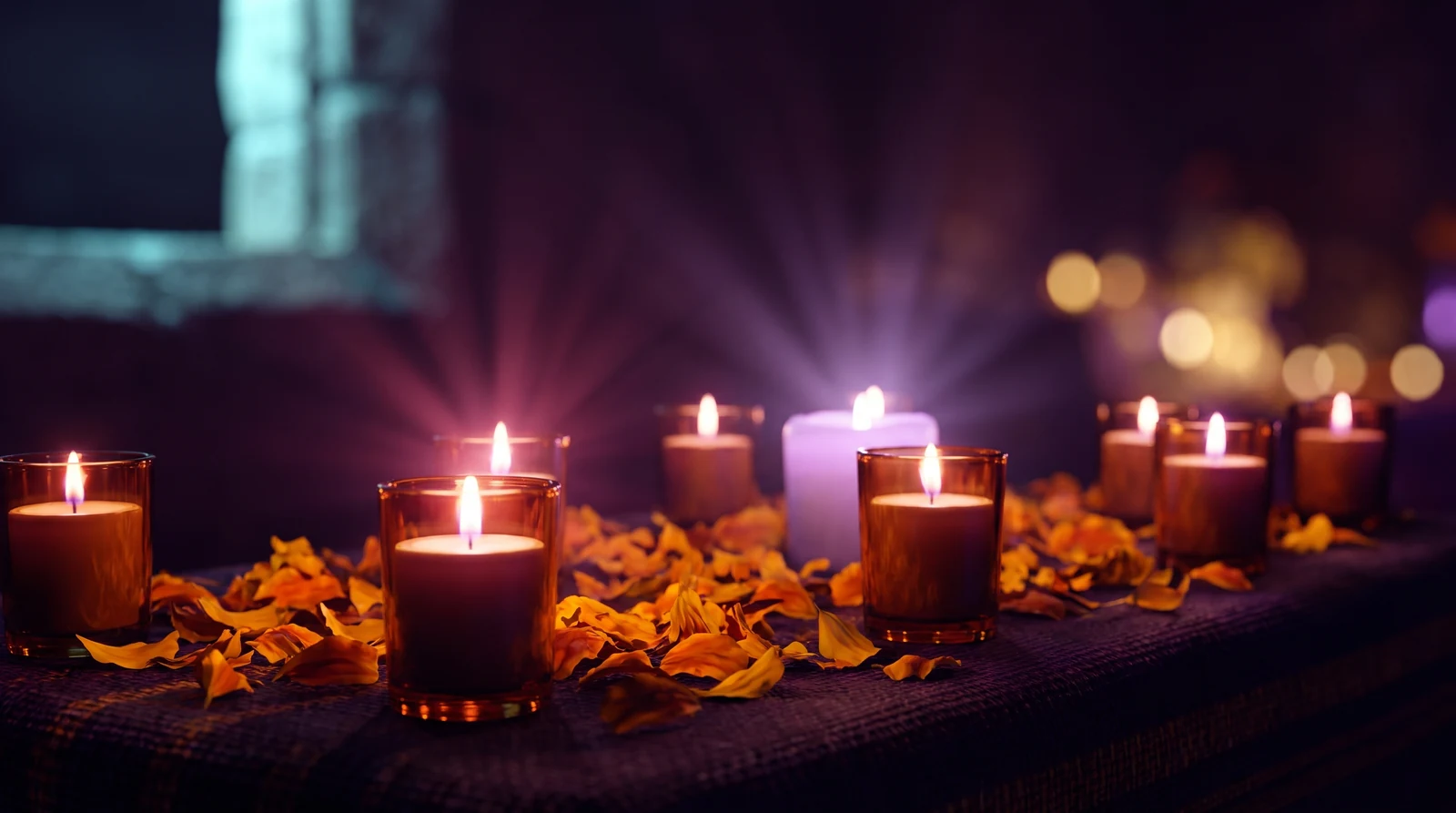
At the start of November, across Mexico and far beyond it, families build small mountains of colour in their homes. Marigolds, candles, photographs, sugar skulls, a bottle of something the departed enjoyed, a plate of the bread they loved best. Cemeteries fill at night with picnics and music. It looks, to an unprepared visitor, like a party, and that is because it is one. Día de los Muertos, the Day of the Dead, is one of the world's great acts of organised remembering: a festival built on the conviction that the dead remain part of the family, and that the proper response to this is not hushed mourning but a warm welcome. For those of us raised in cultures that treat death as an awkward subject best changed, it has a great deal to teach.
What Día de los Muertos actually is
The festival is observed principally on the first and second of November, aligned with the Catholic feasts of All Saints and All Souls. The first day is commonly devoted to children who have died, the second to adults. Its roots run far deeper than the church calendar, drawing on Indigenous Mesoamerican traditions in which death was understood as a phase of a continuing cycle rather than a full stop, and in which the dead were believed to return for a brief annual reunion. The colonial encounter folded these older observances into the Christian calendar, and the result is the layered festival celebrated today: Indigenous in its bones, Catholic in its dates, and thoroughly Mexican in its character. UNESCO inscribed the Indigenous festivity dedicated to the dead on its Representative List of the Intangible Cultural Heritage of Humanity in 2008, recognising both its antiquity and its living importance.
One thing it is not is a Mexican Halloween. The two happen to be neighbours on the calendar and share a certain iconography of skulls, which misleads. Halloween, in its modern form, plays with fear: the dead as spooks. Día de los Muertos does nearly the opposite. The dead are not feared but missed, and invited. The skull imagery, most famous in the elegant calavera figures, is not meant to frighten anyone; it grins, wears hats, rides bicycles, and generally behaves like a relative who refuses to be solemn at dinner.
The ofrenda: memory given a shape
The heart of the observance is the ofrenda, the home altar built for the returning dead. It is not an altar of worship but a table of hospitality, and its traditional elements are a kind of sensory biography. Photographs say who is expected. Cempasúchil, the Mexican marigold, lays a path of colour and scent for the visitors to follow home. Candles give light for the journey. Water quenches the thirst of travel. Salt purifies. Pan de muerto, the soft, orange-scented bread of the dead, feeds them, alongside the particular dishes, sweets or vices each person loved in life. Papel picado, tissue paper cut into lace, trembles in the slightest draught and stands for the fragility of it all.
What strikes me most about the ofrenda is how precise it is. It does not remember the dead in general; it remembers this grandmother's mole recipe, that uncle's brand of cigarettes, a child's toy. Grief research keeps circling back to the value of exactly this sort of continuing bond, the maintained connection with the dead that lets them remain present rather than forcibly filed away. The ofrenda is a technology for that bond. For a few days each year, memory is not an ambush that catches you at the sink; it is an appointment, kept with flowers.
For a few days each year, memory is not an ambush. It is an appointment, kept with flowers.
Why ritual remembering soothes
There is a reason so many cultures arrive at a fixed day for the dead: the Mexican Días de los Muertos, the Catholic All Souls, the Japanese Obon, the Chinese Qingming with its swept graves. A calendar date contains what would otherwise leak. When remembrance has a season, the mind is quietly permitted to set the weight down in ordinary weeks, knowing the appointment is kept. The ritual actions themselves, arranging flowers, lighting candles, cooking a particular dish, give the hands something to do while the heart works, which is one of the oldest forms of relief we have. And doing it together, as families and whole towns, turns the loneliest human experience into a shared one. The festival does not deny the sting of death. It simply refuses to let the sting be the only thing.
You do not need to borrow the festival itself to borrow its wisdom. Keeping a small, deliberate hour of remembrance, on an anniversary or a birthday, with a photograph, a candle and the person's favourite music, is a human practice far older than any one culture. The steadying part is the ritual frame: a beginning, a middle and an end. I am partial to candlelight for this because a flame asks to be watched, and watching it slows the breath. On nights when a candle is not practical, a few quiet minutes with one of Feelsy's slow visual textures does a similar job of giving the eyes a flame to keep vigil by, while the mind is left free to remember.
A festival that looks at death and smiles
The deeper teaching of Día de los Muertos is the one the calaveras grin about: that death is certain, and that this certainty is a reason to hold life, and the people in it, more warmly rather than more anxiously. In this it sits alongside the Stoic practice of memento mori and the Japanese sensitivity to transience, mono no aware, as one of humanity's recurring answers to the same hard fact. The Mexican answer is distinct in its brightness. It sets the table, lights the path home, and insists on music. We remember so that we are not merely losing people, the festival seems to say. And once a year, for two nights, the remembering looks a great deal like joy.
Feelsy is a wellness product, not medical advice. If stress, anxiety or sleep problems persist, please speak with a qualified professional.
References
- UNESCO (2008). Indigenous festivity dedicated to the dead. Representative List of the Intangible Cultural Heritage of Humanity.
Frequently Asked Questions
What is Día de los Muertos?
Día de los Muertos, the Day of the Dead, is a Mexican festival of remembrance observed mainly on the first and second of November. Families build home altars called ofrendas with photographs, marigolds, candles and favourite foods to welcome the spirits of their dead back for an annual reunion. It blends Indigenous Mesoamerican traditions with the Catholic feasts of All Saints and All Souls.
Is Día de los Muertos the same as Halloween?
No. They are calendar neighbours and share skull imagery, but their spirit is nearly opposite. Halloween plays with fear of the dead, while Día de los Muertos welcomes the dead as missed family members. Its grinning calavera skulls are affectionate and playful rather than frightening.
What goes on an ofrenda?
Traditional elements include photographs of the departed, cempasúchil marigolds whose colour and scent are said to guide spirits home, candles to light the way, water for the journey, salt for purification, pan de muerto, and the particular foods and drinks each person loved in life. Papel picado, cut tissue paper, is often strung above.
When is Día de los Muertos celebrated?
The main observances fall on the first and second of November, aligned with All Saints and All Souls in the Catholic calendar. The first day is commonly dedicated to children who have died and the second to adults, with preparations, markets and vigils beginning in the final days of October.
Why do rituals of remembrance feel calming?
A fixed day and a set of ritual actions give grief a container: the mind can set the weight down in ordinary weeks because the appointment to remember will be kept. The actions themselves, arranging flowers, lighting candles, cooking a loved dish, occupy the hands while the heart works, and sharing the ritual with others makes loss feel less solitary.
About the author
Contributing writer
Eleonor writes about contemplative traditions, attention and the cultural history of calm. She has spent two decades collecting the rituals humans use to slow down, from zazen halls to hammams, and translating them for modern, screen-lit lives.
Feel it for yourself.
Feelsy turns reading about calm into practising it. Two minutes of a slow texture is often the whole difference.


Related reading
 Ancient Wisdom
Memento Mori: The Ancient Practice of Remembering You Will Die
Memento mori, the old discipline of remembering death, was never meant to be morbid. Here is its history, and why the reminder tends to produce gratitude.
 Ancient Wisdom
Mono no Aware: Japan's Word for the Beautiful Sadness of Passing Things
Mono no aware is Japan's term for the gentle sadness of passing things. Here is what the phrase means, where it comes from, and why it deepens everyday calm.
 Visual Meditation
Why Watching Fire Is So Calming
Why is watching fire so relaxing? The science of flames, flicker and fireside calm, and how to borrow the campfire effect from a screen on an ordinary night.
 Ancient WisdomNew
Ataraxia: The Ancient Greek Art of an Untroubled Mind
Ataraxia is the ancient Greek word for an untroubled mind, prized by Epicureans, Stoics and Sceptics alike. Here is what it means and how they reached it.
 Ancient WisdomNew
Ma: The Japanese Art of Negative Space
Ma is the Japanese concept of negative space: the pause, the gap, the emptiness that gives everything else meaning. Here is how to invite more of it into a day.
 Ancient Wisdom
Negative Visualisation: The Stoic Habit of Imagining Loss
Negative visualisation, the Stoic practice of briefly imagining losing what you have, sounds grim but works as a gratitude exercise. Here is how to do it well.