Why Watching Fire Is So Calming
Why is watching fire so relaxing? The science of flames, flicker and fireside calm, and how to borrow the campfire effect from a screen on an ordinary night.
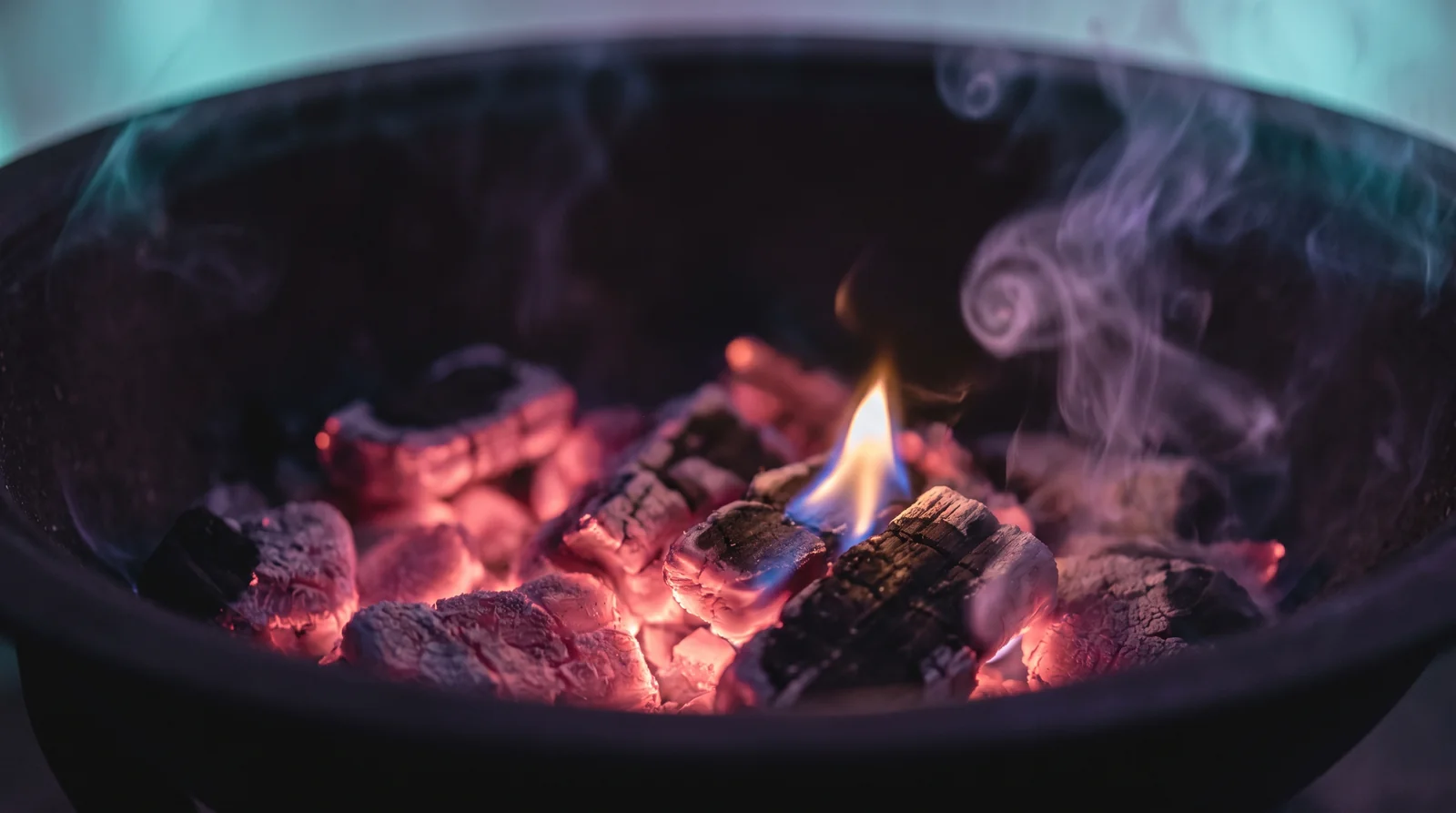
Put a group of people near a fire and watch what happens to the conversation. It slows. Sentences grow longer and more forgiving; silences stop being awkward. Eyes drift to the flames and stay there, held by something that is neither boredom nor concentration but a third state, older than both. Humans have been falling quiet in front of fires for hundreds of thousands of years. It would be strange if all that time had left no mark on us.
The question of why fire soothes us so reliably turns out to be a genuinely interesting one, sitting at the junction of evolutionary theory, attention science and the small modern mystery of why millions of people stream ten-hour fireplace videos every winter.
The campfire hypothesis
The most direct study on the subject asked a simple question: does watching a fire actually lower physiological arousal, or do we just say it does? An anthropologist at the University of Alabama had participants watch a video of a hearth fire, with and without sound, while measuring their blood pressure (Lynn, 2014, Evolutionary Psychology). The result: watching the fire with its crackling audio produced a consistent drop in blood pressure, and the longer people watched, the further it fell. The silent fire, interestingly, did not do much. The calm seems to live in the full sensory package, flame and sound together.
Lynn's explanation reaches back into deep history. For our ancestors, the fireside was the safest place in the world: predators kept away, food cooked, the group gathered. An individual whose nervous system could downshift beside the fire, relaxing, socialising, absorbing the day, may have reaped real benefits from that nightly recovery. We are, by this account, descended from the people fire calmed best. The hearth was the first meditation hall.
We are descended from the people fire calmed best. The hearth was the first meditation hall.
What the flames do to attention
Evolution may explain why the response exists, but attention science describes how it works on a Tuesday evening. Fire is a nearly perfect example of what psychologists call soft fascination: stimulation that is constantly changing yet never demands anything. The flame's movement is unpredictable in detail but utterly predictable in character. Nothing in it requires a decision. Your directed attention, the tired, effortful kind spent on inboxes and invoices, gets to stand down, while a gentler, involuntary attention takes over the watch.
Fire also flickers at the right tempo. Its light rises and falls smoothly, without the hard edges and sudden cuts that keep screens so arousing. The colour palette sits at the warm end of the spectrum, amber and rose, tones we associate with dusk and with rest. And the sound, that irregular soft crackle, is a natural cousin of the broadband noise many people already use for sleep: busy enough to mask a room's small disturbances, meaningless enough to ignore.
Why the fireplace video works at all
It is easy to mock the ten-hour yule log stream, until you notice that Lynn's experiment used exactly that: a video of a fire, not a fire. The blood pressure drop did not require heat, smoke or a starry sky. It required convincing flame movement and honest crackle. The representation carried most of the effect, which is excellent news for anyone whose flat lacks a chimney.
This is the same principle behind visual meditation generally: the nervous system responds to the qualities of what it watches, slowness, softness, warmth, repetition without exact repetition, more than to the object's physical reality. A fire on a screen, an aquarium, a slow ribbon of fluid folding back on itself: these are all members of the same family, patterns that hold the eye without hooking the mind. It is precisely the niche Feelsy's textures are designed for, ember-warm colours and slow motion with layered sound, a pocket hearth for the commute home, no woodpile required.
Borrowing the fireside, deliberately
A few small practices turn fire-watching, real or rendered, from background decoration into an actual wind-down ritual.
- Give it your eyes, not just the room. The effect in the research came from watching, so let the flames be the thing you look at for a few minutes, rather than wallpaper behind your phone.
- Keep the sound on. The silent fire underperformed; the crackle appears to carry a good share of the calm.
- Pair it with a slower breath. Flames make a natural pacing guide: inhale as one rises, exhale as it settles. Two minutes of this is a meditation you did not have to call one.
- Let it end the evening, not extend it. Fire-light is dim and warm, a fine last light before sleep, so resist the urge to follow it with a bright feed.
If you have a real candle, the oldest version of the practice is still available: trataka, steady gazing at a single flame, which we have written about separately. The campfire and the candle are the large and small of the same instinct.
An ancient appetite, kindly fed
There is something quietly reassuring in the idea that one of our most modern habits, watching a looped fire on a glowing rectangle, is also one of our most ancient. The appetite being fed is not for novelty but for its opposite: a warm, safe, endlessly variable sameness that tells the oldest parts of the brain the day's watch is over. Feed it deliberately. Ten minutes of flame, watched with attention and a slower breath, is a small nightly inheritance from a hundred thousand fireside generations, and it still works.
Feelsy is a wellness product, not medical advice. If stress, anxiety or sleep problems persist, please speak with a qualified professional.
References
- Lynn, C. D. (2014). Hearth and campfire influences on arterial blood pressure: Defraying the costs of the social brain through fireside relaxation. Evolutionary Psychology, 12(5), 983–1003.
Frequently Asked Questions
Why is watching fire so relaxing?
A study measuring blood pressure while participants watched a video of a hearth fire found that watching the fire with its crackling audio produced a consistent drop in blood pressure, and the longer people watched, the further it fell. The researcher's explanation reaches into evolutionary history: for our ancestors the fireside was the safest place in the world, and nervous systems that could relax there may have gained a real recovery benefit.
Do you need real fire and sound to get the calming effect, or does a video work?
A video works. The blood pressure study itself used a video of a hearth fire rather than a real one, and the drop in blood pressure didn't require heat, smoke, or an actual sky. However, the silent version of the fire video didn't have much effect, suggesting the crackling sound carries a significant part of the calm.
What is 'soft fascination' and how does it relate to fire?
Soft fascination is a term from attention science describing stimulation that is constantly changing yet never demands anything of you. Fire fits this perfectly: its movement is unpredictable in detail but predictable in character, so directed, effortful attention can stand down while a gentler, involuntary attention takes over.
How can I recreate the calming campfire effect without a real fireplace?
Watch a fire video or similar slow, warm visual with the sound on, since the crackle appears to carry much of the calming effect. Pair it with slower breathing, inhaling as flames rise and exhaling as they settle, and let it be the last thing you watch before bed rather than following it with something bright and stimulating.

About the author
Contributing writer
Eleonor writes about contemplative traditions, attention and the cultural history of calm. She has spent two decades collecting the rituals humans use to slow down, from zazen halls to hammams, and translating them for modern, screen-lit lives.
Feel it for yourself.
Feelsy turns reading about calm into practising it. Two minutes of a slow texture is often the whole difference.


Related reading
 Ancient Wisdom
Trataka: The Original Visual Meditation
Centuries before screens, yogis rested their gaze on a single candle flame. How trataka works, how to practise it safely, and what it teaches modern visual meditation.
 Visual Meditation
What Is Visual Meditation? The Complete Guide
Visual meditation rests your attention on slow, pleasing motion so calm happens almost on its own. Here is how it works, what the research says, and how to practise it in three minutes.
 Ancient Wisdom
Shinrin-Yoku: Why Forests Calm the Human Mind
Japan turned a walk in the woods into preventive medicine. The research behind forest bathing, what it does to stress physiology, and how to practise it without a forest.
 Visual MeditationNew
Highway Hypnosis: Why You Can't Remember the Last Ten Miles
You arrive at your exit with no memory of driving there. Highway hypnosis is real and common: here's the science of the road trance and how to use it safely.
 Visual Meditation
Why the Northern Lights Mesmerise Us: Aurora Watching as Visual Meditation
What causes the northern lights, why the aurora feels so calming to watch, and how to turn sky watching into a simple visual meditation practice.
 Visual Meditation
Blue Mind: Why Being Near Water Calms the Brain
What blue mind theory says about why oceans, lakes and rivers soothe us: the research on blue space, water's pull on the eye, and how to use it daily.