Exploding Head Syndrome: The Loud Bang That Isn't Real
Exploding head syndrome is a harmless sleep glitch: a loud bang or flash as you drift off. What causes it, how common it is, and what actually calms it down.
By Kurt Woleret
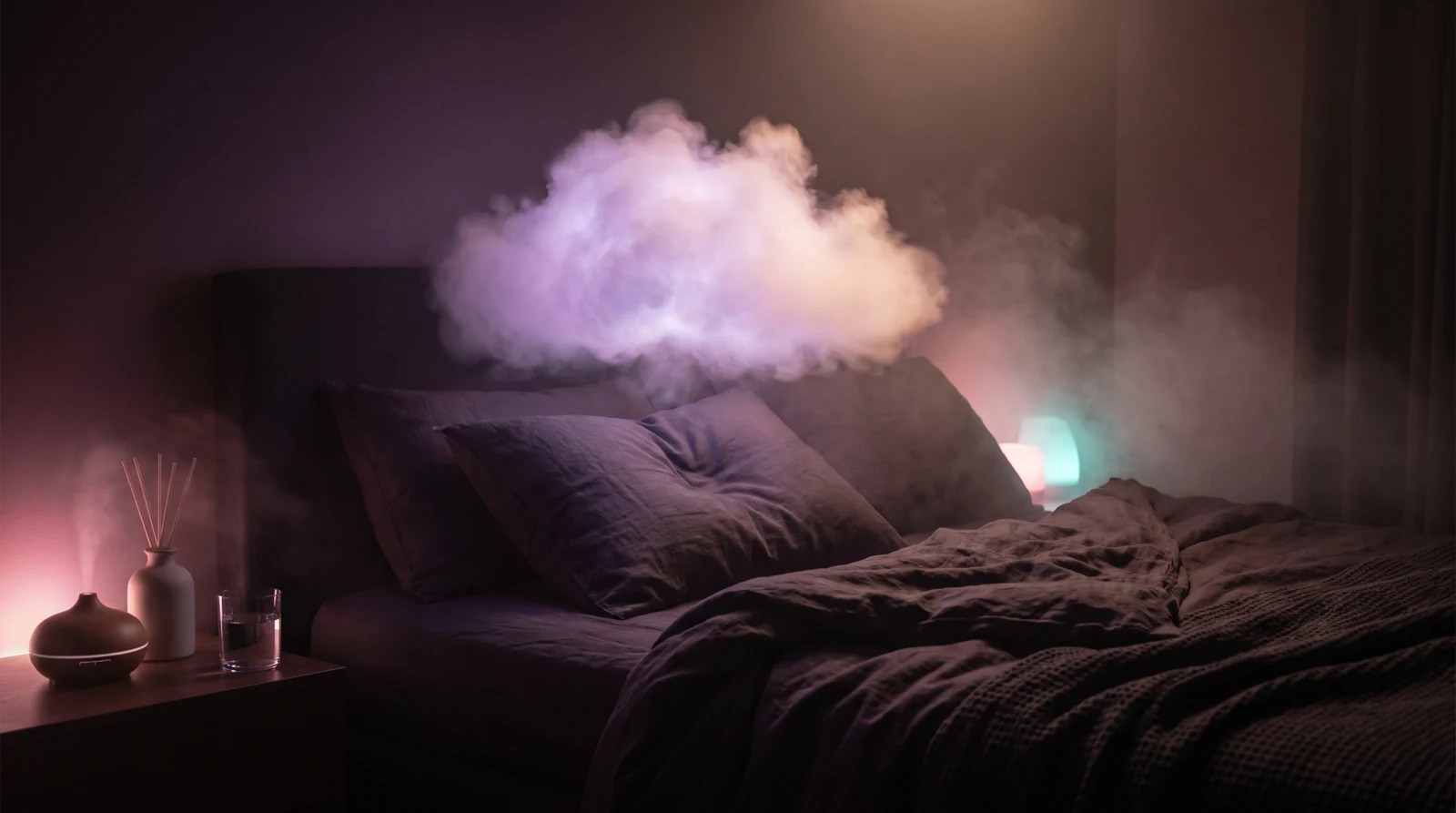
You're thirty seconds from sleep when a gunshot goes off inside your skull. You bolt upright. The apartment is silent. The street is silent. Even the radiator, which has opinions most nights, has nothing to say. Nothing fell, nothing broke, and your heart is doing 140 anyway. If that's ever happened to you, you've probably met exploding head syndrome, which I'd nominate for the worst-named harmless condition in all of sleep medicine.
Let me get the important part out of the way first, because when this happened to a friend of mine she spent two hours convinced something had ruptured: nothing exploded. Nothing is wrong with your head. The bang wasn't real, no sound ever happened, and the whole event is over in a second. It's a sensory misfire at the border between waking and sleep, it's surprisingly common, and it is, by every account in the literature, benign.
What it actually is
Exploding head syndrome is classified as a parasomnia, the same family of sleep events that includes sleep paralysis and hypnic jerks. The experience is a sudden, loud noise or sense of explosion in the head, usually right as you're falling asleep or occasionally as you're waking up. People describe gunshots, door slams, cymbal crashes, electrical zaps, a bomb going off. Some get a flash of light with it. Some feel a jolt of heat or a surge of static. What almost nobody gets is pain, which is one of the ways doctors tell it apart from headache disorders (Sharpless, 2014, Sleep Medicine Reviews).
The event itself lasts under a second. The adrenaline it dumps on you lasts a lot longer, which is the actual problem. The bang doesn't hurt you; the hour you spend afterward lying there with your pulse in your ears, googling symptoms, is where the damage gets done.
You're in bigger company than you think
For decades this was considered rare, mostly because the case reports came from older adults and nobody had bothered to survey anyone else. Then a researcher named Brian Sharpless actually asked. In a study of 211 college students, about 18 percent had experienced exploding head syndrome at least once, and for more than a third of those it was a recurring thing (Sharpless, 2015, Journal of Sleep Research). Nearly one in five. That's not a rare disease; that's a quiet epidemic of people privately wondering if their brain is broken.
The same work found it travels with sleep paralysis, which makes sense once you know the mechanism, and that people who have it rarely tell anyone. Understandable. 'My head exploded last night, anyway how was the meeting' is a hard sentence to deliver.
The bang lasts under a second. The fear of the bang is what steals the night.
The best theory: a shutdown glitch
Here's the leading explanation, and I find it weirdly comforting. Falling asleep isn't flipping one switch. Your brainstem's reticular formation powers down your systems in sequence, like a stagehand walking through a theater killing the lights section by section: motor, visual, auditory. The theory is that in exploding head syndrome, the auditory shutdown misfires. Instead of powering down quietly, the neurons that handle sound fire all at once in a single burst (Sharpless, 2014, Sleep Medicine Reviews). Your auditory cortex screams into the dark for a few milliseconds, and your half-asleep brain interprets that burst the only way it can: as the loudest sound it knows how to imagine.
In other words, it's not a bomb. It's a light switch with a loose wire. The reason there's no pain and no damage is that nothing happened except noise in the wiring.
What makes it more likely
The pattern in the research and the case reports is boringly familiar. The episodes cluster around stress, sleep deprivation, and chaotic schedules. Deadline weeks. Jet lag. The night before something big. The brain seems to fumble the shutdown sequence most when it's been running hot all day and finally gets yanked toward sleep. I've had exactly two episodes in my life, and I can tell you the week both happened: moving apartments, in August, in New York. The science on triggers is thinner than I'd like, but the correlation with stress and short sleep shows up over and over.
What to do about it
Here's the strange, almost suspicious part: the most effective treatment reported in the literature is being told what it is. Reassurance. In some case reports, simply learning the event is harmless cut how often it happened. That sounds like wellness fluff, but it tracks with the mechanics: the thing that turns one misfire into a bad month is fear, and fear is exactly what keeps your arousal system too hot to shut down cleanly the next night. Take away the fear and you've removed the fuel.
Beyond that, the practical playbook is the unglamorous one that fixes most minor sleep weirdness:
- Keep a consistent sleep schedule, even on weekends. The shutdown sequence likes routine.
- Land the plane slowly. Give yourself 30 low-stimulation minutes before bed instead of working until the second you lie down.
- Cut late caffeine and late alcohol, both of which fragment the exact sleep transitions where episodes happen.
- If an episode wakes you, don't lie there bracing for the next one. Get your arousal down: slow exhales, something calm to look at, boring thoughts on purpose.
That wind-down piece is where I'll admit my bias: my phone's bedtime job is running Feelsy with a slow texture on autoplay and the sound low. After my second episode I used its 4-7-8 breathing exercise to talk my heart rate down, mostly because counting felt better than doomscrolling about my own skull. Long exhales are a crude lever on the nervous system, but they're a real one, and at 1am crude and real beats elegant and imaginary.
If episodes are frequent, painful, or come with anything that doesn't fit the pattern here, that's a conversation for a doctor, not a blog. For the garden-variety version: your head is fine. The stagehand flubbed a light switch. Go back to sleep.
Feelsy is a wellness product, not medical advice. If stress, anxiety or sleep problems persist, please speak with a qualified professional.
References
- Sharpless, B. A. (2014). Exploding head syndrome. Sleep Medicine Reviews, 18(6), 489–493.
- Sharpless, B. A. (2015). Exploding head syndrome is common in college students. Journal of Sleep Research, 24(4), 447–449.
Frequently Asked Questions
What is exploding head syndrome?
Exploding head syndrome is a harmless sleep event where you hear a sudden loud noise, like a bang, crash, or explosion, right as you're falling asleep or waking up. No real sound occurs; it's a brief sensory misfire during the brain's transition into sleep. Episodes last under a second and typically involve no pain.
Is exploding head syndrome dangerous?
No. Despite the alarming name, it's classified as a benign parasomnia, in the same family as hypnic jerks and sleep paralysis. Nothing physically happens in your head during an episode. The main harm is the anxiety afterward, which can make it harder to fall back asleep. If episodes come with pain or other unusual symptoms, check with a doctor.
What causes exploding head syndrome?
The leading theory is a glitch in how the brain powers down for sleep. The brainstem normally shuts systems off in sequence, and if the auditory shutdown misfires, sound neurons fire in one burst, which the drowsy brain hears as a huge bang. Stress, sleep deprivation, and irregular schedules appear to make episodes more likely.
How common is exploding head syndrome?
More common than once thought. A study of college students found about 18 percent had experienced it at least once, and it was long assumed to be rare mainly because nobody had surveyed younger people. Many people never mention it to anyone, so it stays underreported.
How do I stop exploding head syndrome?
Reassurance is genuinely the best-documented treatment: episodes often become less frequent once you know they're harmless, because fear keeps the nervous system too aroused to shut down cleanly. A consistent sleep schedule, a calm wind-down before bed, and less late caffeine and alcohol all help. If an episode wakes you, slow your exhales and let your heart rate settle instead of bracing for another.

About the author
Contributing writer
Kurt is a New York based writer covering the practical science of stress, sleep and focus. He is the resident sceptic of the Journal: if a technique cannot survive a crowded subway commute and a deadline week, he is not interested in it.
Feel it for yourself.
Feelsy turns reading about calm into practising it. Two minutes of a slow texture is often the whole difference.


Related reading
 Sleep
Sleep Paralysis: Why You Wake Up Frozen (and What's Actually Happening)
Why you wake up unable to move, where the shadowy figure comes from, and what actually helps: the science of sleep paralysis, minus the demons.
 Sleep
Hypnic Jerks: Why You Twitch Awake Right as You Fall Asleep
That full-body jolt just as you drift off has a name: the hypnic jerk. Here's why sleep starts happen, what makes them worse, and how to calm them down.
 Sleep
Hypnagogia: The Twilight State Between Waking and Sleep
Hypnagogia is the drifting borderland between waking and sleep, full of faces, shapes and half-dreams. What causes it, when it helps, and how to linger there.
 Sleep
Falling Back: A Survival Guide for the End of Daylight Saving Time
Clocks fall back this weekend, and the free hour is slightly fake. What the end of daylight saving time really does to your sleep, and how to land it well.
 Sleep
The Best Alarm Sound to Wake Up To, According to Research
Harsh beeping may be making your mornings worse. What research says about the best alarm sound to wake up to, and how to choose one your brain won't fight.
 Sleep
Can You Learn While You Sleep? What the Science Actually Says
Sleep learning is an old dream and mostly a myth, but not entirely. What research really shows about learning, memory and your sleeping brain.