The Golden Ratio in Nature: What Is Real and What Is Myth
Sunflowers and pinecones truly follow the golden ratio; nautilus shells and the Parthenon mostly do not. What is real, what is myth, and why spirals calm us.
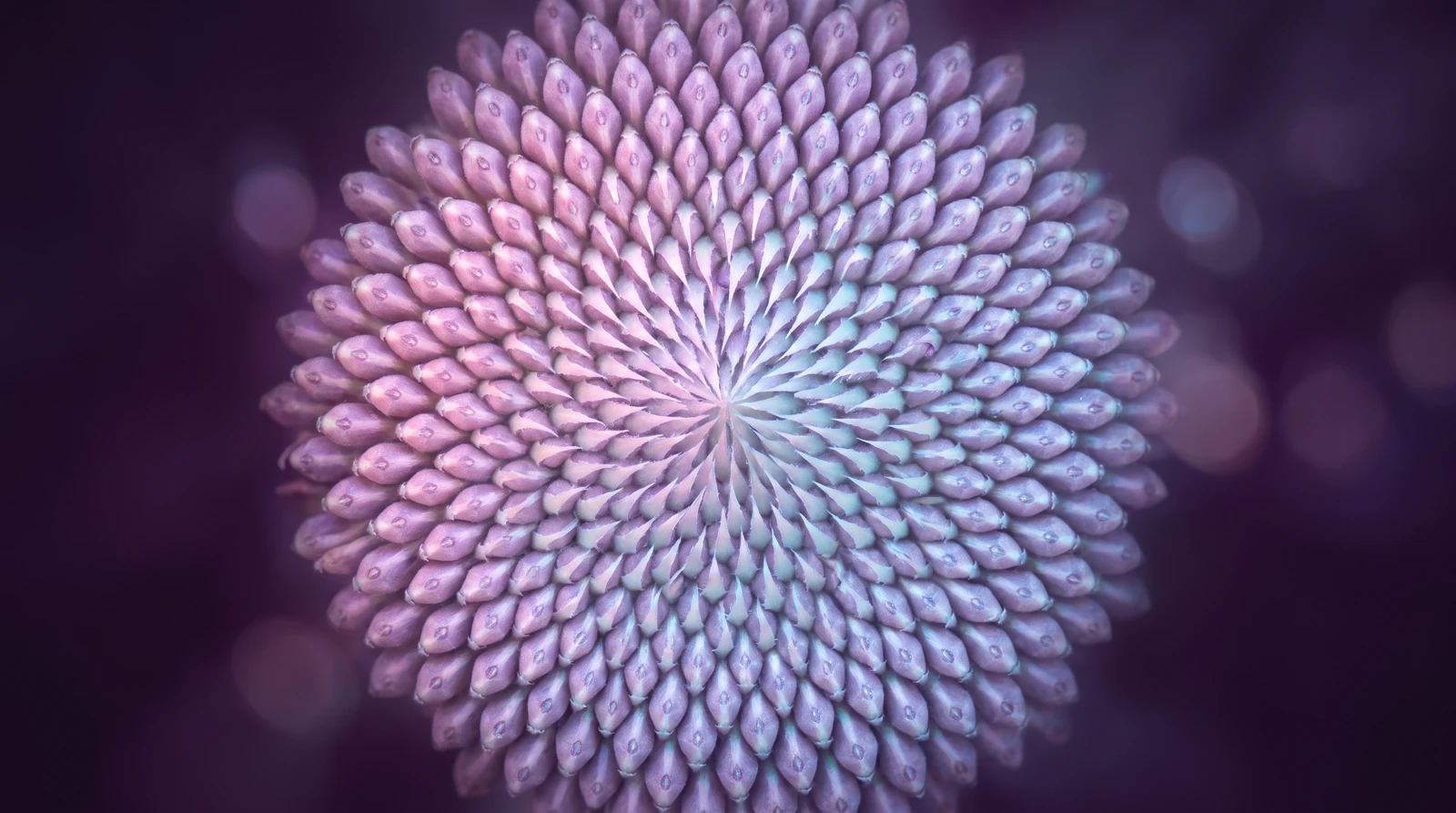
Few numbers have a publicity machine. The golden ratio does. It is credited with the proportions of the Parthenon, the composition of the Mona Lisa, the curl of the nautilus shell, the architecture of the human face and, in the further reaches of the internet, the structure of the galaxy itself. The number in question, roughly 1.618 and written with the Greek letter phi, is described as a secret code of beauty running through all of nature. It is a lovely story. Parts of it are even true, and the true parts are stranger and more beautiful than the myth. It is worth knowing which is which, not to spoil the wonder but to aim it properly.
What the golden ratio actually is
Take a line and cut it into a long piece and a short piece, so that the whole relates to the long piece exactly as the long piece relates to the short one. That proportion is the golden ratio. It is an irrational number, 1.6180339 and so on without end, and it has a famous relative: the Fibonacci sequence, in which each number is the sum of the previous two. One, one, two, three, five, eight, thirteen, twenty-one. Divide any Fibonacci number by the one before it and the result homes in on phi as the numbers grow. The ratio and the sequence are two views of the same mathematical object, and it is the sequence that nature actually uses.
Where nature really does use it
Look closely at the centre of a sunflower and you will see the seeds arranged in two families of spirals, one winding clockwise and one anticlockwise. Count them and you will very often find consecutive Fibonacci numbers: thirty-four one way and fifty-five the other, or fifty-five and eighty-nine on a large head. The same pairing turns up in the scales of a pinecone, the bumps of a pineapple, the florets of romanesco broccoli, and the arrangement of leaves around many stems, a pattern botanists call phyllotaxis.
This is not mysticism; it is packing. A growing plant places each new seed or leaf at a fixed angle around the centre, and the angle that spaces them most evenly, so that no seed sits in another's shadow and no gap is wasted, is the golden angle, about 137.5 degrees, which is the circle divided according to phi. Follow that one simple rule and Fibonacci spirals appear on their own, the way a traffic pattern appears from many cars following the same rule of the road. The plant is not doing geometry. The geometry is what efficiency looks like from above. To my eye this is far more wonderful than the myth: the most painterly pattern in the garden is the signature of pure thrift.
The plant is not doing geometry. The geometry is what efficiency looks like from above.
Where the myth takes over
The nautilus shell, poster child of a thousand golden ratio diagrams, grows as a logarithmic spiral, a shape that widens at a constant rate and is marvellous in its own right. But measured carefully, its growth rate is not phi, and it varies from shell to shell. The Parthenon's celebrated golden rectangles depend heavily on where one chooses to draw the lines, and there is no evidence its builders used the ratio at all. Claims about the Mona Lisa are later readings, not Leonardo's notes. Even the idea that we automatically prefer golden proportions wobbles under testing: when researchers quietly varied the proportions of artworks and measured people's responses, they found no automatic aesthetic preference for the golden ratio over neighbouring ratios (Stieger & Swami, 2015, Psychology of Aesthetics, Creativity, and the Arts). Beauty, it seems, declines to be reduced to one number.
None of this diminishes the real cases. It simply relocates the wonder from numerology to biology: the spiral in the sunflower is not a cosmic signature but a visible solution, evolved thrift you can count with your own eyes.
Why spirals soothe the eye
Whatever the measurements say, the experience remains: people find these patterns deeply restful to look at. The likely reason is a familiar one in the psychology of attention. Spiral and branching patterns offer the eye order with variation, a structure the visual system can predict without being bored by, and they invite the kind of soft, effortless looking that lets focused attention recover. It is the same quality that draws us to fractals, waves and murmurations: complexity wearing a simple rule, change inside predictability. A seed head rewards a long look the way a fire does, and asks exactly as little of you.
If you would like to test this on your own nervous system, nature keeps generous office hours:
- Find a sunflower head, a pinecone or a romanesco and try counting one family of spirals. The counting itself is a small meditation; most people lose their place and start again, pleasantly.
- Notice leaf arrangements on a houseplant, each new leaf stepping around the stem so as not to shade the one below.
- Look for logarithmic spirals at large: the curl of a fern frond, the whorl of water over a drain, the arms of a storm on a weather map.
- Let the gaze go soft rather than analytical once you have seen the structure. The pattern does its calming work on the unhurried eye, not the measuring one.
An honest kind of wonder
There is a small lesson in the golden ratio's double life. We seem to want beauty to have a secret key, one number behind the curtain, and nature keeps offering something better: simple rules, repeated patiently, producing forms no planner could draw. You do not need the myth to justify ten minutes spent looking at a seed head. On grey days when the garden is out of reach, I take my spirals indoors; the slowly unfurling textures in Feelsy give the eye the same orderly, ever-changing motion, left to drift on autoplay while the afternoon recovers its shape. The sunflower will still be doing its patient mathematics when you come back. It has nothing to prove, no code to hide, and all the time in the world, which may be the most calming thing about it.
Feelsy is a wellness product, not medical advice. If stress, anxiety or sleep problems persist, please speak with a qualified professional.
References
- Stieger, S., & Swami, V. (2015). Time to let go? No automatic aesthetic preference for the golden ratio in art pictures. Psychology of Aesthetics, Creativity, and the Arts, 9(1), 91–100.
Frequently Asked Questions
What is the golden ratio in simple terms?
Cut a line into a long piece and a short piece so that the whole relates to the long piece exactly as the long piece relates to the short one, and you have the golden ratio, roughly 1.618, written with the Greek letter phi. It is closely related to the Fibonacci sequence, in which each number is the sum of the previous two; divide any Fibonacci number by the one before it and the result approaches phi as the numbers grow.
Where does the golden ratio really appear in nature?
The clearest genuine examples come from plants. Sunflower seed heads, pinecones, pineapples and romanesco broccoli show two families of spirals whose counts are very often consecutive Fibonacci numbers, and many plants space their leaves around the stem by the golden angle of about 137.5 degrees. This happens because placing each new seed or leaf at that angle packs them most evenly, with no seed in another's shadow and no wasted gap.
Is the nautilus shell really a golden spiral?
Not really. The nautilus grows as a logarithmic spiral, a shape that widens at a constant rate and is beautiful in its own right, but careful measurement shows its growth rate is not the golden ratio and varies from shell to shell. The nautilus-as-golden-spiral image is one of the most repeated parts of the myth, alongside unsupported claims about the Parthenon and the Mona Lisa.
Do people automatically find golden ratio proportions more beautiful?
The evidence says no. When researchers quietly varied the proportions of artworks and measured people's responses, they found no automatic aesthetic preference for the golden ratio over neighbouring ratios. The real cases in nature remain impressive, but beauty does not appear to be reducible to a single number.
Why are spirals and natural patterns so calming to look at?
Spiral and branching patterns give the eye order with variation: a structure the visual system can predict without being bored by. This invites soft, effortless looking, the kind that lets tired, focused attention recover, which is the same reason fractals, waves and murmurations hold the gaze. A sunflower head rewards a long look the way a fire does, while asking nothing of you.

About the author
Contributing writer
Eleonor writes about contemplative traditions, attention and the cultural history of calm. She has spent two decades collecting the rituals humans use to slow down, from zazen halls to hammams, and translating them for modern, screen-lit lives.
Feel it for yourself.
Feelsy turns reading about calm into practising it. Two minutes of a slow texture is often the whole difference.


Related reading
 Visual Meditation
Why Fractals Calm the Mind: The Quiet Mathematics of Ferns and Coastlines
Ferns, clouds and coastlines share a repeating geometry called fractals. Here is why nature's self-similar patterns soothe the eye, and how to use them.
 Visual Meditation
Why Starling Murmurations Are So Mesmerising: The Sky Turned Liquid
Thousands of starlings wheel as one and the evening sky turns liquid. Here is the science of murmurations, why they mesmerise us, and how to watch one well.
 Visual Meditation
Slow Looking: The Lost Art of Paying Attention
What slow looking means, why spending ten minutes with one painting changes what you see, and simple ways to practise deliberate attention anywhere.
 Visual MeditationNew
Apricity: The Forgotten Pleasure of Winter Sun
Apricity is a forgotten English word for the warmth of the sun in winter. Here is why a few minutes of low winter sunlight can soften the darkest months.
 Visual MeditationNew
Momijigari: The Japanese Art of Autumn Leaf Viewing
Momijigari is the old Japanese tradition of travelling to see autumn leaves. Here is why fiery foliage calms the mind, and how to practise it anywhere.
 Visual MeditationNew
Why Libraries Feel So Calming
Step into a library and your shoulders drop. Here is the psychology of hush, tall shelves and shared silence, and how to borrow that feeling for your rooms.