Guided Imagery: Meditation for Minds That Think in Pictures
Learn how guided imagery meditation works: why picturing a peaceful scene calms the body, what research shows, and how to practise it in ten minutes.
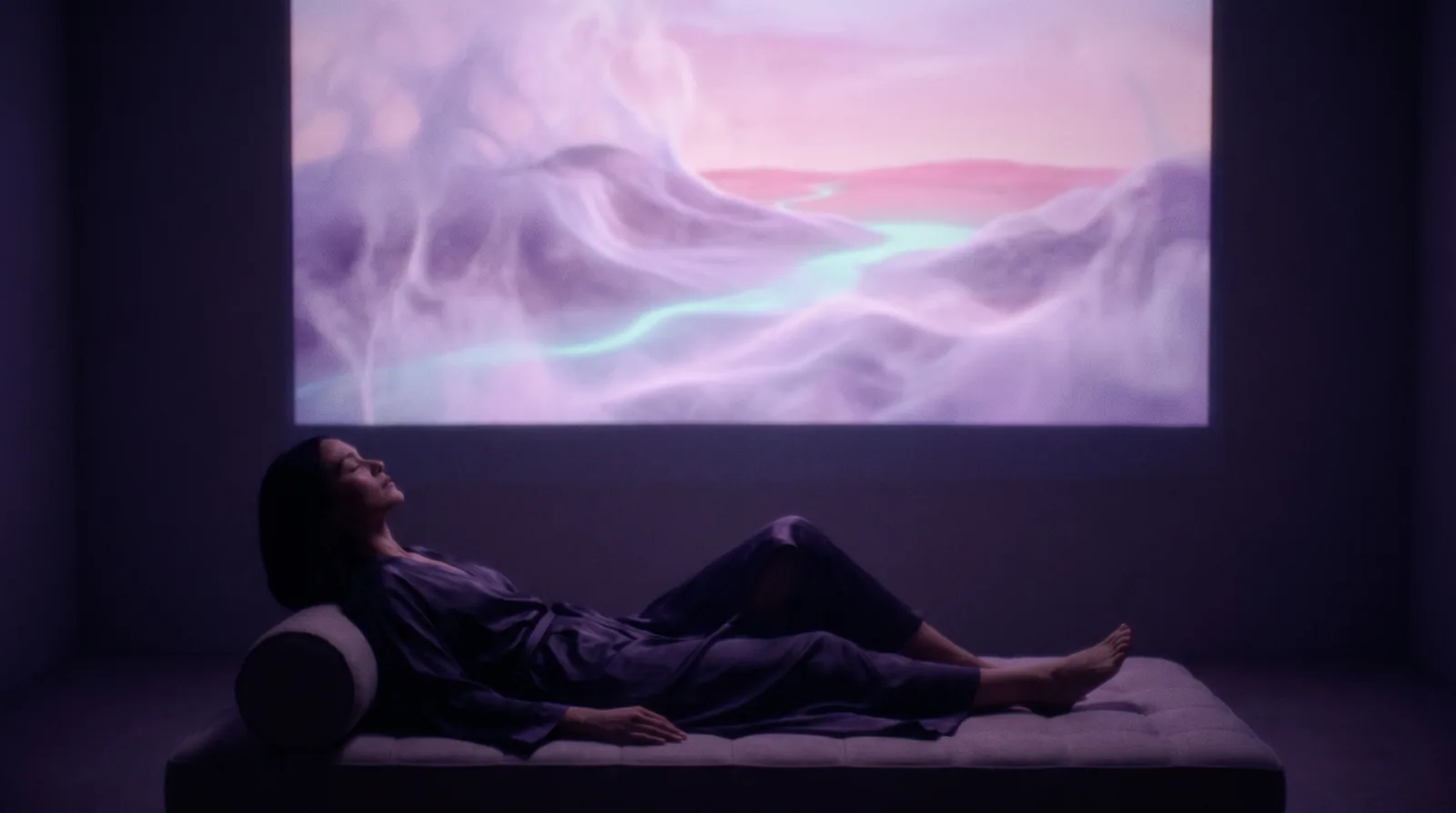
There is a kind of person for whom the classic instructions of meditation are quietly discouraging. Follow the breath, they are told, and within nine seconds the breath has been mislaid and the mind is redecorating the kitchen. If this is you, take heart: you may simply be a mind that thinks in pictures. Guided imagery is the practice built for you. Rather than asking the imagination to sit quietly in the corner, it hands the imagination the whole job: to build, in as much sensory detail as it can manage, a place where the body feels safe enough to soften.
The technique goes by several names: visualisation, guided visualisation, imagery rehearsal, mental journeying. Athletes have used a cousin of it for decades to rehearse races that have not yet happened. Clinicians use it before surgery and chemotherapy. And long before either, contemplative traditions from Tibet to Ignatian Spain were asking practitioners to picture radiant light, sacred landscapes or scenes from scripture in deliberate, loving detail. The insight underneath all of them is the same: the body listens to what the mind is watching.
What guided imagery actually is
At its simplest, guided imagery is a narrated journey to an imagined place. A voice, a recording or your own silent narration leads you somewhere restful: a beach at dusk, a forest path, a room from childhood that always smelled of bread. The craft lies in the detail. You are not merely told 'imagine a beach'; you are invited to feel the particular warmth of the sand under each heel, to hear the unhurried arithmetic of the waves, to notice the colour of the light on the water. The more senses the scene recruits, the more thoroughly it occupies the machinery that would otherwise be manufacturing worry.
This is the important difference from mindfulness practices such as the body scan, which attend to what is actually present. Guided imagery attends to what is deliberately conjured. Neither is superior; they are different doors into the same quiet house. Minds that find present-moment attention slippery often find imagery natural, because imagining is what they were doing anyway. The practice simply changes the programme from anxious rehearsal to restful excursion.
Why pictures calm the body
The nervous system is remarkably credulous about vivid imagery. Picture biting a lemon and the mouth waters; picture a confrontation and the shoulders climb. Imagery of safety and spaciousness works the same lever in the opposite direction: heart rate settles, breathing lengthens, the body begins to behave as though it were actually lying in the meadow it is merely imagining. This is why imagery has earned a place in clinical settings, where it is used to take some of the edge off procedures that are difficult to face.
The research is encouraging, particularly where nature is involved. A study in Frontiers in Psychology found that a brief nature-based guided imagery exercise reduced state anxiety, the sharp, situational kind of anxiety that spikes before an exam or a difficult conversation (Nguyen and Brymer, 2018). The imagined forest, in other words, lends some of the calm of a real one. For those of us who cannot reach a forest on a Tuesday evening, that is a generous discount.
The body begins to behave as though it were actually lying in the meadow it is merely imagining.
A ten-minute practice
- Settle somewhere comfortable, sitting or lying, and let your eyes close. Take three slow breaths, letting each exhale be a little longer than the inhale.
- Choose your place. It can be real or invented, but it must feel safe and unhurried. Many people return to the same place every time, and this repetition is a strength, not a failure of imagination.
- Arrive slowly. Notice the light first: its colour, its angle, its warmth. Then the sounds, near and far. Then what is under your feet or beneath your body.
- Explore gently. Walk a little, or simply look around. Let details volunteer themselves: a texture, a scent, a temperature. If the scene wobbles or goes vague, return to the one detail that feels most vivid and let it rebuild from there.
- Leave gracefully. Before you open your eyes, take one last unhurried look, as if promising the place you will return. Then feel the real room around you and let the eyes open softly.
Ten minutes is ample, and even three will do something. As with all contemplative practice, the returns compound: a scene visited nightly becomes easier to summon, richer in furniture, quicker to calm. You are not just imagining a place; you are building one.
When the pictures will not come
A candid word for those who read all this with mild despair because their mind's eye is dim or dark. Some people, perhaps a few in every hundred, form little or no voluntary visual imagery at all, and many more see only faint sketches rather than cinema. If that is you, nothing is wrong with you, and imagery practice is not closed to you. Lean on the other senses: imagined sound, warmth, weight and movement carry the practice perfectly well without a single picture. A beach can be entirely convincing as sensation alone.
There is also an honourable shortcut: let real images do the imagining for you. Watching something slow, soft and repetitive gives the visual mind the same restful occupation without asking it to generate the scenery itself. This is much of why we built Feelsy the way we did: the slow folding creams, drifting orbs and settling foams are, in effect, guided imagery with the eyes open, and the autoplay mode will keep the journey unspooling gently for as long as you care to watch. Begin with a few minutes of watching, then close your eyes and see how much of the motion continues on its own. Often the imagination, given a running start, takes it from there.
A place of your own
The deepest gift of guided imagery arrives after a few weeks, when the imagined place stops being an exercise and becomes an address. Regular visitors report that the scene begins to appear unbidden at useful moments: in the dentist's chair, on a delayed train, in the wakeful trench of 3am. The mind learns the route the way feet learn the way home in the dark. That is the quiet ambition of this practice: not to escape the world, but to carry within you one reliable room where the noise does not follow.
Feelsy is a wellness product, not medical advice. If stress, anxiety or sleep problems persist, please speak with a qualified professional.
References
- Nguyen, J., & Brymer, E. (2018). Nature-Based Guided Imagery as an Intervention for State Anxiety. Frontiers in Psychology, 9, 1858.
Frequently Asked Questions
What is guided imagery meditation?
Guided imagery is a narrated journey to an imagined restful place, such as a beach at dusk or a forest path, built in as much sensory detail as possible. Rather than asking the mind to sit quietly and observe the present, it hands the imagination the job of constructing a place where the body feels safe enough to soften. It's also known as visualisation, guided visualisation, or mental journeying.
Why does imagining a calm place actually relax the body?
The nervous system responds strongly to vivid imagery, the same way picturing biting a lemon can make your mouth water. Imagining safety and spaciousness works the same lever in the opposite direction from stress: heart rate settles and breathing lengthens as if the body were actually in the imagined scene. A study in Frontiers in Psychology found that a brief nature-based guided imagery exercise reduced state anxiety, the sharp anxiety that spikes before something like an exam.
What if I can't visualise anything in my mind?
Some people form little or no voluntary visual imagery at all, and many more see only faint sketches. The article says this doesn't shut you out of the practice; you can lean on other senses like imagined sound, warmth, weight, and movement, which carry the practice just as well without a single picture.
How do you practise guided imagery in ten minutes?
Settle comfortably, close your eyes, and take three slow breaths with longer exhales. Choose a place, real or invented, that feels safe, and arrive slowly by noticing the light, then sounds, then what's under your feet or body, exploring gentle details before leaving gracefully with one last look before opening your eyes.

About the author
Contributing writer
Eleonor writes about contemplative traditions, attention and the cultural history of calm. She has spent two decades collecting the rituals humans use to slow down, from zazen halls to hammams, and translating them for modern, screen-lit lives.
Feel it for yourself.
Feelsy turns reading about calm into practising it. Two minutes of a slow texture is often the whole difference.


Related reading
 Visual Meditation
Meditation for People Who Can't Meditate
If sitting still with your eyes closed feels impossible, you are not broken. Here is a gentler on-ramp built around senses, movement and very small doses.
 Breath & Body
Body Scan Meditation: A Guided Tour of Your Own Weight
Learn how to do a body scan meditation step by step: what it is, why moving attention through the body calms the mind, and how to practise it tonight.
 Ancient Wisdom
Trataka: The Original Visual Meditation
Centuries before screens, yogis rested their gaze on a single candle flame. How trataka works, how to practise it safely, and what it teaches modern visual meditation.
 Visual MeditationNew
Highway Hypnosis: Why You Can't Remember the Last Ten Miles
You arrive at your exit with no memory of driving there. Highway hypnosis is real and common: here's the science of the road trance and how to use it safely.
 Visual Meditation
Why the Northern Lights Mesmerise Us: Aurora Watching as Visual Meditation
What causes the northern lights, why the aurora feels so calming to watch, and how to turn sky watching into a simple visual meditation practice.
 Visual Meditation
Blue Mind: Why Being Near Water Calms the Brain
What blue mind theory says about why oceans, lakes and rivers soothe us: the research on blue space, water's pull on the eye, and how to use it daily.