How to Sleep During the Day: A Night Shift Survival Guide
Night shifts make daytime sleep a fight against your own body clock. What actually helps: light timing, anchor sleep, blackout setups and caffeine cutoffs.
By Kurt Woleret
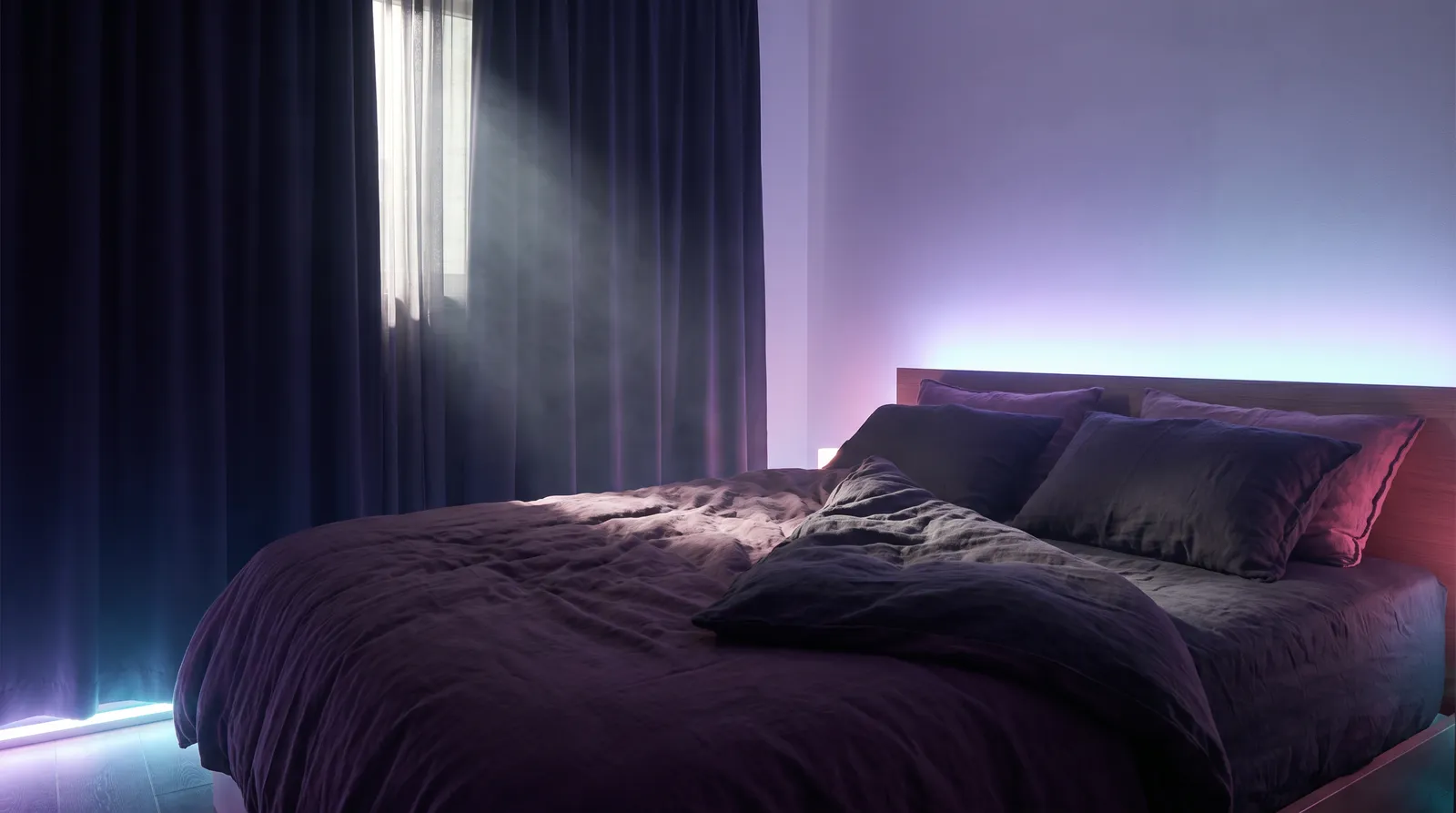
I have a friend who works overnights in a Queens ER. She gets home at 8 a.m., squints at the sun like it owes her money, and then tries to sleep while her building wakes up: garbage trucks, leaf blowers, a neighbor who has apparently taken up tap dancing. Her problem isn't discipline. Her problem is that she's trying to sleep at the exact moment a few billion years of evolution is yelling at her body to be awake. If you work nights, you already know this fight. The good news is that you can't win it, but you can absolutely rig it.
Why daytime sleep is genuinely harder
Your circadian clock, a cluster of neurons behind your eyes, sets the schedule for nearly everything: body temperature, hormones, alertness, the works. Its single biggest input is light. When morning light hits your retinas, the clock reads it as 'day has started' and shuts down melatonin, raises core temperature, and generally preps you for action. None of this cares that you just finished a twelve-hour shift.
Researchers Mark Smith and Charmane Eastman, in a 2012 review of shift work studies, laid out the core problem: most night workers never actually adapt their circadian rhythm to the schedule, because days off and daylight keep yanking the clock back to a daytime orientation. The result is sleep that's shorter and shallower than night sleep, often by hours, stacked on top of working at your biological low point. It's not you. It's physics with hormones.
Light is the whole game
If you only change one thing, change your light exposure. Bright light during the first half of your shift tells your clock that this is daytime, which is what you want it to believe. Then the commute home becomes the dangerous part: that morning sun is the strongest clock-reset signal there is, and it's telling your body the opposite of what you need. Sunglasses on the way home aren't a style choice for night workers; they're protective equipment. Dark, wraparound, worn until you're inside.
You can't argue with your circadian clock. You can only lie to it, and the lie is told with light.
Once you're home, the bedroom needs to commit to the bit. Daylight leaks around standard curtains like water around a screen door. Blackout curtains plus an eye mask is the belt-and-suspenders version, and night workers need both, because even dim light through closed eyelids can keep nudging the clock toward 'be awake.'
The anchor sleep trick
Here's the move that separates the night workers who cope from the ones who feel like wet cardboard: anchor sleep. Pick a block of three to four hours that you protect at the same clock time every single day, workdays and days off alike. Maybe it's 9 a.m. to noon. On work days, you extend sleep on one side of the anchor. On days off, you shift your fun to the other side but keep the anchor itself sacred. Your clock gets one consistent signal to hold onto instead of whiplashing between two opposite schedules, and in their review Smith and Eastman describe exactly this kind of compromise scheduling, partial adaptation instead of full flips, as the realistic sweet spot for most people.
Set up the room like you mean it
- Go full blackout: real blackout curtains, an eye mask, and tape over every smug little LED on the power strip.
- Flatten the daytime noise with a fan, white noise, or brown noise, because the world is loud at 10 a.m. and your landlord won't ask the leaf blowers to stop.
- Keep the room cool; a warm afternoon bedroom fights the natural temperature drop your body wants for sleep.
- Put the phone on do not disturb and tell the people in your life, plainly, that your noon is their 3 a.m.
- Cut caffeine around the midpoint of your shift; a 4 a.m. coffee is still loitering in your bloodstream at 10 a.m. when you're trying to crash.
The wind-down still applies
Night workers often skip the wind-down entirely, going from fluorescent chaos to lying in bed in about eleven minutes, then wondering why their brain is still doing inventory. The wind-down isn't optional just because it's morning. Dim the apartment, keep screens boring, eat something light, and give yourself twenty slow minutes. This is where I'll admit what works for me after late deadline nights: lights off, a slow texture drifting on Feelsy with brown noise underneath, and a couple of rounds of its 4-7-8 breathing exercise. It's the same off-ramp anyone else uses at 11 p.m. I just take it at 9 in the morning.
Days off without wrecking everything
The temptation on your first day off is to flip straight back to a daytime life, which feels social and reasonable and quietly undoes everything. You don't have to live like a vampire, but don't do a full 180 either. Keep the anchor block, let yourself sleep in a split pattern if needed, and accept a compromise: a schedule that's a few hours shifted toward daytime rather than fully flipped. You'll be a little nocturnal at brunch. That's the price. It's cheaper than starting the adaptation from zero every single week.
Daytime sleep will probably never feel as effortless as the night sleep your body was built for. But with aggressive darkness, smart light timing, a protected anchor, and a real wind-down, it stops being a daily emergency and becomes a system. My friend in Queens still hates the tap dancer. She just sleeps through him now.
Feelsy is a wellness product, not medical advice. If stress, anxiety or sleep problems persist, please speak with a qualified professional.
References
- Smith, M. R., & Eastman, C. I. (2012). Shift work: health, performance and safety problems, traditional countermeasures, and innovative management strategies to reduce circadian misalignment. Nature and Science of Sleep, 4, 111-132.
Frequently Asked Questions
Why can't I sleep during the day after a night shift?
Your circadian clock takes its main cue from light, and morning sun on the commute home tells it the day is starting, so it suppresses melatonin and raises alertness right when you need to sleep. Most night workers never fully adapt because days off pull the clock back to a daytime schedule, which makes daytime sleep shorter and shallower than night sleep.
What is anchor sleep?
Anchor sleep is a block of three to four hours that you protect at the same clock time every day, on workdays and days off alike. You extend sleep around it as your schedule allows, but the anchor never moves. That one consistent block gives your circadian clock a stable signal instead of whiplashing between opposite schedules.
Should I wear sunglasses after a night shift?
Yes. Morning sunlight is the strongest reset signal your body clock receives, and on the commute home it tells your body to wake up just as you need to wind down. Dark sunglasses worn until you're indoors blunt that signal and make it noticeably easier to fall asleep once you're home.
When should I stop drinking caffeine on a night shift?
Aim to cut it off around the midpoint of your shift. Caffeine lingers in your system for many hours, so a coffee at 4 a.m. is still active when you're trying to fall asleep at 9 or 10 in the morning. Front-load it early in the shift when you actually need the alertness.

About the author
Contributing writer
Kurt is a New York based writer covering the practical science of stress, sleep and focus. He is the resident sceptic of the Journal: if a technique cannot survive a crowded subway commute and a deadline week, he is not interested in it.
Feel it for yourself.
Feelsy turns reading about calm into practising it. Two minutes of a slow texture is often the whole difference.


Related reading
 Sleep
How to Fix Your Sleep Schedule (Without Wrecking a Whole Week)
Your sleep schedule drifted and now bedtime is a rumor. Here's how to reset your body clock with light, timing, and patience instead of willpower.
 Sleep
How to Block Out Noise at Night: A Field Guide From a Loud Apartment
Thin walls, loud street, 2 a.m. sirens: what actually blocks noise at night, from earplugs to sound masking, ranked by evidence instead of marketing.
 Sleep
The Best Temperature for Sleep (and Why Your Bedroom Runs Hot)
What's the best temperature for sleep? Why cooler rooms help you fall asleep faster, what the research says about heat, and how to fix a hot bedroom.
 Sleep
Falling Back: A Survival Guide for the End of Daylight Saving Time
Clocks fall back this weekend, and the free hour is slightly fake. What the end of daylight saving time really does to your sleep, and how to land it well.
 Sleep
The Best Alarm Sound to Wake Up To, According to Research
Harsh beeping may be making your mornings worse. What research says about the best alarm sound to wake up to, and how to choose one your brain won't fight.
 Sleep
Can You Learn While You Sleep? What the Science Actually Says
Sleep learning is an old dream and mostly a myth, but not entirely. What research really shows about learning, memory and your sleeping brain.