How to Wake Up Early (Without Hating Your Life)
Want to become a morning person? Here's how to wake up early using light, timing and consistency, based on what circadian science actually shows.
By Kurt Woleret
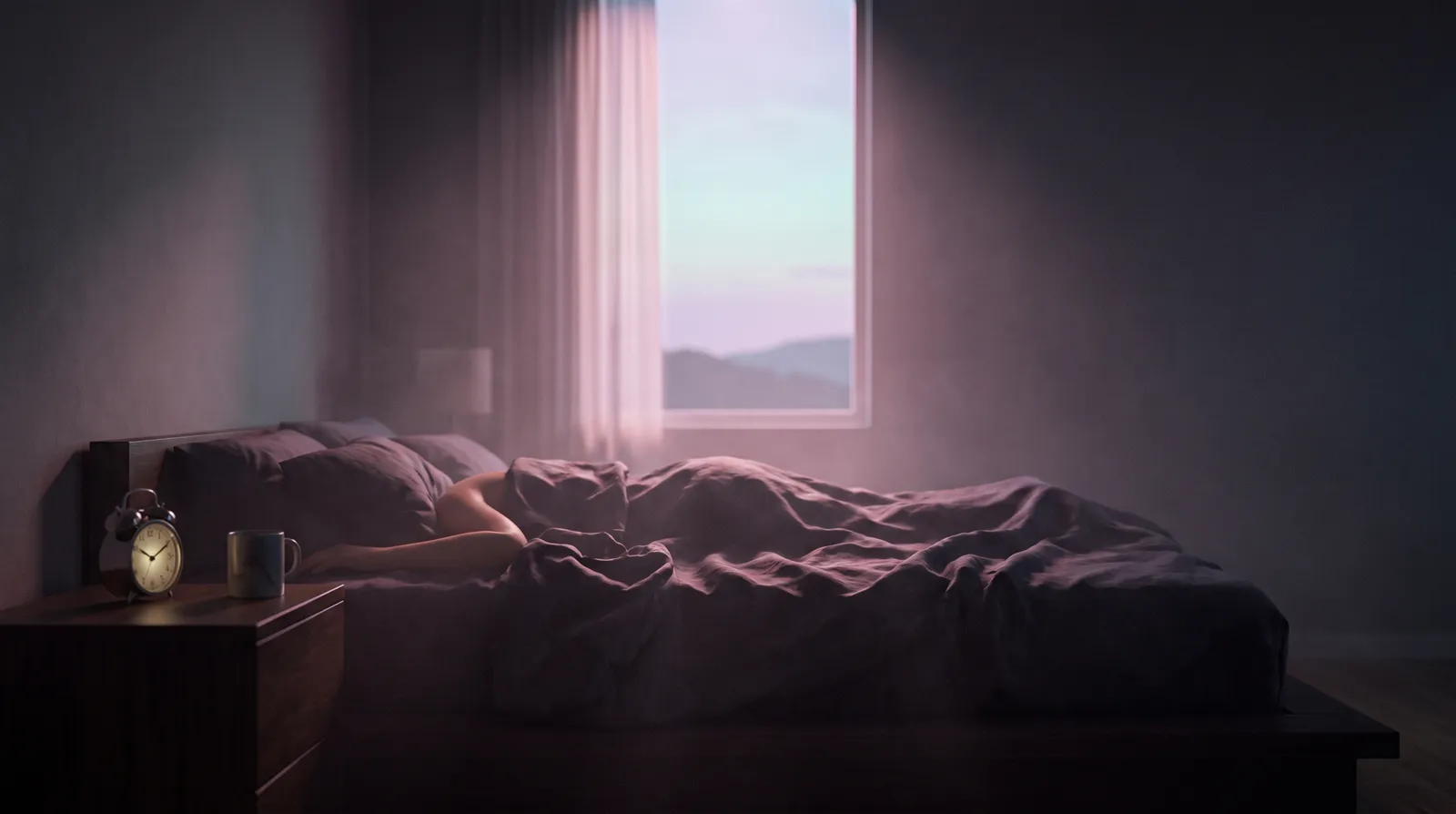
Every productivity guru on the internet wakes up at 5 a.m. Allegedly. They journal, they run, they drink something green, and they've usually closed three deals before I've located my keys. I'm not here to sell you that. I'm here for a smaller, more honest project: you'd like to wake up earlier than you currently do, without feeling like you've been exhumed. That part is actually doable, and the science behind it is solid.
The bad news first: you can't decide to be a morning person the way you decide to try a new deli. Your wake time is downstream of your circadian clock, a roughly 24-hour rhythm run by a cluster of neurons that takes its cues mostly from light. The clock decides when melatonin rises at night and when your body temperature starts climbing before dawn. Set an alarm three hours ahead of where that clock sits and the alarm will win the battle, but the clock wins the war. You'll be groggy, cranky, and back to snoozing by Thursday.
Your clock is negotiable. Your willpower isn't.
The good news is that the clock moves. In a well-known study, researchers sent people camping in the Rocky Mountains with no phones and no flashlights. After a week of natural light and dark, their internal clocks had shifted about two hours earlier, and their melatonin onset lined up with sunset instead of midnight (Wright et al., 2013, Current Biology). Nobody used discipline. They just changed the light.
You probably can't go camping every week. I live in an apartment where the sunrise is mostly implied by a brick wall. But the underlying principle scales down: morning light pulls your clock earlier, evening light pushes it later. Most of us have that exactly backwards. We spend our mornings in dim kitchens and our nights bathed in the full glow of a phone eight inches from our face.
You don't need more discipline at 6 a.m. You need less light at 11 p.m.
The protocol that's actually been tested
In 2019, researchers at Birmingham and Monash took a group of committed night owls, people whose bodies wanted to sleep at 2:30 a.m., and gave them a three-week routine: wake at a fixed time, get outdoor light soon after waking, keep the same sleep schedule on weekends, dim things down in the evening, and stop caffeine after mid-afternoon. Their clocks shifted about two hours earlier. Here's what I find persuasive: the shift came with less daytime sleepiness and lower self-reported stress and depression, not more (Facer-Childs et al., 2019, Sleep Medicine). They didn't sleep less. They slept the same amount, earlier.
That study is basically a checklist, so here it is, in the order that matters:
- Pick one wake time and hold it every day, including weekends. The weekend part is the whole ballgame; sleeping in until 11 on Sunday undoes the week.
- Get light within an hour of waking. Outside is best, even ten minutes with a coffee on the stoop. A gray sky still beats your ceiling fixture by an order of magnitude.
- Cut caffeine after about 3 p.m. Not because caffeine is evil, but because it lingers long enough to shave the edge off the sleep you need for the early alarm.
- Dim your evenings. Lamps instead of overheads, screens low and boring after dinner. You're trying to convince your brain that sunset happened.
- Move your bedtime earlier in 15-minute steps, not one heroic 90-minute leap. The heroic leap is how people end up lying awake at 9:45 hating everything.
The first three days are rough. That's not failure.
Any shift in wake time comes with a lag while your internal rhythm catches up to the alarm. For the first few mornings you'll wake up before your body temperature has started its morning climb, which feels roughly like jet lag, because physiologically it is. Expect it, plan a gentle first hour, and don't judge the experiment until day five or six. Sleep inertia, that heavy-headed fog after waking, also fades faster with light and a bit of movement than it does with a fourth snooze.
About snoozing: I've made my peace with one alarm, placed across the room. Not because a podcast bro told me to, but because nine minutes of fragmented dozing has never once improved my morning, and I've run the experiment for years.
Evenings are where early mornings are made
Here's the part nobody wants to hear: waking up early is mostly an evening skill. If your wind-down is doomscrolling under a bright screen until your eyes surrender, your clock is being told it's noon in Las Vegas. Swap the last twenty minutes for something dim and slow. I put Feelsy's autoplay mode on with the screen brightness low, let a slime texture fold itself in the dark, and run the 4-7-8 breathing exercise until my shoulders unclench. It's the rare screen time that behaves like a sunset instead of a stadium.
One caveat, because I promised honesty: chronotypes are partly genetic, and a true night owl will probably never become a cheerful 5 a.m. person. That's fine. The realistic win isn't joining the dawn-jog influencers. It's moving your morning back an hour, feeling like a person during it, and keeping it there. Modest, repeatable, boring. In sleep, boring is what winning looks like.
Feelsy is a wellness product, not medical advice. If stress, anxiety or sleep problems persist, please speak with a qualified professional.
References
- Wright, K. P., McHill, A. W., Birks, B. R., et al. (2013). Entrainment of the human circadian clock to the natural light-dark cycle. Current Biology, 23(16), 1554-1558.
- Facer-Childs, E. R., Middleton, B., Skene, D. J., & Bagshaw, A. P. (2019). Resetting the late timing of 'night owls' has a positive impact on mental health and performance. Sleep Medicine, 60, 236-247.
Frequently Asked Questions
How can I train myself to wake up early?
Pick one wake time and keep it every day, including weekends, then get bright light within an hour of waking, ideally outdoors. In the evening, dim your lights and screens and move bedtime earlier in 15-minute steps. In a 2019 study, night owls who followed this kind of routine for three weeks shifted their body clocks about two hours earlier and reported feeling less sleepy and less stressed, not more.
Why do I feel terrible when I wake up early?
For the first few days of an earlier alarm, you're waking before your internal clock has started its morning warm-up, so your body is still in night mode. That jet-lag feeling is normal and fades as your rhythm catches up, usually within about a week if your wake time stays consistent. Morning light and a little movement clear the grogginess faster than extra snoozing does.
Does morning light really help you wake up earlier?
Yes, and it's probably the single strongest lever you have. Light in the morning pulls your circadian clock earlier, while bright light at night pushes it later. In one study, a week of camping with only natural light shifted people's internal clocks about two hours earlier without any effort or alarm discipline at all.
Should I keep the same wake time on weekends?
If you're serious about becoming a morning person, yes. Sleeping in for two days sends your clock drifting later again, which is why Monday alarms feel so brutal. If you need extra rest on weekends, go to bed earlier rather than waking later, or cap the sleep-in at about an hour.
Can a night owl really become a morning person?
Partly. Chronotype has a genetic component, so an extreme night owl is unlikely to turn into a happy 5 a.m. riser. But research shows most people can move their schedule one to two hours earlier with consistent wake times, morning light and dimmer evenings, and feel better rather than worse doing it. Aim for a realistic shift, not a personality transplant.

About the author
Contributing writer
Kurt is a New York based writer covering the practical science of stress, sleep and focus. He is the resident sceptic of the Journal: if a technique cannot survive a crowded subway commute and a deadline week, he is not interested in it.
Feel it for yourself.
Feelsy turns reading about calm into practising it. Two minutes of a slow texture is often the whole difference.


Related reading
 Sleep
SleepHow to Fix Your Sleep Schedule (Without Wrecking a Whole Week)
Your sleep schedule drifted and now bedtime is a rumor. Here's how to reset your body clock with light, timing, and patience instead of willpower.
 Sleep
SleepIs Hitting Snooze Actually Bad for You? What the Science Says
Everyone says snoozing ruins your sleep. New research says otherwise. Here's what actually happens in those nine minutes, and who should snooze or skip it.
 Sleep
SleepSleep Inertia: Why You Wake Up Groggy (and How to Shake It Faster)
That heavy fog after waking has a name: sleep inertia. Here's why mornings feel broken, what the research says, and how to clear your head faster.
 SleepNew
Night Owl vs Early Bird: The Science of Chronotypes
Night owl or early bird isn't a personality flaw or a virtue. It's a chronotype. Here's what the science says about your body clock and how to work with it.
 Sleep
SleepCan't Sleep? Why Getting Out of Bed Is the Counterintuitive Fix
Lying awake trying harder is the one thing that makes insomnia worse. Here's the 20-minute rule, the science of stimulus control, and how to use it.
 Sleep
SleepHow to Get Over Jet Lag: A Body-Clock Owner's Manual
Jet lag isn't ordinary tiredness, it's your body clock running on the wrong city. Here's how light, timing and a little planning reset it faster.