Is Hitting Snooze Actually Bad for You? What the Science Says
Everyone says snoozing ruins your sleep. New research says otherwise. Here's what actually happens in those nine minutes, and who should snooze or skip it.
By Kurt Woleret
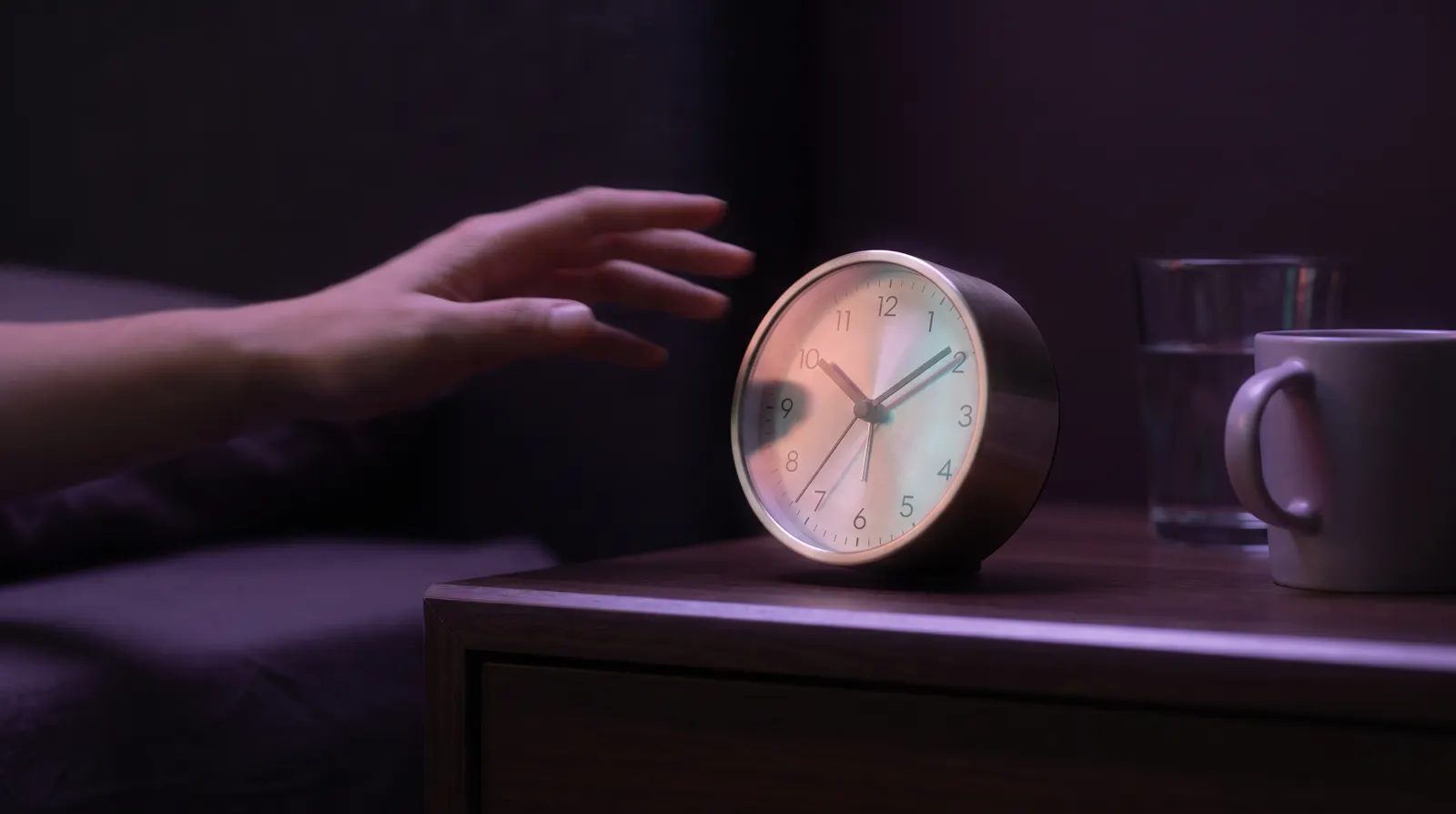
My alarm goes off at 6:45. My thumb, acting entirely on its own authority, hits snooze. Nine minutes later we repeat the ritual. For years I felt vaguely criminal about this, because every productivity guy on the internet insists that snoozing is self-sabotage: you're fragmenting precious sleep, confusing your brain, starting the day with failure. Wake up with the first alarm like a Navy SEAL, they say, usually while selling a supplement. So I went looking for the actual evidence that snoozing is bad. Funny thing: it mostly doesn't exist. And the best study we have says something close to the opposite.
Where the anti-snooze folklore came from
The argument sounds airtight. Sleep between snooze alarms is light and broken, and fragmented sleep is bad, therefore snoozing is bad. The problem is that nobody had really tested it. The anti-snooze case was built on vibes and extrapolation: take findings about fragmented sleep across a whole night and assume they apply to the last thirty minutes of the morning. That's a big assumption. The end of the night is a weird zone; sleep is already lighter, your body is already warming up for launch, and what happens there might play by different rules than 2 a.m. sleep. Spoiler: it does.
What the research actually found
In 2023, sleep researchers Tina Sundelin and John Axelsson published a two-part study in the Journal of Sleep Research with the excellent title 'Is snoozing losing?' First they surveyed over a thousand people and found that snoozers are real and numerous: mostly younger people and night owls, snoozing about twenty-two minutes on average, usually because they simply can't get up at the first alarm. Then came the fun part: they brought habitual snoozers into a sleep lab and compared thirty minutes of snoozing against getting up at the first alarm.
The results were undramatic in the best way. Thirty minutes of snoozing cost participants only about six minutes of sleep, didn't wreck their sleep quality overall, and had no clear negative effect on morning cortisol, mood, or sleepiness. Cognitive performance right after waking was actually slightly better after snoozing on several tests. The likely reason: those broken bonus minutes keep you in lighter sleep, which means the final alarm doesn't yank you out of deep sleep, which means less sleep inertia, that concrete-headed grogginess that makes the first twenty minutes of the day feel like wading through wet cement.
Worth pausing on how surprising this is. Cortisol, the hormone everyone loves to worry about, didn't misbehave. Mood didn't tank. Sleepiness through the day was no worse. The researchers even checked overall sleep architecture across the night and found snoozing didn't meaningfully degrade it; the fragmentation stayed contained to that final half hour of already-light morning sleep. Meanwhile the wake-up-instantly approach, the one sold as discipline, means potentially getting yanked straight out of deep sleep with no runway at all. If you've ever bolted up to a first alarm and spent twenty minutes feeling like your brain was buffering, you've met the downside of the 'just get up' doctrine firsthand.
Snoozing isn't a moral failing. For night owls dragged awake by an alarm, it's a soft landing instead of a crash.
So should you snooze?
Depends who you are. If you're an evening type forced awake earlier than your body wants, a couple of snooze cycles seem harmless and might genuinely ease the exit. The study's participants were habitual snoozers who could fall back asleep between alarms; for them, the system works. But there are honest caveats. If your snoozing runs to an hour of dozing misery, that's not a soft landing, that's a schedule problem wearing a snooze costume. If you share a bed, your bonus minutes are someone else's fragmented night. And if you snooze because you're chronically underslept, the snooze button is treating a symptom. The disease is your bedtime.
What snoozing can't fix
Let's be clear about what the study didn't say, because nuance dies fast on the internet. It didn't say snoozing gives you extra rest; those broken minutes are junk-grade sleep, pleasant but not restorative. It didn't test people who snooze for an hour, or people who set their first alarm artificially early specifically to snooze, a move that just converts real sleep into junk sleep on purpose. And it can't rescue you from the actual epidemic, which is not enough sleep, full stop. If you need three alarms and a crane to exit the bed every single morning, the question isn't snooze versus no snooze. It's why your body is this desperate to stay down, and the answer usually lives somewhere around 11 p.m. the night before, glowing, in your hand.
A better wake-up, snooze optional
A few things matter far more than whether you snooze. A consistent wake time, weekends included, teaches your body when the night ends, and eventually it starts prepping for launch before the alarm even fires. Light soon after waking anchors that clock. And the real heavy lifting happens twelve hours earlier: the easiest morning is bought the night before, with an actual wind-down instead of a doomscroll. That's the slot where I've quietly replaced my phone feed with Feelsy: lights low, autoplay mode drifting through slow textures, or a few rounds of the guided 4-7-8 breathing when my brain is still writing emails to nobody. Go to bed with a landed nervous system and the 6:45 alarm gets noticeably less hostile. Snooze twice if you like. Science says you're fine. Just don't let the snooze button become the load-bearing wall of your sleep schedule.
Feelsy is a wellness product, not medical advice. If stress, anxiety or sleep problems persist, please speak with a qualified professional.
References
- Sundelin, T., Landry, S., & Axelsson, J. (2023). Is snoozing losing? Why intermittent morning alarms are used and how they affect sleep, cognition, cortisol, and mood. Journal of Sleep Research, 33(2), e14054.
Frequently Asked Questions
Is hitting the snooze button bad for your health?
The best available research suggests no, at least for habitual snoozers. A 2023 study in the Journal of Sleep Research found that thirty minutes of snoozing cost only about six minutes of sleep and showed no clear negative effects on morning cortisol, mood, or sleepiness. Cognitive performance right after waking was actually slightly better after snoozing.
Why does snoozing feel so good in the morning?
Snoozing keeps you in lighter sleep during the final stretch of the morning, so the last alarm doesn't pull you out of deep sleep. That means less sleep inertia, the heavy grogginess that can drag on after an abrupt wake-up. For night owls forced awake earlier than their body clock wants, those broken bonus minutes act as a gentler runway into the day.
How many times is it okay to hit snooze?
There's no official number, but the research tested about thirty minutes of snoozing without ill effect, and habitual snoozers average around twenty minutes. A cycle or two is a soft landing. If you're snoozing for an hour of miserable dozing, the snooze button isn't the problem; your bedtime or your overall sleep need is, and that's what deserves fixing.
What matters more than whether I snooze?
A consistent wake time, morning light, and enough total sleep beat any alarm strategy. Waking at roughly the same time daily trains your body clock to prepare for waking before the alarm fires. And the easiest morning is set up the night before with a real wind-down, low light, and a calm descent instead of late-night scrolling.

About the author
Contributing writer
Kurt is a New York based writer covering the practical science of stress, sleep and focus. He is the resident sceptic of the Journal: if a technique cannot survive a crowded subway commute and a deadline week, he is not interested in it.
Feel it for yourself.
Feelsy turns reading about calm into practising it. Two minutes of a slow texture is often the whole difference.


Related reading
 Sleep
SleepHow Long Should a Nap Be? The Science of Waking Up Better
Ten minutes, twenty, ninety? Nap length decides whether you wake up sharp or wrecked. Here's what sleep research says about the ideal nap, and how to time it.
 Sleep
SleepThe Military Sleep Method: Can You Really Fall Asleep in Two Minutes?
The military sleep method promises sleep in two minutes. Here's where it came from, what the routine involves, and how well the two-minute claim holds up.
 Sleep
SleepWhy Am I Still Tired After 8 Hours of Sleep?
Getting eight hours but waking up exhausted? Here's why time in bed isn't the same as good sleep: fragmentation, timing, alcohol, and what actually helps.
 SleepNew
Night Owl vs Early Bird: The Science of Chronotypes
Night owl or early bird isn't a personality flaw or a virtue. It's a chronotype. Here's what the science says about your body clock and how to work with it.
 SleepNew
How to Wake Up Early (Without Hating Your Life)
Want to become a morning person? Here's how to wake up early using light, timing and consistency, based on what circadian science actually shows.
 Sleep
SleepCan't Sleep? Why Getting Out of Bed Is the Counterintuitive Fix
Lying awake trying harder is the one thing that makes insomnia worse. Here's the 20-minute rule, the science of stimulus control, and how to use it.