Why Kinetic Sand Videos Are So Satisfying
Kinetic sand videos rack up billions of views of slicing, crumbling and scraping. The psychology of why sand feels so calming, and what your brain gets.
By Kurt Woleret

At some point last year, the algorithm decided I needed to watch a pair of hands slice a block of sand with a putty knife. I watched one. Then eleven. Somewhere around the clip where a scraper shaved perfect ribbons off a sand cube, I realized twenty minutes had passed and my shoulders had dropped an inch for the first time that day. Kinetic sand videos are a legitimately enormous genre: billions of views of cutting, crumbling, scraping, and pressing mildly damp-looking sand. No plot. No faces. No dialogue. And an audience of millions of adults, many watching specifically to calm down or fall asleep. As the resident skeptic, I wanted to know why this works. Turns out the answer is a tidy little stack of perceptual psychology.
First, what this stuff even is
Kinetic sand is regular sand coated with a tiny amount of silicone polymer, which makes the grains cling to each other just enough. The result is a material with contradictory properties: it holds a crisp edge like clay, then crumbles like a sandcastle, then flows almost like a liquid when it collapses. That contradiction is the engine of the whole genre. Your brain has a lifetime of physics intuitions about how sand behaves and how solids behave, and kinetic sand keeps landing right between them. Every slice is a tiny physics demonstration that's slightly wrong in a pleasing way.
The prediction game your brain loves
Here's the core mechanism, and it's the same one behind most oddly satisfying content. Your brain is a prediction machine; it constantly forecasts what's about to happen and gets a small reward signal when reality lands cleanly on the forecast. A kinetic sand video is a prediction game with a perfect difficulty curve. The knife approaches the block: you know roughly what's coming. The slice lands: clean face, crisp edge, a soft collapse, confirmation. But because the material sits between solid and liquid, each cut carries a little uncertainty: will it hold the edge or crumble? That tiny gap between 'mostly predictable' and 'slightly surprising' is the sweet spot where attention settles without effort. Too predictable is boring. Too chaotic is stressful. Sand being sliced is the Goldilocks zone, over and over, on a loop.
Every cut is a tiny promise, and the sand keeps every one of them.
The sound is half the product
Mute a kinetic sand video and it loses most of its power, which tells you this is as much an ASMR genre as a visual one. The sounds live in a specific family: granular, crisp, textural. The soft crunch of a blade entering the block. The whispery cascade of grains collapsing. The scrape of a flat edge across a surface. These sit alongside classic triggers like tapping and crinkling: complex, non-threatening, repetitive textures that many nervous systems read as 'safe, nothing to monitor here.' And there's decent evidence the calm is physiological, not just vibes: in a controlled study, people who experience ASMR showed significantly reduced heart rates while watching trigger videos, alongside increased feelings of calm and social connection (Poerio et al., 2018, PLOS ONE). You don't need to feel tingles for the quieting effect, either; plenty of viewers get the relaxation with no scalp fizz at all, which matches what we've written before about tingle-free ASMR.
Completion, destruction, and why that's healthy
There's one more ingredient, and it's the one people feel vaguely guilty about: the destruction. A huge share of the genre is watching something tidy get demolished: a perfect cube shaved to nothing, a sculpted sphere crushed under a palm. I'd argue the appeal is not aggression but completion. Each clip is a closed loop: a form exists, the form is transformed, the transformation finishes cleanly, and nothing is left hanging. Your day is full of open loops: emails half-answered, projects at sixty percent, a subway ride away from three unfinished conversations. Watching a block of sand get fully, decisively resolved is a micro-dose of the thing your to-do list never gives you: an ending. Add that the stakes are zero, nothing of value is lost, nobody is harmed, the sand literally reforms for the next video, and you get consequence-free closure on tap.
Using it on purpose instead of by accident
The failure mode of satisfying content isn't the content; it's the container. A feed serves you sand videos interleaved with ads, outrage, and whatever else the algorithm is testing on you, so your nervous system downshifts for forty seconds and then gets yanked back up. If granular, slow-transforming texture is what calms you, it works better taken deliberately. This is, full disclosure, exactly the corner Feelsy lives in: slow, tactile textures you can slice and press yourself, with layered granular sound and no feed wrapped around them, and an autoplay mode for the nights when even swiping feels like a chore. Interactive beats passive here, by the way: when your own finger drags through the texture, your brain gets the richest version of the prediction game, because it issued the command and gets to verify the result. Two or three minutes of that before bed, or between meetings, does what the eleven-video accident did to me, minus the eleven videos.
The skeptic's bottom line
Kinetic sand videos work because they stack four honest mechanisms: a material that playfully bends your physics intuitions, a prediction loop tuned to the exact sweet spot of attention, a granular soundscape from the classic ASMR trigger family with measured physiological calming behind it, and clean, consequence-free completion for brains drowning in open loops. No mystery, no mysticism, no guilt required. Your attention knows what it likes. Once you know why it likes it, you can use it like a tool instead of falling into it at 1 a.m.
Feelsy is a wellness product, not medical advice. If stress, anxiety or sleep problems persist, please speak with a qualified professional.
References
- Poerio, G. L., Blakey, E., Hostler, T. J., & Veltri, T. (2018). More than a feeling: Autonomous sensory meridian response (ASMR) is characterized by reliable changes in affect and physiology. PLOS ONE, 13(6), e0196645.
Frequently Asked Questions
Why is kinetic sand so satisfying?
Kinetic sand sits between a solid and a liquid: it holds crisp edges like clay, then crumbles and flows like dry sand. That contradiction turns every slice into a small prediction game for your brain, mostly predictable with a little surprise, which is the sweet spot where attention settles effortlessly. Add crisp granular sounds and the clean sense of completion in each cut, and you get content that's almost engineered to calm.
Is watching kinetic sand videos ASMR?
Largely yes. The sounds, soft crunches, whispery grain cascades, and scraping, belong to the same trigger family as tapping and crinkling, and much of the genre's effect disappears on mute. Research on ASMR viewers found significantly reduced heart rates while watching trigger videos, so the calm has a measurable physiological side. You don't need to feel tingles to get the relaxing effect.
Why do I like watching things get destroyed in these videos?
The appeal is less about destruction and more about completion. Each clip is a closed loop: a form exists, gets transformed, and the transformation finishes cleanly with zero real-world consequences. For a brain carrying dozens of unfinished tasks, a fully resolved ending, even of a sand cube, is a small, satisfying dose of closure.
Can kinetic sand videos help me sleep or relax?
They can, with one caveat: the container matters. Watching inside a social feed means your calm gets interrupted by ads and algorithmic noise. Slow, granular textures work better taken deliberately, in a dim, quiet format, for a few focused minutes before bed or between tasks. Interactive textures tend to work even better than passive watching, since your own touch drives the prediction loop.

About the author
Contributing writer
Kurt is a New York based writer covering the practical science of stress, sleep and focus. He is the resident sceptic of the Journal: if a technique cannot survive a crowded subway commute and a deadline week, he is not interested in it.
Feel it for yourself.
Feelsy turns reading about calm into practising it. Two minutes of a slow texture is often the whole difference.


Related reading
 ASMR
Why Slime Videos Are So Satisfying
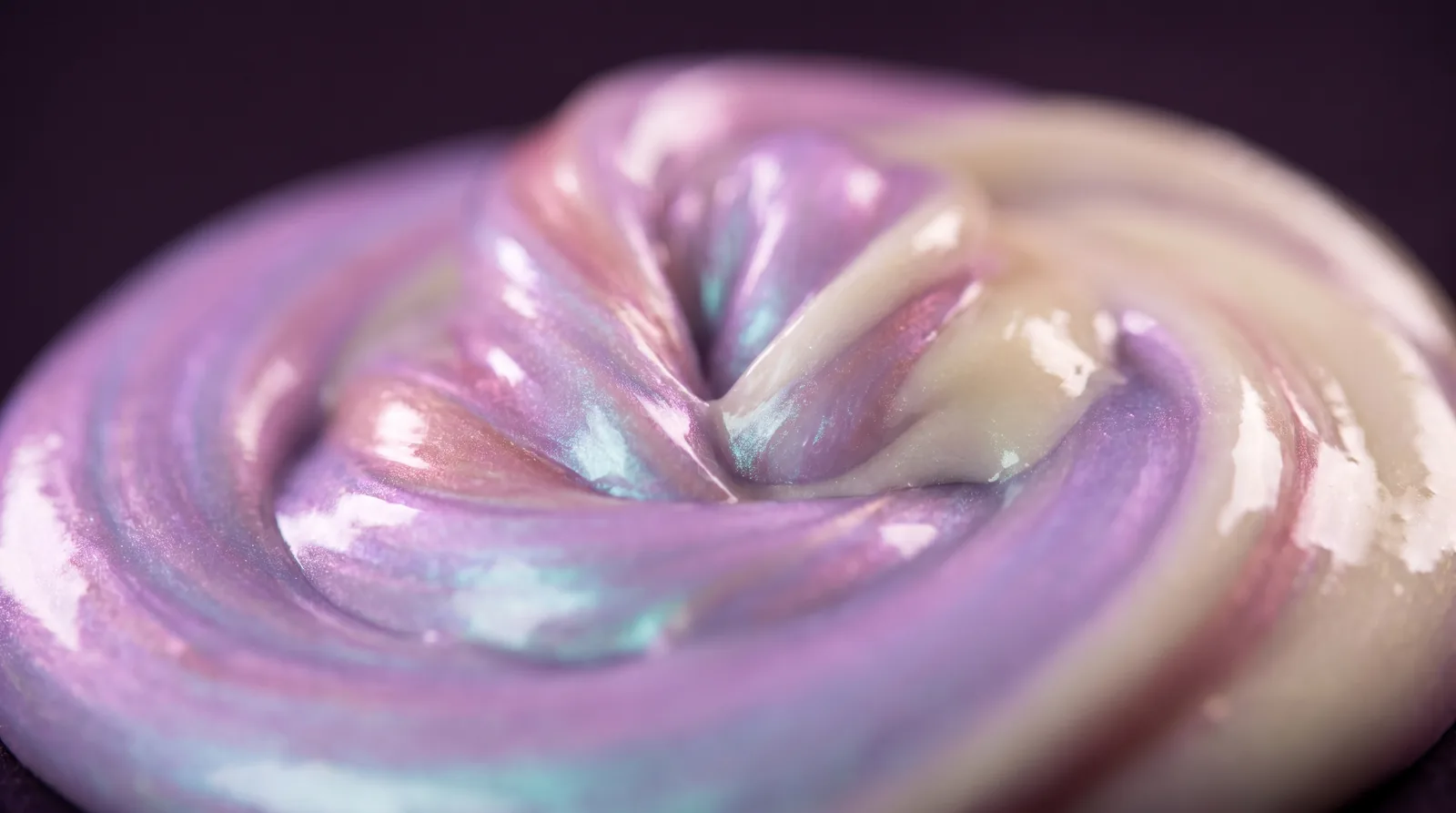
There is a real reason your shoulders drop when you watch slime being folded and poked. A look at ASMR, soft fascination and the design of satisfying motion.
 ASMR
The Quiet Pleasure of Oddly Satisfying Videos
Why are oddly satisfying videos so satisfying? The psychology of perfect fits, clean sweeps and slow swirls, and how to turn watching into meditation.
 ASMR
Why Soap Cutting Videos Are So Satisfying
Soap cutting videos rack up billions of views. Here's the science of why crisp cuts and curling ribbons calm your brain, and how to use that effect on purpose.
 Visual MeditationNew
Apricity: The Forgotten Pleasure of Winter Sun
Apricity is a forgotten English word for the warmth of the sun in winter. Here is why a few minutes of low winter sunlight can soften the darkest months.
 Visual MeditationNew
Momijigari: The Japanese Art of Autumn Leaf Viewing
Momijigari is the old Japanese tradition of travelling to see autumn leaves. Here is why fiery foliage calms the mind, and how to practise it anywhere.
 Visual MeditationNew
Why Libraries Feel So Calming
Step into a library and your shoulders drop. Here is the psychology of hush, tall shelves and shared silence, and how to borrow that feeling for your rooms.