The Military Sleep Method: Can You Really Fall Asleep in Two Minutes?
The military sleep method promises sleep in two minutes. Here's where it came from, what the routine involves, and how well the two-minute claim holds up.
By Kurt Woleret
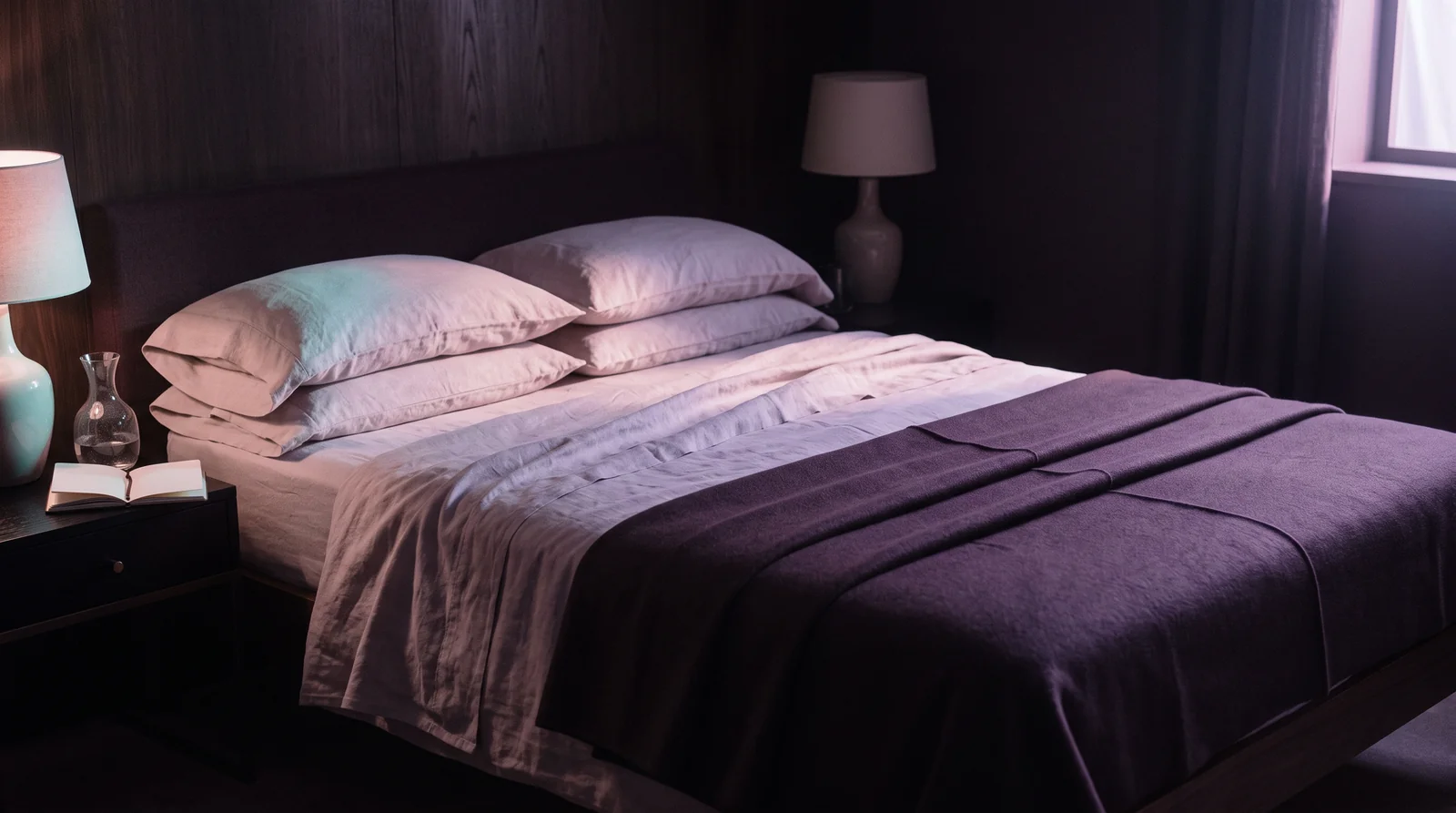
The pitch has everything a tired person wants. A technique developed for military pilots, a claimed 96 percent success rate, and a number that sounds like a dare: asleep in two minutes. It's been making the rounds for years now, usually delivered by someone on the internet who looks suspiciously well rested. I live in New York, where sleep is a competitive sport that nobody wins, so I did the thing I always do when a promise sounds too clean: I went looking for the receipts.
Where the method actually comes from
The trail leads back further than TikTok, which I'll admit surprised me. The source is a 1981 book called Relax and Win: Championship Performance by Lloyd 'Bud' Winter, a legendary sprint coach at San Jose State. During World War II, Winter helped build a relaxation program for Navy pre-flight cadets, aimed at pilots who needed to be able to sleep anywhere, anytime, including, according to the book, sitting up in a chair after coffee while recordings of gunfire played in the background. The famous numbers come from that account: after six weeks of practice, 96 percent of the cadets could reportedly fall asleep within two minutes.
Here's the part the videos leave out. That figure comes from a coach's memoir describing a wartime training program, not from a peer-reviewed study. Nobody published a controlled trial. Nobody, as far as I can find, has run one on the branded 'military method' since. That doesn't make the method fake. It makes the 96 percent a story, and stories about how well something worked in 1943 deserve the same eyebrow you'd give a fisherman describing a fish.
The routine, step by step
The method itself is short enough to learn on a subway ride. Here's the standard sequence:
- Relax your face. Close your eyes and let go of your forehead, your eyelids, your jaw, and, weirdly crucial, your tongue. The face carries more tension than you think.
- Drop your shoulders. Let them sink as low as they'll go, then release one arm at a time, upper arm, then forearm, then hand.
- Exhale and soften your chest. One slow breath out, letting the chest go heavy.
- Release your legs. Thighs first, then calves, then ankles and feet, like the tension is draining out the bottom.
- Clear your mind for ten seconds. Winter offered three options: picture yourself in a canoe on a calm lake with nothing but blue sky above, picture yourself in a black velvet hammock in a pitch-black room, or silently repeat 'don't think, don't think, don't think.'
So does it actually work?
Broken into parts, the method is surprisingly respectable. The muscle sequence is a compressed version of progressive muscle relaxation, a technique with decades of evidence behind it for reducing physical arousal. The slow exhale nudges the nervous system toward its rest state. The canoe and the hammock are guided imagery, which gives a racing mind a single low-stakes channel to occupy instead of forty. None of this is military secret sauce. It's a well-built stack of things that were already known to work, wearing a uniform.
The two-minute claim is where I get off the boat. Healthy adults typically take somewhere between ten and twenty minutes to fall asleep, and sleep researchers actually treat consistently crashing in under five minutes as a possible sign of sleep deprivation, not of mastery. Expecting two minutes on night one is a setup for the exact kind of performance anxiety that keeps people awake. The realistic promise is different and still worth having: a repeatable wind-down that reliably shortens the runway, with the two-minute landings reserved for the genuinely exhausted and the extensively practiced.
None of it is secret military sauce. It's a well-built stack of things that already worked, wearing a uniform.
Why it works when it works
Three mechanisms, none of them mysterious. First, the body scan releases actual muscle tension, and a slack body is a signal the brain reads as safety. Second, the sequence gives your attention a job. Most of what keeps city people awake isn't noise, it's cognition: rehearsing tomorrow's meeting, replaying today's. A structured routine occupies the mental bandwidth those loops need to run. Third, repetition turns the whole sequence into a cue. Run the same routine every night for six weeks, which is the part of the cadet story everyone skips, and the routine itself starts to mean sleep, the way your couch means slouching.
How to run it tonight
Do it in bed, lights out, on your back or however you actually sleep. Go slower than feels necessary; the face alone deserves a full thirty seconds. If your mind bolts during the ten-second clear, that's normal; just restart the image without grading yourself. I'll sometimes front-load the wind-down before the lights go out: a few rounds of the 4-7-8 exercise in Feelsy to slow my breath down, or a few minutes of one of its slow textures with the volume low, so that by the time I start the muscle sequence my nervous system has already downshifted a gear. The method is the landing; it helps to begin the descent early.
And give it the six weeks. Winter's cadets weren't magic, they were consistent, and they practiced under conditions considerably worse than your bedroom. If a technique was supposedly learnable next to artillery recordings, it can survive your radiator.
The bottom line
The military sleep method is a solid relaxation routine with an inflated origin story. Strip the marketing and you're left with progressive muscle relaxation, a long exhale, and a mental parking spot, practiced nightly until they become automatic. That combination is legitimately good. Just judge it like a training program instead of a magic trick: the win isn't sleeping in two minutes tonight, it's needing less runway every week. If the claim got you to actually practice relaxing on purpose, then the propaganda did something useful for once.
Feelsy is a wellness product, not medical advice. If stress, anxiety or sleep problems persist, please speak with a qualified professional.
References
- Winter, B. (1981). Relax and Win: Championship Performance. A. S. Barnes.
Frequently Asked Questions
Where did the military sleep method actually come from?
It traces back to a 1981 book called Relax and Win: Championship Performance by sprint coach Lloyd 'Bud' Winter, who described a relaxation program built for Navy pre-flight cadets in World War II. The famous claim, that 96 percent of cadets could fall asleep within two minutes after six weeks of practice, comes from that coach's memoir rather than from any peer-reviewed study.
What are the steps of the military sleep method?
You relax your face including the forehead, eyelids, jaw and tongue, then drop your shoulders and release each arm from upper arm to hand. Next you exhale and let the chest go heavy, release the legs from thighs down to feet, and finally clear your mind for ten seconds using an image like a canoe on a calm lake or a black velvet hammock, or by silently repeating 'don't think, don't think, don't think.'
Can you really fall asleep in two minutes using this method?
Probably not right away. Healthy adults typically take ten to twenty minutes to fall asleep, and sleep researchers actually treat consistently falling asleep in under five minutes as a possible sign of sleep deprivation rather than skill. Expecting a two-minute result on night one can create performance anxiety that keeps you awake, so it's better treated as a wind-down routine than an instant trick.
Why does the military sleep method work at all?
It works because it stacks together things already known to help: the muscle-relaxation sequence is a compressed version of progressive muscle relaxation, the slow exhale nudges the nervous system toward rest, and the imagery gives a racing mind one low-stakes channel to occupy. Repeating the same sequence nightly for weeks also turns the routine itself into a cue that signals sleep.
How long does it take to see results from practicing this method?
The original cadet story involved six weeks of consistent nightly practice, not a single try. The realistic goal is a repeatable wind-down routine that gradually shortens how long it takes you to fall asleep, with the fastest results reserved for people who are either genuinely exhausted or who have practiced the routine extensively.

About the author
Contributing writer
Kurt is a New York based writer covering the practical science of stress, sleep and focus. He is the resident sceptic of the Journal: if a technique cannot survive a crowded subway commute and a deadline week, he is not interested in it.
Feel it for yourself.
Feelsy turns reading about calm into practising it. Two minutes of a slow texture is often the whole difference.


Related reading
 Sleep
SleepHow to Fall Asleep Faster: Sound, Light and Ritual
Falling asleep is a skill, not a stroke of luck. Here is how sound, light and a 15-minute ritual can quiet a racing mind and shorten the trip to sleep.
 Breath & Body
Progressive Muscle Relaxation: A Complete Guide
Progressive muscle relaxation releases tension you did not know you were holding. A complete beginner's guide to the tense-and-release technique.
 Sleep
SleepHow to Stop Racing Thoughts at Night
Racing thoughts at night are a habit the brain can unlearn. Here is why minds speed up at bedtime and the techniques that quiet them, step by step.
 SleepNew
Night Owl vs Early Bird: The Science of Chronotypes
Night owl or early bird isn't a personality flaw or a virtue. It's a chronotype. Here's what the science says about your body clock and how to work with it.
 SleepNew
How to Wake Up Early (Without Hating Your Life)
Want to become a morning person? Here's how to wake up early using light, timing and consistency, based on what circadian science actually shows.
 Sleep
SleepCan't Sleep? Why Getting Out of Bed Is the Counterintuitive Fix
Lying awake trying harder is the one thing that makes insomnia worse. Here's the 20-minute rule, the science of stimulus control, and how to use it.